
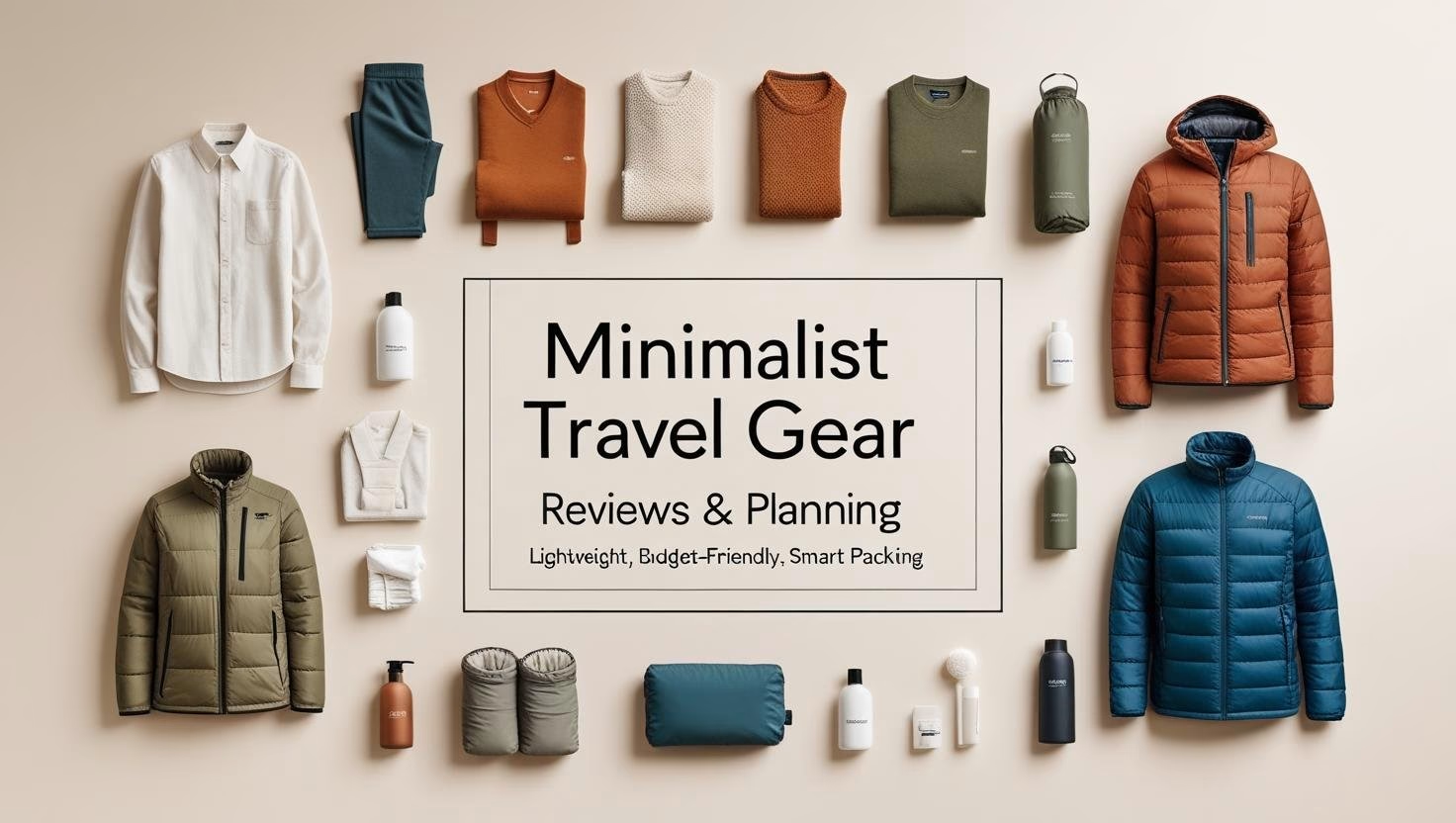

Travel gear marketing runs on anxiety: the fear of being cold, wet, or caught without the right piece of equipment. For most people the result is a bag heavier than it needs to be, packed with items that never come out. The alternative is not owning less for its own sake — it is choosing a few versatile pieces for the actual conditions of the trip, then trusting them to cover the range.
The Bag: One Carry-On That Does Everything
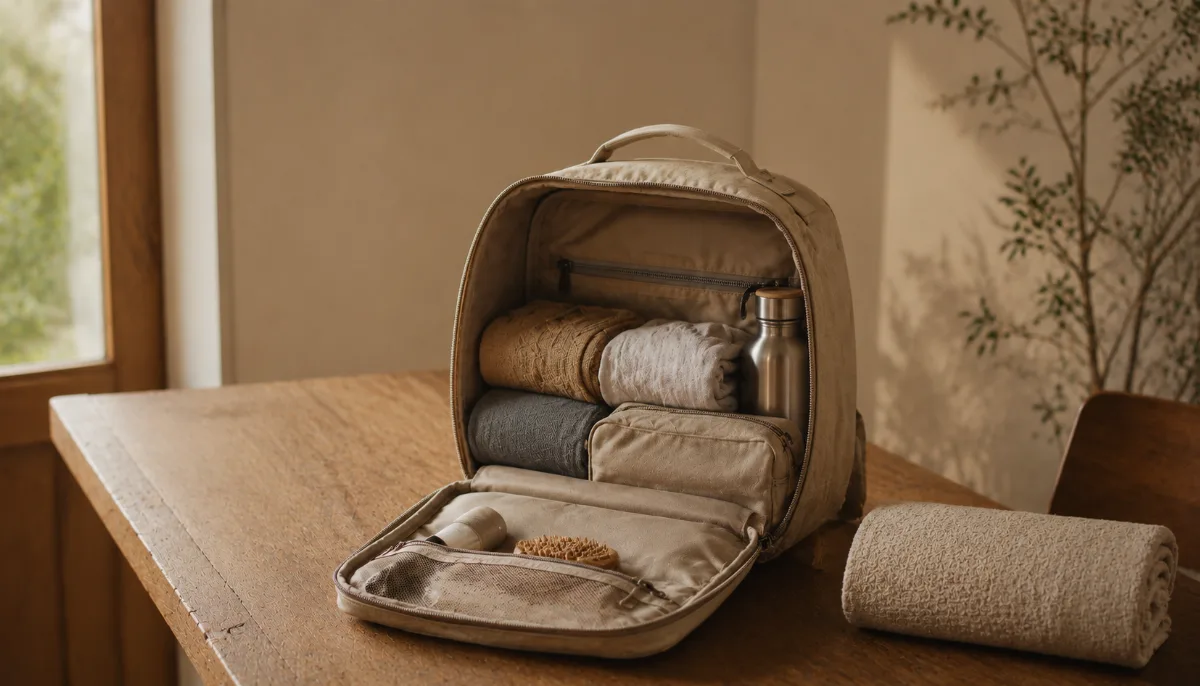
The bag is the most consequential decision because everything else fits inside it, and its size determines whether you check luggage at all. A 20-to-26-liter bag stays within most airlines' personal-item or carry-on limits, which forces discipline about what comes along and permanently removes checked-bag fees, baggage-claim time, and the risk of lost luggage. Check your specific airline's carry-on dimensions before buying, since a bag sized for one carrier can be an inch too large for another.
Look for a clamshell opening that lets you reach any item without unpacking the whole bag, a hip or chest strap for carrying weight over distance, and enough internal pockets to keep small things findable. Weather resistance matters more than full waterproofing here: a bag that sheds light rain is practical, while a fully sealed bag adds weight for coverage you rarely need. The specific model matters less than the commitment to one bag — any 22-to-26-liter clamshell with a laptop slot does the job.
The Layering System: One Approach, Four Seasons
Packing for cold weather does not mean packing heavy. A three-layer system handles cold better than a single bulky coat while compressing smaller and covering a wider temperature range. A merino wool base layer, top and bottom, is the highest-value piece on a cold-weather list: it regulates temperature across a broad range, resists odor far longer than synthetic or cotton, and doubles as a standalone shirt in mild conditions. A packable down or synthetic puffy is the mid layer — a 650-fill jacket at roughly 10 ounces compresses to the size of a water bottle and holds warmth to freezing under a shell, with synthetic fill costing less and performing better when wet. The outer layer is a light rain jacket or wind shell rather than a heavy hardshell.
Together these three pieces handle 35°F to 65°F and pack down to about the volume of a large paperback. For warm-weather trips the layers simply come out: two or three lightweight merino or quick-dry shirts, one versatile pair of shorts or pants, a sun hat, and the same packable rain layer for afternoon showers cover nearly everything.
What makes the system work across a two-week trip is repeat wear, not more garments. Merino shrugs off odor for several days between washes, and a small tube of travel detergent turns any sink into a laundry — two shirts in rotation cover a week if you rinse one while wearing the other. That is the real reason the layering approach beats packing separate outfits for warm and cold days: the same base layer that sits under a puffy at freezing becomes a standalone shirt at 60 degrees, so a single set of pieces stretches to cover conditions that would otherwise demand two wardrobes.
Footwear: Two Pairs Maximum
Most travelers overpack shoes. Two pairs serve most trips: one for active use — walking, hiking, anything that involves distance — and one for nicer settings like restaurant dinners or more formal city walking. A single versatile pair, such as a leather sneaker or a trail runner that straddles both roles, cuts this to one pair on shorter trips.
Whatever you bring should already be broken in. New shoes cause blisters, and blisters ruin a walking-heavy trip, so aim for at least 20 miles of wear before departure. Sandals earn a spot as a third pair only for beach destinations, hot climates, or hostel showers; otherwise the weight-to-use ratio rarely justifies the space they take.
Socks quietly matter more than the shoes on a trip built around walking. Five or six pairs of merino socks handle multi-day wear between washes and keep feet dry on the long days that flat, unfamiliar cities produce, and they are the cheapest thing on the whole list to pack adequately. The traveler who invests in one good pair of shoes and a handful of good socks is far better equipped than the one who brings three pairs of shoes and cotton athletic socks that hold moisture all afternoon.
Tech: What to Bring, What to Leave
The phone is the hub — photography, navigation, translation, boarding passes, and communication all in one device. With a local SIM or an eSIM activated before departure, it replaces most other electronics outright. For trips under two weeks where work is not required, a tablet with a keyboard cover handles email and light document work at less weight than a laptop; for any work-heavy trip, the laptop stays.
Keep cables minimal: one universal power adaptor rather than one per device, one charging cable per connector type since USB-C now covers most gear, and a small power bank for the day. Noise-cancelling earphones earn their weight on any trip with flights — the difference across a six-hour flight is large enough to justify the volume. A 10,000-mAh power bank, roughly the size of a deck of cards, carries a full day of navigation and photos without a wall outlet. Beyond those two, the case for extra electronics weakens fast: a dedicated GPS unit, a separate e-reader, a travel mouse. The honest test is how many times each was used on the last three trips, and the answer is usually zero.
What Travelers Pack but Rarely Need
A predictable set of items comes along and goes home unused: more than two pairs of shoes, heavy reference books the phone already holds, bulky first-aid kits for destinations with pharmacies on every block, full-sized toiletries where travel sizes work identically, and formal attire for an occasion that may never materialize. A full week of clothing for a five-day trip belongs on the same list. It helps to cross-check ideas like these against the National Park Service's trip-planning resources.
One question settles most of these decisions: if it turns out I need this and did not bring it, can I buy it there at reasonable cost? For most non-essential items the answer is yes, and that answer is enough to justify leaving them behind. A mirrorless camera with one versatile zoom is a proportionate addition for someone who treats photography as a primary trip activity; a body with three lenses is a commitment that changes the character of the trip itself.
Toiletries Without the Bulk
Toiletries are where carry-on bags quietly gain weight. The 3-1-1 rule caps liquids at 3.4-ounce containers in one quart bag, which is genuinely sufficient for trips under ten days. Solid alternatives — shampoo bars, solid conditioner, solid body wash — sidestep the liquid limit entirely and last longer per ounce than their bottled equivalents.
Most products you use at home are sold at the destination too. Shampoo, sunscreen, razors, and common medications are stocked in pharmacies and grocery stores worldwide, so for longer trips, buying them on arrival rather than carrying them removes the toiletry weight completely and often costs about the same per use. The bag you actually want is the one where nothing rides along untouched — pack for the trip's real conditions, and let the destination cover the rest.
The three-layer math:
| Piece | Spec | Result |
|---|---|---|
| Bag | 22–26 L clamshell + laptop slot | personal-item/carry-on compliant |
| Mid layer | 650-fill puffy, ~10 oz | compresses to paperback size |
| Together | base + mid + shell | covers 35–65°F |
| Shoes | 20+ miles of wear before departure | blisters ruin walking trips |

Comments
No comments yet.