
Budget-Friendly Home Organization Using Dollar Store Supplies
I swear, every time I open my linen closet, it’s like a damn avalanche. Towels, sheets, random pillowcases I haven't seen since 2018. Sound familiar?
It’s a special kind of chaos, isn't it? The kind that makes you want to just shut the door and pretend it doesn't exist.
For too long, I thought getting my house in order meant dropping a small fortune at those fancy home stores. You know, the ones with the perfectly curated baskets and the price tags that make your jaw drop?
But then I had kids. And suddenly, every spare dollar went to diapers or, like, food. So, I got creative. We're going to talk about how you can actually get your crap together without emptying your wallet.
I’m talking about using dollar store finds to tackle those messy spots that drive you nuts. From the pantry that looks like a cereal bomb went off, to the kids’ toy corner that seems to multiply overnight.
Why This Actually Matters
Let's be real. Motherhood is exhausting. The mental load alone could power a small city, and adding "find that one specific sippy cup" to your daily to-do list? It just pushes you over the edge.
Having an organized space isn't about being Pinterest-perfect. Hell no. It's about making your life a tiny bit easier.
It's about knowing where things are, so you're not tearing the house apart looking for the damn nail clippers when your toddler suddenly sprouts Wolverine claws.
For me, it meant reclaiming some precious mental space. I used to spend 15 minutes every morning just trying to find matching socks for my oldest.
That's 15 minutes I could have spent drinking my coffee in peace, or, let's be honest, staring blankly at a wall. Now, it's maybe 30 seconds, and that makes a huge difference.
It's also about saving money in the long run. When you know what you have, you stop buying duplicates. I once found three half-used bottles of mustard in my fridge. Three!
Think about how much money that adds up to over time, just buying stuff you already own but can't find. It's infuriating.
Plus, a less cluttered home generally means less to clean. And who doesn't want that? I'd rather spend my extra time at the park with my kids than scrubbing grout.
The Basics: It's Not About Buying More Stuff
Okay, before we even think about hitting up the dollar store, we need to talk about the absolute foundation of organization. This is where most people screw up, myself included, for years.
Organization isn't about buying cute bins to put all your clutter in. That's just glorified clutter storage. We've all been there, buying five new baskets for a mountain of stuff we don't actually need.
The real secret? It starts with decluttering. Seriously, this is the part that will make or break your efforts.
You can't organize what you don't need or use. It’s like trying to make a gourmet meal with rotten ingredients. It just won't work, and it's a huge waste of time.
Declutter First, Always
This sounds obvious, right? But it's so easy to skip. We get excited about the idea of a tidy space and rush straight to the shopping part.
Resist the urge. Pick one small area—seriously, just one drawer or a single shelf—and pull everything out.
Look at each item. Ask yourself: Do I use this? Do I love this? Does it serve a purpose? Have I even touched it in the last six months?
Be brutal. It's hard, especially with kid stuff. I swear, sometimes it feels like every single broken toy holds some deep sentimental value.
But remember, you're doing this to make your life easier. Less stuff means less stress, less cleaning, and more space for the things that actually matter.
- The "Maybe" Pile is a Trap - If you're on the fence about something, put it in a box. Label it with a date, say, six months from now. If you haven't needed or thought about anything in that box by the date, donate or toss it. Out of sight, out of mind, out of your house.
- One-In, One-Out Rule - This is my holy grail for preventing new clutter. Every time something new comes into your house – a new toy, a new shirt, a new kitchen gadget – something old has to go. It keeps the flow manageable.
- Start Small, Celebrate Wins - Don't try to tackle your entire house in one go. You'll burn out, I promise. Pick one small drawer. Get it done. Revel in that tiny victory. That momentum will carry you to the next small project.
How To Actually Do It: Your Dollar Store Playbook
Okay, so you've decluttered a spot, or maybe you're just starting small with a clearly defined need, like your junk drawer. Now for the fun part: finding solutions that won't make you gasp at the checkout.
The dollar store is an absolute goldmine for basic, functional organization tools. You just need to know what to look for and, more importantly, what to skip.
Step 1: Measure Your Spaces
This is probably the most overlooked step, and it'll save you so much frustration. Before you buy a single bin, grab a tape measure.
Measure the length, width, and height of the drawer, shelf, or cabinet you're trying to organize. Write those numbers down on a piece of paper, or just snap a picture with your phone.
There's nothing worse than getting home with a bunch of dollar store bins, only to find they don't fit. Been there, done that, now I have a pile of unused bins in my garage.
Knowing your measurements means you can make smart choices in the store. It helps you visualize what will work in your actual space, not just what looks cute.
Step 2: Make a Dollar Store Shopping List
Don't just wander in aimlessly. You'll end up with a cart full of stuff you didn't need and a bag of candy, guaranteed. Go in with a plan based on your measurements and decluttering needs.
Think about the types of items you need to contain. Are they small? Tall? Do they need to be visible? This will guide your choices.
I usually break it down by room or specific problem area. For example: "Pantry: need 3 small clear bins for snacks, 2 tall bins for pasta."
Step 3: What to Grab at the Dollar Store
Here’s where the magic happens. The dollar store has surprisingly good basics if you know what to look for. Skip the flimsy plastic stuff that will crack in a week.
- Clear Plastic Bins: These are amazing for the pantry, fridge, under the sink, or bathroom drawers. Being clear means you can actually see what's inside, so nothing gets lost or forgotten. I use them for kid snacks, medicine, cleaning supplies, you name it.
- Small Baskets/Caddies: Perfect for grouping items that move around a lot, like kids' art supplies, bath toys, or hair accessories. They make cleanup a breeze – just toss everything in the basket.
- Drawer Dividers (Plastic or Bamboo): While sometimes a bit flimsier, these can work wonders for cutlery drawers, junk drawers, or even sock drawers. Just ensure they fit your measurements. If you can find the spring-loaded kind, grab them.
- Over-the-Door Hooks/Organizers: For vertical space! These are gold for small closets, bathroom doors, or even the back of a pantry door. Think shoe organizers for gloves and hats, or small wire baskets for cleaning rags.
- Command Hooks (sometimes): Check for these! They're not always a dollar, but sometimes you can find generic versions or small packs that are cheap. Great for hanging aprons, dish towels, or even lightweight art.
- Small Totes/Buckets: Excellent for corralling smaller toys, craft supplies, or even cleaning bottles under the sink. My kids each have a dollar store bucket for their Legos, and it makes cleanup so much easier.
- Glass Jars/Canisters: For dry goods in the pantry, cotton balls in the bathroom, or even craft supplies. Just make sure they have a good seal if you're storing food. They look surprisingly chic for a buck.
Step 4: Group Like with Like (Zoning)
Once you've got your new dollar store goodies home, it's time to put them to use. The key here is to create "zones" for everything.
Don't just randomly stuff things into bins. Think about how you use your space. For example, in the kitchen, create a "baking zone" with all your flours and sugars, a "snack zone" for the kids, and a "coffee zone."
This makes things intuitive. When you go to grab a snack, you know exactly where to look. When you're making dinner, all your spices are together.
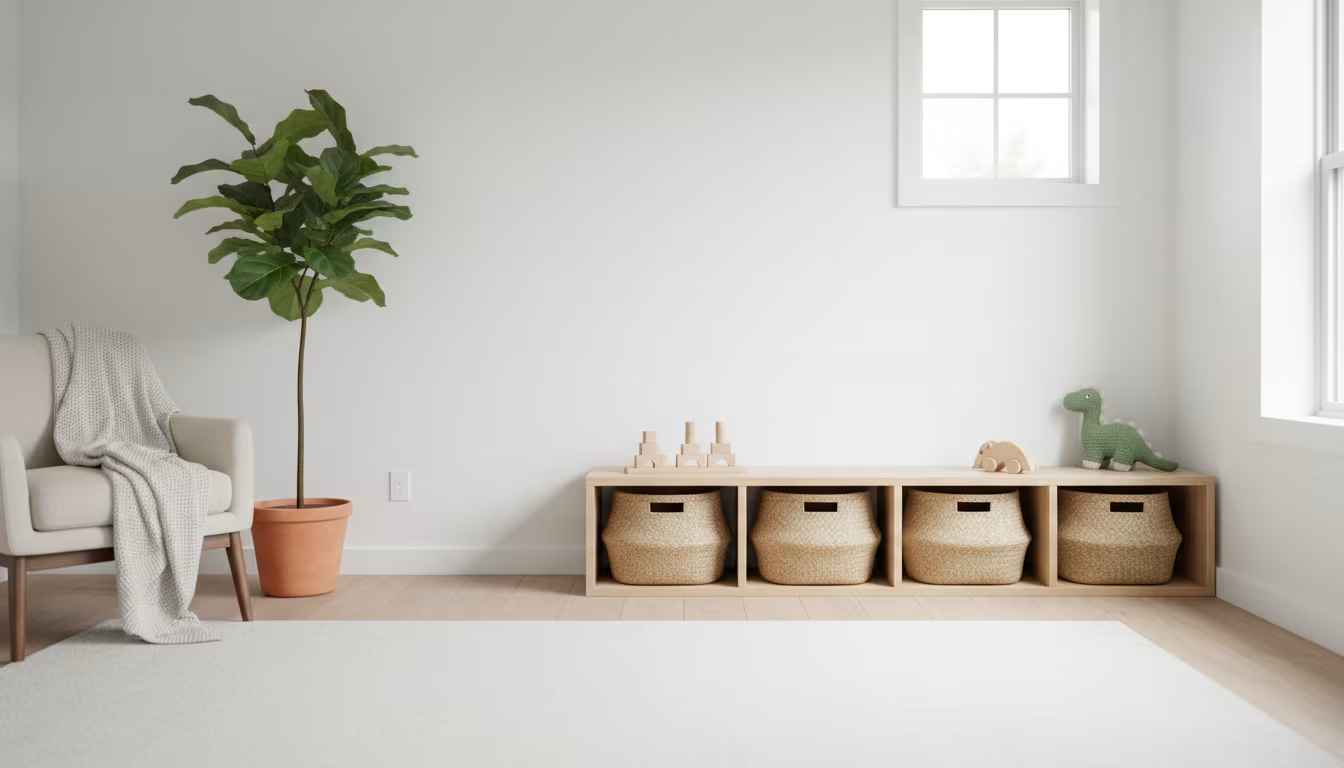
For kid toys, it’s a lifesaver. All the cars in one bin, all the blocks in another. It teaches them where things belong, even if they sometimes forget.
Step 5: Label Everything (Yes, Everything)
Seriously, even if you think you’ll remember. You won’t. Especially when you’re tired, or someone else in the family is trying to find something.
Dollar Tree often has cheap labels, or you can just use a Sharpie and some masking tape. It doesn't have to be fancy. It just has to be clear.
Label your clear bins, your opaque baskets, the shelves. This is especially helpful for things you don’t use every day, like seasonal items or back stock of toiletries.
It also helps keep your family accountable. My husband used to ask me where the damn batteries were every single time. Now? There's a bin labeled "Batteries," and he knows where to look. Pure magic.
Step 6: Integrate with Existing Systems
You probably already have some organization going on, even if it’s just a vague idea. Don't throw out everything you already have.
See how your new dollar store bins and baskets can work with what you're already using. Maybe you have a nice big basket, and now you can put smaller dollar store bins inside it to compartmentalize.
The goal isn't to replace everything, but to supplement and improve what's already there. It's about making your system more functional and sustainable, not completely overhauling it every time.
Step 7: Start with High-Impact Areas
Don’t start with your perfectly neat linen closet (unless that’s truly your pain point). Start with the area that makes you groan every time you look at it. The one that causes the most daily stress.
For me, it was my kitchen pantry. Absolute hell. Snacks everywhere, pasta spilling out, half-eaten boxes of crackers. That was my first big dollar store organization project.
Tackling that messy spot first gives you the biggest emotional win. You’ll feel a sense of accomplishment that will motivate you to keep going. It’s like clearing a traffic jam on your busiest mental highway.
Step 8: Be Patient with Yourself and Your Family
This isn't a one-and-done kind of thing. Life happens. Kids happen. Things will get messy again, and that’s totally normal.
The system you set up isn’t rigid; it’s a guideline. If something isn't working, don't be afraid to adjust it. Maybe that bin of sensory toys needs to be moved to a different shelf. Maybe those snack bins aren't practical for your toddler.
Organization is an ongoing process, a continuous loop of decluttering, organizing, maintaining, and tweaking. It’s a marathon, not a sprint. And honestly, it's never perfect, and that's okay.
Making It Stick / Common Mistakes
So you’ve got your dollar store bins, your labels, your zones. Everything looks great for about three days. Then what?
This is where most people get tripped up. Maintaining the system is often harder than setting it up. It requires consistent, small efforts.
One of the biggest mistakes I made was buying too many organizational products. I'd see a cute bin and think, "Oh, I'll find a use for that!" No, Eleanor. No, you won't. That's just more clutter.
Organization isn't about having a pretty container for every single thing. It's about having less stuff, period.
Another common mistake is trying to make everything perfect. Let's be real, with kids, perfection is a myth. There will always be a rogue toy or a misplaced item.
Aim for "functional enough" not "magazine-worthy." If your system helps you find things, clean up faster, and generally reduces your stress, it’s working. Don't beat yourself up if it's not always spotless.
Don't be afraid to change things up. If a system isn't working for your family, ditch it and try something else. Maybe a toy rotation system isn't working, and a simple "all toys in one big bin" works better for your kids right now. That's fine.
The point is to adapt. Your family's needs change as kids grow, so your organization will need to evolve too. Be flexible.
Frequently Asked Questions
I've had some dollar store bins for years, especially for things like pantry items or cleaning supplies. Just give items a quick once-over for cracks before you buy them.
Having a designated spot for everything means they (and you!) know where things belong, making cleanup less of a "where do I even put this?" headache. Plus, involving them in the cleanup process, even if it's just one bin, helps them learn.
You might want nicer, more permanent solutions for high-visibility areas like your main living room bookshelf. But for closets, drawers, under sinks, and pantries? Absolutely. It’s a fantastic starting point.
Don't expect to overhaul your entire kitchen in one go unless you have a child-free weekend and a lot of caffeine. Break it down into manageable 30-60 minute sessions.
Also, I'd generally steer clear of anything with super thin, brittle plastic, especially if it's going to hold heavy items or be frequently handled by little ones. Functionality over fleeting cuteness, always.
Thrift stores can also be a goldmine for baskets, jars, and containers. The key is just looking for simple, functional items that fit your space and your needs, regardless of where they come from.
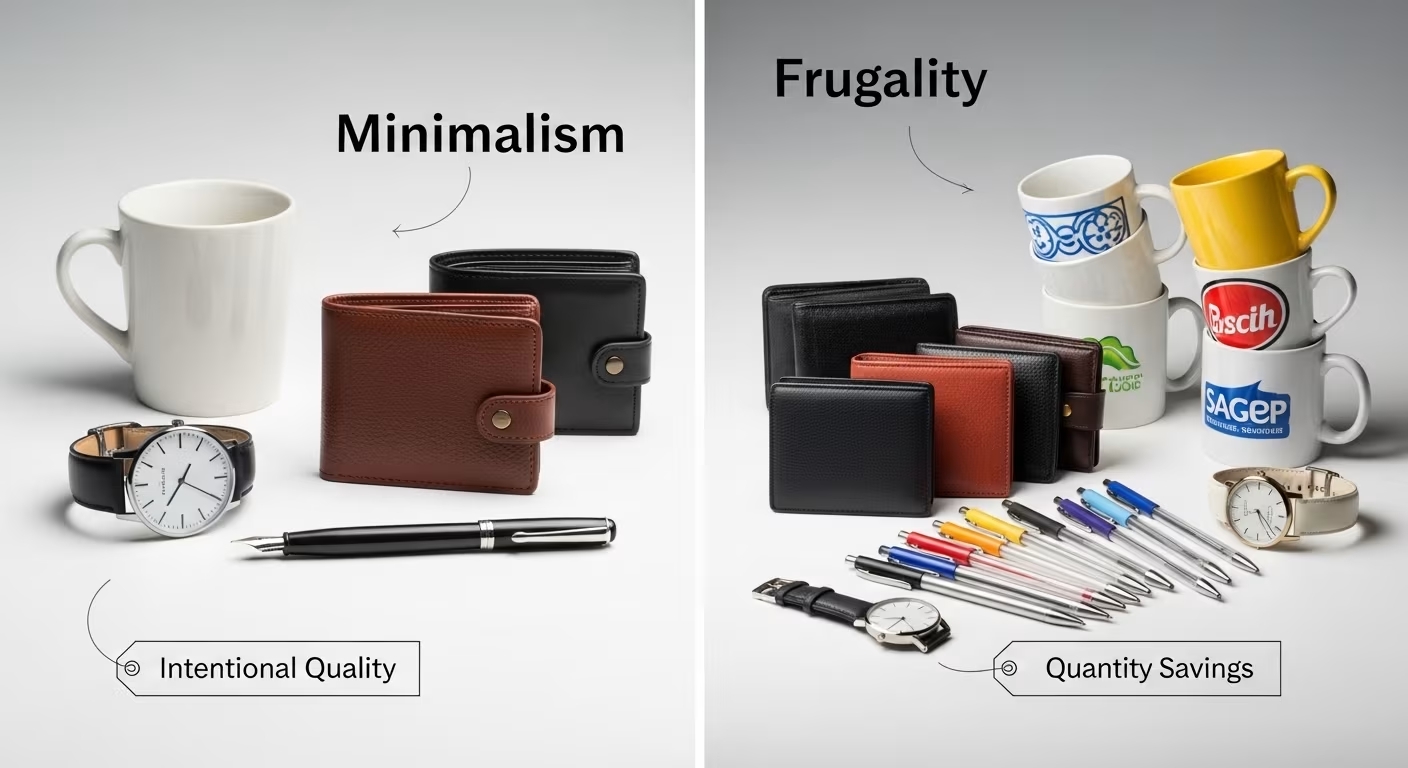
Once they see how much easier it is to find their tools, or how much clearer their workspace is, they'll usually start coming around. Small, visible wins are far more persuasive than a lecture on minimalism.
The Bottom Line
You don't need a massive budget or a perfectly curated home to feel more in control of your space. You just need a plan, a little bit of time, and the willingness to declutter first.
The dollar store isn't just for party favors and impulse buys. It's a surprisingly effective resource for creating systems that simplify your daily life.
Start small, mama. Pick one drawer, one shelf, one messy cabinet. Get it done. And then, maybe, reward yourself with a dollar store treat. You've earned it. 👋