
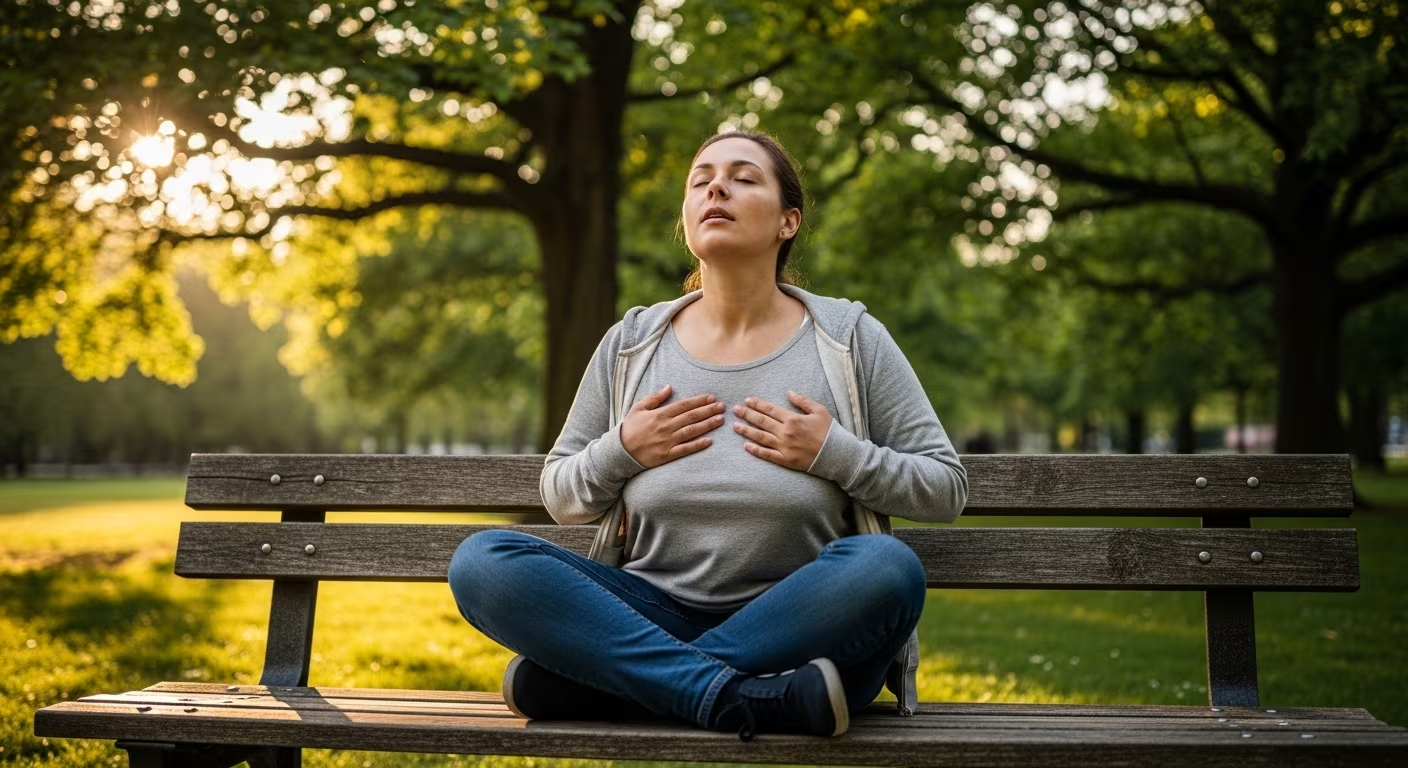

The stress management industry sells products — supplements, apps, devices, courses — that address the same problems that free techniques address effectively. The free techniques have more research behind them than most marketed products and are available immediately, without any purchase, subscription, or delivery wait.
Why Breathing Changes Stress Physiology Immediately
The mechanism behind breathing-based stress reduction is physiological rather than psychological. The autonomic nervous system has two branches: the sympathetic ("fight or flight"), which increases heart rate, muscle tension, and cortisol, and the parasympathetic ("rest and digest"), which produces the opposite effects. Breathing is the only autonomic function that can be voluntarily controlled, which means it's a direct intervention point for shifting between these states.
Specifically, the exhalation phase of breathing activates the vagus nerve, which in turn activates the parasympathetic branch. A longer exhale relative to the inhale produces a stronger parasympathetic response than equal-length breathing. This is the physiological reason why slowing down and lengthening the out-breath reduces the physical sensation of stress — it directly changes the nervous system state, not through placebo or cognitive framing.
The Physiological Sigh

The physiological sigh is a naturally occurring breathing pattern the body uses to offload accumulated carbon dioxide from the lungs, which builds up during sustained stress and shallow breathing. Doing it voluntarily produces rapid stress reduction.
The pattern: two short inhales through the nose (the second one on top of the first, filling the lungs maximally), followed by a long, slow exhale through the mouth. One to three repetitions. The whole thing takes under thirty seconds and produces an immediate reduction in subjective stress and heart rate for most people.
This technique was studied in a 2023 paper published in Cell Reports Medicine comparing different breathwork practices. The exhale-focused breathing pattern (cyclic sighing — similar to repeated physiological sighs) produced greater improvement in mood and reduction in physiological arousal than mindfulness meditation over a one-month comparison period.
Box Breathing
Box breathing uses equal time periods for each phase: inhale for four counts, hold for four counts, exhale for four counts, hold for four counts. One round takes approximately sixteen seconds at a moderate pace. Four to five rounds takes about one minute.
The hold after the exhale is the element that distinguishes box breathing from simple slow breathing and is the phase that most effectively activates parasympathetic response. It extends the moment of maximum vagal activation before the next inhale begins.
Box breathing is used by various groups — military, first responders, surgeons — for acute stress situations because it works quickly, can be done anywhere, and doesn't require any preparation or equipment. It doesn't look unusual from the outside, which makes it practical in situations where visibly doing breathing exercises would be inappropriate.
Walking as Regulated Exposure to Stress Reduction

Walking, particularly in outdoor environments, reduces cortisol and produces mood improvements through several mechanisms: bilateral rhythmic movement activates the same neural pathways used in EMDR therapy for trauma processing; exposure to natural environments produces measurable reductions in stress biomarkers; and the mild cardiovascular load of walking releases endorphins without the intensity that can itself become stressful.
A 20-minute walk in a green environment — a park, a tree-lined street, any outdoor space with vegetation — has been shown to reduce cortisol levels measurably. This doesn't require a pristine natural setting; a neighborhood walk with trees produces similar effects to a forest walk in studies comparing urban and semi-natural environments.
Walking without audio input (podcast, music) allows the mind to process background thoughts and concerns, which reduces the rumination that persists when those thoughts are suppressed or crowded out. The walk that feels less "productive" because you're not listening to anything is often more stress-reducing than one spent consuming audio content.
Writing as Cognitive Offload
Stress accumulates in part from the load of holding multiple unresolved concerns simultaneously. Writing those concerns down — not journaling in an elaborate sense, but simply listing what's currently worrying you — reduces the cognitive load of holding them in working memory.
The mechanism is similar to writing down a task list: the brain maintains active surveillance of unresolved items, and externalizing them (putting them on paper or screen) allows that surveillance to relax, reducing background anxiety. A 2011 study published in Science found that students who wrote about upcoming concerns before a high-stakes test performed significantly better than those who didn't — the writing freed cognitive resources from anxiety-monitoring back to the task itself.
This doesn't require elaborate journaling or self-reflection. Five minutes of writing "what is currently on my mind that I haven't resolved" before a stressful period or before attempting sleep is sufficient to produce the offload effect.
Physical Tension Release

Stress produces muscle tension, particularly in the jaw, neck, shoulders, and hands. Releasing this tension deliberately produces downstream relaxation throughout the body through a mechanism called progressive muscle relaxation, though the full progressive relaxation protocol isn't required.
Effective short version: notice where you're holding tension (jaw clenched? Shoulders raised? Hands gripping?), actively release that tension while exhaling, and repeat twice. The first release often doesn't fully resolve the tension; the second and third attempts typically do. Combined with a slow exhale — the parasympathetic activator — this takes under two minutes and produces measurable reduction in subjective stress.
What These Have in Common
All of the above work by directly changing physiology rather than by changing thought. This is worth noting because the cognitive approach to stress management — identifying irrational thoughts, reframing situations, building perspective — is real and useful, but it requires cognitive capacity that's often limited during high stress. The physiological approaches work even when thinking clearly is difficult, which is exactly when stress management is most needed.
Combining Techniques for Acute Stress

Single techniques work for mild to moderate stress and for maintenance. Acute stress — the kind produced by a difficult conversation, unexpected bad news, or a high-stakes situation — benefits from combining physical and cognitive approaches.
A practical sequence for acute stress: physiological sigh (30 seconds), brief walk if possible or brief standing and moving in place (2–5 minutes), write the core concern in one sentence (2 minutes). This sequence addresses the physiological arousal, produces brief movement that processes stress hormones, and externalizes the specific concern so the brain doesn't have to hold it continuously.
The sequence doesn't require privacy or elaborate setup, which makes it practical in the actual situations where it's needed. The physiological sigh can be done at a desk or in a hallway; the brief movement can be a walk to a different part of the building; the one-sentence writing can be in a phone notes app. The totality takes under ten minutes and produces noticeably different physiological and cognitive states than the same ten minutes spent trying to push through.
Why These Work Better Than Distraction
Distraction — using entertainment, conversation, or activity to take your mind off stress — produces temporary relief by occupying attention and preventing dwelling on stressors. It works in the short term and produces no durable change in the underlying physiological state.
The techniques above work differently. Breathing-based techniques directly change the nervous system state, producing a shift in the physical symptoms of stress rather than just occupying attention away from them. Walking produces neurochemical changes that outlast the walk itself. Writing reduces the cognitive load that the stress is generating rather than covering it. Each of these produces an effect that persists after the technique has stopped, rather than returning to the previous state as soon as attention is freed.
This distinction matters when deciding which approach to use. For a brief moment of frustration or anxious thought that needs temporary management, distraction is adequate. For sustained, persistently high stress that's affecting sleep, decision-making, or relationships, techniques that change the underlying state are more appropriate.



Comments
No comments yet.