
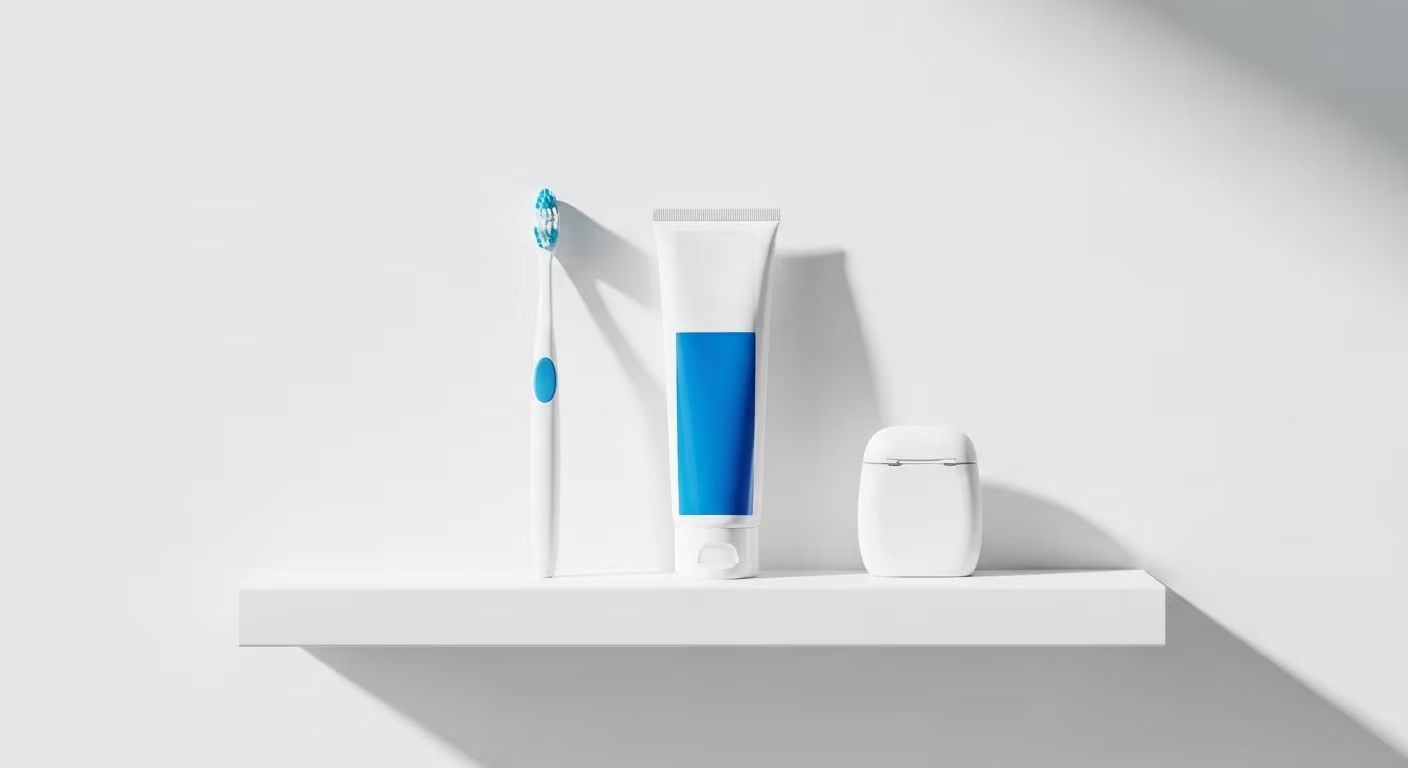

Most people's dental routines involve brushing twice daily and flossing occasionally, with some guilt about the flossing. The actual minimum effective routine — the one that addresses the primary causes of tooth decay and gum disease — is simpler to understand and more specific to implement than most people realize. The products are cheap. The techniques matter more than the tools.
What Causes the Problems You're Trying to Prevent
Tooth decay and gum disease both originate with dental plaque: a biofilm of bacteria that forms continuously on tooth surfaces. Plaque that remains undisturbed for 24–48 hours hardens into calculus (tartar), which can't be removed by brushing or flossing and requires professional scaling. The goal of daily oral hygiene is to disrupt plaque before it calcifies — not to eliminate all bacteria, which isn't possible, but to prevent accumulation from becoming permanent.
The areas plaque accumulates most effectively and causes most damage are the gumline and the spaces between teeth. These are exactly the areas that brushing misses and flossing addresses. This is why flossing, despite being widely skipped, matters disproportionately to its difficulty.
Brushing: What Actually Works

Brush twice daily for two full minutes each session. This is the ADA recommendation, and the research supporting two minutes is specific — most people brush for 45–60 seconds when brushing "normally," which leaves significant surface area uncleaned.
Hold the toothbrush at a 45-degree angle to the gumline and use small circular or gentle back-and-forth strokes, not long scrubbing strokes. The 45-degree angle aims bristles at the gumline where plaque accumulates; the gentle motion avoids the enamel erosion and gum recession that aggressive horizontal scrubbing causes over time. Electric toothbrushes with oscillating or sonic heads do this work more consistently and with less technique-dependence than manual brushes — the evidence for their superiority in plaque removal is reasonably consistent across studies.
Fluoride toothpaste is the active ingredient that matters. The fluoride concentration in standard over-the-counter toothpaste in most countries is sufficient for cavity prevention; premium or specialty toothpastes don't add meaningfully to this. The toothpaste brand is largely irrelevant.
Flossing: Order Matters More Than Most People Know
Floss once per day. The ADA recommends this as minimum effective frequency for interdental cleaning. The specific mechanism: flossing disrupts the plaque accumulated in the interdental space (between teeth) and along the gumline in areas the toothbrush can't reach. Not flossing leaves these areas largely unaddressed.
A finding from research that most people don't know: flossing before brushing produces better outcomes than flossing after. The logic is mechanical — flossing dislodges plaque and food debris from the interdental spaces, and subsequent brushing removes that debris from the mouth. Brushing first and then flossing leaves the dislodged debris in the mouth with no subsequent step to remove it.
Technique: use approximately 18 inches of floss, winding most of it around the middle fingers of each hand, which gives clean sections to advance as you move between teeth. Slide the floss gently between teeth — don't snap it against the gumline — and curve it into a C-shape around each tooth, moving it slightly under the gumline on both sides before sliding it out.
What the Products Actually Do

Mouthwash is not a substitute for brushing or flossing. Antibacterial mouthwash (containing chlorhexidine, cetylpyridinium chloride, or essential oils) can reduce bacterial load in the mouth, but it doesn't disrupt the biofilm physically the way mechanical cleaning does. Fluoride mouthwash provides supplemental fluoride benefit. Neither is required in a basic routine — they're useful additions, not replacements.
Tongue scraping removes bacteria and food residue from the tongue surface, reducing the bacteria count in the mouth overall. A metal tongue scraper is more effective than a toothbrush used on the tongue. This takes thirty seconds and is a useful addition, particularly for people concerned about breath. It's not required for dental health.
Whitening toothpastes use abrasives or low concentrations of bleaching agents. Abrasive formulas polish surface stains but cause enamel wear with prolonged use; bleaching formulas require time in contact with tooth surface to be effective. For genuine whitening, professional or at-home tray treatments are more effective than toothpaste.
Frequency and Professional Care

Two dental cleanings per year is the standard recommendation for adults without significant gum disease risk. Professional cleaning removes calculus that has formed despite adequate home hygiene — every person accumulates some, regardless of technique. This is not negotiable in the same way home hygiene is: professional scaling and examination catch problems before they become significantly more expensive to treat.
If professional cleaning has been skipped for several years, one cleaning will often not be sufficient — the accumulated calculus may require deep cleaning (scaling and root planing) that addresses the roots below the gumline. Getting current and maintaining the biannual schedule from that point forward is the correct approach.
The Simplest Adequate Routine
Floss all teeth (one minute). Brush two minutes at 45 degrees to the gumline. Rinse with water. This takes three to four minutes twice daily and addresses the primary causes of dental disease consistently. Everything else is optional, useful for specific situations, or aesthetic.
The routine doesn't require expensive products — any soft-bristled toothbrush, any ADA-approved fluoride toothpaste, and standard floss are sufficient. The techniques applied consistently matter more than the brand of anything.
What to Skip

Many dental products are optional at best. Mouthwash adds marginal benefit when brushing and flossing technique are adequate. Charcoal toothpaste is abrasive and removes surface stains by abrading enamel — effective short-term and damaging long-term. Oil pulling has no meaningful evidence for claims beyond mild mechanical action. Water flossers are useful for people with limited dexterity or orthodontic appliances but aren't superior to string floss for most people.
The product that does have clear evidence beyond basics: fluoride. If the water supply in your area isn't fluoridated, fluoride toothpaste and a fluoride rinse provide measurable cavity protection that extends beyond standard brushing. This is worth confirming with your dentist given that fluoride levels vary by municipal supply.
Sensitive toothpaste containing potassium nitrate or stannous fluoride provides genuine relief for tooth sensitivity by blocking the tubules in dentin that transmit pain signals. If sensitivity is a concern, this is a product with actual mechanism behind it, not a marketing category.
Handling Dental Anxiety
Dental anxiety is more common than most people acknowledge, and it frequently causes people to delay or avoid professional care until pain forces action — which is consistently the scenario that produces the most expensive and invasive treatment. The avoidance-delay-crisis cycle is the expensive version of dental care.
If dental anxiety has caused a gap in professional care, calling a dental practice and describing the anxiety level before scheduling is a useful first step. Many practices have specific protocols for anxious patients: slower explanations, more frequent check-ins during procedures, or numbing options that were standard of care improvements in the last decade. Describing the concern removes the uncertainty of how the practice will respond, which is often its own source of anxiety.
The longer the gap since your last professional cleaning, the more important it is to return — not to catch up on missed appointments in a single session, but because early-stage decay and gum disease are reversible in ways that advanced stages aren't. A small cavity caught at a biannual cleaning is a filling. Left two or three years, it may be a crown or a root canal. The math on regular professional care is straightforward once you run it.


Comments
No comments yet.