
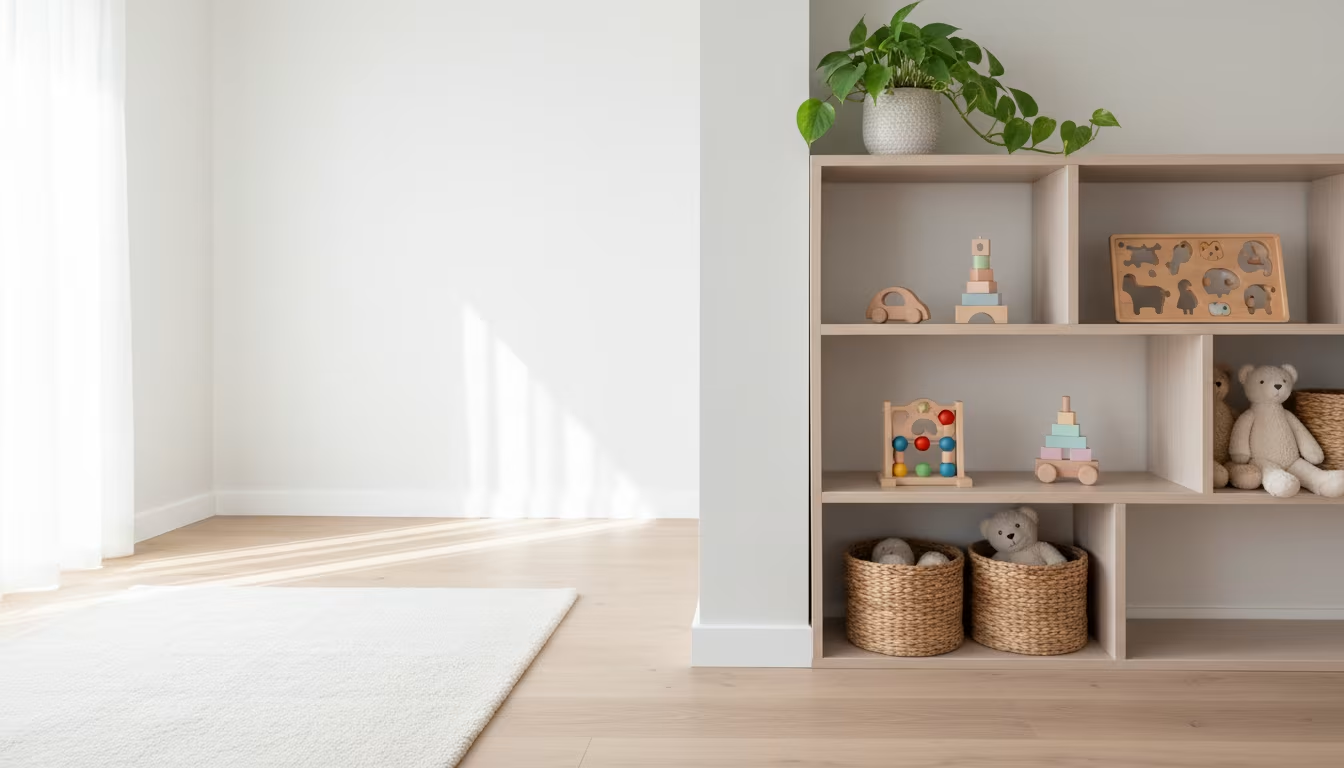

Most decluttering projects stall for the same reason: they need a block of time, a decision to start, and enough mental energy to make dozens of keep-or-toss choices in a row. That combination is rarely available all at once, so the project gets scheduled, delayed, rescheduled, and quietly abandoned while the house looks about the same as before. The one-box method sidesteps all of it by never requiring a session. It runs in the background of ordinary life.
How the Method Works
Put a box, bin, or bag in a fixed, easy-to-reach spot — the bottom of a closet, a corner of the laundry room, a basket by the door. That is the outbox. Any time normal daily life turns up something you no longer use, need, or want, you drop it in. No sorting, no evaluating the other things around it, no session. One item, into the box, and you carry on with whatever you were doing.
When the box is full, it leaves the house — a donation center, a friend who needs the item, a local free group. The destination matters less than the steady outflow. Then the box returns to its spot and starts filling again. That is the whole method: one fixed box, filled gradually through everyday noticing, emptied when full.
Why Continuous Beats the Occasional Purge
The usual approach is the big periodic session: clear a whole room in an afternoon, decide about an entire category at once, then leave the result untouched until the next session months later. That works as a one-time reset and poorly as a maintenance system. Between sessions, objects come in faster than they leave, so the clutter drifts back to its old level.
The one-box method matches outflow to the rate at which things are noticed as no longer needed, which is constant rather than seasonal. On any given day, using a normal household, there are things in plain view that have lost their job: the gadget used twice, the finished book you won't reread, the cable for a device you no longer own, the coat tried on and rejected every winter for three years. Each of those is a decision already effectively made — the deliberation happened the last time the item was used and found wanting. The box only has to receive it.
What Belongs in the Box, and What Doesn't
The outbox is for items where the decision to let go has, in practice, already been made. It is not a tool for forcing hard calls. Push genuinely undecided things into it and you create regret and the urge to fish them back out, which erodes trust in the whole system. The box is for what you already know.
| Situation | Into the outbox? |
|---|---|
| Coat unworn for two winters | Yes |
| Kitchen tool used twice since you bought it | Yes |
| Duplicate of something you already own | Yes |
| Gift kept out of guilt, never used | Yes |
| Seasonal item you haven't reached yet this year | No — not yet |
| Something you "might need" | No — still undecided |
| Sentimental object | No — needs deliberate review |
The right-hand column is the guardrail. Anything that still needs thinking — a possible future use, a sentimental weight, a seasonal item you simply haven't reached — stays out of the box and goes through its own, slower consideration. Keeping those out is what makes dropping the easy items in feel painless.
The Retrieval Window

Part of what makes the box easier than a permanent purge is reversibility. Items in it aren't gone; they're staged. If you drop something in and want it back within a day or two, you retrieve it with no consequence. In practice, retrieval is rare, and the pieces that do come back are usually the ones you were right to hesitate on — a seasonal item, something still genuinely needed once in a while. The act of pulling it back isn't a failure; it's information, moving a truly undecided item into deliberate consideration. For more detail, it is worth checking Penn State Extension.
A rough rule holds: anything not retrieved within a week of going in rarely should be. The window of reconsideration has passed, and the box leaving the house is the correct result. If you find yourself retrieving several items from every box, that's a useful signal too — it means things are going in before the decision is really settled, and the fix is to be slightly stricter about what counts as already decided, not to abandon the method.
Where to Put the Box
Location decides the method's success more than anything else. The box has to be reachable in one or two steps — opening a door, lifting a lid, or squeezing past obstacles adds enough friction to kill consistent use. It also has to be visible enough to stay top of mind without being in the way. A basket near an entryway or the bottom of a hallway cupboard works; a box in the basement does not, because out of sight becomes out of mind, and the whole method depends on things going in the moment they're noticed.
Size matters too. Too small and it fills before enough accumulates to justify a donation run; too large and it takes months to fill, killing the sense of progress. A standard medium moving box or a laundry basket is about right for most homes.
Pairing It With One-In-One-Out and Shared Spaces
The box clears existing excess. To stop it rebuilding, pair it with a one-in-one-out default: when something new arrives, something in the same category goes into the outbox around the same time. A new pair of shoes means an old pair leaves; a new kitchen tool retires the one it replaces. There's nothing to track — only the habit of noticing what a new item displaces — and over time it holds the household's total roughly steady instead of letting it creep upward between purges. The two habits reinforce each other: the box gives incoming clutter a place to go, and the one-in-one-out rule keeps the rate of incoming clutter from outpacing it.
In a shared household, each person's things go through their own review before reaching the box; no one drops another adult's belongings in without a conversation, because that breeds conflict and erodes trust in the process. Children's items can work differently — some families let the child pick which old toy leaves when a new one arrives, others manage kids' things on a seasonal schedule. Either is fine, as long as nothing gets removed without the owner's say.
One optional touch some households find motivating: jot a line whenever the box goes out — "Box 1, Jan 12, about 18 items." It takes thirty seconds and makes the outflow visible. Over six months of steady use, a one-box system removes far more than most people expect, and seeing the running count makes it easy to keep going through the stretches when the box fills slowly. Start today by placing the box somewhere you pass daily, and drop in the first obvious item before you overthink it.



Comments
No comments yet.