
Hey there, friends. π
You know that feeling? The one where you trip over a math textbook, step on a rogue crayon, and then realize you can't find the history project supplies because they're buried under a mountain of library books and dried-up glue sticks?
Yeah, me too. For a while, our "homeschooling space" was less a space and more a battleground. And honestly, it made me want to throw my hands up and just outsource everything to YouTube videos.
If you're homeschooling, or even just supporting learning at home, you know the struggle. The stuff just accumulates. It's a never-ending cycle of school supplies, craft projects, and forgotten worksheets.
Today, we're gonna talk about how to reclaim some sanity. We'll chat about creating a calm, functional homeschooling space without blowing your budget or losing your mind. Think less Pinterest perfection, more "I can actually find the scissors."
Why This Actually Matters
Let's be real. When your environment feels chaotic, your brain feels chaotic. Itβs hard enough to focus when you're trying to explain fractions to a seven-year-old who's already thinking about Minecraft.
Add in visual clutter, and suddenly everyone's distracted. I used to think I was just bad at teaching. Then I realized my kids literally couldn't see the worksheet for all the junk around it.
For me, the biggest win wasn't just finding things faster. It was the shift in energy. When the space was less overwhelming, I was less overwhelmed. And that spilled over into my kids.
We started having fewer meltdowns (mine included, to be honest). Lessons felt a little smoother, and clean-up didn't feel like a Herculean task after every single subject.
Plus, let's not forget the money aspect. Buying more storage, more organizers, more "solutions" for endless stuff just adds up. Learning to live with less helps your wallet and your sanity.
The Core Idea: Less is More (even for Learning)
When I first thought about minimalist homeschooling, I pictured an empty room with a single pencil. That felt totally impossible and, frankly, kind of depressing for kids.
But minimalism isn't about deprivation. It's about being intentional. It's about creating an environment that supports learning and growth, not one that adds to your mental load.
It's about having what you need to do the work, not just having things for the sake of having them. And definitely not having duplicates of things you already own.
What "minimalist Homeschooling Space" Really Means
This isn't about creating a sterile, silent learning lab. No, thank you. This is about making your current space work harder and smarter for you and your kids.
It means every item in your learning zone has a purpose. It has a home. And it's not buried under three weeks of forgotten field trip forms.
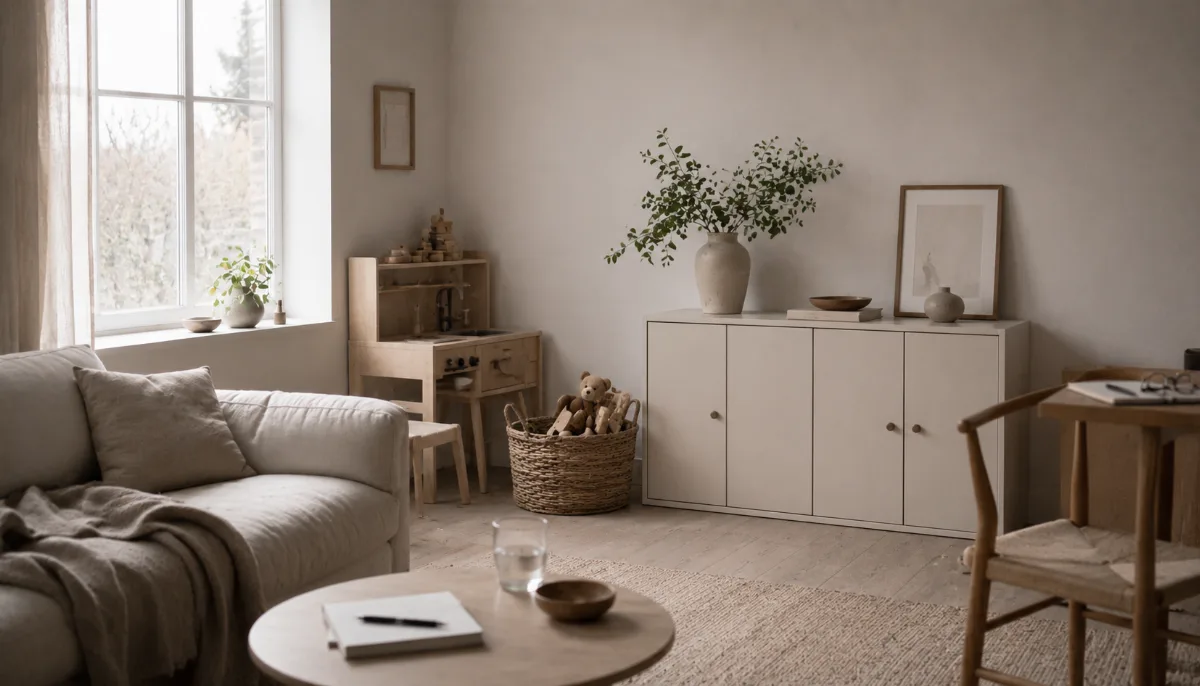
It can be a dedicated room, a corner of the kitchen, or even a rolling cart that gets tucked away. The key is that it's functional, adaptable, and most importantly, calm.
- Focus over distraction: When there's less visual noise, kids (and adults) can concentrate better. It's like turning down the volume on all the extra "stuff" screaming for attention.
- Ease of setup/cleanup: You're tired. I'm tired. We're all tired. Less stuff means fewer items to pull out and fewer items to put away. It makes daily transitions so much smoother.
- Budget-friendly by default: This approach leans on using what you have, repurposing, and buying only what's truly essential. It naturally saves you money because you're not constantly chasing new organization trends.
How to Actually do It: Your Budget-friendly Battle Plan
Alright, no more theory. Let's get down to the messy, real-life part. This isn't a race, and it won't happen overnight. But these steps will get you moving in the right direction.
Ready to finally find that protractor when you need it? Here's how I did it, and how you can too, without spending a dime unless you absolutely have to.
Step 1: the Grand Declutter (brutal, but Necessary)
This is where the magic (and a little bit of pain) begins. You absolutely cannot organize clutter. You just can't. You'll just be moving junk from one bin to another.
My first homeschool declutter session was eye-opening. I found three copies of the same math workbook, two broken staplers, and enough dried-up markers to supply a small art school. Seriously, how?
Gather everything that has anything to do with homeschooling or crafts. Textbooks, notebooks, loose papers, art supplies, globes, flashcards, games. Put it all in one spot.
Now, go through it item by item. Ask yourself: Do we use this regularly? Is it broken? Do we have duplicates? Does it genuinely support our learning goals right now?
Be ruthless. If you haven't touched that geology kit in two years, and your kids have zero interest in rocks, it's okay to let it go. You're making space for learning, not just collecting things.
Sort into three piles: Keep, Donate/Sell, Trash/Recycle. Don't let anything sit in the "maybe" pile for more than five minutes. Your gut knows.
Step 2: Define Your Zones (even if It's One Corner)
Most of us don't have a dedicated "school room." And that's totally fine. My first homeschool "space" was half our dining room table, shared with coffee mugs and yesterday's mail.
The key here is to define where learning actually happens. Is it the kitchen table for math? The living room couch for reading? A small desk in a bedroom for quiet work?
You don't need to buy a new desk or special furniture. Look at what you already have. Can a corner of the living room become the "reading nook" during school hours?
Could an under-utilized shelf in a closet hold your core supplies? Being flexible is your superpower here. We use our dining table for main lessons, but quiet reading happens wherever my kids are comfy.
The "zone" doesn't have to be permanent. It can be set up each morning and packed away each afternoon. That's a huge benefit for small homes or multi-purpose rooms.
Step 3: Smart Storage Solutions (mostly Free)
Okay, you've decluttered. Now you have a pile of "Keepers." How do you store them without spending a fortune on fancy bins and shelf units?
Look around your house. Do you have old shoeboxes? Baskets from another room? An unused magazine file? These are your new storage heroes. Cover shoeboxes with leftover wrapping paper or construction paper for a quick refresh.
Clear plastic bins from the dollar store are amazing for craft supplies. You can see what's inside, and they stack nicely. I found a couple of these years ago, and they're still going strong for our art cart.
Think vertically. If you have any empty wall space, even a small shelf or a pegboard can create tons of storage for frequently used items. Check Facebook Marketplace or local "Buy Nothing" groups for free or cheap shelves.
For textbooks and workbooks, an old milk crate or a sturdy laundry basket can do the trick. The goal isn't pretty, it's functional. And cheap.
My biggest win was finding an old, beat-up bookshelf on the side of the road. A quick clean and it was perfect for holding all our main curriculum. You really don't need to buy new.
Step 4: Curate Your Supplies (quality over Quantity)
Now that you know what you actually have, it's time to think about what you actually need. This is where I made huge mistakes in the beginning, buying all the shiny new things.
I thought we needed every color of construction paper, 20 different kinds of markers, and a professional-grade laminator. News flash: we didn't. Most of it sat there, unused, taking up space.
Focus on high-quality basics. A good set of colored pencils, a decent pair of scissors, a reliable glue stick, and plenty of plain paper. These are your workhorses.
Instead of five different types of glitter glue, maybe just one bottle for special projects. Instead of a giant bin of random craft scraps, keep a smaller, curated box of useful bits.
Before you buy anything new, check your "Keep" pile. Use up what you have first. Get creative with what's already in your house. Empty toilet paper rolls are surprisingly versatile, just saying.
Make a list of true essentials. Stick to it. Don't get swayed by the school supply aisles in August. It's a trap, I tell you.
Step 5: Embrace the Digital (smartly)
In this day and age, there's a treasure trove of learning resources online. And many of them are completely free or super low-cost. This is a huge win for minimalist, budget-friendly homeschooling.
Think beyond physical books. Your local library likely offers tons of e-books, audiobooks, and even online databases for free. Educational websites, YouTube channels, and free apps can supplement your curriculum without adding a single physical item to your space.
We use a lot of online curriculum for science and history, which means fewer textbooks cluttering up our shelves. Plus, it's super convenient for travel or learning on the go.
A word of caution here: it's not about turning your kids into screen zombies. Balance is key. But strategically incorporating digital resources can significantly reduce your physical footprint and save you a decent chunk of change.
Many online tools also offer interactive elements that physical workbooks can't. Just make sure the content aligns with your family's values and learning style.
Step 6: Decorate with Purpose (not Just Cuteness)
Your homeschooling space doesn't need to look like a classroom straight out of a magazine. Again, that's a trap. But it should be inviting and stimulating.
Instead of decorative knick-knacks, think about items that genuinely aid learning or inspire creativity. A large whiteboard or chalkboard is fantastic for brainstorming, practicing math, or displaying schedules. You can often find these secondhand or even make one from a painted piece of plywood.
Maps are beautiful and educational. A globe is a great conversation starter. Display your kids' current artwork or projects on a rotating basis. This makes the space feel personal and celebrated without adding clutter.
I rotate our kids' art regularly. We have a designated spot on the fridge and a simple string with clothespins. When a new masterpiece comes in, an older one gets photographed and then usually recycled (shhh, don't tell the kids I said that).
Posters of historical timelines, multiplication tables, or the alphabet can be functional decor. Look for printables online that you can print at home for free or very cheap. Pinterest is your friend here, just make sure you're finding free resources.
Step 7: the "one In, One Out" Rule (your Sanity Saver)
This is probably the hardest rule to stick to, but it's crucial for preventing clutter creep. For every new item that comes into your homeschooling space, an old item must leave.
Did Grandma buy your child a new craft kit? Awesome! But now we need to decide which old, half-used craft kit is going to be donated or tossed. It's tough, especially with gifts.
This rule applies to textbooks, workbooks, art supplies, and even games. If you're getting a new history curriculum, what's happening to the old one? Can it be sold, donated, or passed on?
It's a continuous conversation, especially with kids. Frame it as "making space for new adventures" or "passing on tools to another family." It teaches them intentionality, too.
I constantly struggle with this with art supplies. A new box of markers comes in, and I have to be firm about tossing the dried-up ones that are still lurking in the bottom of the bin. It's a never-ending battle, but it's worth it for the peace of mind.
Making It Stick & Avoiding the Pitfalls
Let's be real: creating a minimalist homeschooling space isn't a one-and-done thing. Life happens. New projects emerge. Grandparents shower your kids with stuff. It's okay. It's a continuous process.
The goal isn't perfection. It's progress. It's creating habits that keep the chaos at bay more often than not. And giving yourself grace when the art supplies explode again.
"A minimalist space isn't about being empty; it's about being intentional. It's about making room for what truly matters, not just what fits."
One common mistake I made was expecting everything to stay perfectly organized all the time. Nope. That's just not reality with kids. My rule now is: it's okay for things to get messy during lessons, as long as we reset at the end of the day.
Another pitfall is trying to do it all at once. That's a recipe for burnout. Pick one small area. Maybe it's the art supply drawer. Or the textbook shelf. Tackle that, feel the win, then move on.
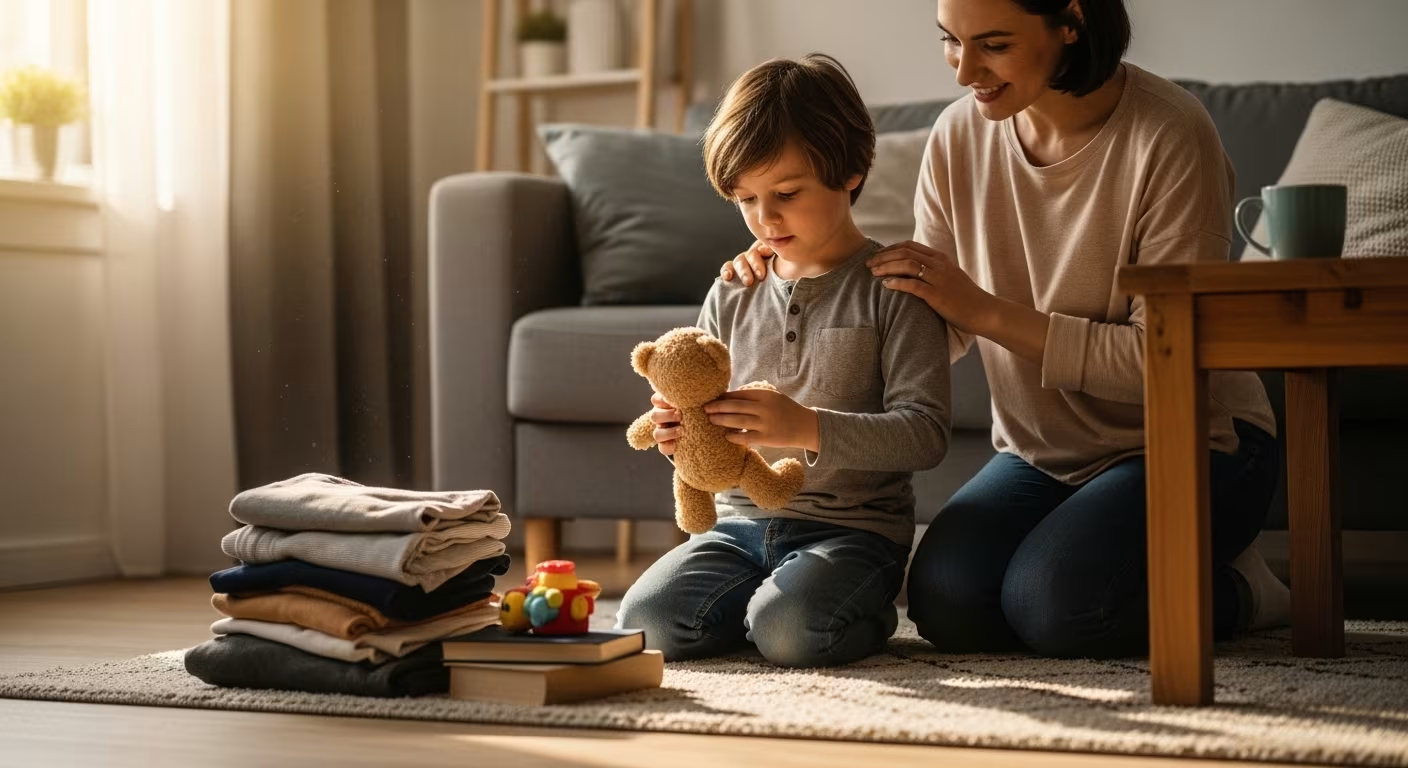
Don't forget to involve your kids. They're more likely to respect and maintain a space if they've had a hand in creating it. Let them decide which sentimental items to keep (within reason, obviously).
And please, please, please don't fall into the trap of thinking you need to buy all new "minimalist" organizing systems. That defeats the entire budget-friendly purpose. Use what you have. Be resourceful.
Frequently Asked Questions
For the physical keepers, designate one "memory box" per child. When it's full, something has to leave to make room for new treasures. It teaches them about prioritizing what really matters.
Flexibility is key. Use baskets or bins that can be quickly pulled out and then tucked back into a closet or under a bed. Your space can totally do double duty, or even triple duty, without feeling chaotic.
My Kids are Really Resistant to Decluttering. Help!
Oh, tell me about it. My kids cling to everything. Don't make it a punishment. Frame it as "making space for new adventures" or "organizing our tools so we can find them faster."
Start small and let them lead. Focus on their own stuff, not communal supplies. "Pick your top five favorite drawings to keep, and we'll photograph the rest!" Make it a game, not a chore. Kids respond well to challenges, not demands.
Don't try to tackle everything at once. Break it down into small, manageable chunks. One shelf today, one drawer tomorrow. You'll avoid burnout and actually see progress, which keeps you motivated.
Plus, the skills you learn from decluttering and organizing will serve your family long after your homeschooling journey ends. It's about creating systems for your home, not just for school.
The Bottom Line
Look, homeschooling is hard enough without having to constantly hunt for supplies or feel overwhelmed by clutter. Creating a minimalist homeschooling space isn't about being perfect or having a pristine, Instagram-worthy room.
It's about making your life easier. It's about reducing stress, increasing focus, and teaching your kids valuable lessons about intentionality and resourcefulness. And doing it all without spending a fortune.
So, start small. Pick one drawer, one shelf, or even just one category of supplies. Tackle it. Feel the weight lift. You've got this. Give yourself some grace, and just start somewhere. β¨