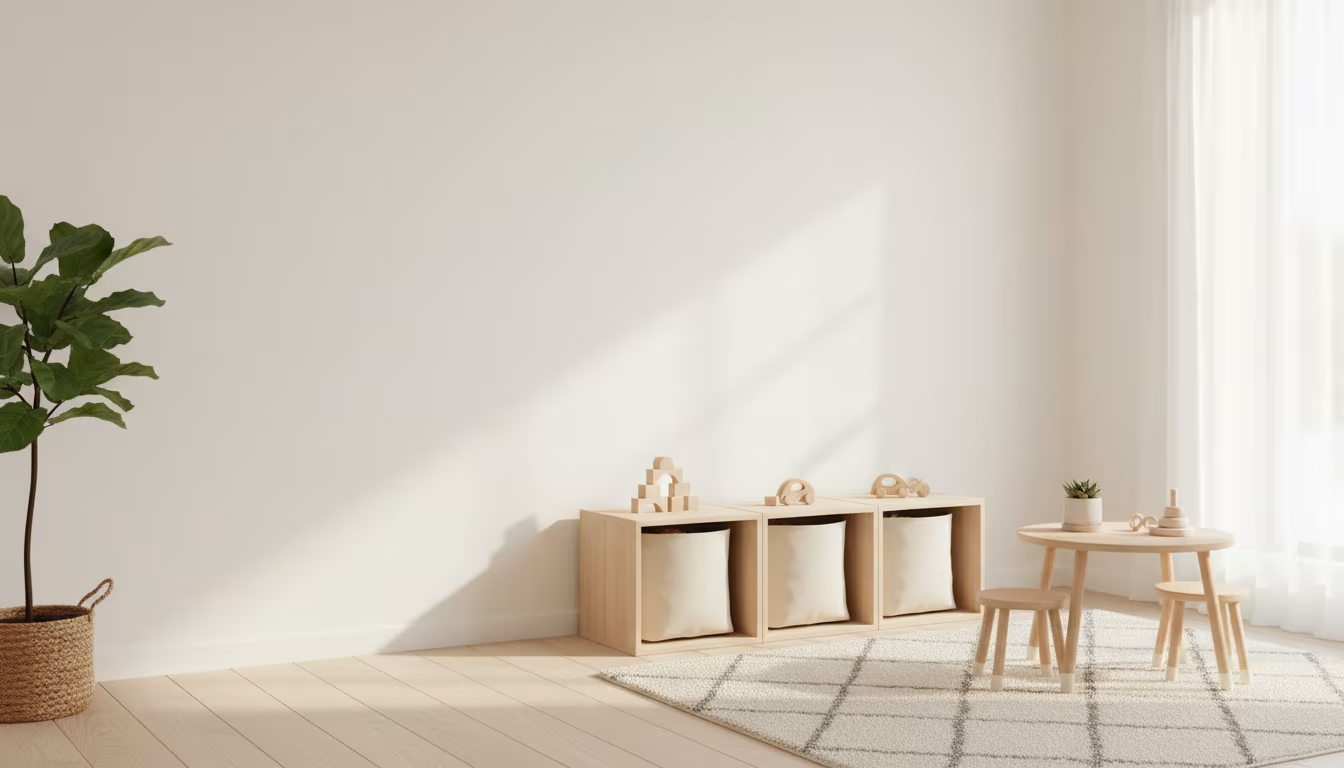

The Minimalist Guide to Creating a Calm and Intentional Nursery

I remember sitting in my first nursery, pregnant with Finn. It was beautiful, perfectly curated from Pinterest. Every little romper folded, every small sock rolled.

Then he arrived. And oh my god, the stuff. It multiplied. I was tripping over burp cloths, digging under piles of "cute but never worn" outfits, and spending precious naptime reorganizing just to feel like I could breathe.

You know that feeling? That suffocating avalanche of baby gear? It's like your tiny human, who needs so little, somehow attracts ALL THE THINGS. 👋

Today, we're going to talk about how to reclaim that space. We're gonna strip down the excess, make some tough choices, and create a nursery that actually feels like a sanctuary. For you and your baby.

We'll cover what "minimalist" actually means in this context, the exact steps to declutter, how to keep the stuff from creeping back in, and answer all those nagging "what if" questions.

Why This Actually Matters

Let's be real, you're exhausted. You're probably running on fumes, whether you're expecting or already knee-deep in diapers. The last thing you need is more visual noise and more things to manage.

When your nursery is overflowing, it's not just a messy room. It's another drain on your mental energy. Every item is a micro-decision, a dust collector, a thing to move to find what you actually need.

I distinctly remember one 3 AM feed with Finn. He was screaming, I was half-asleep, and I couldn't find the damn diaper cream. It was buried under a stack of baby blankets I never used and a mountain of tiny jeans.

That feeling of frantic searching, in the dark, with a crying baby? That's what clutter does. It steals your peace when you need it most. It adds friction to moments that should be calm and connected.

A calm, intentional nursery isn't just about aesthetics. It's about reducing your mental load. It's about creating an environment that supports sleep, feeds, and quiet moments instead of stressing you out.

It's about having less to clean, less to trip over, and more time and energy for what truly matters: connecting with your little one. Trust me, you'll thank yourself later when you're not spending naptime sorting newborn onesies.

What Even is a Minimalist Nursery?

Okay, let's clear something up right away. A "minimalist nursery" doesn't mean a stark, empty room with nothing but a crib. That sounds awful, honestly. And totally impractical.

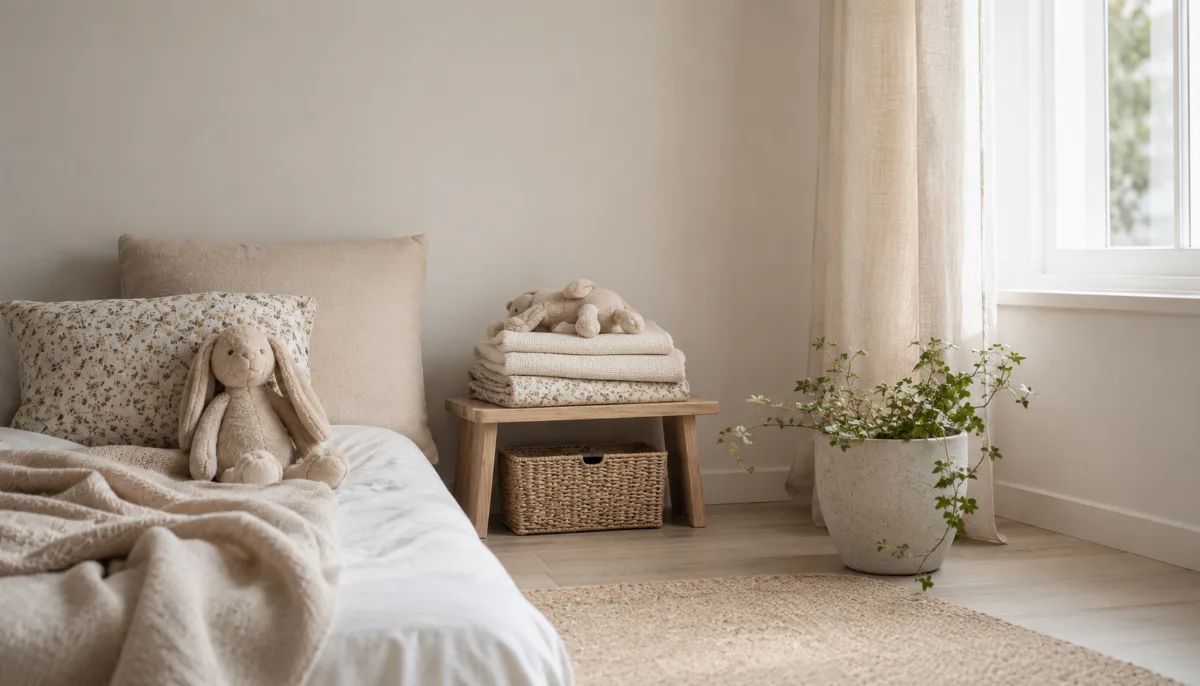
It means a nursery that's intentional. Every item in the room has a purpose, brings joy, or is genuinely needed. It's about quality over quantity, and functionality over excessive decor.

Think of it as editing your baby's space. You're curating a collection of useful, beautiful, and necessary items, rather than just accumulating everything the baby industry tells you you need.

It’s about creating breathing room. For you, for your baby, and for your sanity. It's a peaceful space where you both can relax, not an overwhelming storage unit.

Beyond the Aesthetic

The benefits of an intentional nursery go way beyond how good it looks on Instagram. Sure, it'll look lovely, but the real win is how it feels.

Less visual clutter helps everyone. For you, it means less decision fatigue. For baby, a calmer environment can mean better sleep and less overstimulation. Who doesn't want that?

It also means less cleaning. Fewer surfaces to dust, fewer things to move when you vacuum. And let's not even get started on how much easier it is to find that specific pacifier or burp cloth.

  • Function over form: Before you buy or keep something, ask yourself: What does this do? Is it truly helpful for baby's care or development?
  • Less visual clutter: Our brains crave order. A simpler space reduces cognitive load, meaning less mental stress for both you and your baby.
  • Grow with them: Think beyond the newborn stage. Can this item serve a purpose for months or even years? Avoid single-use gadgets that'll be obsolete in weeks.

How to Actually do It: the Step-by-step Declutter

Ready to get started? This isn't a race, and you don't have to do it all in one day. Pick a time when you have a bit of energy, maybe enlist your partner, and put on some good music.

Remember, this is a process. It might feel a little chaotic at first, but trust the system. You'll get there, and it'll be worth it, I promise.

Step 1: the Inventory Dump (and the Purge)

This is where we get everything out. Seriously, everything. Take all the clothes, toys, blankets, books, and gadgets out of the nursery. Pile them on the bed, on the floor, wherever.

Seeing everything you own for the nursery in one giant heap can be really eye-opening. It shows you the sheer volume you're dealing with. It's also a little terrifying, but push through.

Now, grab three bins or laundry baskets. Label them: Keep, Donate/Sell, and Trash/Recycle. Be ruthless. Ask yourself for each item:

Is this absolutely necessary for baby's care or comfort? Do I love it? Is it still useful? Does it fit?

If it's stained, broken, or you have five of them, it probably belongs in Donate or Trash. Don't keep things "just in case" or out of guilt. If you haven't used it for your first kid, you probably won't for your second.

Step 2: Focus on the "big Three" (sleep, Change, Feed)

Once you've done the big purge, let's prioritize the absolute essentials. What does your baby actually need for these core functions?

For sleep: A safe crib or bassinet, a firm mattress, a couple of fitted sheets, and maybe some swaddles. That's it. No bumpers, no excessive blankets.

For changing: A changing pad (or just a towel on the floor), diapers, wipes, diaper cream. Maybe one small basket to hold these close by. Do you need a dedicated changing table? A dresser with a pad works just as well and has a longer lifespan.

For feeding: If you're breastfeeding, a comfortable chair and maybe a small side table for water and a book. If bottle feeding, a few bottles and formula. Keep pumps and accessories in a designated, organized spot.

Build out these stations first. Make them functional, easy to access, and clutter-free. Everything else can wait. You'll realize how little you truly need in the early days.

Step 3: Clothes Closet Combat

This is usually the biggest culprit for nursery clutter. Babies grow so fast, and people love buying tiny clothes. You'll likely have enough outfits for a small army.

Here's the deal: Keep only what fits now and maybe a handful of items for the next size up. Babies wear the same few outfits on repeat, let's be honest. One cute outfit for special occasions is plenty.

Sort everything by size. Take out anything stained, ripped, or that your baby genuinely never wears. Pass on the rest to friends, donate, or sell. Don't feel guilty about it.

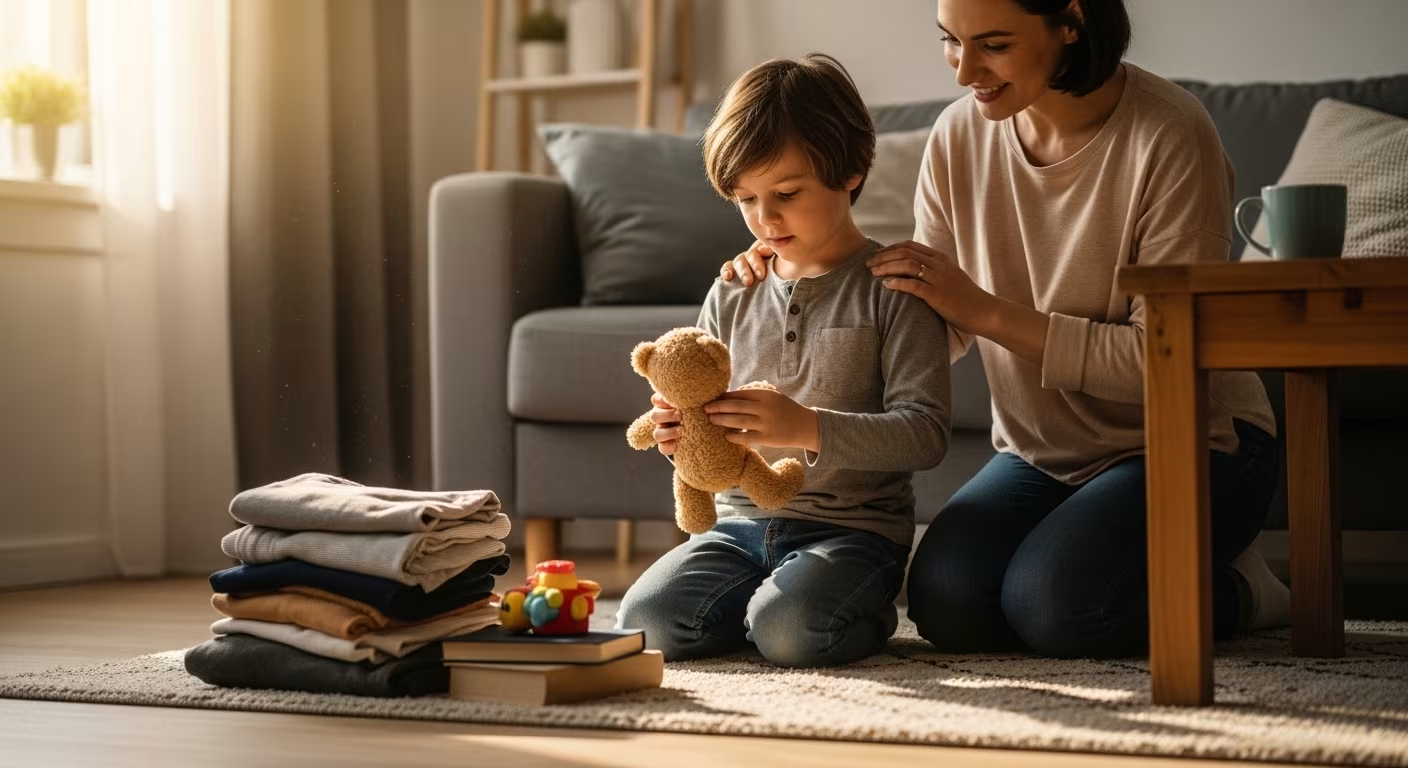
For the clothes you keep, store them simply. Fold in drawers, hang in the closet. Consider a mini capsule wardrobe for your baby: a few bodysuits, pants, sleepers, and maybe a jacket. It makes laundry and getting dressed so much easier.

I swear, I had 40 tiny newborn onesies for my first. He wore maybe seven of them before outgrowing the size in two weeks. What a waste of space and laundry time.

Step 4: Toy Taming & Rotation

Babies don't need a million toys. In fact, too many toys can be overwhelming and actually hinder focused play. Think about it: when there's too much choice, it's harder to choose.

For newborns, a few high-contrast cards, a soft rattle, and a play mat are more than enough. As they grow, slowly introduce age-appropriate toys.

The trick here is toy rotation. Instead of having all toys available all the time, keep only a small selection out. Store the rest in a bin in a closet or another room.

Every few weeks, swap them out. It's like giving your child new toys without actually buying anything. It keeps things fresh and prevents clutter from piling up on the floor.

This was a damn revelation for me. My kids actually played more with fewer toys. It helped them focus and get more creative. Plus, cleanup was a breeze.

Step 5: Decor with Purpose

Every item in the nursery should have a reason to be there. This applies to decor too. Instead of filling shelves with knick-knacks, choose meaningful pieces.

A few framed photos, a favorite piece of art, a simple mobile above the crib (removed once baby can stand). Let natural light shine through if possible. Keep window treatments simple.

Think about the overall feeling you want to create. Calm, peaceful, nurturing. Overly busy patterns or too many small, decorative items can disrupt that feeling and just collect dust.

I used to have shelves full of little ceramic animals. They looked cute, but they were just one more thing to dust, and eventually, one more thing for a curious toddler to pull down. Simplify, simplify.

Step 6: Smart Storage Solutions (less is More)

The goal isn't to buy a million bins to hold all your stuff. The goal is to have less stuff to begin with. Then, and only then, consider smart storage for what remains.

Utilize vertical space with shelves or a tall dresser. Drawers are your friend for clothes and small items. Clearly defined zones help a lot: one drawer for diapers, one for PJs, etc.

Don't be afraid to use multi-functional furniture. A dresser that doubles as a changing table. A small bookshelf that can later hold toys. A comfortable glider that works for feeds now and story time later.

Baskets can be great for containing toys or blankets, but don't just fill them with random junk. Use them intentionally for categories. One small basket for books, another for current toys.

Step 7: the Gifting Gauntlet (and How to Navigate It)

This is where well-meaning friends and family can inadvertently undo all your hard work. People love to buy baby gifts, and often they buy a lot.

Before the baby arrives, if you feel comfortable, you can gently suggest practical gifts or experiences. "We're really focusing on minimizing clutter, so gift cards, books, or contributions to a college fund would be amazing!"

After gifts arrive, be gracious, say thank you, and then be honest with yourself. If you truly don't need it, or it doesn't fit your minimalist vision, it's okay to re-gift, donate, or sell.

You don't have to keep every single item. Your love for the giver isn't measured by how many items you keep. I've donated so many duplicate items that were perfectly nice but just not needed. It's okay. Truly.

Making It Stick / Common Mistakes

You've done the hard work, the nursery is looking great. Now, how do you keep it that way? It's easy for clutter to creep back in, piece by piece. You gotta stay vigilant.

It's about mindset as much as it is about physical stuff. Every time something new comes into the house, ask yourself if it truly belongs in your curated, calm space.

Mistake 1: the "what If" Trap

"What if we need this specific swaddle for a future baby?" "What if they hate all other toys?" "What if this obscure gadget suddenly becomes essential?"

This trap leads to keeping piles of things you rarely use. Most things, if truly needed, can be bought quickly or borrowed. Don't let hypothetical situations dictate your current living space.

Keep a small "maybe" box for things you're truly unsure about. Put a date on it. If you haven't needed anything in that box after three months, it's time to let it go. No guilt, just practical action.

Mistake 2: Buying More Storage

This is a classic minimalist no-no. You think you have too much stuff, so your first instinct is to buy more bins, shelves, or containers. This only makes room for more stuff. It doesn't solve the core problem.

If you feel like you need more storage, it's a sign that you actually need to declutter more. Address the volume of items first. Once you've minimized, then consider if a well-placed basket or drawer organizer is genuinely helpful.

I learned this the hard way with my craft supplies. I bought a huge rolling cart, then filled it with even more craft stuff I rarely used. It was a damn vicious cycle.

Mistake 3: Comparisonitis

Your nursery doesn't need to look like a perfectly styled Instagram photo. Seriously, don't let those picture-perfect nurseries make you feel inadequate. They're often staged, and certainly don't reflect daily life with a baby.

Focus on functionality and peace for your family. Your nursery should feel good to you, not impress anyone else. Nobody lives in a magazine spread.

Your unique situation, budget, and preferences should guide your choices, not some idealized image. My kids' rooms are far from perfect, but they're functional and we can breathe in them. That's a win.

Mistake 4: Not Involving Partners

This isn't a solo mission, especially if your partner tends to be a collector. Get them on board early. Explain the why: less stress, easier clean-up, more time together.

Show them the physical and mental relief that comes with less stuff. It’s a shared space and a shared responsibility. You'll need their support to keep the clutter monster at bay.

My husband wasn't convinced at first, especially with sentimental items. But once he saw how much faster laundry was, and how much easier it was to find things, he became a total convert. Mostly.

A truly calm nursery isn't just about what you keep in it. It's about what you choose to keep out of it.

Frequently Asked Questions

What are the Absolute Bare Minimum Items I Need for a Newborn?
Okay, truly bare bones: A safe sleep space (crib/bassinet, firm mattress, fitted sheet), diapers, wipes, a few onesies, a couple of swaddles, formula/bottles if not breastfeeding, and a way to transport them (car seat).

Everything else is extra, or can be added as needed. Seriously. You'll manage with less than you think. Don't overbuy before baby arrives.

How do I Deal with Hand-me-downs from Friends/family?
Be grateful for the generosity, but don't feel obligated to keep everything. Filter ruthlessly. Keep the best quality items, especially essentials like bodysuits and sleepers. Say a polite thank you and explain you're minimizing.

Then, pass on what you don't need to another family, donate, or sell. It’s okay to filter out things that are stained, too worn, or just not your style. No guilt trips allowed.

My Partner Thinks This is Crazy. How do I Get Them on Board?
Focus on the benefits for them. Less time spent cleaning, easier to find things, less stress when you're both exhausted. Maybe point out how much money you'll save by not buying redundant stuff.

Start small with a highly visible win. Declutter one drawer and show them how much easier it is to find socks. Let them experience the calm. Action often speaks louder than words.

I'm worried about not having enough. What if I do need something later?

This is a common fear! But think about it: we live in a world where almost anything can be delivered to your door in a day or two. Most things aren't truly "urgent" in a life-or-death way.

Plus, you can always borrow from friends, buy secondhand, or simply realize you didn't need it after all. The peace of mind from less clutter usually outweighs the slight inconvenience of a delayed purchase.

What's the Best Way to Organize Baby Clothes by Size Without Buying Tons of Dividers?
Honestly? Simple folding and drawer space. Dedicate one drawer (or a section of a drawer) to the current size. Keep one small bin for the next size up.

As baby grows, move clothes from the "next size" bin into the current drawer, and swap out the too-small items. You don't need fancy gadgets. Just keep track of what you have and what fits.

The Bottom Line

Creating a calm, intentional nursery isn't about deprivation or being super trendy. It's about making thoughtful choices that support you and your baby during a beautiful, but often overwhelming, time.

It’s about reducing stress, saving time, and creating a peaceful haven. It’s a space where you can focus on connection, not clutter. And trust me, that's what truly matters.

You don't have to tackle it all at once. Start with one drawer, one closet, one category. Every little step makes a difference. You got this, mama. ❤️