

Sentimental objects are the last category most people reach in a decluttering project, and usually the one where the project stalls. Everything before it — unused kitchen gadgets, expired pantry items, clothes that no longer fit — only asks you to notice that something isn't serving its purpose. Sentimental items ask for something harder: recognizing that an object's emotional weight is not the same as its usefulness, and that keeping something because it's hard to release is different from keeping it because it genuinely adds to your life.
Why Sentimental Clutter Is Harder Than Ordinary Clutter
People don't value a sentimental object only for what it is; they fuse it with the experience or relationship it stands for. This isn't irrational. The object worked for years as a physical anchor for something meaningful, and the brain registers its potential removal as a small threat to the memory itself. That's why a coffee mug from a trip can feel harder to release than a coat that cost fifty times as much.
Guilt is the second complication. Gifts carry a sense of obligation that outlasts any practical use. Inherited objects add a different pressure — the feeling that the person who owned them would disapprove of the disposal, or that letting go says something about how much you valued them. Neither feeling is logically sound, and both are strong enough to freeze action for years. The move that helps most is separating two propositions that usually travel together: "I value the memory" and "I need this object to preserve the memory." The first is true for most sentimental items. The second usually isn't. The memory lives in you, not in the object; the object is a retrieval cue, useful for revisiting the memory but not the container of it. Removing it takes away a trigger, a much smaller loss than it feels like in the moment.
Photograph Before You Decide Anything
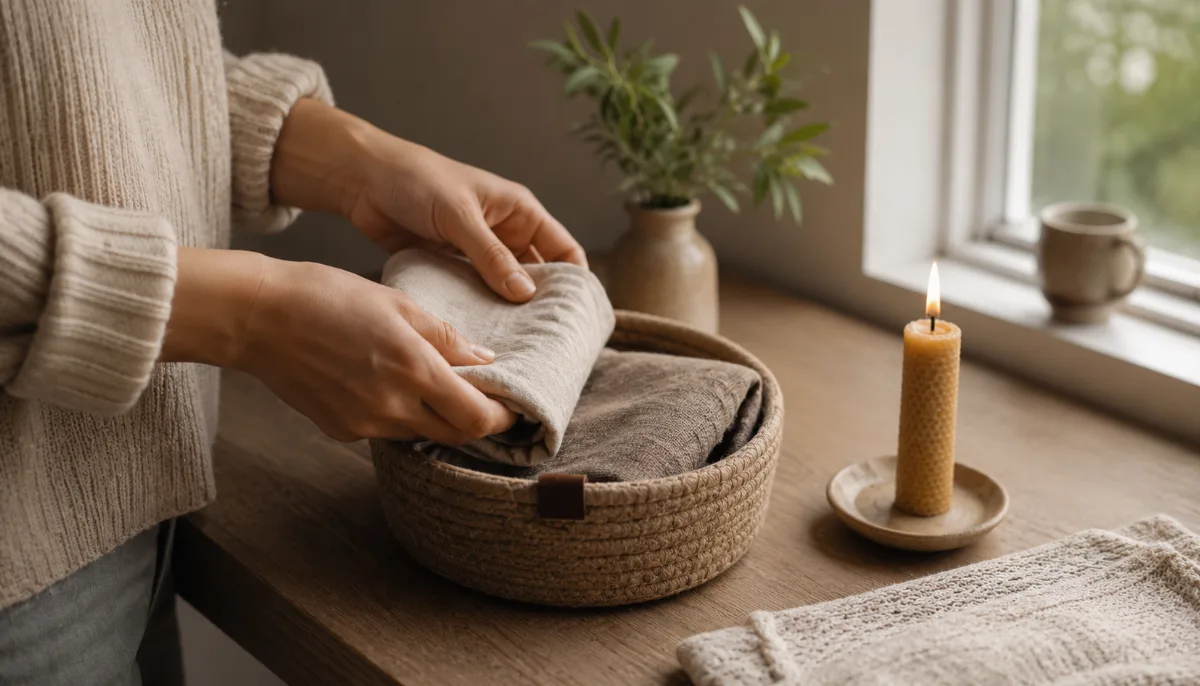
The most consistently useful technique is photographing objects before making any decision about them. It's a low-stakes first step that commits to nothing: you aren't releasing anything, you're creating a record. That reframe alone unsticks people who have been circling a box for months. It is worth cross-checking against Rutgers Cooperative Extension's publications.
The photo does several things at once. It forces you to actually look at the object, often closely for the first time in years. It externalizes the memory into a form you can retrieve — a digital album is far more accessible than a box on a high shelf that gets opened once a decade. And for many people, once a photo exists, the pull of the physical object loosens: the memory feels preserved, and the thing feels less necessary to hold onto. For objects with real personal history, write three sentences alongside the photo — who it came from, when, and what it represented. Those notes take about four minutes each and give more durable access to the memory than the object ever did buried in storage.
Photographing first changes the decision because it separates the memory from the object, and it takes minutes rather than hours. Practical settings: daylight near a window, a plain background — a white sheet or a bare floor — the item filling most of the frame, and 2 or 3 angles for anything three-dimensional. Include something for scale where size is part of the memory.
The step that makes it worth doing is the caption. A photograph with no context is worth little in ten years; one sentence saying what it was, whose it was and roughly when converts it into something a family member can actually understand. Recording that as a voice note while you photograph is faster than typing and captures more.
Three Categories Instead of Keep-or-Toss
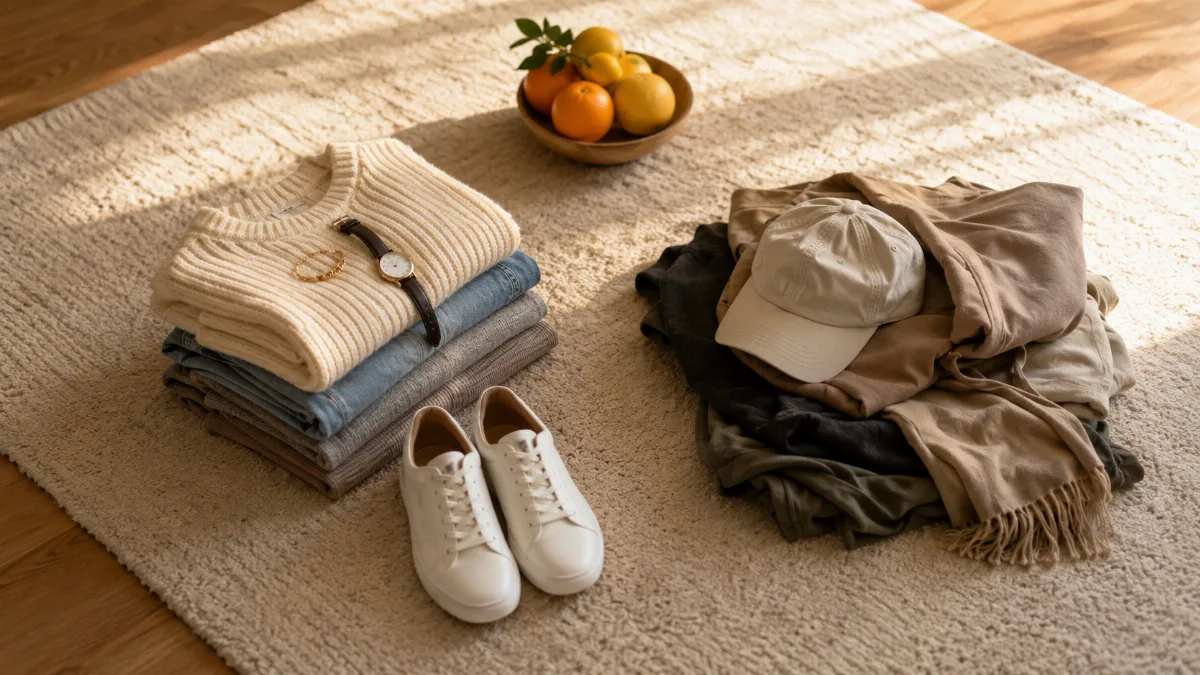
A binary of keep-or-donate works badly here because it forces a decision many people simply aren't ready to make, and the whole pile stalls behind the hardest few items. Three categories move faster.
Keep without question: items that are genuinely irreplaceable, that you display or actually use, and that you're glad to reach for more than once or twice a year — a truly singular photograph, an heirloom in active use, a piece of jewelry worn regularly. These stay without deliberation. Photograph and release: items that hold a memory but serve no current function, that you haven't looked at or touched in over a year, or that exist in multiples where a fraction carries the same memory. Thirty drawings from a child's first year of school, where eight photographed together represent the same period and progression. Take the photo, write the note, let the object go. Wait in a maybe box: items you honestly can't decide about right now. Box them, seal it, and write a date three months out on the outside. If you haven't opened it by then, the contents belong in the release pile — you didn't need them. If you did open it for something specific, keep that one item, not the whole box.
The keep category only earns its value if it stays small enough to be curated rather than becoming a holding area for everything that caused hesitation. A useful test: does this object add to daily life, or would you actively seek it out within a month? Not theoretically — actually. A painting that gives you something every time you pass it passes. A box on top of a wardrobe unopened in three years doesn't. One box or one small shelf, deliberately assembled and revisited once a year, holds more real value than a room full of things kept because releasing them felt too difficult.
Two categories force a decision most people cannot make, which is why the box gets closed again. Three make it possible: keep and display, which means the item earns a visible place rather than a box; photograph and release; and hold for later, in a dated box reviewed in 12 months.
The first category carries a constraint that does the real work: a fixed number of displayed items, or a fixed shelf. An object kept in a sealed box in a loft is not being enjoyed, it is being stored — and comparing the two honestly is what makes the second category acceptable for the rest.
Passing Objects On to Someone Who'll Use Them
Many inherited or received items carry their heaviest weight precisely because they belonged to someone else — a parent, a grandparent, a friend who has died. Donating them anonymously can feel dismissive of that weight. Giving them to someone who knew the person and will actually use them is a different proposition entirely. The grandmother's cookbook to a cousin who cooks seriously. A father's workshop tools to a sibling who builds things. A record collection to someone who shares the taste. These transfers read as continuation rather than disposal; the object's story keeps going in someone who values it. The option isn't always available, but when it is, it resolves the hesitation that neither keeping nor anonymous donation quite settles.
When It's a Collection, Not Just a Box
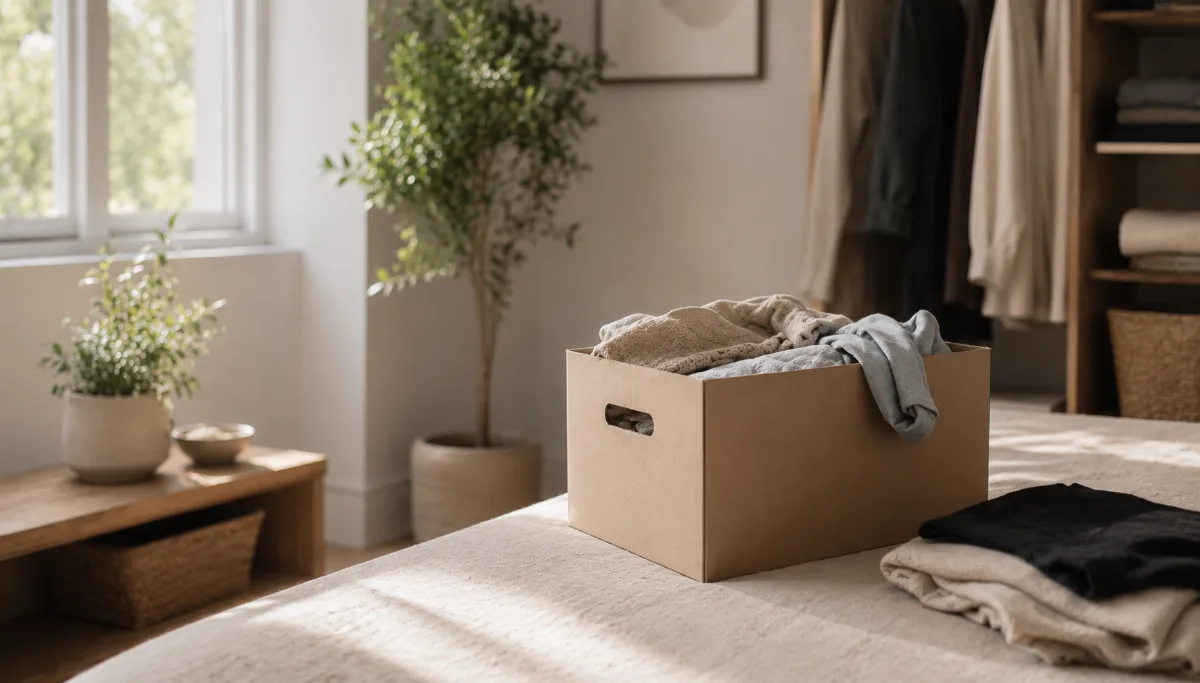
Some sentimental accumulation takes the form of a collection: letters, greeting cards, ticket stubs, albums, or a late relative's entire household after they pass. These are harder than single objects because the volume is large and the items feel interdependent — pulling one card from a stack of fifty feels like it changes the stack. Collections respond better to curation than to item-by-item decluttering. Decide on a final form first: one box of letters, one album representing a decade, a small set of objects from a person rather than everything they owned. Then work toward that form by removing duplicates, the least significant examples, and things that entered the collection by accident. A curated set of thirty meaningful items carries more emotional weight than a box of three hundred mixed ones, because what remains is finally visible instead of buried.
Give yourself permission to be slow. Items gathered over decades don't need resolving in a weekend, and forcing a marathon produces worse decisions than a pace of two or three objects per session across several months. The choices improve when you aren't exhausted, and they hold better because they weren't made under pressure. A recurring monthly reminder — thirty minutes, one small group, photograph anything you're releasing — moves the project forward without becoming a weekend you dread.
The three honest exits:
| Exit | What it means |
|---|---|
| Keep and display | earns a visible place — not a box |
| Photograph and release | daylight, plain background, item filling the frame |
| Pass on with the story | the meaning travels with it |
Comments
No comments yet.