
How to Foster Independence Through a Minimalist Home Environment
I swear, just last week, I lost my mind trying to find a specific matchbox car. You know, the sparkly blue one? The only car my son wanted to play with for five minutes. It was buried under a mountain of other toys, books, and random socks in the living room.
My kids were yelling, I was sweating, and honestly, I wanted to just throw everything out the window. Sound familiar? You’ve been there, right?
That feeling of drowning in kid stuff is what started MinimalistRig. And it’s a big part of why I got so obsessed with creating a home where my kids could actually, you know, find their own damn things.
Today, we're gonna talk about how having less junk can actually make your kids more capable, more confident, and frankly, make your life a whole lot easier. We’ll cover what it really means, how to actually do it without losing your mind, and what to do when things inevitably go sideways. Let’s do this. 👋
Why This Actually Matters
Okay, so it's not just about not tripping over plastic dinosaurs anymore. Though, honestly, that's a huge win itself.
The real reason this whole "minimalist home for independence" thing is worth your time and effort? It teaches your kids life skills they’re not getting when you’re constantly fetching, sorting, and cleaning up after them.
Think about it. When there are 50 puzzle pieces in a bin, and only three of them actually go to the puzzle your kid wants to do, what happens? They get frustrated. They give up. They ask you to do it.
When there are only 10 pieces, and they all belong, suddenly, your kid is a puzzle master. They feel competent. They feel proud.
I used to spend a solid hour every night just picking up toys. An hour! That’s an hour I could have spent reading a book, talking to my husband, or you know, staring blankly at a wall, which sounds heavenly.
Now? My kids help clean up. Not perfectly, obviously. They’re still kids. But they know where things go because there aren’t 7,000 "wheres" to choose from.
Last week, my five-year-old decided he wanted a specific art supply. Instead of screaming for me, he went to the art shelf, got the crayons, and started drawing. He put them back when he was done. No input from me. Zero. It was pure magic.
That kind of self-sufficiency? That's what we're aiming for. It's about giving them the tools and the environment to succeed on their own, even with small things.
What "Minimalist Home for Independence" Even Means
Alright, let’s be clear. When I say "minimalist home," I’m not talking about empty white rooms and kids playing with a single wooden block. That's a magazine spread, not real life with sticky fingers and endless projects.
It means being intentional about what you bring into your home. And, more importantly, about what you keep.
It’s about creating spaces that are easy to navigate for everyone, especially for your little humans. Spaces where they can actually reach things, identify things, and put things away without needing adult assistance every five seconds.
It means less visual clutter, which, honestly, is good for everyone's brain. My brain gets fuzzy when I look at a pile of random stuff. Imagine how a three-year-old’s brain feels.
We’re talking about functionality over volume. Access over abundance. It’s a shift in how we think about "stuff" and its role in our family's daily life.
It's About Access, Not Empty Rooms
This is where a lot of people get hung up. They think minimalism means getting rid of everything. But that's not it at all, especially with kids.
It's about making sure the things you DO have are easy for your kids to use and put away. Think about their height. Think about their dexterity. Think about their capacity for making choices.
If your child has to ask you to get them a spoon from a high drawer every time they need one, they’re not learning independence in the kitchen. If their favorite book is always on the top shelf, they can't go grab it themselves.
It's about lowering the barriers, both literally and figuratively, to them being able to do things for themselves.
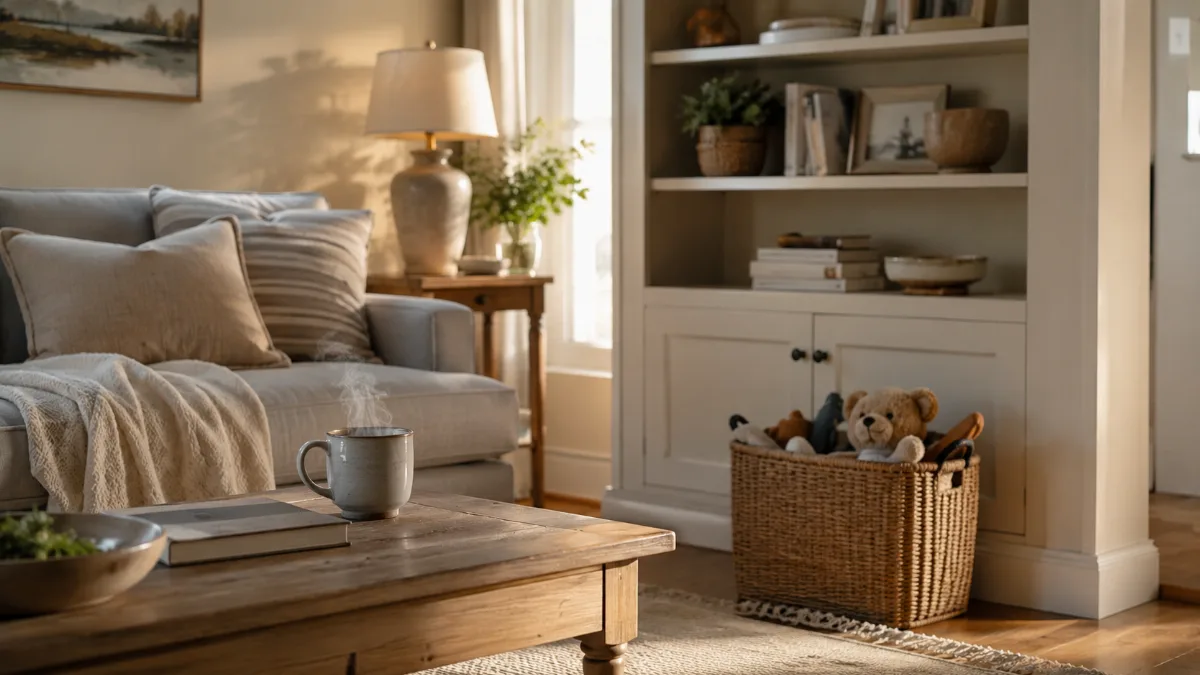
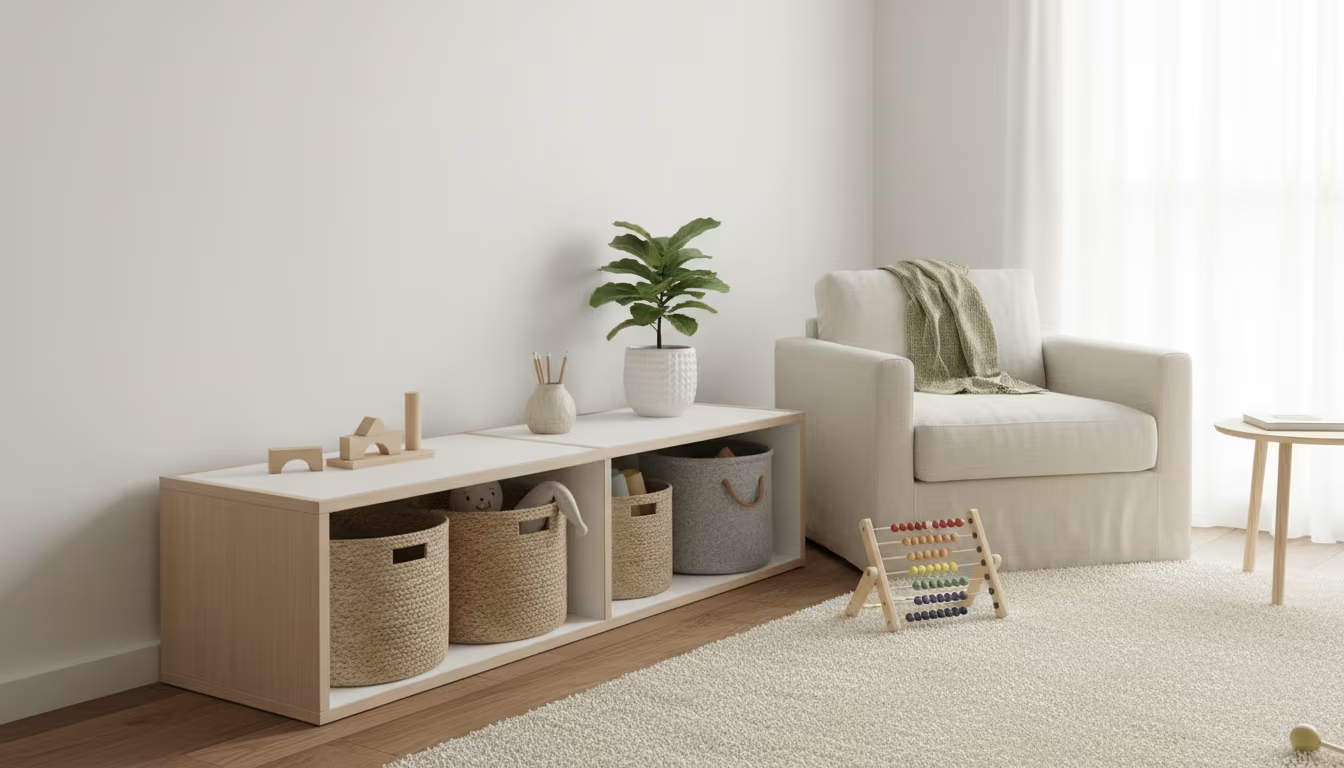
- Accessible storage: This is huge. We ditched most of the big toy chests my first kid had. They just became black holes where toys went to die. Now, it's low shelves, open bins, and baskets that are easy for tiny hands to pull out and push back in. My kids can see what's in them, which means they actually play with things instead of just dumping everything out trying to find that one specific toy.
- Defined zones: This one was a game-changer for cleanup. Instead of toys being everywhere, we have a "book nook," an "art station," and a "building block spot." Each zone has its own limited, designated items. My daughter knows her dolls live in the pink basket by her bed, not under the dining table. This means when I say "clean up your dolls," she knows exactly where to go and what to do.
- Fewer choices: Oh, this is the good stuff. Remember that puzzle example? It applies to everything. If a kid has five different art kits, they're probably overwhelmed and won't use any of them. If they have one small box of crayons and a stack of paper, they're more likely to sit down and create. Less choice means less decision fatigue, which is real, even for toddlers. It helps them focus and actually engage with what they have.
How To Actually Do It
Okay, so you’re on board with the idea. You're tired of being everyone's personal assistant. But how the hell do you actually start making this happen when your house currently looks like a toy store exploded?
Deep breaths. It’s not an overnight thing. It’s a process. And you're gonna mess up. I still do. But every little bit helps, I promise.
We’re going to tackle this in manageable steps. No need to clear out your entire house in one weekend. Just pick one area, one type of item, and start there.
Step 1: The Declutter Deep Dive (Starting with Toys)
This is often the hardest part, but it's crucial. You can't create accessible spaces if they're overflowing with stuff your kids don't even play with.
I know, I know. The guilt is real. "But Grandma gave them that!" "What if they decide they want to play with it next week?" Trust me, I’ve had those thoughts. They paralyze you.
Here’s the deal: Grab three bins. One for "keep," one for "donate/sell," and one for "maybe later/rotate." Seriously, just three. Don't overcomplicate it.
Start with one category. Toys are usually the biggest offender. Pull all of the toys from everywhere in the house into one spot. It’ll look like a bomb went off. That’s okay. It’s part of the process.
Then, go through each item. Ask yourself: Do my kids actually play with this? Is it broken? Is it age-appropriate? Do we have 17 versions of the same thing (looking at you, Hot Wheels collection)?
My kids used to have literally hundreds of tiny plastic animals. They played with about five of them regularly. The rest just got dumped on the floor. We cut that collection down by 80%. And guess what? They still play with the five favorites, and now they actually find them.
Don't be afraid to be ruthless. Your kids won't miss what they don't even know they have. And if they do, it's usually for about five minutes. The freedom you gain is worth that tiny bit of momentary grumbling.
Step 2: Kid-Level Everything
Once you’ve decluttered, it’s time to rethink placement. This is where you literally get down on your kid's level. Crouch down. What can they see? What can they reach?
Put their everyday dishes and cups in a low drawer or cabinet. My kids have their own set of small plates, bowls, and cups in a bottom drawer next to the dishwasher. They can grab them for snacks, and they can put them away after rinsing.
Their clothes, too. I used to have my daughter's dresser jammed full of clothes, with drawers too high for her to reach. Now, her most-worn outfits are in baskets on a low shelf in her closet. She can pick out her own clothes. Sometimes the combinations are wild, but she's dressing herself, and that's the win.
Think about snacks. If you have a snack cupboard that’s always a jumbled mess, make a designated "kid snack bin" on a lower shelf with approved items. They can grab their own apple slices or goldfish. It's amazing how much less "MOM, I'M HUNGRY!" you hear when they can self-serve.
Expect a learning curve. They won't do it perfectly at first. My son still leaves the snack drawer open sometimes. But they're learning the routine, and they're gaining confidence with each small task.
Step 3: Create Zones for Specific Activities
This goes hand-in-hand with accessible storage. Instead of just "the toy room," think about specific activity areas. This helps kids understand what to do in that space and where things belong.
For us, we have a small art table with a caddy of crayons, markers, and paper right there. That’s the art zone. Not the kitchen table, not the couch. Just that spot. It keeps the mess contained and gives them a clear place to be creative.
We have a "reading rug" with a low shelf of books nearby. When they want to read, they go there. It helps them focus and associate the space with the activity.
In the main living area, we have a small basket for building toys (Legos, Duplos) and another for imaginary play (a few cars, some small figures). That's it. When they're done, those few items go back in their respective baskets.
It sounds overly structured, but it actually gives them more freedom because they know the boundaries. They're not constantly being told "don't bring that here" or "put that away somewhere." The "somewhere" is now very clear.
Step 4: Implement the "One In, One Out" Rule (Seriously, Try It)
Decluttering is great, but maintaining it? That’s the real beast. The "one in, one out" rule is simple, but damn effective.
It means if a new toy comes into the house, an old toy has to leave. Period. No exceptions. This applies to clothes, books, art supplies – everything.
Grandparents bring a new truck? Great! Let your kid choose an old truck to donate. New shirt for school? Time to say goodbye to one that's too small or worn out.
This teaches kids that things have value, and that our space isn’t limitless. It also makes them think about what they really want to keep, rather than just accumulating mindlessly.
It can be tough at first, especially with gifts. I usually have a "holding zone" for new gifts for a week or two. Then we have the conversation. "Which of these do you love the most? To make space for the new one, which old one are we ready to pass on?" It’s a gentle way to introduce the concept.
Step 5: Rotate (Toys, Books, Clothes)
This is my secret weapon against boredom and clutter. You don’t need to buy new toys constantly to keep things interesting. You just need to hide some of the old ones for a bit!
I have two big bins in our garage. At the beginning of each season (or when I'm just sick of looking at a particular toy), I’ll swap things out. A third of the toys go into storage, and a third from storage come out.
It’s like getting new toys, but without spending a dime. My kids absolutely love "rediscovering" things they haven't seen in months. They play with them with renewed interest and creativity.
For books, I swap them out on their low shelf. Some go back to the library, some get stored in a small bin, and new ones come out. It keeps their reading choices fresh without overwhelming the shelf.
This also works really well for clothes. As seasons change, swap out the appropriate clothes for the current weather. It keeps their dressers from overflowing and makes daily dressing easier because only relevant items are available.
The first few times, your kid might ask for a specific toy you just put away. Mine did. Over and over. Stick with it. After a week or so, they forget, and then it’s like Christmas when it comes back out.
Step 6: Involve Them in the Process (When Age-Appropriate)
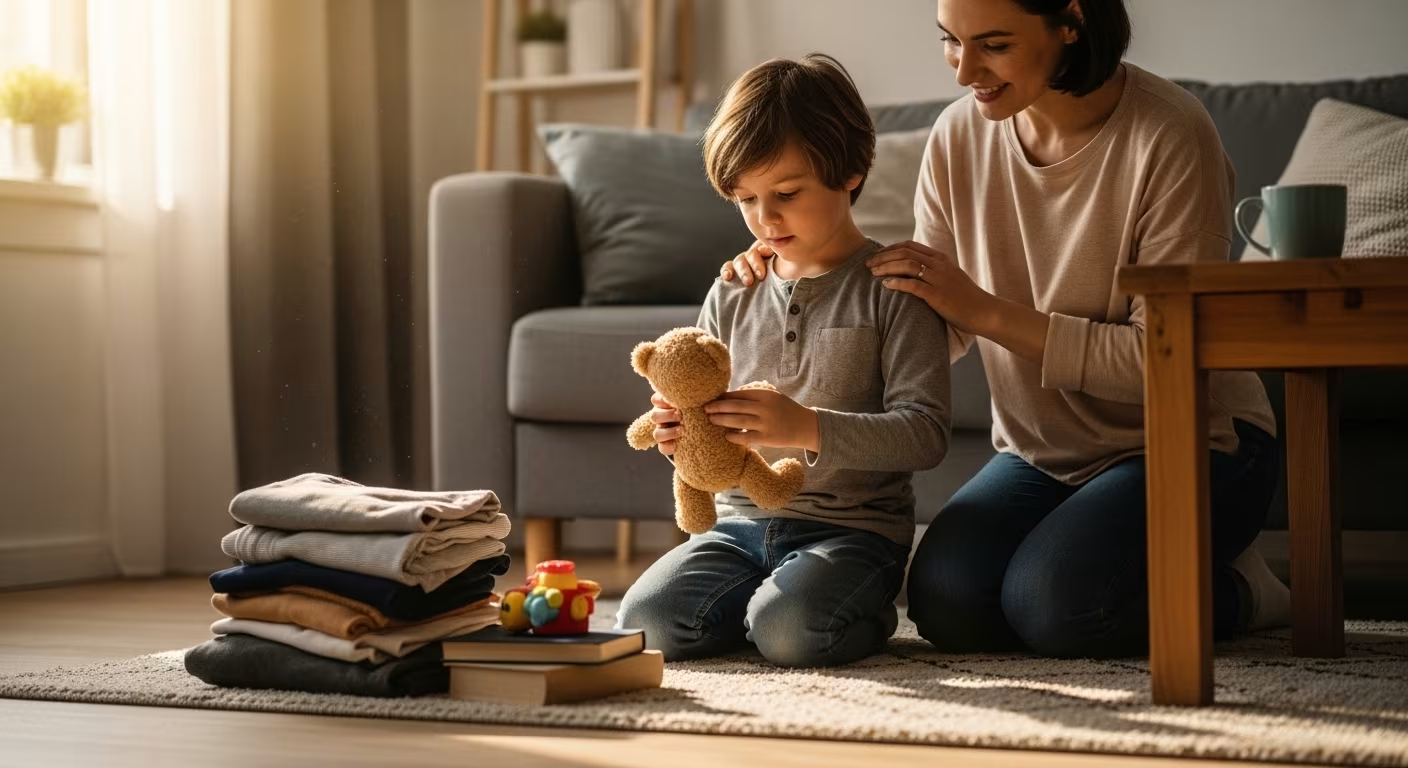
You can't just spring a minimalist takeover on your kids. Well, you can, but it might not go over well. Involving them, even in small ways, gives them ownership and teaches them the "why."
For toddlers, it might be as simple as saying, "Let’s put the blue cars in the blue bin!" or "Which three books do you want on your shelf this week?"
For preschoolers, you can involve them in the decluttering. "We have so many stuffed animals! Which ones are your very favorite? And which ones do you think another little boy or girl might love to play with?" Frame it as sharing, not deprivation.
My five-year-old now helps me rotate toys. He gets to choose what goes into the "rest" bin and what comes out. This makes him feel empowered and less like things are just disappearing without his input.
It's not about making them do all the work, but about making them a part of the decision-making. This builds their problem-solving skills and their understanding of how their home works.
Step 7: Simplify Their Wardrobe
Okay, this is a big one for me, especially with laundry. I used to have so many clothes for my kids. So many! I swear, half of them still had tags. It was overwhelming for them to choose, and it was overwhelming for me to wash and put away.
Enter the kids' capsule wardrobe. It's not as strict as an adult one, but the principle is the same: fewer, well-loved, versatile items.
I aim for about 5-7 everyday outfits per kid, plus a couple of pajamas, play clothes, and maybe a "nice" outfit. That's it. Total. For the whole season.
This means less laundry for me (hell yes!), and it means my kids can actually pick their own clothes without having 15 different t-shirts to choose from. It cuts down on decision fatigue for everyone involved.
They don't need 20 pairs of pants. They just don't. And if they get something dirty, we wash it. It's really that simple. It teaches them that clothes are functional, not just an endless supply.
I also try to stick to a relatively cohesive color palette for their clothes, so everything mixes and matches. This reduces arguments about "what goes with what" and makes getting dressed a lot smoother for everyone. It's a small change that makes a huge difference in the morning chaos.
Making It Stick / Common Mistakes
So, you’ve done the decluttering, you’ve set up the zones, your kids are (mostly) putting their own stuff away. Victory, right? Well, sort of.
The truth is, life happens. Birthdays happen. Grandparents happen. And slowly but surely, stuff creeps back in. This isn’t a one-and-done kind of thing. It’s an ongoing process, a mindset shift.
One of the biggest mistakes I made at first was expecting perfection. My kids are still going to make messes. They're still going to leave a trail of toys from the living room to their bedroom. They're still going to forget where the crayons go sometimes.
That's okay. The goal isn't a pristine home. The goal is a functional home that supports independence, not one where everything is always perfectly in place. Give yourself grace, and give your kids grace.
Another mistake? Just hiding things instead of getting rid of them. I used to stash overflowing toy bins in the closet, thinking "out of sight, out of mind." But it was still there. It was still clutter. It was still mental burden. If you're not using it, if it's not adding value, really evaluate letting it go.
Don't compare your journey to anyone else's. Some families thrive with very little. Others need more. Find what works for your unique family, your kids' personalities, and your available space. There's no "right" way to be a minimalist mom, just your way.
Kids don't need more stuff. They need more space to be stuff – to be curious, to be creative, to be capable.
Frequently Asked Questions
My partner isn't on board. Help!
Oh, tell me about it. This is a common one. Don't try to strong-arm them into it. Start small and demonstrate the benefits. Maybe tackle just your own closet or a corner of the kitchen. When they see your stress levels drop, or how much easier it is for the kids to clean up, they might become more open.
Focus on the "why" that resonates with them. Less cleaning time? Less money spent on duplicates? Frame it in terms of benefits to them or the family, not just "getting rid of stuff."
What about gifts from grandparents? The struggle is real.
Ugh, the eternal dilemma. This is tough because it's about relationships. My approach is two-fold: First, talk to the grandparents if you can. Suggest experiences (zoo passes, museum memberships) or consumables (art supplies, play-doh) instead of more plastic junk. Second, use the "one in, one out" rule. If a new toy comes in, something has to go out. You're teaching your kids boundaries and intentionality.
Is this just for little kids? My kids are older.
Absolutely not! The principles scale. Older kids can benefit even more from a minimalist approach to their bedrooms, school supplies, and clothes. They learn organization, decision-making, and responsibility. Involve them fully in the decluttering process and let them take ownership of their space. It's empowering for teenagers to have a calm, functional room.
The Bottom Line
Look, motherhood is messy. Kids are messy. Your home doesn't need to be a museum. But creating a home environment that's thoughtfully simplified can make a huge difference in everyone's lives. It's not about having less; it's about having what truly serves you and your family.
It's about giving your kids the tools and the space to grow into capable, confident little humans. It means less nagging for you, more self-sufficiency for them, and honestly, a calmer atmosphere for everyone. It won't be perfect, but it will be better. Take a deep breath, pick one small thing, and just start. You’ve got this. ❤️