
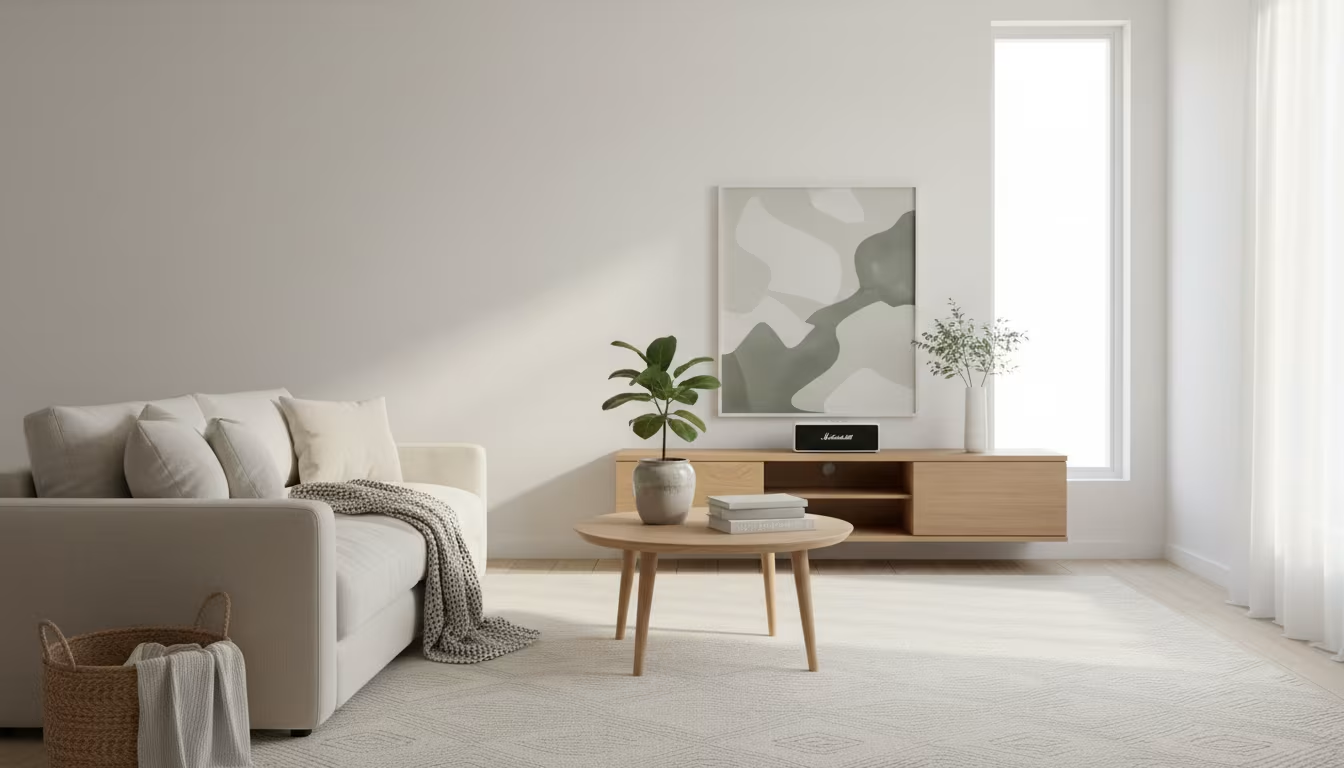

The standard renter's complaint about minimalist design is that the beige walls, the dated light fixtures, and the builder-grade flooring seem impossible to work around. A calm, considered space looks like it requires the freedom to renovate, and renters do not have it. In practice, the things that most determine how a room feels have almost nothing to do with renovation: how much furniture is in it, how that furniture is arranged, what sits on the surfaces, and the quality of the light after dark. Every one of those is fully within a renter's control. The renovation limit is real, but it is smaller than it looks, because the variables that matter most are not the ones the lease forbids.
The Furniture Edit Makes the Biggest Difference
A rental that came partly furnished, or that collected pieces across several moves, usually holds more than the space benefits from. An extra armchair in a small living room, a second bookshelf from a previous flat, a side table in every corner: each one fills the room and makes it feel dense without making it more useful. Removing the furniture you do not genuinely use is the single highest-impact change in most rentals. A bedroom with just a bed, a nightstand, and adequate clothing storage reads as an entirely different space than the same room carrying a desk that only holds clutter, a second dresser of unclear purpose, and a chair buried under laundry.
Pieces that cannot stay but also cannot be thrown out can often go to family storage, a building locker, or a resale listing. The short-term inconvenience of losing the item is almost always outweighed by the quality of what remains once the floor opens up. A useful test before hauling anything back in: leave the room emptied of the questionable piece for a week and notice whether you miss it. Most of the time the open floor wins, and the piece that felt essential turns out to have been filling space rather than serving a purpose. Renters move often enough that every retained item is also a future box to pack, which is a second reason to keep the count honest. For evidence-based guidance here, see Iowa State University Extension.
Textiles and Light Do the Work Paint Can't
The landlord's walls read differently depending on what sits in front of them. A warm-toned rug, a few textured cushions, and curtains in a natural fabric add color and depth without touching anything the landlord controls. The trick for a calm room is a limited palette: a handful of items in tones that agree with each other, not many pieces competing in different colors. Curtains earn special attention. Most landlords do not object to swapping the panels, though not the hardware track, and floor-length linen or cotton hung on the existing rod changes a window more than almost any other single move, making ceilings feel higher and the whole room feel deliberate.
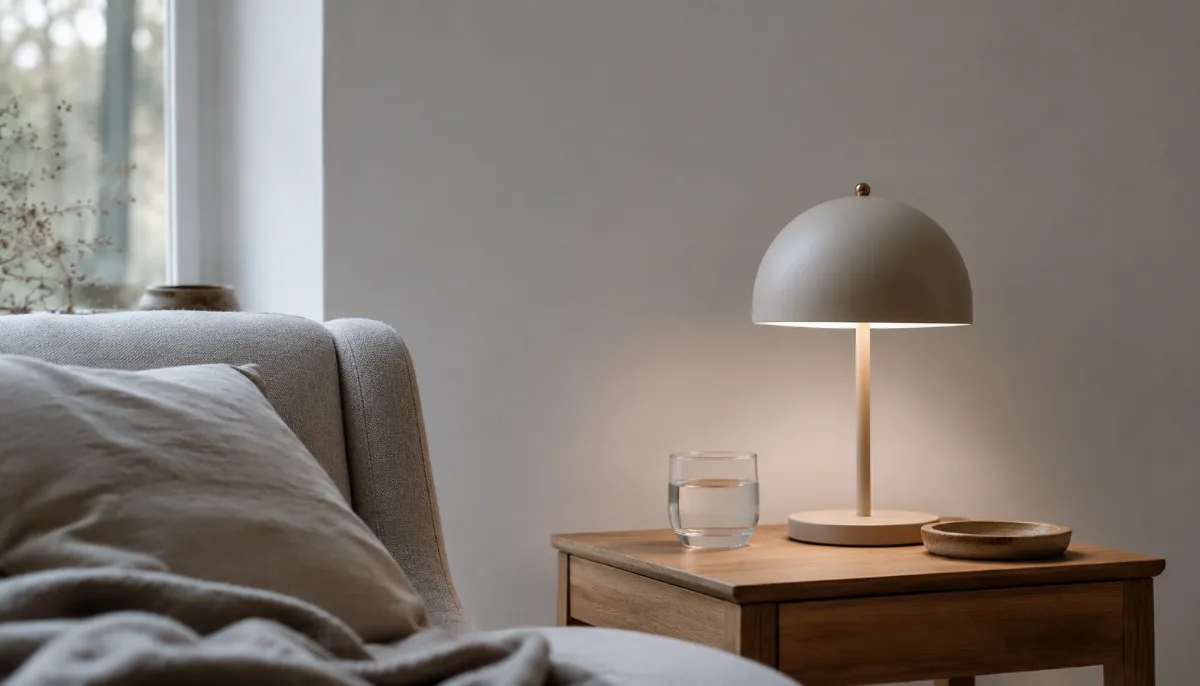
Lighting after dark is the fastest fix of all. Rentals almost always default to a single overhead fixture, which is exactly what makes a space feel least like home. A floor lamp in the corner, a table lamp per bedroom, and warm-toned bulbs around 2700K in every fixture, overheads included, cost little and transform the feel of a room after sunset. Bulbs swap back at move-out in ten minutes, and the lamps move with you. The spend is small; the difference in the hours you actually occupy the place is large.
A Renter's Change List, Ranked by Effort
Nearly every worthwhile rental change shares three traits: it reverses cleanly at move-out, it costs modestly, and it targets feel rather than structure. Laid out together, the priorities are easy to see.
| Change | Reversible at move-out? | Rough cost | What it fixes |
|---|---|---|---|
| Remove unused furniture | Yes | $0 | Density and cramped floor space |
| Warm 2700K bulbs | Yes, swap back in minutes | $10–$25 | Clinical overhead light |
| Floor and table lamps | Yes, they move with you | $30–$80 each | Overhead-only lighting |
| Linen curtain panels | Yes, keep original hardware | $40–$120 | Low-feeling ceilings, bare windows |
| Large leaning mirror | Yes, no wall mount needed | $60–$150 | Small, dim rooms |
| Peel-and-stick contact paper | Yes, damage-free removal | $15–$40 | Dated cabinet fronts |
Editing Surfaces and Softening What Can't Change
Countertops, open shelving, and coffee tables collect objects in a rental by the same mechanism as in any owned home, and the renter has exactly the same control over what stays on them. A clear kitchen counter and a deliberate edit of what is on display do more for the feel of a space than any renovation. Keep what is actively used or genuinely adds something; question everything sitting there by default. The cable box, the windowsill pile, the decorative object that outlived the look it belonged to: each deserves a decision rather than passive retention.
Some features cannot change without breaking the lease: dated bathroom tile, original cabinet fronts, a peculiar ceiling light. The move for these is visual minimization, keeping the area around them as quiet as possible so the feature stops dominating. Temporary adhesive wallpaper, made specifically for damage-free renter use, can rescue a problem wall, and peel-and-stick contact paper over tired cabinet fronts reads cleaner without harming the originals. The broader principle is to spend your attention and budget on the variables you control and as little energy as possible mourning the ones you do not. A well-arranged space with deliberate contents never needed renovation to feel considered; most of the work is subtraction, not construction.
Awkward Rooms and the Move-Out Payoff
Plenty of rentals come with genuinely difficult features: low ceilings, odd proportions, a single window in a strange spot. Here furniture scale and placement carry more weight than in a neutral room. Under low ceilings, lower-profile pieces, sofas with shorter backs, beds closer to the floor, shelving that stops short of the ceiling, keep the vertical space from feeling compressed. In a narrow room, one large rug running the length of the floor reads better than several small ones that chop it into pieces. A large mirror leaned against the wall rather than mounted, which many leases require anyway, adds perceived depth and brightness in almost any constraint and moves out as easily as it moved in.
The quiet bonus arrives at the end of the lease. A rental run as a deliberate, minimal space is far easier to return to original condition: fewer possessions mean less to pack, and a space maintained throughout needs less scrubbing and repair before handover. The move-out most renters dread becomes a manageable project when the unit never became a holding pen for years of unmanaged excess in the first place.



Comments
No comments yet.