

What Kitchen Clutter Actually Costs
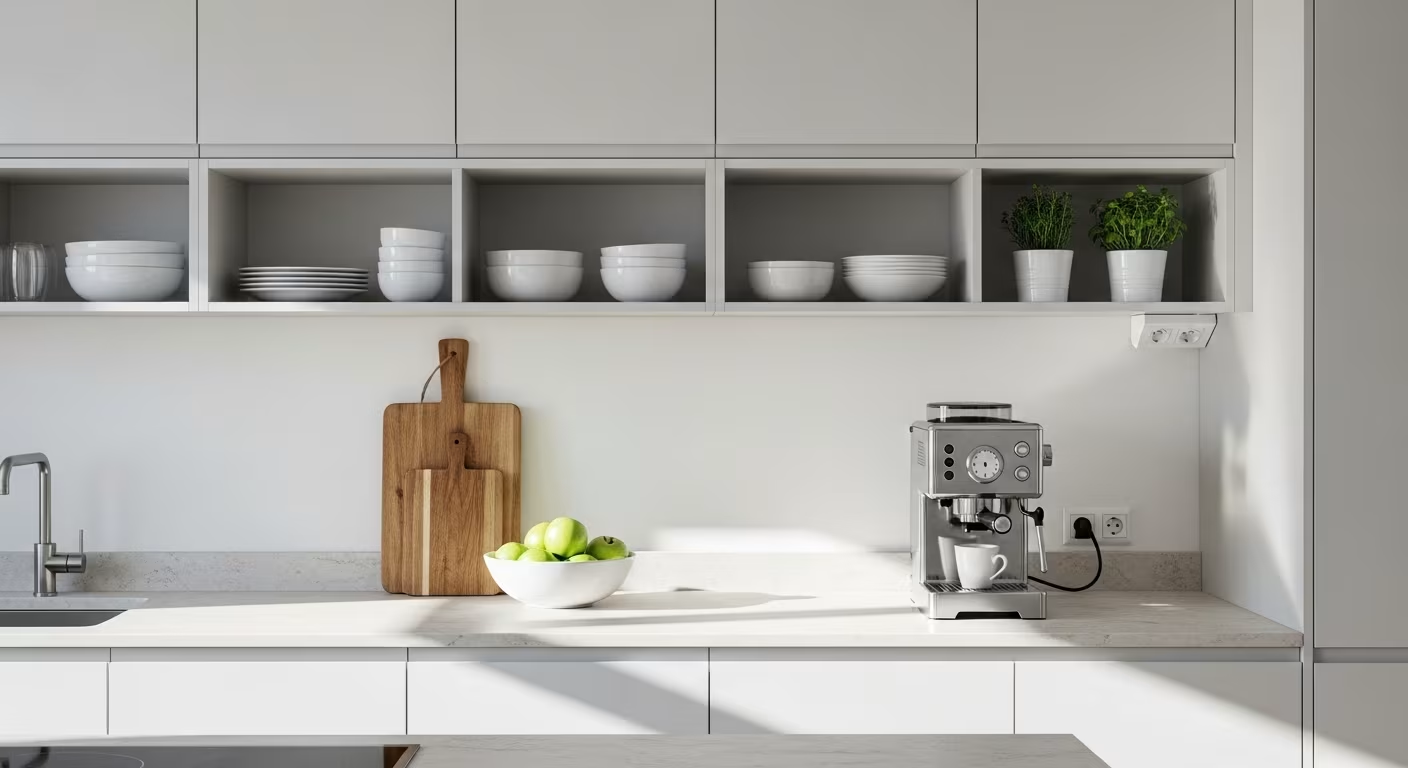
Kitchen clutter differs from clutter elsewhere because it carries a direct functional cost: a cluttered kitchen is simply harder to cook in. Counter space taken up by rarely used appliances shrinks the workspace for prep. Cabinets packed to the front make finding the right pan take longer, a small friction repeated every session. A drawer so full that reaching the vegetable peeler means excavation is a snag felt several times a day. None of these are dramatic on their own, which is exactly why they get normalized — a household that has cooked in a crowded kitchen for years has adapted to its limits and stopped noticing them. Strip those limits away, and a kitchen where every tool is visible, every drawer opens, and the counters have clear working room feels like a different place to cook.
Counter Surfaces: The Highest-Priority Zone
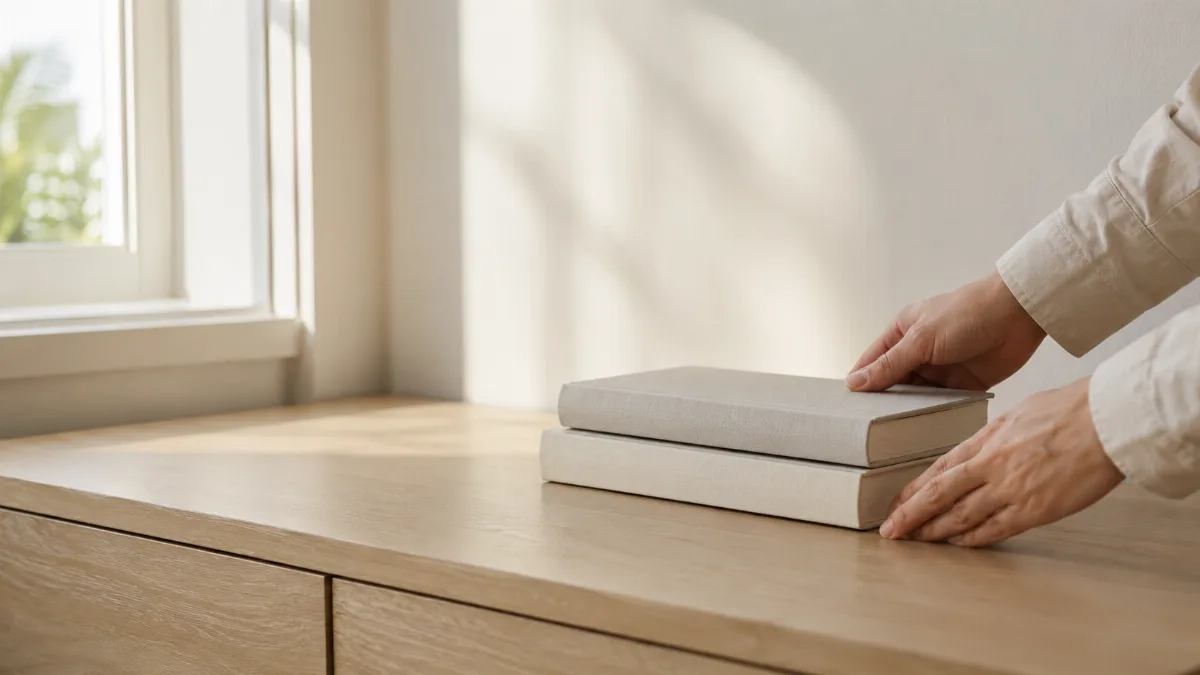
Counters are the kitchen's working space, and every object permanently sitting on one permanently subtracts from it. The bar for counter items is higher than for anything in a cabinet: a cabinet item used monthly earns its keep, but a counter item used less than daily rarely justifies occupying prime real estate. The usual offenders are appliances run less than weekly — the toaster, the blender, the second coffee gadget — plus decorative objects that arrived without intention, mail that migrated in from the entry, and tools left out "for convenience" that would live better in a drawer. After pulling everything off for assessment, returning an item should require a positive reason, not inertia. Something that was simply always there goes back only if its actual use frequency earns the space.
Cabinets, Drawers, and the Pantry
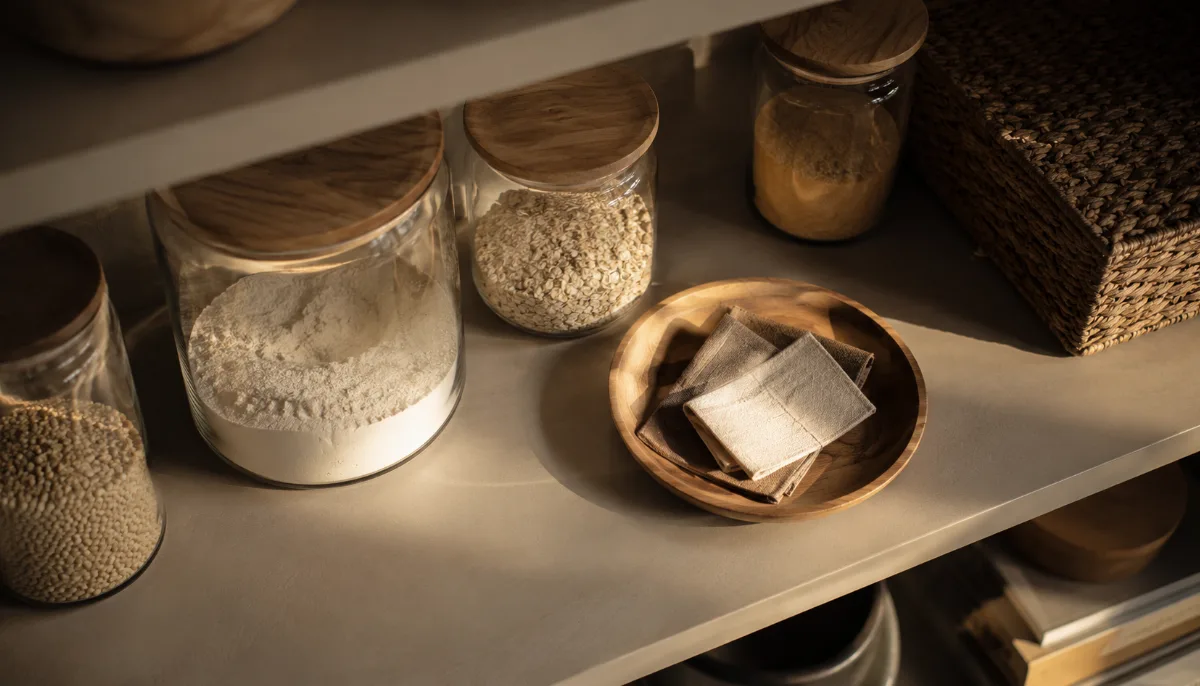
Cabinet and drawer work means testing each piece against a use-frequency threshold. A reasonable default: anything used less than once a month has to justify its storage through the value of that occasional use. Specialty gear accumulates precisely because it was bought for a specific occasion — a holiday, a cooking phase, one recipe — then stored indefinitely for the next occasion that may never come. A bread machine, a spiralizer, an ice cream maker, a mandoline: any is worth keeping for a household that genuinely uses it and would miss it, and worth releasing for one that has run it once or twice while it hogs a prime shelf. The honest test is physical — empty a single cabinet, recall how often each item was actually used in the past year, and return only what earned the space.
| Zone | Keep standard | Usually released |
|---|---|---|
| Countertop | Used most days | Weekly-or-less appliances, decor, stray mail |
| Everyday cabinets | Used at least monthly | Duplicate pans, single-recipe gadgets |
| Prime drawers | Used weekly | Broken tools, second-string utensils |
| Pantry | In current rotation | Expired staples, one-recipe condiments |
Drawers reward the same physical test. A single utensil drawer holding three spatulas, two can openers, and a garlic press used once tells you exactly which duplicates to release — you rarely reach for the second-best version of anything, so it can go. Keep one good tool per job and the drawer closes without a fight.
The pantry has its own two problems: expired or abandoned food, and organization that hides what you have. Clear the first before addressing the second — organizing a pantry that still holds jars nobody will ever open just produces a tidy arrangement of clutter. Once it's cleared, keep the most-used items at eye level in front and push the rare ones to the back or a higher shelf. Containers and labels help, but apply them after reducing the contents, not before; decanting a full pantry just moves the same volume into nicer jars.
The Refrigerator and Freezer

Fridge and freezer contents spoil when they get lost behind other things or stored without a plan for use. A weekly fridge check — spotting what needs using soon and building a couple of the week's meals around it — cuts both the stock of forgotten jars at the back and, per ReFED's research on reducing household food waste, the amount of food thrown away. The freezer follows the pantry principle: most-used items most visible. A chest freezer with no system turns into a solid block that has to be dug through to find anything, while even rough category zones — proteins in one spot, vegetables in another, prepared meals in a third — make it usable as an actual resource instead of an opaque storage brick.
Maintaining the Decluttered Kitchen
A kitchen re-accumulates faster than most rooms because it's used several times a day and acts as a natural landing spot for whatever comes into the home — mail on the counter, shopping bags on the table, the appliance tried once and left out. The maintenance habit that holds against this is a brief daily reset: about five minutes at the end of a cooking session to wipe surfaces back to clear and return everything used to its specific place. That small nightly effort costs far less than an occasional large re-sort and keeps the kitchen continuously functional instead of swinging between clean and cluttered. Countertop appliances deserve the strictest scrutiny in that reset, since they sit on the most valuable surface: the daily coffee maker earns its spot without argument, the stand mixer used twice a month belongs back in the cabinet between uses, and the bread machine run three times since purchase is a strong release candidate regardless of what it cost. See also our guide to building a minimalist kitchen for choosing a streamlined tool set in the first place.
What a Functional Kitchen Feels Like
The real test of a decluttered kitchen is what the household notices mid-cook. A functional kitchen is one where every item a recipe needs is findable without digging, the counter is clear enough to prep without moving things first, every drawer opens without force, and the fridge's contents are visible rather than buried. Households that reach this level of kitchen organization often say cooking itself becomes more pleasant — the friction has dropped far enough that making a meal is enjoyable rather than effortful in ways that have nothing to do with the food. The meal is the same. The experience of making it changes once the room stops working against the cook.


Comments
No comments yet.