


First in, first out is the rotation rule that commercial kitchens, grocery stores, and food warehouses run on to keep stock from spoiling. New product goes behind the old; the older item stays in front and gets used first. It's simple enough to sound too obvious to bother stating — and yet most home kitchens run on the exact opposite logic without meaning to.
What FIFO Is and Why It Works
Left to default habits, groceries go into the fridge front-first because that's the order you unpack them. Last week's food gets shoved to the back, out of sight, and stays there until it turns. The result is a slow, invisible leak of money: produce that liquefies in the drawer, leftovers nobody remembers, pantry cans that quietly pass their date.
FIFO reverses the default. It isn't a gadget or an app; it's a physical habit that, once it's in place, runs on its own. The whole system is one sentence — new stock goes behind, old stock comes forward — applied every time you put food away.
FIFO in the Fridge
Start with the produce drawer, the single biggest source of household spoilage. When fresh vegetables come home, lift out whatever is already there, slide the new produce to the back, and set the older produce in front. It takes about 90 seconds and guarantees last week's carrots get eaten before this week's, instead of the reverse.
The same move applies to the dairy shelf, the leftover containers, and the deli drawer: older to the front, newer behind. The front of every shelf becomes, by design, the oldest food — the food that needs using soonest. Clear containers multiply the effect. Leftovers in transparent boxes stay part of the visual field; opaque tubs and foil-wrapped plates become "mystery leftovers" that nobody opens because nobody is sure what's inside or how old it is.
FIFO only works if you know how long each shelf's contents actually last. Refrigerated at 4 °C or below:
| Food | Keeps | Where it belongs |
|---|---|---|
| Raw poultry and fish | 1 to 2 days | Bottom shelf, in a tray |
| Raw red meat | 3 to 5 days | Bottom shelf |
| Cooked leftovers | 3 to 4 days | Middle shelf, front |
| Milk (opened) | 5 to 7 days | Middle shelf, not the door |
| Hard cheese | 3 to 4 weeks | Drawer |
| Eggs | 3 to 5 weeks | Middle shelf, in the carton |
| Leafy greens | 3 to 5 days | Crisper, dry |
Two placement details do more than any labelling system. The door is the warmest part of the fridge and swings several degrees with every opening, so milk and eggs do not belong there despite the moulded shelves. And a fridge thermometer costs a few dollars and settles the question of whether the appliance is actually at 4 °C — many run warmer than their dial suggests, which shortens every number in that table.
The Pantry and the Freezer
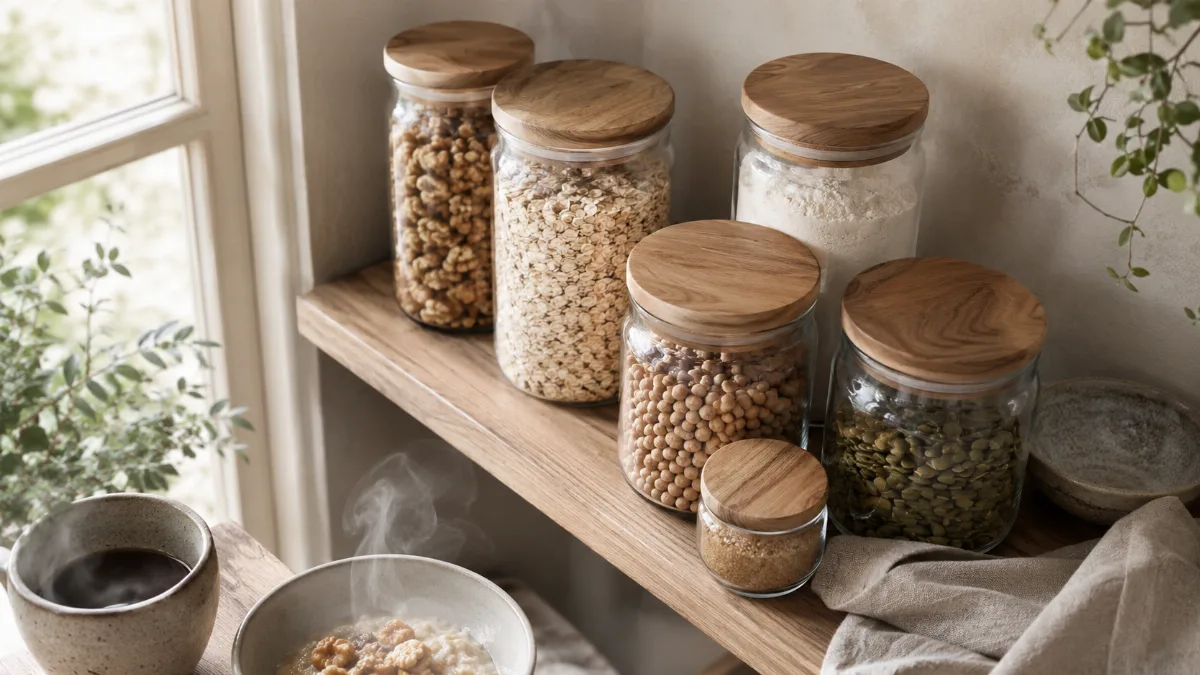
The pantry follows the same rule with slightly more effort. When you restock pasta, canned beans, or cereal, the new supply goes behind the existing one, which means physically moving what's already there rather than stacking on top. The payoff is that items get used in order instead of collecting into three half-open boxes of the same thing, or an expired can fossilizing at the back. A useful corollary: keep only one package of a thing open at a time. A second open bag of oats behind the first just creates doubt about which to reach for.
The freezer is where FIFO usually collapses, because everything is stored in a dense, hard-to-see stack and new items land wherever they fit. The fix is a marker and a habit: label every item with the date it went in, and keep the oldest dates toward the front. A short running list on the freezer door — what's inside, when it was frozen — makes the rotation decision without any digging, and it's the single most practical tool for stopping the accumulation of food that isn't spoiled but will never actually get eaten.
Freezer quality windows are longer than most people assume, and the food stays safe indefinitely below −18 °C — what degrades is texture and flavour. Ground meat holds quality 3 to 4 months, whole cuts 4 to 12 months, poultry pieces 9 months, cooked leftovers 2 to 3 months, bread 3 months, soups and stocks 4 to 6 months, and most vegetables 8 to 12 months.
Freezer burn is the practical enemy, and it comes from air contact rather than time. Two habits prevent most of it: freeze in portions flat enough to thaw in an hour, and label with contents and date in a way you can read through frost. A date alone is not enough — an unlabelled block six months on is thrown out regardless of what it is.
The Weekly Audit and What It Saves
FIFO does its main work on grocery-arrival day, but a five-minute mid-week scan of the fridge catches the items drifting toward the edge — the produce softening in the drawer, the container pushed to the back — before they actually cross into waste. Some households fold this into cooking: a quick look at what most needs using, then building that night's meal around it. That habit pulls forgotten leftovers and aging produce back into the rotation instead of letting them slide to the bin.
The money adds up faster than most people expect. Every spoiled item is a purchase that produced no meal, and across a month the running total of liquefied greens, forgotten leftovers, and expired staples is usually larger than anyone would guess before tracking it. The EPA's guidance on preventing wasted food at home lays out how much of an average household's discarded food was simply never used in time. Applied consistently across fridge, pantry, and freezer, FIFO tends to cut the volume thrown away within the first two or three weeks, and the saving compounds month over month as the habit turns automatic.
The Foods FIFO Rescues First
Not every food benefits equally. FIFO delivers the biggest return on the fastest-spoiling categories, so those are where to concentrate the habit. Fresh produce leads — leafy greens, herbs, berries, and cut vegetables can turn within days, and they account for a large share of what most households throw away. Dairy and eggs come next, followed by leftovers, which spoil silently at the back of the shelf because no timer reminds you they exist.
Shelf-stable pantry goods and frozen items waste more slowly, but they waste in a different way: not by rotting but by quietly passing their date or getting buried and forgotten until they're long past use. For those, the date label and the front-of-shelf rule matter more than speed. Matching the effort to the category — daily attention on produce and leftovers, a periodic sweep for pantry and freezer — keeps the practice from feeling like a chore while still catching the bulk of the waste.
Keeping It Running
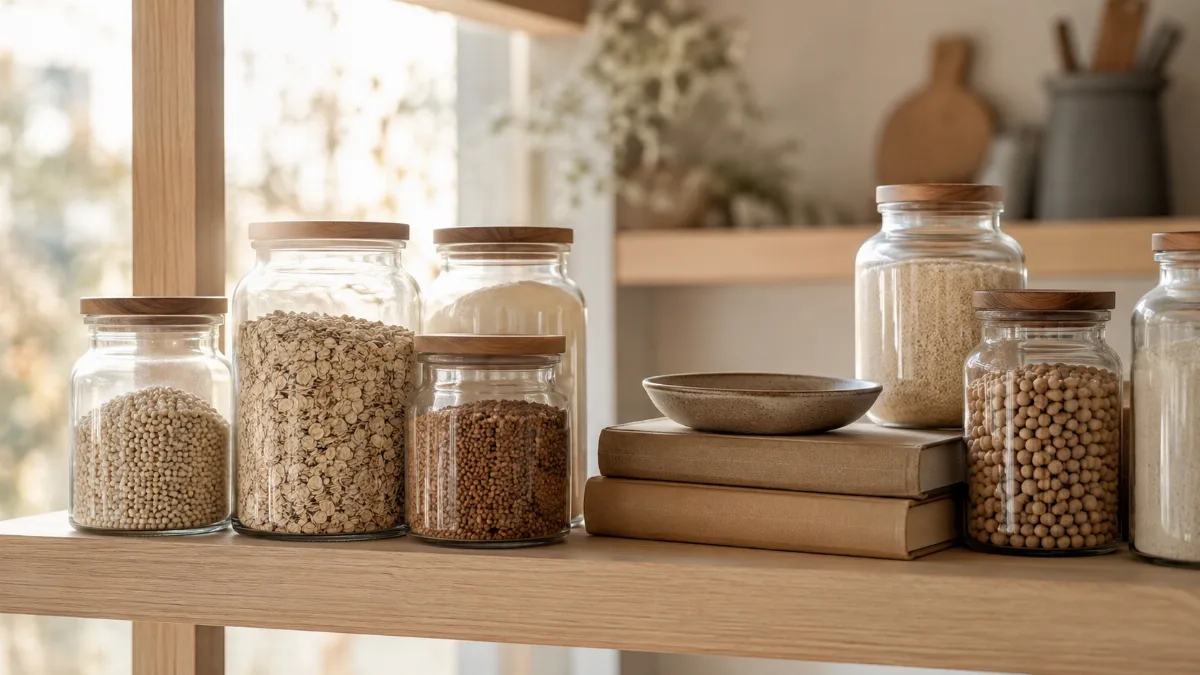
FIFO is far easier when the storage isn't overcrowded. A fridge packed so tight that items stack on each other can't be rotated; a pantry shelf three cans deep resists the whole practice because checking dates is too much effort to do every time. Every season or so, it's worth a full clear-out — discard what's genuinely past use and restart FIFO from a clean baseline. A clean system is simply easier to maintain than one carrying months of accumulated disorder.
The habit also depends on everyone who puts groceries away knowing the rule. One partner or older child loading new items in front undoes the rotation instantly. A single hands-on demonstration at one shelf — this is what "new in back, old in front" looks like — works better than repeated reminders, and a small label on the shelf holds the line until it sticks. It usually does stick, because the proof arrives quickly: the first week nothing gets thrown out is its own argument for keeping it up. Pair it with a pre-shop check of what's already on hand — shopping your own pantry first — and the audit and the rotation become a single, fast routine that keeps waste low for good.

Comments
No comments yet.