
How to Transition Your Family to a Low-waste Kitchen Lifestyle

Hey there, friend. 👋 Let's be real for a sec. My kitchen counter often looks like a war zone after breakfast. Cereal crumbs, sticky toast plates, and enough plastic packaging to build a small fort. You know the feeling, right?

For years, I just accepted it. I'd open the trash can and sigh, feeling that low hum of guilt about how much we were sending to the dump. It felt like an uphill battle, especially with two little humans who somehow generate a mountain of waste.

But then I started small, really small. And now? Our kitchen is still a little messy (because, kids), but the trash situation? Miles better. We're gonna talk about how to do that here – ditching some of that kitchen waste without going totally insane or buying a whole new house full of stuff.

Why This Actually Matters

You might be thinking, "Eleanor, I can barely get my kids to eat vegetables, let alone worry about how much plastic is in my pantry." And honestly? I get it. My plate is full too. My brain is fried by 7 PM most nights.

But hear me out. For me, the "why" isn't just about saving the planet (though that's a damn good reason). It’s also about saving my sanity, saving money, and just feeling a little less overwhelmed.

Think about it: less packaging means less stuff to organize. Less food waste means less money literally going into the garbage. And that constant low-level guilt about our consumption? That actually drains you.

I remember one week, after a particularly chaotic birthday party for my youngest, I took out the trash. It was overflowing with paper plates, plastic forks, half-eaten snacks still in their wrappers. I stared at it and just felt a knot in my stomach.

It wasn't just the sheer volume. It was the feeling of constant consumption, of things being so disposable. I realized I wanted a different vibe for my family, a quieter, less wasteful rhythm. Not perfect, just better.

Making small changes in the kitchen actually translated to a calmer space for me. Less clutter, less mental load. And for a tired mom of two, any little bit of calm is worth its weight in gold, believe me.

Starting Small: What Even is "low-waste," Anyway?

Okay, let's clear something up right away. When I say "low-waste," I'm not talking about those Instagram gurus who can fit a year's worth of trash in a tiny jar. That's a hell no for me and my family.

Low-waste living, especially for families, is about doing less. Less packaging, less throwing stuff away, less buying things you don't really need. It’s about being mindful of what comes into your house and what goes out.

It’s not some exclusive club for crunchy granola folks (though I do love granola). It’s just about making smarter choices, one at a time, that add up over time. Think of it as a spectrum, not an on/off switch.

You're not aiming for zero. You're aiming for better. And frankly, "better" feels way less intimidating than "perfect." Because who the hell has time for perfect?

It's Not About Perfection, Promise

This is probably the most important thing I can tell you: don't beat yourself up. You're going to mess up. You're going to forget your reusable bags. Your kid is going to demand a juice box. And that's okay, damn it.

The goal isn't to be flawless. The goal is to make conscious choices most of the time. Every little swap, every time you choose reusable over disposable, it makes a difference. Seriously, it really does.

Think of it like this, based on the famous "5 Rs" of waste reduction, but with a family-friendly spin:

  • Refuse: Say no to things you don't need. Free plastic toys in kids' meals? No thanks. Unnecessary plastic bags at the store? Nope.
  • Reduce: Buy less stuff in the first place. This saves money and means less packaging to deal with. Do you really need that sixth coffee mug?
  • Reuse: Use things again and again. Mason jars for leftovers, old t-shirts as cleaning rags, reusable snack bags instead of Ziplocs.
  • Recycle: When you absolutely can't refuse, reduce, or reuse, then recycle. But think of it as a last resort, because recycling itself uses resources.
  • Rot (Compost): Turn your food scraps into nutrient-rich soil. This keeps organic matter out of landfills, where it just produces methane.

See? It's not rocket science. It's just a shift in mindset. A little more intentionality in a world that pushes convenience and disposability like crazy. And trust me, once you start, you'll feel so much better about the everyday choices you're making.

Okay, So Where do We Start? the Real Talk Steps

Alright, enough with the theory. You're probably wondering, "How do I actually make this happen in my already chaotic life?" I hear you. The idea of adding another "thing" to your to-do list might make you want to curl up in a ball.

The trick is to start small. Like, ridiculously small. Don't try to overhaul your entire kitchen in a weekend. You'll burn out, get frustrated, and probably just revert to your old habits. We're going for sustainable changes here, not a sprint.

Pick one or two of these steps to focus on first. Get comfortable with them. Then, when you're ready, add another. That's how real life changes actually stick, at least in my experience.

Step 1: Take Stock of Your Trash Can (seriously)

Okay, this might sound a little gross. But seriously, go look in your kitchen trash can right now. Or, even better, just pay attention to what you're throwing away over the next couple of days. You don't have to literally dig through it, but just observe.

I swear, when I first did this, I was shocked. So much plastic packaging from snacks, a mountain of paper towels, and those damn plastic produce bags. It felt like a confession, staring at all that crap I was sending to the landfill.

Don't just glance. Take a real inventory in your head. What's the biggest culprit in there? For me, it was definitely snack wrappers and those little single-serve yogurt cups the kids loved. They were everywhere.

This isn't about shaming yourself, okay? It's just about getting a baseline. You can't start making changes if you don't know what the biggest problems actually are in your own home. You might be surprised.

Step 2: Target Your Top 3 Offenders

Based on your trash audit, pick one to three items that you throw away constantly. These are your "low-hanging fruit" – the easiest things to swap out with a reusable option or just reduce.

For me, it was plastic sandwich bags, paper towels, and those store-bought plastic produce bags. These were things I used multiple times a day, every day, without even thinking about it.

Don't try to tackle all ten things you found. That's a recipe for failure. Just pick a couple that feel manageable. The goal is a quick win to build momentum, not to feel overwhelmed before you've even started.

What can you replace them with? For sandwich bags, maybe some reusable silicone ones or small containers. Paper towels? A stack of old cloth napkins or cleaning rags. Produce bags? Reusable mesh bags.

You don't need to buy fancy new stuff right away either. Look around your house. Do you have old Tupperware? Some tea towels you barely use? Start there. No need to spend money if you don't have to.

Step 3: Embrace Reusables, One Thing at a Time

Once you've identified your top offenders, start making simple swaps. Seriously, one thing at a time. Trying to replace everything at once will just make you want to quit.

My first swap was ditching plastic sandwich bags. I bought a pack of silicone reusable bags and some small stainless steel containers. The first week? I totally forgot to wash them sometimes. Or I'd send my husband to work with a regular Ziploc because I was running late. Oh well.

But after a few weeks, it became second nature. My kids even started grabbing the "colorful bags" for their snacks. And seeing that handful of Ziploc bags not go into the trash felt pretty damn good.

Other easy swaps: a reusable coffee mug for your daily caffeine fix, a water bottle for everyone in the family (ditching those plastic water bottles is huge!), or cloth napkins instead of paper ones.

Don't feel like you need to buy all the "eco-friendly" brands either. Use what you have. Reuse old jars. Cut up old towels for rags. The greenest option is always the one you already own.

Step 4: Rethink Your Grocery Run

This is where a lot of kitchen waste starts, isn't it? The grocery store is a plastic paradise. But with a little planning, you can make a big dent.

Before you go, make a list. A real list. And stick to it. This cuts down on impulse buys, which often come with extra packaging and can lead to food waste if you don't end up using them.

Bring your own reusable shopping bags, obviously. But also consider bringing reusable produce bags. Those thin plastic bags for apples and bananas? They add up fast. Mesh produce bags are cheap and last forever.

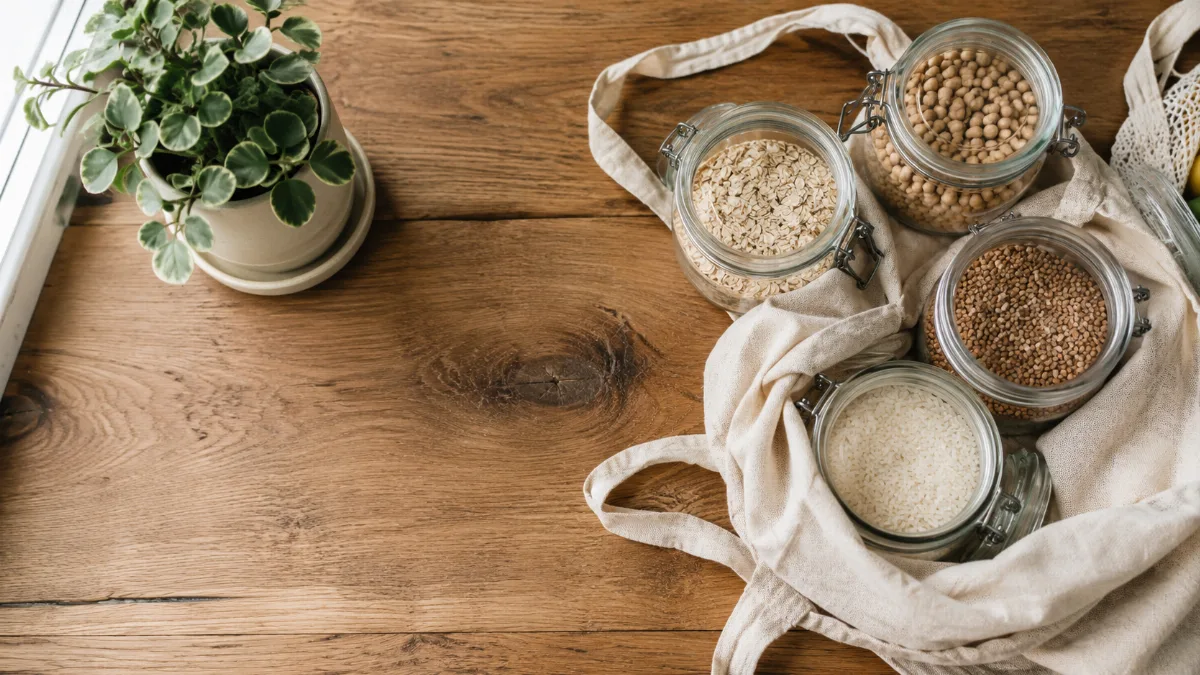
If your store has a bulk section, explore it! Pasta, rice, nuts, oats, spices – so many things can be bought without packaging if you bring your own containers or cloth bags. Just tare them first (weigh the empty container) so you only pay for the food.

Another big one: meal planning. When I actually plan out our meals for the week, I buy exactly what I need. No more sad, forgotten vegetables rotting in the back of the fridge. That's money saved, and food waste avoided. It might take an extra 15 minutes on Sunday, but it saves me so much grief later.

Step 5: Compost What You Can

Okay, this one can feel a little intimidating. But it's actually super simple, and it makes a huge difference. Food scraps make up a significant portion of household waste, and when they go to a landfill, they create methane, a potent greenhouse gas.

Composting means turning those food scraps into nutrient-rich soil. What can you compost? Fruit and vegetable peels, coffee grounds, tea bags, eggshells, even cardboard toilet paper rolls (if they get wet, they break down faster). Just avoid meat, dairy, and oily foods unless you have a specialized hot composting system.

How to start? You don't need a fancy backyard bin right away. Grab a small lidded container for your kitchen counter. Just something to collect your scraps for a day or two. Then, once it's full, you have a few options.

Check if your city has a composting program or community drop-off sites. Many places do now. If not, a simple backyard compost pile is easy to set up. You can even buy small, rotating tumblers if you're feeling a bit more ambitious.

I started with a cute little ceramic bin on my counter. It gets emptied into our backyard pile every few days. The kids actually think it's cool that their banana peels turn into dirt. Who knew?

Step 6: Diy Your Cleaning Stuff (or Buy Smarter)

Go take a peek under your kitchen sink. How many plastic bottles of various cleaners do you have? Floor cleaner, counter spray, glass cleaner, sink scrub... it's a lot, right?

Most conventional cleaning products come in single-use plastic, and they're full of chemicals. You can drastically reduce plastic waste (and save money) by making your own simple cleaners.

My go-to "recipe" is a spray bottle with half white vinegar, half water, and a few drops of essential oil (lemon is my favorite). It cleans most surfaces beautifully. For scrubbing, baking soda works wonders. A little Castile soap can handle tougher grease.

If DIY isn't your jam right now (totally fair), look for brands that offer refillable options or come in glass or cardboard packaging. Or concentrated tablets that you add water to. It's a small change, but think of how many bottles you'll save over a year!

And definitely ditch the paper towels for cleaning. A stack of old washcloths, cut-up t-shirts, or rags you already have works just as well, if not better. Just toss them in the laundry when they're dirty.

Step 7: Involve the Fam (without a Fight)

Trying to go low-waste in the kitchen without your family on board is like trying to push a rope. It's frustrating and ultimately pointless. You've got to get them in on it, even a little bit.

Don't preach at them. Nobody likes being lectured. Instead, lead by example. Kids are sponges. If they see you consistently using reusable bags or putting food scraps in the compost bin, they'll start to mimic it.

Make it a game! My kids love decorating their reusable snack bags with fabric markers. They get to pick which reusable container their lunch goes in. "Who can remember to put their apple core in the compost?" is a frequent question at our dinner table.

Explain why in simple terms. "We're trying not to throw away so much plastic because it hurts the animals." Or "When we compost our food, it helps the plants develop in our garden." Keep it light and positive, not guilt-inducing.

And be patient. There will be resistance. There will be forgotten items. Your partner might accidentally buy a plastic-wrapped item. Don't sweat it. Just gently remind them, or just take care of it yourself. The consistency, not the perfection, is what counts here.

Sticking with It when Life Gets Messy

You're going to have days when you nail it. You'll bring your bags, compost your scraps, pack a zero-waste lunch. And then you'll have days when you forget everything, grab a takeaway coffee in a disposable cup, and just want to throw your hands up.

That's normal. Life with kids is unpredictable. There are going to be busy weeks, unexpected errands, and times when convenience wins out. And that's okay. Truly. The biggest mistake you can make is letting one bad day derail all your progress.

Don't let the perfect be the enemy of the good. You're aiming for progress, not perfection. Every little bit counts. Seriously.

Here's what I tell myself when I feel like I'm failing:

You don't need to be perfect to make a difference. You just need to keep trying.

A few tips for making it stick:

  • Have backup plans: Keep extra reusable bags in your car or purse. Have some spare containers ready for leftovers.
  • Focus on what you can do: If composting feels too hard right now, focus on reusable bags. If you can't ditch all plastic snacks, focus on cooking more meals at home.
  • Celebrate small wins: Acknowledge when you remember your water bottle. Point out to your kids that the trash can isn't as full this week.
  • Be kind to yourself: You're doing a lot already. This is just one more thing you're trying to integrate into your busy life. Give yourself grace.

Frequently Asked Questions

Is This Expensive to Start?
No, not at all! In fact, it can actually save you money. You don't need to buy a bunch of fancy new "eco-friendly" gadgets. Start by using what you already have – old jars, fabric scraps for rags, containers you already own. Reusing things and buying less disposable stuff saves cash in the long run.
What About My Picky Eaters and All Their Pre-packaged Snacks?
Oh, the snack struggle is real, believe me. Don't try to tackle that first if it feels like too big of a battle. Focus on other areas where you have more control, like your cleaning supplies or your own coffee routine. When you're ready, you can try some simple swaps, like buying larger bags of snacks and portioning them into reusable containers instead of individual packs. Baby steps!

My Partner Thinks This is a Waste of Time. Help!

Same, friend. My husband was pretty skeptical at first. I didn't lecture him; I just started doing my thing. When he saw our trash can wasn't overflowing as fast, or when I pointed out how much money we weren't spending on paper towels anymore, he started coming around. Focus on the benefits that resonate with them, whether it's saving money, less clutter, or simply a calmer kitchen.

How do I Deal with Food Waste from Kids Who Don't Finish Their Plates?
Ugh, this is a daily battle, isn't it? For us, it's a combination of things. We try to serve smaller portions so they can ask for more if they're still hungry. Anything that's untouched and easily salvagable might go into a "snack plate" for later. And if it's truly done for, it goes straight into our compost bin. Don't feel guilty, just get it out of the landfill.
I Keep Forgetting My Reusable Bags/containers. Any Tips?
You and me both! It's a habit you have to build. Try keeping your shopping bags right by the front door, or always put them back in the car as soon as you unload groceries. For snack containers, make sure they're washed and ready to go in a designated spot, so it's easy to grab them when packing lunches. Consistency over perfection is key here, you'll get there.

The Bottom Line

You don't need to be a perfect low-waste guru to make a real difference in your kitchen. You're busy. You're tired. And honestly, trying to do it all perfectly is just going to lead to burnout, and nobody needs that.

Just pick one thing. Seriously, just one. Maybe it's ditching paper towels for rags. Or remembering your reusable bags at the grocery store. Start there. Get comfortable. Then, when you're ready, add another.

Every single little step you take makes a difference. For your sanity, for your budget, and for the planet your kids are going to inherit. You've got this. Now go tackle that kitchen, one small change at a time. ❤️