

The home that's easy to clean has fewer things to clean around. Low-maintenance housekeeping isn't about lowering standards or buying faster products — it's about shrinking the amount of stuff that has to be managed in the first place. A kitchen counter holding one coffee maker takes about ten seconds to wipe. The same counter with a toaster, a blender, a knife block, a fruit bowl, a soap dispenser, and a stack of mail takes closer to four minutes, because every object has to be lifted, cleaned under, and set back down. Same counter, same square footage — the difference is entirely in how many things are sitting on it.
One In, One Out
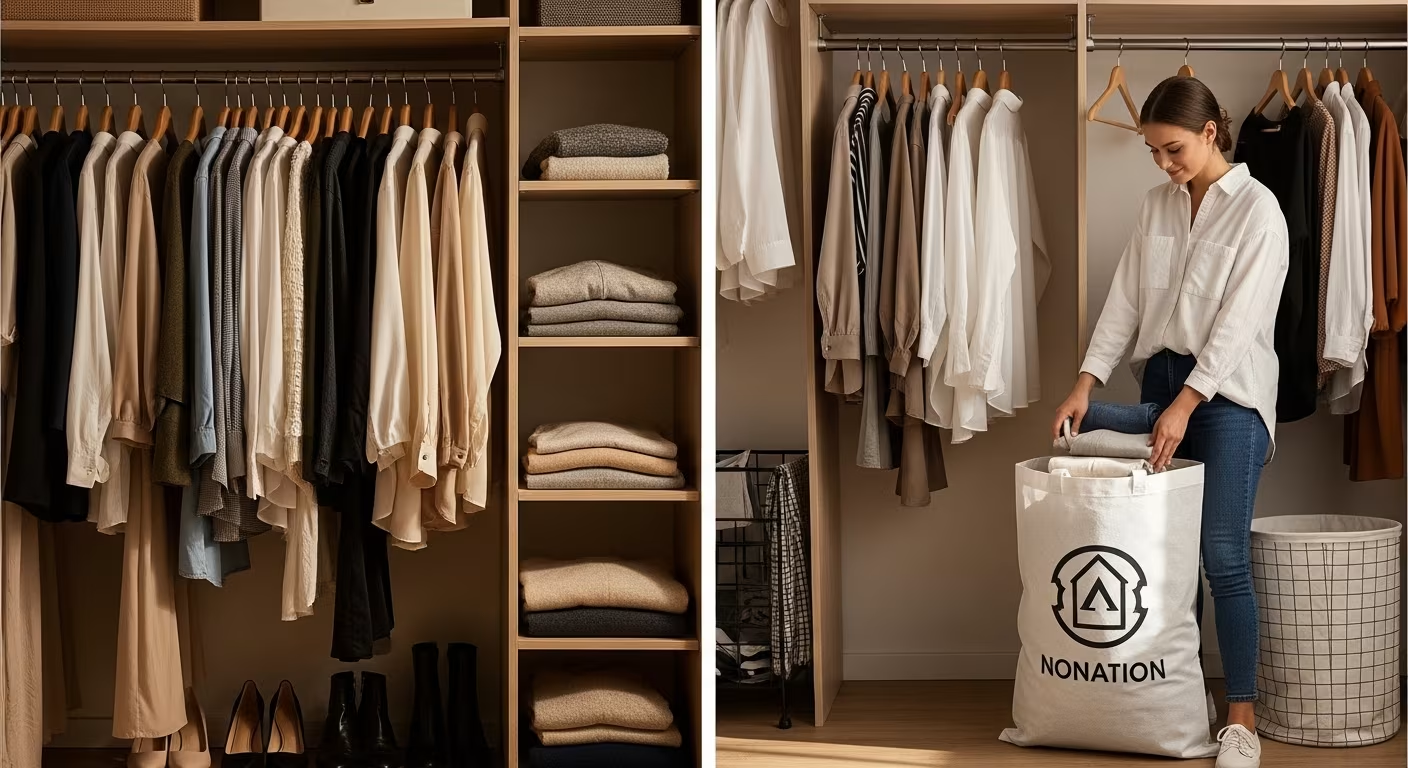
The most useful housekeeping habit isn't cleaning at all. It's removing one item every time a new one arrives. A new book means an old one goes to the library sale. A new sauté pan means the pan it replaced leaves the same week. New clothes mean a similar piece exits the closet.
This matched inflow and outflow is what stops the slow density creep that causes most cleaning difficulty. The rule fails in only one way: when the outgoing item is deferred to "someday." The fix is making the exit immediate — before the new thing gets put away, the old one goes into a donation bag by the door, and that bag leaves within the week. A home that never gains net volume never drifts toward the cluttered state that makes cleaning slow.

Default Surfaces and the Ten-Minute Reset
Every flat surface should have a defined default: what it looks like when the day is done. The kitchen counter default is clear except for the coffee maker. The entryway table is empty except for a key bowl. The bathroom counter holds only the daily hand soap. When something leaves that state during the day, the reset is simply returning it — which is faster than vague "tidying" because the target is already known.
The daily reset is the engine of the whole system. Ten minutes, done in sequence, prevents the buildup that turns weekend cleaning into a chore:
- Kitchen: counter cleared and wiped, dishes loaded, stovetop spot-wiped
- Living area: items returned to their homes, pillows and blankets back to default
- Entryway: shoes racked, coats and bags hung, mail sorted at the door
- Bathroom: soap and toothbrush back in place, counter wiped, paper restocked if low
Start in the kitchen. It's the most-used room and gives the clearest before-and-after, which is what makes the habit stick. The whole thing only works if everything has a storage home — an item with nowhere to go floats permanently, and floating items are the signal that either storage is short or the object doesn't belong in the house.
The Minimum Cleaning Kit
The product set a low-maintenance home actually needs is far smaller than the cleaning aisle implies. Five things cover nearly every routine job, and most cost a few dollars a bottle: Ohio State University Extension's Ohioline is a good place to verify the details.
| Product | How it's used | What it handles |
|---|---|---|
| White vinegar | Diluted 50/50 with water | Glass, mirrors, light mineral deposits |
| Dish soap | A few drops in a spray bottle | Counters, sinks, general surfaces |
| Baking soda | Dry, or mixed into a paste | Drains, toilet bowl, gentle scrubbing |
| All-purpose spray | Ready to use | Anything the first three miss |
| Microfiber cloths | Reused until worn out | Most wiping, in place of paper towels |
Refillable bottles for the vinegar and dish-soap solutions end the packaging cycle, and both mix in under a minute from bulk supplies. A smaller kit also means less under-sink clutter to reach around — the same principle applied to the cleaning supplies themselves.
Paper: The Category That Breaks Systems
Paper defeats more housekeeping systems than any other category. It arrives in unpredictable volume, has no obvious single home, and spreads across the counter, the table, and the desk faster than anything else. The counter-move is a two-bin system: one bin for action items (anything needing a response, a payment, or a decision) and one for filing (anything worth keeping). Everything else — flyers, junk mail, most receipts — is recycled or shredded at the door, before it ever lands on a surface.
The action bin gets worked weekly; the filing bin gets emptied monthly or quarterly. Neither bin's contents are allowed to migrate onto a surface, and both live in a fixed spot.
The Drop Zones Nobody Admits To
Every home has one or two spots that collect whatever comes through the door regardless of any system: the bedroom chair that turns into a laundry pile, the dining table that becomes a mail-and-backpack heap, the stair landing that gathers things waiting to go up. These drop zones aren't a discipline failure — they're a sign that the natural landing spot has no assigned job. The fix is to give it one. Put a real hamper where the chair was so the clothes have somewhere honest to go. Hang hooks by the door so backpacks land there instead of the table. Naming the drop zone and installing the missing storage does more than any amount of resolving to be tidier, because it removes the reason the pile formed in the first place.
A low-maintenance system still drifts if inventory grows faster than it leaves. The tell isn't chaos — it's the daily reset quietly stretching from ten minutes to twenty. That's the cue for a thirty-minute targeted sort of whichever category overran, usually paper, a half-finished seasonal clothing swap, or accumulated kitchen tools, which returns the cycle to baseline. Start tonight with a single surface: clear the kitchen counter to its default and wipe it, then let the ten-minute reset build outward from there. See also: seasonal deep cleaning checklist, weekly cleaning routines, and daily decluttering routines.


Comments
No comments yet.