


Clutter rarely arrives through one catastrophic decision. It builds through small repeated ones: a purchase here, a gift accepted there, a paper set on the counter instead of sorted, a bag not put away, a shirt tried on and left over the chair rather than hung or washed. Each action is trivial on its own. The sum across weeks and months is what eventually surfaces as "the house is out of control again." The reason it keeps returning is a simple imbalance: things enter the home every day, but they only leave when something forces them out. A daily decluttering routine is the counter-pressure, a small, steady outflow that matches the inflow so the home never drifts toward density in the first place.
The One-Item-Out Daily Practice
The most durable daily habit is removing a single item a day. It sounds too small to matter. Over a year it is 365 items gone, a concrete reduction in everything you own, store, dust, and move around. You do not have to hunt for the item through a structured search. The practice is really attention: as you move through the day you pass things that have no clear purpose, no home they reliably return to, or that you have relocated three times without ever using. That is the item for today.
The habit also recalibrates your sense of "enough." After about 90 days of steady outflow, most people notice the home already feels more open, even before any dedicated purge, because the daily removals have been quietly thinning the spaces they touch most. One item is small enough to never feel like a project and consistent enough to compound.
Zone-Based Weekly Maintenance
A weekly zone sweep catches what the daily habit misses: the buildup in storage areas, the "temporary" pile that quietly became permanent, and the spaces you can close a door on and forget. Assign each weekday a zone and give it 5 to 15 minutes. The aim is not a full declutter of that zone every week; it is awareness maintenance, keeping any single area from reaching the state where it needs a dedicated session.
| Day | Zone | What to check |
|---|---|---|
| Monday | Kitchen drawers and pantry | Expired food, duplicate utensils, saved packaging, single-use extras |
| Tuesday | Bathroom cabinet and under-sink | Expired products, near-empty duplicates, unused hair tools |
| Wednesday | Paper and mail | Process the action bin, sort the filing bin, clear surface paper |
| Thursday | Clothing | Items tried on and set aside; evaluate for wash or donation |
| Friday | Entryway and main surfaces | Anything that does not belong in the living area, returned or removed |
The zone check also surfaces the long-term holdouts, things put in a drawer "temporarily" six months ago, items kept because they might be useful someday. The daily one-item habit rarely reaches these because they are out of sight. The weekly pass brings them back into view on a fixed cycle, so the decision becomes unavoidable rather than easy to defer indefinitely.
The Inflow Audit: Where Clutter Originates
Most decluttering advice fixates on what is already in the house. The more efficient intervention is reducing what arrives, and that means naming the specific sources. Online shopping is the fastest: one-click buying means an item ships before the decision is fully made. A 48-hour wait between adding something to the cart and checking out removes a large share of impulse purchases, because the urge usually passes before the two days are up. Free items and gifts feel costless but carry the same storage burden as anything bought; a "free" branded tote still needs somewhere to live, so the useful question before accepting one is whether you would buy it if it weren't free. Children's school papers and artwork generate real volume for families, and a weekly sort, keep two or three pieces, photograph the rest before recycling, manages the flow without erasing the record.
The Exit Protocol: Making Removal Easy

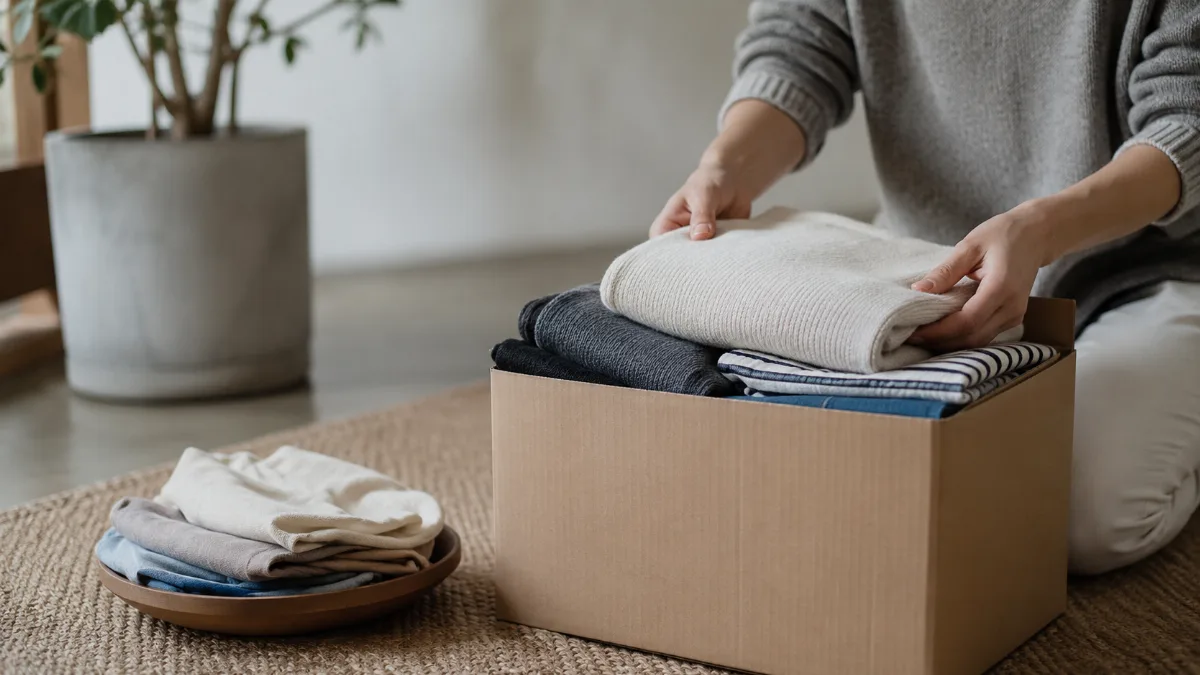
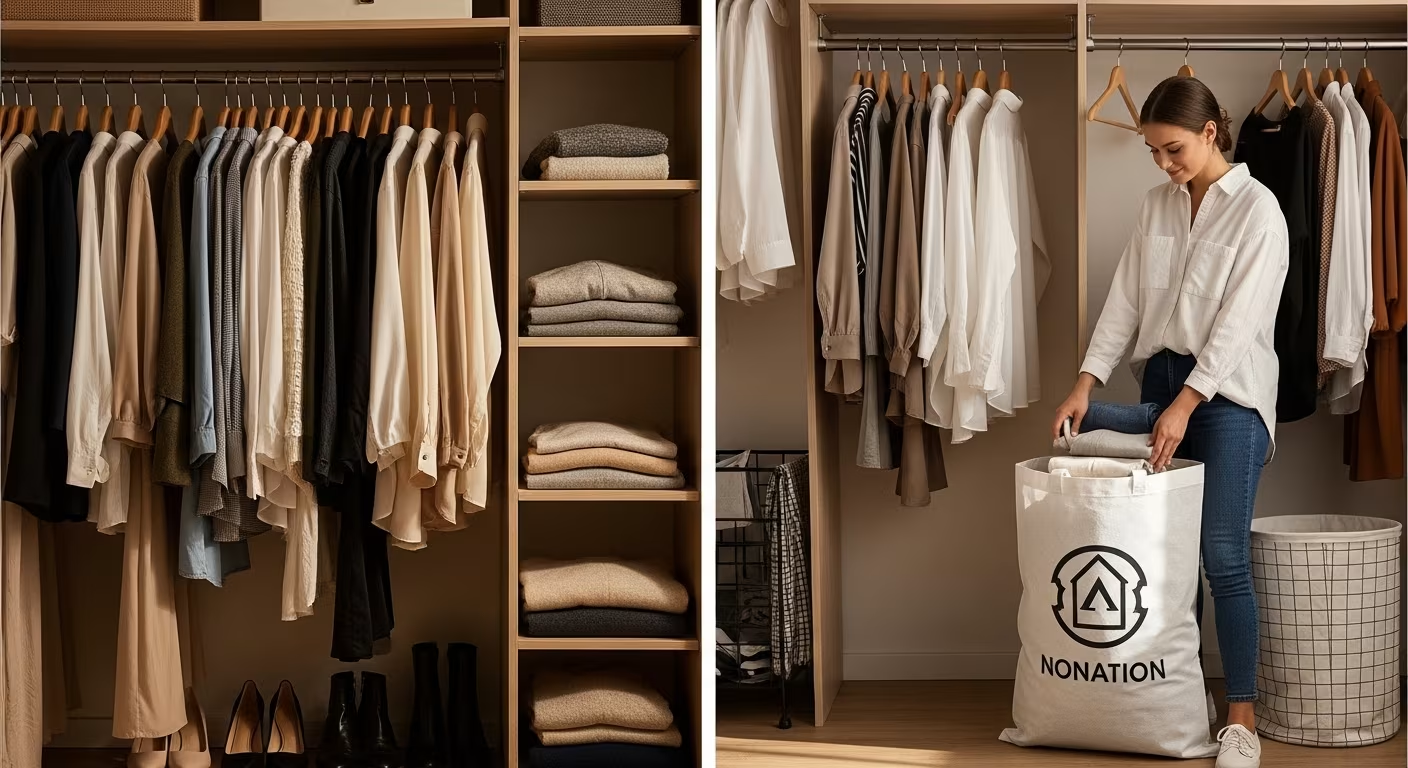
Items you have decided to remove do not actually leave unless there is a clear path out, and the exit protocol is that path. Keep a donation bag somewhere accessible rather than buried in a closet, so an identified item goes straight into it instead of onto a staging pile that never moves; the bag leaves when it is full, on a set schedule, or whenever you pass a drop-off. For anything you plan to sell, set a 30-day limit: items held longer almost always get donated in the end anyway, and the sale rarely repays the hours of listing, messaging, and shipping, with the exception of genuinely high-value pieces. For recycling and disposal, resources vary by town, most municipalities offer electronics drop-off, textile recycling through Goodwill or similar, and hazardous-material disposal for old paint and batteries. Identifying the exact route before you start the declutter removes the "I'll figure it out later" excuse that leaves bags sitting in the garage for months. Much of this echoes Ohio State University Extension's Ohioline.
One-In, One-Out for the Categories That Refill
A few categories refill faster than any daily habit can drain them, and they are usually the ones tied to a hobby or a size that changes. Books, kids' clothes, coffee mugs, tote bags, and cables are the classic offenders: each new arrival feels justified in the moment, and none of the old ones leave. The one-in, one-out rule handles these directly. When a new book comes in, an old one goes to the donation bag the same week; a new mug means a chipped one leaves; an incoming t-shirt displaces a worn one. The rule works because it moves the decision to the moment of acquisition, when you already have the new item in hand and the comparison is concrete, rather than deferring it to a future purge that may never happen.
For children's clothing, tie the rule to the size change instead of the calendar. When a size is outgrown, the whole band of that size leaves at once, sorted into donate, hand-down, or keepsake, before the next size fills the same drawer. Applied to two or three refill-prone categories, the rule quietly caps the inventory at its current level, which is often all a household actually needs once the initial sort has brought density down to something manageable.
What Actually Sustains the Practice
Daily decluttering lasts when the space reflects back calm instead of obligation. Each item removed is storage overhead gone, one less decision to make, and a little less cleaning complexity, all concrete returns rather than philosophical ones. The habit does not depend on any particular aesthetic or belief system. It rests on a single observation, that the home works better holding less, plus the small consistent actions that keep that observation true in practice.
When You Have Too Much to Declutter Daily
Some homes are past the point where one item a day matches the scale of accumulation. There, a targeted weekend sort is the right starting move before daily maintenance can take over, and the trick is to work by category, not by room. Gather every piece of clothing from every room into one pile, evaluate each item, and put back only what gets worn; do the same with books, then with kitchen tools. The category approach works because it forces a comparison across your entire inventory instead of judging items in isolation where they sit, a shirt that looks fine alone in the closet reads differently next to 40 others. The major categories usually take two to four focused sessions. Once they are done, the home sits at a manageable density and the one-item-out habit shifts from catch-up mechanism to simple upkeep. Start this week with a single category and a single daily removal, and let the two work together rather than waiting for a free weekend that never comes. For more on closing the loop, see our zero-waste decluttering strategies and our list of 21 things to declutter right now.


Comments
No comments yet.