
Minimalist Gift Giving Ideas That Save Money and Reduce Waste
Oh, the holidays.
Or birthdays. Or just, you know, Tuesday when you want to make someone feel special.
I used to dive headfirst into the gift-giving season like it was an Olympic sport. My living room would look like a toy store had exploded, only messier, and full of half-opened packages.
Then came the post-holiday crash, usually involving me tripping over a plastic dinosaur while trying to find the remote.
Sound familiar? You're not alone, mama.
If you're tired of the clutter, the financial strain, and the sheer stuff that piles up after every gift-giving occasion, stick with me.
Today, we're talking about how to give gifts that actually bring joy, not just more junk. We'll cover how to save your sanity, your wallet, and maybe even a tiny piece of the planet.
Why This Actually Matters
Let's be real for a second.
The holidays, birthdays, or any special occasion can crank up the pressure to buy, buy, buy to an insane degree. It's like we've been programmed to believe more gifts equal more love, or more fun.
But when I looked around my house after my first son's second Christmas, all I saw was mountains of plastic.
I saw toys that were played with once, then forgotten. Clothes that were worn exactly zero times. Boxes, wrapping paper, and packaging everywhere.
My kids barely even noticed half of it. They were more interested in the empty boxes than the toys they contained, for crying out loud.
That year, I felt this crushing weight of regret. Not for the money, though that was a sting, but for the sheer waste.
And for the feeling that I hadn't actually given my kids joy, just more things to manage.
Think about it: that feeling of overwhelm? It doesn't magically disappear after the presents are unwrapped.
It just transforms into the overwhelm of storing, cleaning, and eventually getting rid of all that extra stuff.
My biggest motivation for minimalist gift giving came from wanting to reclaim my home and my peace. I wanted to give gifts that mattered, that created memories, not just clutter.
And damn, it saves so much money. That extra cash? It can go towards experiences, savings, or even just a damn good coffee for you.
The Truth About Gifts: It's Not About More
The core idea behind minimalist gift giving isn't to be a Scrooge or to deny your loved ones nice things.
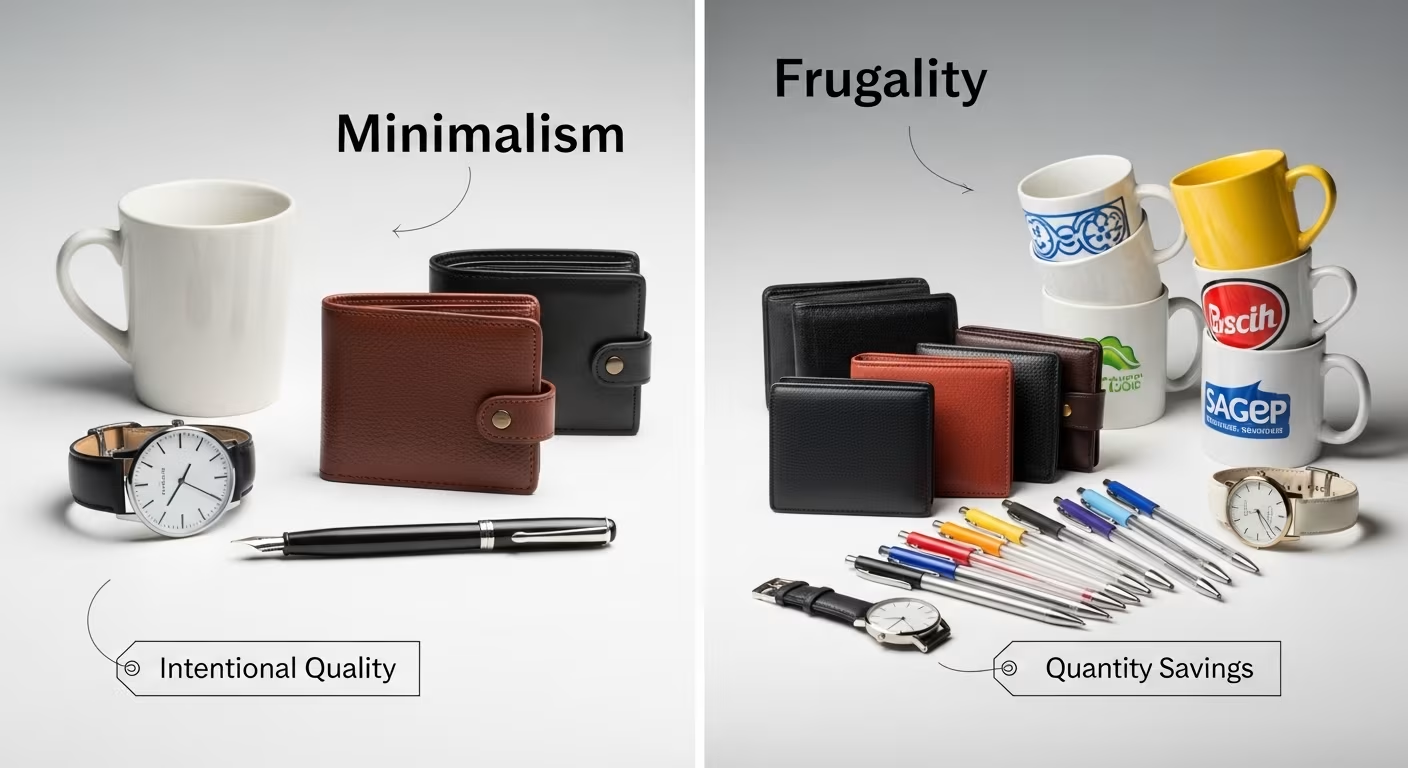
It's about being intentional. It's about shifting from quantity to quality, from transient joy to lasting memories.
When you focus on less, you can often give something much more meaningful. Something that truly resonates with the recipient.
For me, this epiphany hit hard when I realized my kids were forgetting what they'd gotten just hours after opening presents. It was a blur of bright colors and crinkling paper.
They weren't appreciating anything because there was simply too much to process.
The "Something They Want, Need, Wear, Read" Rule
This is probably the most famous minimalist gifting guideline, and for good reason. It's simple, practical, and takes a lot of the guesswork out of things.
I started implementing this with my own kids a few years ago, and it's been a damn game-changer for our family.
- Something they WANT: This is that one specific toy or item your kid (or loved one) has been talking about nonstop. The one they truly desire.
- Something they NEED: Think practical. This could be new shoes, a winter coat, a backpack for school, or even a specific tool for a hobby they love.
- Something to WEAR: This is pretty straightforward. Clothes, socks, PJs, a hat, a scarf.
- Something to READ: Books, magazines, a subscription to an educational app, even an audiobook credit.
This isn't about getting them everything they want. It's about honing in on that one big wish.
My daughter really wanted a specific LEGO set last year, and that was her "want" gift. She still plays with it regularly.
For my son, this often means new pajamas, since he seems to sprout inches overnight. Or maybe a sturdy water bottle.
For an adult, it could be a kitchen gadget they actually use, or a subscription to something practical.
Again, this is a chance to get something practical that they'll actually use and look good in.
My kids always get cozy new pajamas for Christmas, which doubles as their "something to wear" and often gets opened on Christmas Eve.
This is my absolute favorite category. You can never have too many books, right?
We love finding unique picture books or graphic novels for our kids, or a new novel for my husband.
This simple framework helps you limit the volume while ensuring the gifts are thoughtful and useful. It eliminates the random plastic junk.
Experiences Over Things: Creating Memories, Not Clutter
Beyond the "Want, Need, Wear, Read" rule, my biggest pivot in gifting was towards experiences.
These are gifts that don't take up space in your home. They create memories that last way longer than any toy.
Think about it: do you remember that specific toy you got for your seventh birthday? Or do you remember that trip to the zoo with your grandparents?
For our family, experience gifts have been a total game-changer.
They foster connection, create anticipation, and give us something fun to look forward to long after the holiday season is over.
We've done everything from annual passes to our local children's museum to a weekend trip to a cabin in the mountains. Even small things count!
How To Actually Do It: Minimalist Gift Giving in Practice
Okay, so the concept sounds great. But how the hell do you actually do it when Grandma wants to buy 15 things and your kids have a mile-long wish list?
It takes a bit of planning and some conversations, but trust me, it's worth the effort.
Step 1: Shift Your Mindset (and Your Family's)
This is probably the hardest step, especially if your family is used to lavish gift exchanges. You need to be the change you want to see.
Start by talking to your partner. Get on the same page about your new approach to gifting. This is crucial for a united front.
Then, gently, calmly, bring it up with other family members. Frame it positively: "We're trying to focus more on experiences and less on stuff this year."
Don't make it about them doing anything wrong. Make it about your family's values and what you're trying to achieve.
You might say something like, "Instead of a bunch of small toys, we'd really appreciate contributions towards a family membership to the museum," or "We're focusing on one special gift for each kid, so if you'd like to contribute to that, we can share their 'big wish'."
Expect some pushback. Some people express love through gifts, and changing that can feel personal to them. Be patient, explain your "why," and offer concrete alternatives.
Step 2: Make a Master Gift List (and Stick To It)
Before any shopping even begins, sit down and make a list for each person you're buying for.
For your kids, involve them in the "want" discussion. What's the one thing they're dreaming of?
Then, figure out their "need," "wear," and "read" items. This automatically limits the number of gifts you're buying.
For adults, think about their hobbies, their needs, or what they truly enjoy. Do they love coffee? A specific type of tea? Are they always losing their earbuds?
Set a budget for each person. Write it down. This is your game plan, and it helps prevent impulse buys.
Step 3: Consider "Consumption" Gifts
These are my secret weapon against clutter. Consumption gifts are items that get used up, disappear, or are consumed, leaving behind no lasting physical footprint.
Think beyond just food, though delicious consumables are always a hit. A fancy hot chocolate mix, local coffee beans, or gourmet snacks are usually well-received.
For kids, this could be art supplies (specific ones they actually use up, like a special pack of markers or paint), playdough, or ingredients for a baking project you can do together.
For adults, consider high-quality bath bombs, fancy soaps, candles, or a curated selection of teas. Anything that will be enjoyed and then, poof, gone.
These kinds of gifts show thoughtfulness without burdening someone with more stuff to store forever.
Step 4: Embrace Experience Gifts
This is where the real magic happens. Experience gifts create anticipation, memories, and shared joy.
For families with young kids, consider a membership to a local zoo, children's museum, or even a year-long pass to an indoor play place. These are used repeatedly and create so many opportunities for fun.
For older kids or adults, think about tickets to a concert, a sporting event, a cooking class, or a local art workshop. What are their interests?
Even small experiences count. A "movie night in a box" with a gift card for a rental and some fancy popcorn, or a voucher for a specific date with you to get ice cream.
The key is to present it well. A small card detailing the experience, maybe a photo from the venue, can make it feel just as exciting as a wrapped gift.
Step 5: DIY with Intention (Not Just for Cheapness)
Homemade gifts can be incredibly thoughtful, but they can also turn into clutter if not done right. The goal isn't just to save money, it's to give something genuinely useful or beautiful.
Are you a baker? A plate of your famous cookies or a homemade jam can be a wonderful gift. Do you knit? A cozy scarf made specifically for someone can be deeply appreciated.
For kids, maybe you create a "coupon book" for special activities: "one stay-up-late night," "one choose-the-movie night," "one extra bedtime story." These are priceless and take up no space.
Avoid making something just to make something. Only DIY if you know it's something the recipient will truly value and use, not just politely stash in a closet.
Step 6: Gift The Gift of Time or Skill
This is probably the most undervalued gift there is. Time is a precious commodity, especially for moms.
Offer to babysit for a new parent. Give a coupon for "one weekend of yard work" to a busy friend. Offer to teach someone a skill you have, like knitting, baking, or even organizing their pantry.
For an elderly relative, perhaps you offer a monthly visit to help with groceries or just to chat. These gifts are priceless because they address real needs and create genuine connection.
My best friend once gave me a "clean my bathroom" voucher when I had a newborn. I almost cried with gratitude. That's a damn good gift right there.
Step 7: Plan Ahead (Seriously, Do It)
Minimalist gifting thrives on intention, and intention requires planning. Don't wait until the last minute and panic-buy a bunch of crap.
Start your list early. Think about what people genuinely need or would truly enjoy. Keep an eye out for sales on those specific items throughout the year.
If you're doing experience gifts, book tickets or purchase memberships in advance. If you're making something, give yourself plenty of time.
Spreading out your gift-buying also helps ease the financial burden. A little bit here, a little bit there, feels a lot better than one huge credit card bill in December.
Making It Stick & Avoiding the Pitfalls
Alright, you've got the ideas. Now, how do you keep this minimalist gifting train on the tracks?
The biggest hurdle usually comes from external pressure. Relatives who love to buy things, or kids who compare their haul with their friends'.
Don't get discouraged. This is a marathon, not a sprint.
The best gift isn't wrapped; it's lived.
One common mistake is feeling guilty. You might feel like you're depriving your kids or being ungenerous with adults. Shake that off, mama.
You're actually being more generous by giving thoughtful, meaningful gifts that don't add stress or clutter.
Another pitfall is giving in to the last-minute frenzy. You know, when Black Friday hits and suddenly everything looks like a "good deal" you can't pass up?
Stick to your list. Remind yourself of your "why." Is this item on the list? Will it truly bring joy or fill a need? If not, walk away.
And what about those well-meaning gifts you receive that just aren't a fit?
Don't feel obligated to keep everything. Thank the giver sincerely, and then quietly assess. Can it be donated? Re-gifted (to someone who will actually use it)?
For kids' toys, consider a toy rotation system. Some things go into storage, and when they come out a few months later, they feel brand new.
Or, if it's truly not needed or wanted, donate it to a local charity. Out of sight, out of mind, and it helps someone else.
Frequently Asked Questions
Offer specific suggestions, and if they still buy a lot, accept gracefully and then quietly donate or store what isn't needed. You can't control what others do, only how you respond.
What if my kid only wants toys, and lots of them?
Kids are great at wanting all the things, aren't they? Validate their excitement. Talk about their favorite toy and why they love it. Then, gently introduce the idea of "just one special toy" or "one big adventure."
Help them understand that experiences, like going to the park or a special outing, are also gifts. Over time, they'll learn the value of quality over quantity. And remember the "something they want" rule – it still allows for that coveted toy!
It's about thoughtfulness, connection, and giving something that truly enriches someone's life without burdening them. You're giving the gift of less stress and more joy, both for yourself and the recipient. That's pretty damn generous.
For example, movie tickets with a box of their favorite candy, or zoo tickets with a small stuffed animal. Build anticipation by talking about the upcoming adventure. Frame it as "our special day" or "our big trip."
Starting with one holiday or event can be a great way to ease into it. Once you see the benefits, you'll likely want to extend it year-round. It makes everything feel less frantic and more meaningful.
The Bottom Line
Embracing minimalist gift giving isn't about being stingy or joyless. It's about being thoughtful, intentional, and creating more peace in your home and your life. It's about giving gifts that truly matter.
You'll save money, reduce waste, and most importantly, foster deeper connections and create lasting memories instead of just more stuff to clean around.
Start small, have those conversations, and don't be afraid to break from tradition. Your sanity (and your storage space) will thank you. ✨