
How to Implement a Toy Rotation System That Actually Works

Hey there, friend. 👋 Let's be real for a sec. If your living room currently resembles the aftermath of a small toy tsunami, you are not alone. I’ve been there. My first kid’s room was basically a giant ball pit made of plastic animals and forgotten crayons.

I used to spend my evenings tripping over discarded trains, stuffing dolls under the couch, and swearing I'd "organize it all tomorrow." Tomorrow usually meant shoving things into a bin and calling it a day, only for the chaos to reappear. Sound familiar? We’re going to tackle that beast today.

We’re talking about toy rotation – not some fancy, Pinterest-perfect setup, but a real-life, sanity-saving system that actually makes sense for tired moms. I’ll walk you through why it matters, how to actually do it without losing your mind, and how to avoid the common pitfalls. Because trust me, I've hit every single one.

Why This Actually Matters

So, why bother with this whole toy rotation thing when you’re already drowning in laundry and battling toddlers over broccoli? The short answer: sanity. Yours, mostly. But also theirs.

Before I implemented this, I was spending at least an hour every single day cleaning up toys. An hour! That’s 365 hours a year I could have spent reading a book, drinking a coffee in silence, or just staring blankly at a wall. I swear, the sheer volume of plastic crap was giving me anxiety.

Plus, my kids weren't even playing with half of it. They'd dump out every single bin, look at the mountain, and then ask for the iPad. It was like they were paralyzed by choice. Turns out, less stuff means more actual play. Who would've thought?

The Never-ending Toy Avalanche (and How to Stop It)

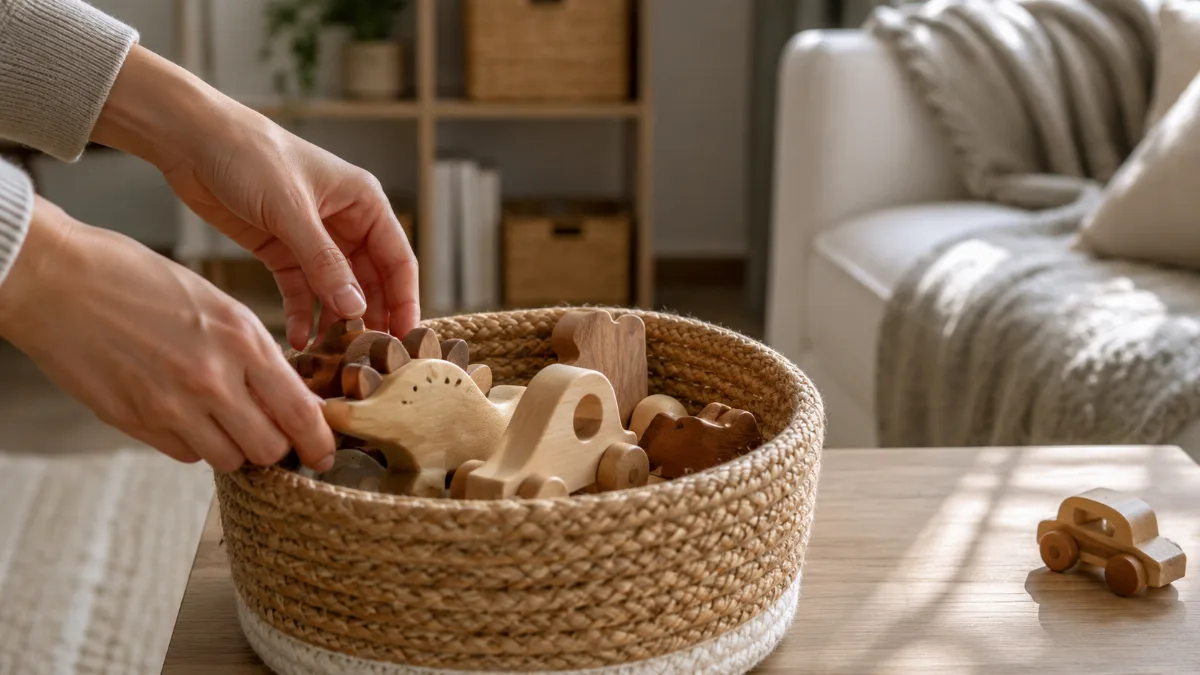
Let's break down what toy rotation actually is, because it's simpler than it sounds. It's basically curating a small selection of toys for your kids to play with at any given time, while the rest are stored away out of sight. Then, after a week or two (or whenever you damn well feel like it), you swap them out.

Think of it like a library for your own house. You're not getting rid of the books; you’re just making sure only a few are on the coffee table at once. This isn't about deprivation, it's about giving toys a chance to be new again.

Kids, especially little ones, can get totally overwhelmed by too many choices. When everything is available all the time, nothing feels special. They flit from one thing to the next, not really engaging with anything deeply.

It's Not About Deprivation, It's About Intention

When I first heard about toy rotation, my immediate thought was, "My kids are going to freak out. I can't just take their stuff away." And yeah, there were some initial protests. But I quickly realized this wasn't about taking things away forever. It was about presenting them with intention.

Instead of a vast ocean of plastic, they got a focused, exciting set of "new" discoveries. And guess what? They played longer. They were more creative. My oldest, who used to just push a pile of cars around, suddenly built an elaborate road system when he only had a few cars and some blocks.

Here's why this small shift makes a huge difference:

  • Less Overwhelm for Tiny Brains: Imagine walking into a grocery store with 50 brands of cereal. It’s paralyzing. Kids feel the same way with a room full of toys. Fewer choices help them focus and develop deeper play.
  • Deeper Engagement: When a toy reappears after being "away" for a while, it’s like rediscovering an old friend. Kids approach it with fresh eyes and renewed interest, leading to longer, more imaginative play sessions.
  • Sanity for You: This is huge. Seriously, the mental load of constantly tidying a disaster zone is exhausting. With fewer toys out, cleanup is faster, easier, and less frequent. You spend less time nagging and more time, well, living.

Actually Doing It: Your Step-by-step Playbook

Alright, enough theoretical talk. You're tired, I'm tired. Let's get down to the dirty work. This might feel like a big project at first, but I promise, once you get the system going, it's a huge relief. Think of it as a one-time big push for long-term chill.

Step 1: the Great Toy Purge (no Guilt Allowed)

This is the most crucial, and often the hardest, aspect. You can't rotate effectively if you have too much junk to begin with. Grab some bins or bags: one for donation, one for trash, and one for "maybe later" (but really, try to avoid that one).

Go through every single toy in your house. Yes, every damn one. Pull it all out into one big pile. It will look like a bomb went off, and you'll question your life choices. That’s normal.

Now, pick up each item and ask yourself: Is it broken? Does anyone play with this? Is it missing pieces? Is it age-appropriate? Be ruthless. If your kids haven't touched it in months, or if it causes more frustration than joy (looking at you, broken remote control car), it's probably time for it to go. I once found 17 tiny plastic animals that had lost their mates. Into the donation bin they went. No regrets.

Step 2: Sorting Into Categories (like a Grown-up Puzzle)

Once you've purged, it's time to organize what's left. Group similar items together. Think blocks, cars, dolls, puzzles, art supplies, animal figures, pretend play items, musical instruments. Don't overthink this part, just make logical groupings.

This step is important because you want to make sure each rotation offers a variety of play. You don't want to swap out "all the cars" for "all the blocks" and have your kid miss out on other types of play. Mixing it up keeps things interesting. So, put all the Lego Duplos together, all the train tracks together, all the dress-up clothes together, and so on.

Step 3: Creating Your Rotation Zones (the Secret Stash)

Now you need a place for all the toys that aren't currently in rotation. The key here is out of sight, out of mind. If your kids can see the bins of "new" toys, they'll constantly ask for them, defeating the whole purpose.

I use clear plastic bins with lids, stored in the top of our coat closet and a corner of the garage. You could use under-the-bed storage, a guest room closet, or even a high shelf in the laundry room. Just make sure they're accessible to you but not to curious little hands. Labeling the bins is a huge time-saver. Trust me, trying to remember which bin has the play-doh accessories is a hell I wouldn't wish on my worst enemy.

Step 4: the First Rotation (it's Kinda Like Magic)

Okay, you've purged, sorted, and stashed. Now for the fun part. From your sorted categories, select a small, manageable number of toys to keep out. Aim for a variety of play types – maybe one building toy, one vehicle set, one imaginative play item, a puzzle, and a few books.

The exact number will depend on your kids' ages and your space, but less is definitely more. For my toddler, I usually aim for 5-7 distinct "sets" of toys. For my older child, maybe 7-10.

Put these selected toys in your kids' play area. Take everything else that made the cut and put it into your rotation bins. Watch what happens. The first few days might involve some asking for old favorites, but usually, the "newness" of the smaller selection quickly takes over.

Step 5: Setting a Schedule (don't Overthink It)

This is where people often get hung up. "How often should I rotate?" There's no magic number. My personal sweet spot is every two weeks. It's long enough for them to truly engage with the toys, but short enough that they don't get bored.

Some families do weekly, some do monthly. You might even find yourself rotating specific items on demand if a particular interest sparks. For example, if we’re reading a book about dinosaurs, I might pull out the dino figures even if it's not our official rotation day. The point is to find a rhythm that works for your family, not some arbitrary rule. Don’t let perfection be the enemy of good enough here.

Step 6: Observing and Adjusting (you're the Boss)

This isn't a set-it-and-forget-it system forever. You’ll need to pay attention. Are your kids constantly ignoring a certain toy? Maybe it's not a hit, and it can be donated. Are they really engaging with one specific type of play more than others? You might want to include more of those items in the next rotation.

I keep a mental note (or sometimes a real note, if I remember where I put the pen) of what's working and what's not. This system is flexible. If a rotation isn’t sparking joy, feel free to swap things out early. It's your house, your rules. You're the one who has to live in it.

Making It Stick & Dodging Common Pitfalls

Okay, so you’ve gone through the steps. You’ve got a small selection of toys out, and the rest are stashed. Now, how do you keep this momentum going when you’re tired and life gets in the way? The biggest challenge is consistency, and the second biggest is battling that little voice in your head.

"You don't need a perfect system. You just need a system that's better than the one you have now."

I remember one hellish week when I was sick, the kids were sick, and the idea of swapping out toy bins felt like climbing Mount Everest. I didn’t rotate that week. And you know what? The world kept spinning. Don't beat yourself up if you miss a rotation or if a new toy sneaks its way in. It happens. Just reset when you can.

Mistake #1: Too Many Toys in Rotation

This is probably the most common mistake. You do all that purging and sorting, and then you put out half of everything. The goal isn’t just to store toys, it's to reduce the visual clutter and choice overload in the play space.

If your child's playroom still looks like a toy store exploded, you probably have too many items out. Less really is more here. Try to be intentional about what you put out, ensuring each item has a purpose and offers a different type of play.

Mistake #2: Not Sticking to a Schedule (or Being Too Rigid)

As I mentioned, consistency helps, but rigidity hurts. If you decide you're going to rotate every Tuesday at 3 PM, and then life throws a curveball, don't let it derail you completely. Miss a Tuesday? Do it Wednesday. Or Friday. Or next Tuesday.

The important thing is to get into a rhythm that works for your family. If monthly is all you can manage, that's better than nothing. If weekly is too much, stretch it to ten days. This is about making your life easier, not adding another chore to your already overflowing plate.

Mistake #3: Feeling Guilty

Oh, the guilt. "My poor child, I'm taking away their toys! They'll think I don't love them!" Stop it. Seriously. You are not depriving your child. You are actually enhancing their play experience, fostering creativity, and teaching them that not everything needs to be available all the time.

You're also doing yourself a massive favor by creating a calmer, more organized home. Happy, less stressed mama equals happy kids. So ditch the guilt. You're a damn good mom, and this is a smart parenting move.

Mistake #4: Not Involving Your Kids (when Age-appropriate)

Once your kids are old enough (around 3 or 4, depending on the kid), involve them in the rotation process. My kids actually get excited about "new toy day." We talk about which toys are going "on vacation" and which ones are coming back.

Letting them help put toys into the bins or choose a few items for the next rotation gives them a sense of control and makes them less likely to resist. It’s also a great way to introduce the concept of tidying up and valuing their possessions. Plus, it makes it less like you’re the toy police.

Frequently Asked Questions

How Many Toys Should I Keep out at One Time?
This really depends on your child's age, personality, and your space. For toddlers, I recommend 5-7 distinct play sets or categories. For preschoolers, maybe 7-10. The goal isn't a specific number, but rather a selection that encourages focus without overwhelming them. Start small, and adjust if you notice them getting bored quickly or overwhelmed.
What do I do if My Kid Asks for a Specific Toy I Put Away?
It happens! My kids do it all the time. My usual response is, "Oh, that's on vacation right now. We'll get it out next week when we rotate again." Sometimes, if they're really insistent and it's a specific, calm request (not a tantrum), I might pull it out. But mostly, I redirect their attention to the awesome toys that are currently available. It’s a boundary, and they learn pretty quickly.
My House is Small. Where do I Store the Rotated Toys?
Small spaces are tough, I get it. Think vertically (shelves high up in closets), under beds in flat bins, or even in the trunk of your car (if you’re desperate and it’s a short-term solution for like, one bin). My friend uses the top shelf of her linen closet. Any spot that's out of sight but relatively accessible to you will work. You just need to be creative.

Is This Really Worth the Effort? I'm Already So Tired

Yes, damn it, yes! The initial effort of purging and setting up the system is real, and it’s tiring. But the long-term payoff in reduced stress, less cleaning, and more independent, engaged play from your kids is 100% worth it. Think of it as an investment in your future sanity. Once it’s set up, each rotation takes maybe 15 minutes. That’s nothing compared to the hours you'll save on cleanup.

What About Open-ended Toys Like Blocks or Playdough? do Those Get Rotated?
Good question! I tend to keep core open-ended toys like basic wooden blocks, a steady supply of art paper, or a few board books accessible almost all the time. These are the "evergreen" toys that never really lose their appeal. However, I do rotate accessories for these. So, maybe one week they have play-doh with cutters, and the next they have it with a rolling pin and stamps. For blocks, I might rotate out specific themed sets but keep the main set available.

The Bottom Line

Listen, you don't need a spotless house or perfectly curated play zones to be a good mom. But a little less toy chaos can genuinely make a big difference in your everyday life. It did for me. It means less frantic tidying, more focused play, and honestly, a bit more peace in the home.

Start small. Tackle one area first. Purge what you can. And remember, this is about making your life better, not adding another impossible standard. You got this, mama. Now go pour yourself that damn coffee. ❤️