
How to Style Open Shelving Without Making It Look Cluttered

You know that feeling, right? You’re scrolling through Pinterest, completely mesmerized by those perfectly styled open shelves.

Everything looks so effortless, so chic, so… uncluttered. Then you look at your own open shelves, and yeah. Mine used to look like a tornado hit a thrift store, too. 👋

It’s a special kind of chaos, isn’t it? The kind that makes you wonder if "minimalist" and "open shelving" can even exist in the same sentence when you live with actual humans, especially tiny ones.

Today, we're gonna talk about how to make those shelves look good, stay that way, and not add to your daily mental load. We’ll cover why it matters, how to actually do it step-by-step, and what mistakes to avoid so your beautiful display doesn't turn into a junk magnet.

Why This Actually Matters

Okay, so it's just shelves, right? Who cares if they look a little messy? Well, I used to think that, too.

But here’s the thing: visual clutter is real clutter. It’s like a constant low hum of "unfinished business" in the back of your brain, especially in high-traffic areas like the kitchen or living room.

I remember my kitchen shelves. They were a mishmash of mismatched mugs, half-empty spice jars, and weird souvenir magnets from college trips. Every time I stepped into the kitchen to make dinner, my eyes would automatically dart to them, and my brain would just sigh.

It wasn't just about looking "pretty" for guests. It was about feeling a tiny bit more at peace in my own damn home. That constant visual noise was adding to my already overflowing "mom brain" to-do list, even if I wasn't consciously realizing it.

When I finally tackled them, it wasn't just my kitchen that felt lighter. My head felt lighter. It reduced the mental friction I didn’t even know was there, which honestly, is a lifesaver when you're already trying to remember if it's Tuesday or Thursday.

Plus, less stuff on display means less stuff to dust. And who doesn't want that? I’d rather spend that extra 10 minutes playing with my kids or, let’s be real, staring blankly at a wall, than meticulously wiping down 40 different items on a shelf.

What Even Is "Styled" Open Shelving, Anyway?

When you see those beautiful shelves online, it's not usually because they’re packed to the gills with every single item the person owns. It’s the exact opposite, actually.

Styled open shelving is about thoughtful curation and intentional display. It’s less about storage and more about creating a visual moment in your home.

Think of it like a gallery wall, but with actual objects instead of just pictures. You’re telling a story, or creating a feeling, with a few well-chosen pieces.

It’s definitely not a free-for-all storage solution for everything that doesn't fit in a cabinet. And that's often where we go wrong, right? We see open shelves and think "more space!" when really, they demand less stuff.

The "Less Is More" Mantra (But Like, Actually)

Okay, so everyone says "less is more." But what does that even mean when you're staring at an empty shelf trying to figure out how to make it look decent without buying a whole new collection of decorative gourds?

For open shelving, "less is more" means being really selective. It means giving your eyes a place to rest, not just a bunch of stuff to look at.

It means every single item on that shelf should earn its spot. Is it useful? Is it beautiful? Does it spark a genuine feeling of joy or memory?

  • Function first, always: Before you even think about aesthetics, consider what you actually need accessible on those shelves. In a kitchen, maybe it's your everyday plates, some mixing bowls, or pretty mugs. For a living room, maybe it's a few favorite books. Don't force purely decorative items if you're truly short on functional storage.
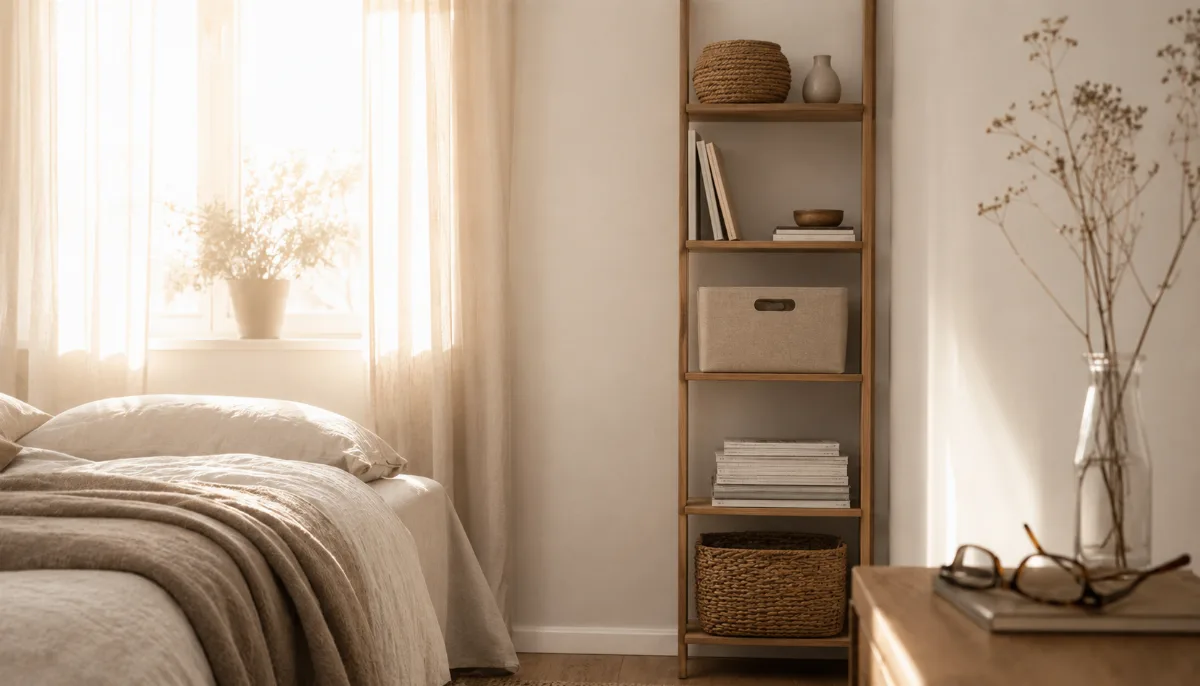
  • Embrace visual breathing room: This is probably the biggest takeaway for minimalist open shelving. Empty space is your friend. Don't cram every inch. Allow gaps between items and groups of items. This makes the pieces you do display stand out and prevents that dreaded cluttered look.
  • Personal touch (sparingly): Yes, your home should feel like your home. But that doesn't mean displaying every single trinket you’ve ever owned. Pick one or two truly meaningful items – a small piece of art from your kid, a vintage vase from your grandma, a photo. These add personality without adding visual noise.

How To Actually Do It: My 7-Step Shelving Salvation Plan

Alright, enough theory. Let's get down to brass tacks. This isn't rocket science, but it does require a bit of ruthless honesty and some patience. Trust me, I've made all the mistakes so you don't have to.

Step 1: Empty Everything Out (Seriously, Everything)

I know, I know. It sounds like a pain in the ass. But you can't start with a clean slate if the old mess is still there. Pull every single item off those shelves. Every single one.

Put it all on your counter, your dining table, the floor – wherever. Just get it off the shelves. This gives you a truly fresh perspective and helps you detach from the "it's already there" mentality.

Step 2: Clean Your Damn Shelves

While everything is off, take a minute to actually wipe down the shelves. Dust, crumbs, maybe a sticky spot from that time your toddler tried to make a "smoothie" with flour and water.

It’s amazing how much better even empty shelves look when they're sparkling clean. This step is purely practical, but it sets the stage for everything else.

Step 3: Curate Your Collection (The Hard Part)

Now, look at that pile of stuff you just pulled off. This is where you get brutal. Ask yourself: "Does this item deserve a spot on my beautiful, visible open shelves?"

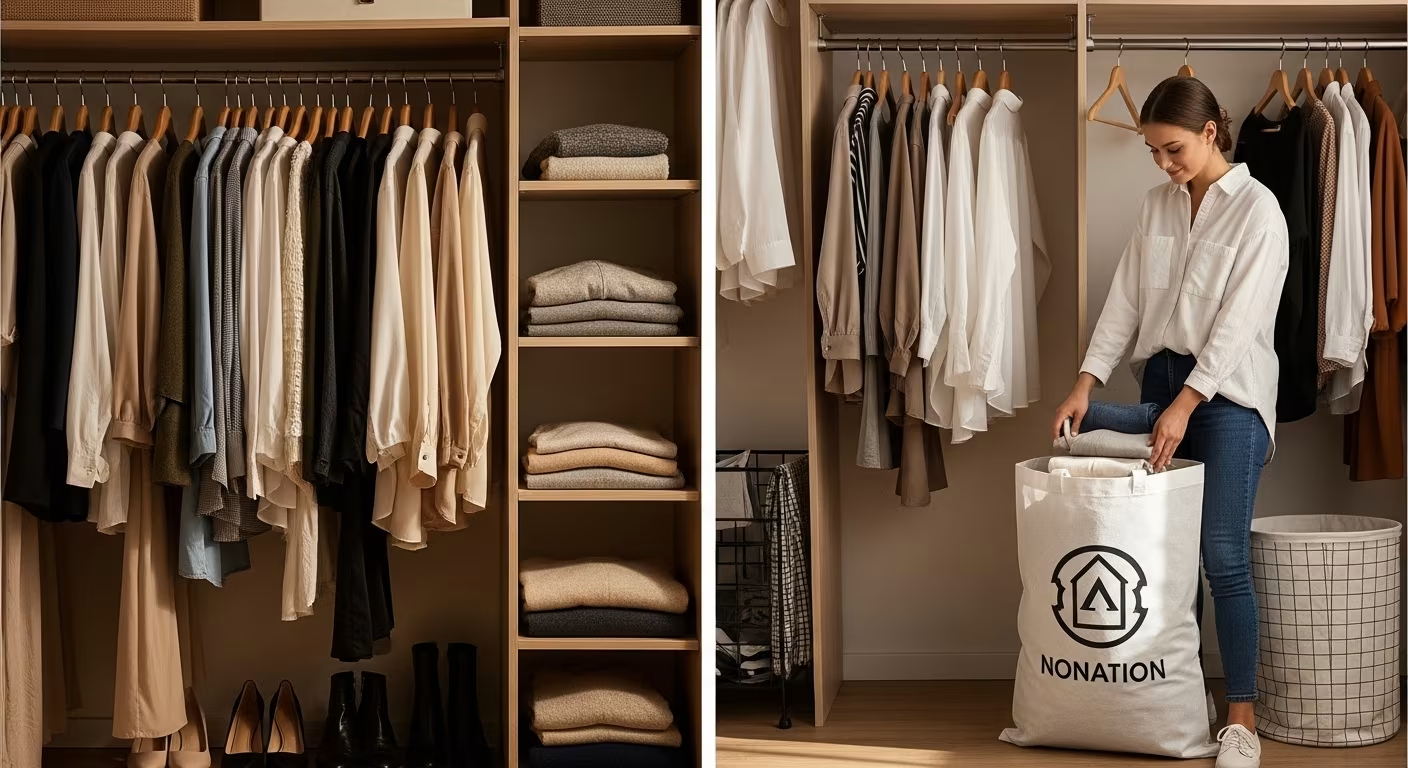
Separate everything into three piles: Keep (for the shelves), Keep (for closed cabinets), and Donate/Trash. Only put back things that are truly beautiful, genuinely useful for daily life, or deeply sentimental (and don't look like junk).

Do you really need 17 coffee mugs? Be honest. I bet you use three regularly. Put the rest in a cabinet or donate them. If it’s chipped, stained, or you haven’t touched it in a year, it probably doesn’t belong on your display shelves.

Think about colors and materials too. Are there common themes? Simple white plates, wooden bowls, green plants – these tend to look harmonious. A rainbow of plastic kids' cups? Probably not.

Step 4: Start with the Anchor Pieces (Your Big Guns)

Once you’ve got your curated "Keep for Shelves" pile, start with your largest, most functional items. These are your anchors. For a kitchen, this might be a stack of dinner plates or a set of bowls.

Place these first, creating a base for your display. Don't put everything on one shelf. Distribute them. For instance, a stack of plates on the bottom left shelf, a stack of bowls on the middle right.

This creates balance and gives you a framework to build upon. You're thinking about the big picture here, not the tiny details yet.

Step 5: Group Like with Like (But Not Too Much Like)

Now, start adding smaller items, grouping them in odd numbers – usually 3. This is the "rule of three" and it really does work for visual appeal.

So, instead of a single plant, maybe it's a plant, a small book, and a little ceramic dish. Or three different height candles. Vary heights and textures within these groups.

Don’t make everything uniform. A tall vase next to a short stack of coasters, maybe a small framed photo. The variation adds interest without adding clutter. Think small vignettes, not armies of identical items.

Leave plenty of space around these groups. This is crucial for that "uncluttered" look. Don't feel like you have to fill every nook and cranny. Seriously, resist the urge.

Step 6: Embrace Negative Space (Your New Best Friend)

I cannot stress this enough: empty space is gold on open shelves. It allows the items you do display to shine, and it gives your eye a break.

Don't be afraid to leave large sections of a shelf completely bare. It's not empty, it's intentional. It speaks volumes without saying anything.

When you feel like you want to add "just one more thing," step back. Take a photo with your phone. Often, the photo will show you what your eye misses – that one extra item that pushes it from styled to slightly messy.

This takes practice, especially if you’re used to filling every surface. But it’s the secret sauce to making those shelves look like they belong in a magazine.

Step 7: The "One-In, One-Out" Rule for Life

You’ve done all this hard work. You’ve got beautiful, uncluttered shelves. Now, how do you keep them that way?

The "one-in, one-out" rule isn't just for clothes, it's for everything. If you buy a new decorative bowl, an old one has to go. If you get a new cookbook, you need to decide which old one gets demoted to a closed cabinet (or donated).

This prevents the slow creep of clutter that will inevitably happen if you don't have a system. It's how those messy souvenir magnets ended up back on my shelves after a few months. Be vigilant, mama. Your future self will thank you.

Making It Stick / Common Mistakes: Don't Mess This Up, Mama

Okay, so you've put in the work, and your shelves are looking damn good. But here’s the thing: keeping them that way is an ongoing effort. It's easy to fall back into old habits.

I’ve definitely made all these mistakes myself, sometimes more than once. It’s a learning curve, especially when life happens and things just pile up.

Mistake 1: Too Many Tiny Trinkets

Those cute little knick-knacks? They might be adorable on their own, but a collection of them on an open shelf quickly looks like clutter. They make the space feel busy, collect dust like it’s their job, and are a pain to clean around.

Instead, opt for fewer, larger items that have more visual weight. One substantial vase looks much cleaner than five tiny ceramic birds.

Mistake 2: Ignoring Function for "Pretty"

I get it. You want everything to look picture-perfect. But if you’re constantly grabbing for something that's difficult to reach or pulling out an item that looks totally out of place with your aesthetic, it's not sustainable.

Don't put your kids' brightly colored plastic snack cups on display if it clashes with your carefully curated neutral palette, even if they're "functional." Store them in a cabinet and keep the shelves for things that truly work with the aesthetic and your life.

Mistake 3: Forgetting About Dust (The Inevitable Enemy)

Open shelves get dusty. Period. There’s no escaping it. If the thought of wiping down your shelves more frequently makes you groan, then maybe open shelving isn't for you, or at least not everywhere.

Fewer items means less dusting, which is a big win for me. Just remember that it’s part of the deal. Budget in a quick wipe-down once a week or every other week as part of your normal cleaning routine.

Mistake 4: Not Having a "Home" for Everything Else

You’ve cleared off the shelves, which is awesome. But if all that "donate/cabinet" stuff just ends up in another corner or on another surface, you haven't actually solved the problem.

The decluttering process for your open shelves needs to be part of a larger plan. Make sure everything has a designated spot, even if that spot is in a closed cabinet, a drawer, or out the door for donation. Otherwise, the clutter just migrates.

Open shelves are like a highlight reel, not your entire home movie. Only show the good stuff, not the outtakes or the credits.

Frequently Asked Questions

How do I deal with dust on open shelves without going insane?
Honestly, you just have to accept it’s going to happen. The best way to deal with it is to have fewer items on your shelves. Less to move, less to wipe down. A quick swipe with a microfiber cloth once a week while you're doing other kitchen tasks can keep it mostly at bay. I also use a small hand vacuum for crumbs on kitchen shelves.
What if I don't have "pretty" dishes or decor to display?
You really don't need fancy stuff. Simple, classic white dishes look incredibly clean and chic on open shelves. You can also incorporate natural elements like small potted plants (pothos or snake plants are low-maintenance), a few cookbooks, or even just some pretty glassware. Minimalism isn't about expensive things; it’s about thoughtful things.
Can I put kid stuff on open shelves, like toys or books?
I wouldn't recommend putting a big bin of LEGOs on open shelves. But a few carefully selected items can work. Maybe a couple of beautifully illustrated children's books stacked neatly, or one or two wooden toys that are visually appealing. Keep them contained, easy to access for play (if that's the intent), and limited. And accept that they'll probably get touched a lot. ❤️
How do I stop my kids from pulling everything off the shelves?
Oh, the age-old question. For items that are breakable or truly important, put them on the highest shelves, out of reach. For the lower shelves, either embrace the chaos (and teach boundaries, repeatedly) or accept that this might not be the season for perfectly styled open shelves in certain areas. Sometimes, cabinets are just smarter for a few years.
I only have super practical items, how can I make them look good?
Focus on grouping. Stack your plates neatly. Store flour and sugar in pretty, airtight containers (glass jars look great). Put your everyday utensils in a nice ceramic crock. Even practical items look better when they’re organized and thoughtfully displayed. Small, real plants can also instantly elevate even the most utilitarian setup.

The Bottom Line

Look, styling open shelves without them looking like a cluttered mess isn't about buying new stuff or having a picture-perfect life. It's about making deliberate choices and being a little ruthless with what you display.

It's about creating pockets of calm in your home, one shelf at a time. And trust me, that feeling of calm is worth the effort.

Start small. Pick one shelf. Empty it, clean it, and put back just a few things you truly love or use. You got this, mama.