


The defining problem with children's clothing is the speed of the cycle. A school-age child outgrows a full size every 8 to 12 months, and the toddler years move faster still — 18 months to 3 years can bring three or four size jumps in a single year. Buying a complete adult-style wardrobe at each size produces enormous volume, enormous cost, and, because each size gets one season of wear before it's outgrown, terrible cost-per-wear economics. A capsule approach answers all three at once.
Why Children's Wardrobes Need Different Logic
An adult capsule wardrobe gets built once and refined slowly over years. A children's capsule is rebuilt at every size, and the sizes turn over fast. That flips the investment math: the goal isn't a collection meant to last five years, it's one that covers a single school year's real need at the lowest total cost.
The children's version also has an advantage the adult one lacks — the outgoing size is nearly new. A 7-year-old who wore a size-6 capsule of a dozen items for a year has worn each piece maybe 20 to 30 times. Most of the value is still in the fabric, which makes resale and hand-me-down far more viable than with adult clothes worn to exhaustion.
How Many Items for a Children's Capsule
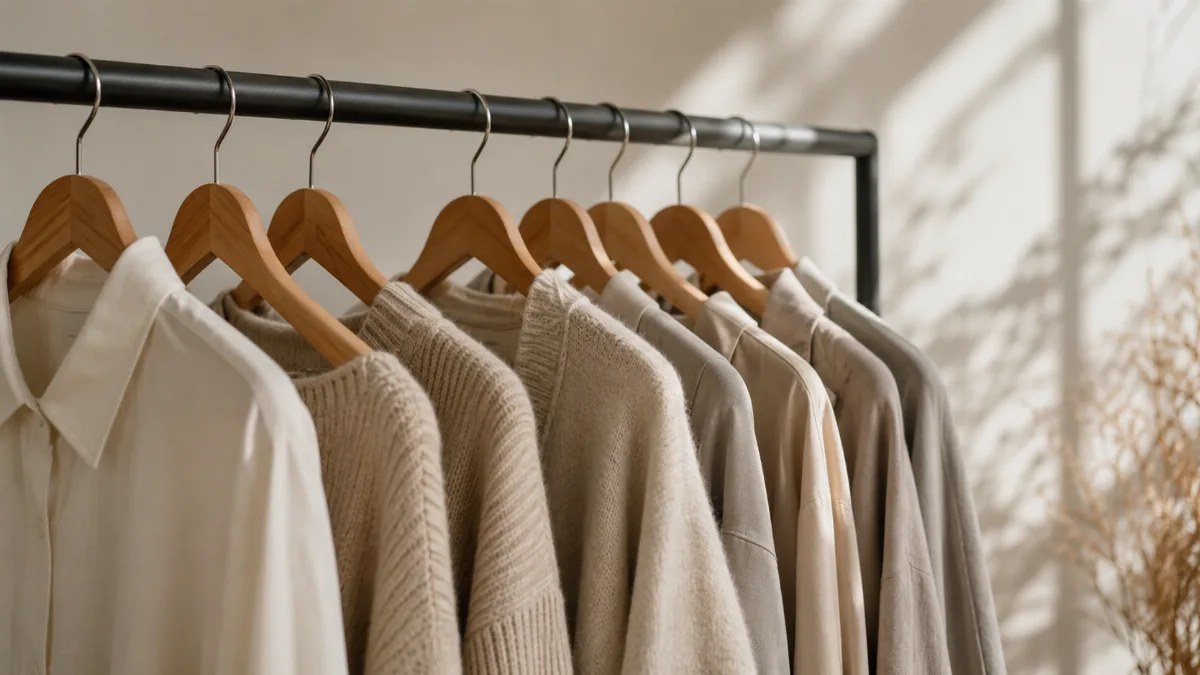
The daily need for a school-age child of 5 to 12 is five complete weekday outfits — five tops, five bottoms — plus two or three weekend outfits that double as casual weekday alternatives. Add two to three complete sets of active or sports clothing if the child has activities with a dress requirement. In totals: 7 to 8 tops, 5 to 6 bottoms, 2 to 3 active sets, one dress or nicer outfit for events, and footwear covering school, athletics, and one dressier occasion.
That comes to roughly 14 to 18 pieces plus shoes. A child with this wardrobe has clean clothes every day on a twice-weekly laundry rhythm, and the closet never becomes the overstuffed rail where half the contents are the wrong size and the rest go unworn.
What to Include in Each Category
Tops work best as a mix of long- and short-sleeve suited to the climate, weighted toward neutrals — navy, gray, white, simple stripes — with two or three in the child's favorite color. Neutral tops pair with any bottom, which multiplies outfit combinations without adding to the item count.
Bottoms come down to two or three pairs of jeans or pants, two pairs of shorts (or a climate-appropriate equivalent), and one pair that can handle a slightly dressier occasion. Dark-wash jeans are the most versatile single item for this age: they go with any top and cross from playground to a family dinner without a change. For active wear, match the activity frequency plus one spare set — a child with three practices a week needs four sets, three in rotation and one in the wash on practice day.
One deliberate choice makes the whole capsule work harder: keep the palette tight. When the tops share a small range of colors and the bottoms are mostly neutral, almost any combination a child pulls out in the morning works, which quietly removes the daily standoff over what matches. It also means a single stain or a fast-worn knee doesn't strand a lone outfit — the surviving pieces still recombine with everything else. A capsule that photographs as "boring" is usually the one that dresses a six-year-old in under two minutes.
Sourcing the Capsule: Secondhand First
Children's clothing bought secondhand at 70 to 90% below retail delivers the same function as new for a category where cost-per-wear is high and pieces are outgrown while still in good shape. The best selection tends to come from Once Upon a Child, a national chain that condition-checks and prices its stock reliably, and Kidizen, an online marketplace built specifically around children's clothing that's often better curated than general resale sites. Facebook Marketplace and local swap groups round it out for specific items and easy local pickup.
The economics are stark. A 14-piece capsule sourced secondhand at an average of $4 to $7 per item runs $56 to $98; the same capsule bought new runs $200 to $350. Across six years of school and six full size transitions, the secondhand route saves somewhere between $850 and $1,500 over buying new every time.
Managing the Size Transition
The size transition is the most labor-intensive moment in running a children's capsule, and a set process keeps it from turning into an emergency. About two months before the child typically outgrows the current size — spring for the spring/summer changeover, late summer for fall/winter — pull everything in that size and try it on. What still fits goes back. What's too small goes straight into a donation or resale bag, not into a bin stored for "maybe someone smaller later."
Build the next size from the secondhand sources during that same two-month window, aiming to have it complete before the current size is fully outgrown. The lead time is what lets you find the specific pieces you need without a panicked full-price trip to the mall the week nothing fits.
A short written list keeps the transition honest. Note the exact gaps — three tops, two pairs of pants, one pair of shoes — and shop against it rather than by feel; secondhand racks reward a specific list and punish browsing, where the temptation is to grab ten cute items and end up back at an overstuffed closet. Sizes also run inconsistently between brands, so try the incoming pieces on the child before the outgoing ones leave, keeping just enough overlap to avoid a gap-day when a "size 7" turns out to fit like a 6. If you want to dig deeper, Zero to Three's early-childhood development resources is a good starting point.
Laundry and Resale: The Two Payoffs
A capsule directly reduces laundry volume, which is counterintuitive until you see the mechanism. A child with 25 items can go longer before running out, which means longer gaps between washes and larger, less predictable loads. A child with 14 cycles through the wardrobe faster on a fixed twice-weekly schedule. Set laundry days — Tuesday and Friday, say — and you avoid the Sunday-night discovery that every school shirt is in the hamper.
The exit strategy matters as much as the sourcing. Clothing from a capsule — fewer items, higher rotation, usually in good condition when outgrown — resells well. Once Upon a Child takes walk-in drop-off resale; Kidizen and Poshmark handle individual listings or bundles; a local Facebook Marketplace sale recovers value fast on in-demand pieces. A household that buys the current size secondhand at $4 to $7 an item and resells it at $3 to $5 is effectively running children's clothing at a net $1 to $2 per item — close to free once the capsule is established as a rotating pool.
Teaching Children to Manage Their Capsule
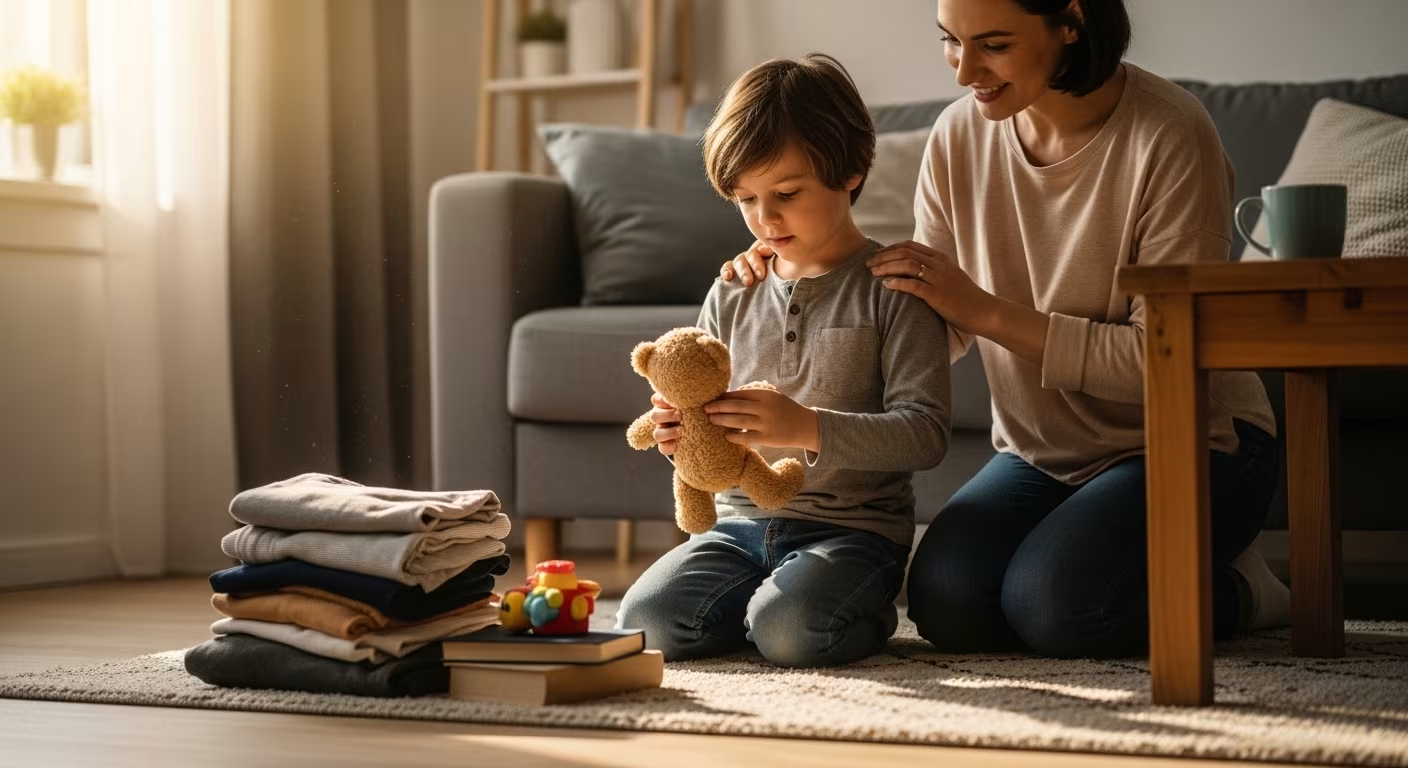
A child who takes part in their own clothing system develops the habit of noticing whether something fits, whether it's worn out, and whether it's still something they reach for — habits worth having for life. The size transition is the natural teaching moment: bringing a child of six or older into the end-of-size try-on gives them their first real experience of curating a collection, deciding what still fits, what can go, and what needs replacing, all in an entirely concrete context with nothing abstract about it.
Children who keep a smaller wardrobe from early on — who know where every item is and reach all of it regularly — tend to become more organized dressers as teenagers and adults than kids who navigate overstuffed closets with unpredictable contents. The organizational habit scales up as they grow, and so, unfortunately, does the passive-accumulation habit; a capsule teaches the first before the second sets in. See also: minimalist capsule wardrobe for moms and secondhand baby gear guide.
The kids-capsule math:
| Parameter | Number | Note |
|---|---|---|
| Growth clock | a size every 8–12 months (faster at 1.5–3) | wear count per piece: 20–30 |
| Capsule size | 14–18 pieces + shoes | 7–8 tops, 5–6 bottoms, 2–3 active, 1 dressy |
| Sourcing | secondhand at 70–90% off | same service life at kid pace |

Comments
No comments yet.