

Why Boredom Does More Than It Feels Like
There is a gap between what boredom feels like and what it actually does. To a child in the middle of it, boredom feels awful — restless, itchy, purposeless. To the adult watching, it can look like a problem that needs fixing. But the discomfort is precisely what makes it useful, and rescuing a child from it too quickly removes the only part that mattered.
When a child has nothing external to engage with, the brain shifts into a different mode. Researchers describe a default mode network — the set of regions that light up during rest and self-directed thought — and this is roughly when imaginative thinking, self-reflection, and creative problem-solving happen. The state that looks like doing nothing is when a good deal of important cognitive work is actually going on.
Filling every gap in the day with stimulation skips that process entirely. The child who runs from school to a screen to a structured activity to dinner without a single unoccupied interval is not getting a bonus. They are losing something the empty intervals would have handed them for free.
The Screen Is the Shortcut We Reach For Too Fast

The easiest answer to "I'm bored" is a device. It works instantly: the boredom stops, the child is occupied, and the parent gets back to whatever they were doing. The problem is not that it fails. The problem is that it works too well and too fast, in a way that trains the child to flee the discomfort rather than move through it.
Boredom has a natural arc. The first 10 to 20 minutes are genuinely unpleasant — the child complains, drifts, circles back to you looking for something to do. If you hold the line, most children eventually find their own direction. They invent a game, revisit an old project, start something they had forgotten they liked. That is the part that matters, and it only shows up if the discomfort is allowed to run its course. A tablet handed over at minute two ends the arc before the child ever reaches the creative output waiting at minute twenty. You are not skipping the boring part; you are deleting the payoff.
What Happens in the Brain When a Child Is Bored
Part of what makes boredom uncomfortable is a drop in dopamine relative to what the brain has learned to expect. In a child whose baseline is several hours of screen time daily, the threshold for "stimulating" climbs. More input is needed to produce the same sense of engagement, and ordinary afternoons start to feel flat by comparison — which is part of why the American Academy of Pediatrics' guidance on children and media emphasizes protecting unstructured, screen-free stretches in a child's day.
This is not permanent. The baseline can recalibrate, but it takes time and consistent exposure to lower-stimulation activities. A child who spends a summer with markedly less screen time often finds, by August, that quieter activities are genuinely enjoyable in a way they simply were not in June. The adjustment period is uncomfortable for everyone in the house. That discomfort is not a sign the approach is wrong — it is the recalibration happening in real time.
It helps to know roughly what the arc looks like, so the hard middle does not read as failure:
| Phase | Rough timing | What it looks like | Useful parent response |
|---|---|---|---|
| Protest | First 5–10 min | Complaining, following you around, "there's nothing to do" | Acknowledge, decline to solve it |
| Drift | 10–20 min | Aimless wandering, poking at things, half-starts | Stay available but quiet |
| Turn | Around 20 min | A first flicker of self-directed activity | Do not interrupt or praise it into self-consciousness |
| Absorption | 20+ min | Focused, invented play the child sustains alone | Leave it running as long as it lasts |
The timings vary by child and by day, but the shape is consistent. Knowing the turn usually sits near the twenty-minute mark makes it far easier to wait through the protest without caving.
Holding the Line When They Push Back
Most children will not accept "I'm bored" as a final state without testing whether you will provide an exit. The response that tends to work is to acknowledge the feeling, decline to solve it, and offer minimal scaffolding rather than a solution. Something like, "I hear you. That feeling won't last — you'll find something." That is different from "go play," which is too directive, and different from handing over the tablet, which solves the wrong problem entirely. The message underneath is: your boredom is real, I am not going to rescue you from it, and I trust you to find your way through.
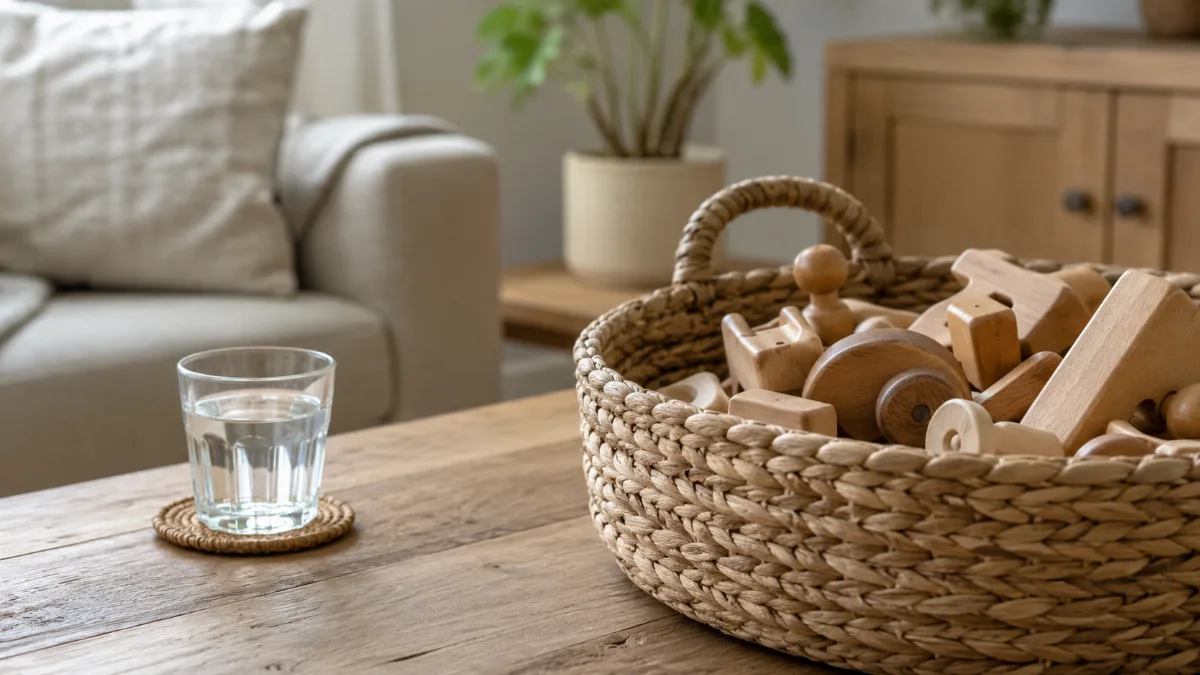
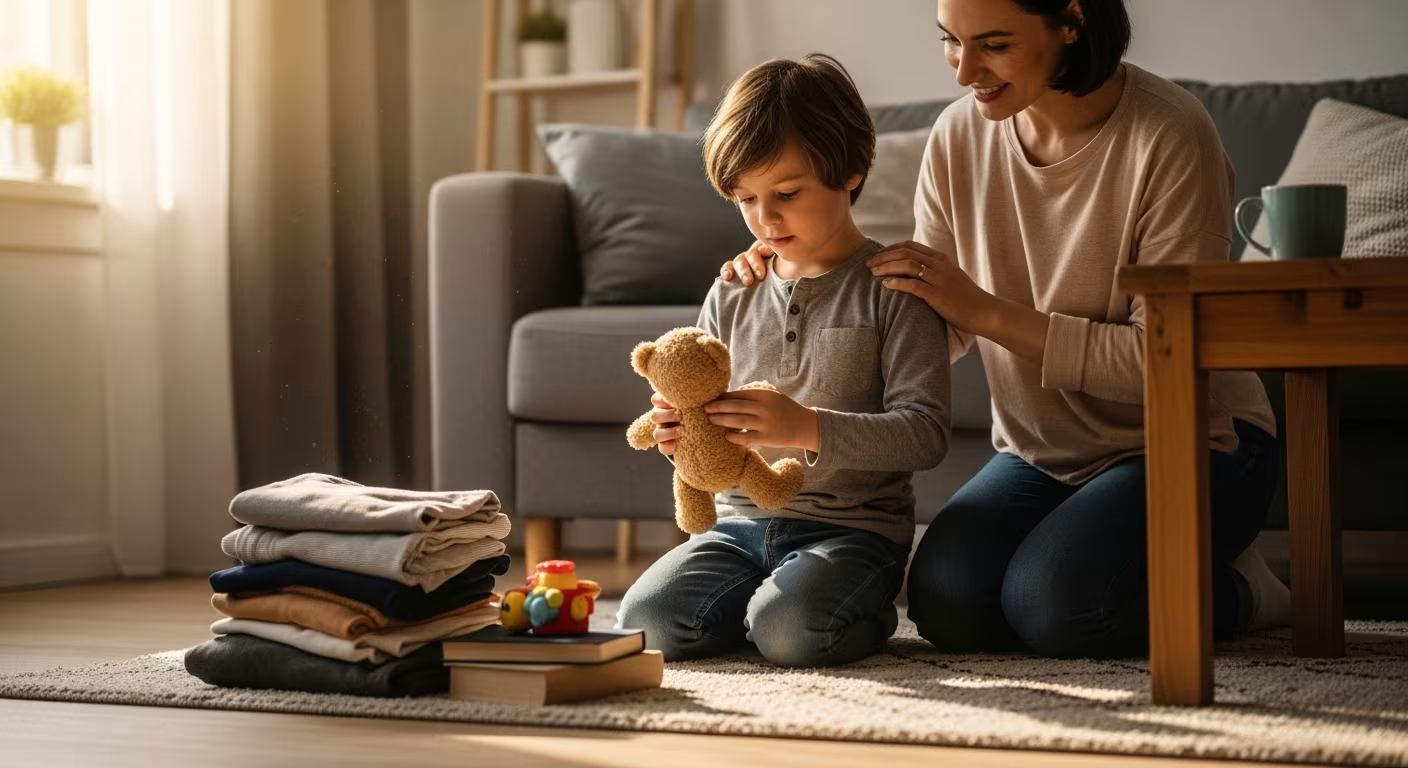
For younger children, keeping a few low-structure options in view is enough scaffolding without programming the time — paper and colored pencils left on the table, building materials on a low shelf, a bin of blocks within reach. You are providing the materials, not the activity. The distinction is the whole game: the moment you name the activity, you have taken back the very work the child was about to do.
It also helps to expect the pushback to escalate before it fades. A child who has always been rescued from boredom will, the first few times, protest harder and longer — testing whether the new rule is real. That spike is not the approach failing; it is the old expectation being renegotiated. Naming the boundary once and then going quiet ("I'm not going to find something for you, but you'll figure it out") works better than repeating it, because every repetition reads as a crack the child can push on. Within a week or two of consistency, the protest phase usually shrinks from twenty minutes to a couple, because the child has learned that the exit really is closed and stops spending energy looking for it.
What Unstructured Time Actually Means
Unstructured time does not mean isolated time or time without physical resources. It means time without a plan, a goal, or adult direction — and that distinction matters more than it first appears. A child playing in the backyard with no particular agenda has unstructured time. A child doing a guided craft project has structured time, even if the atmosphere feels relaxed and low-pressure. The dividing line is simply whether the child is driving what happens or following someone else's plan.
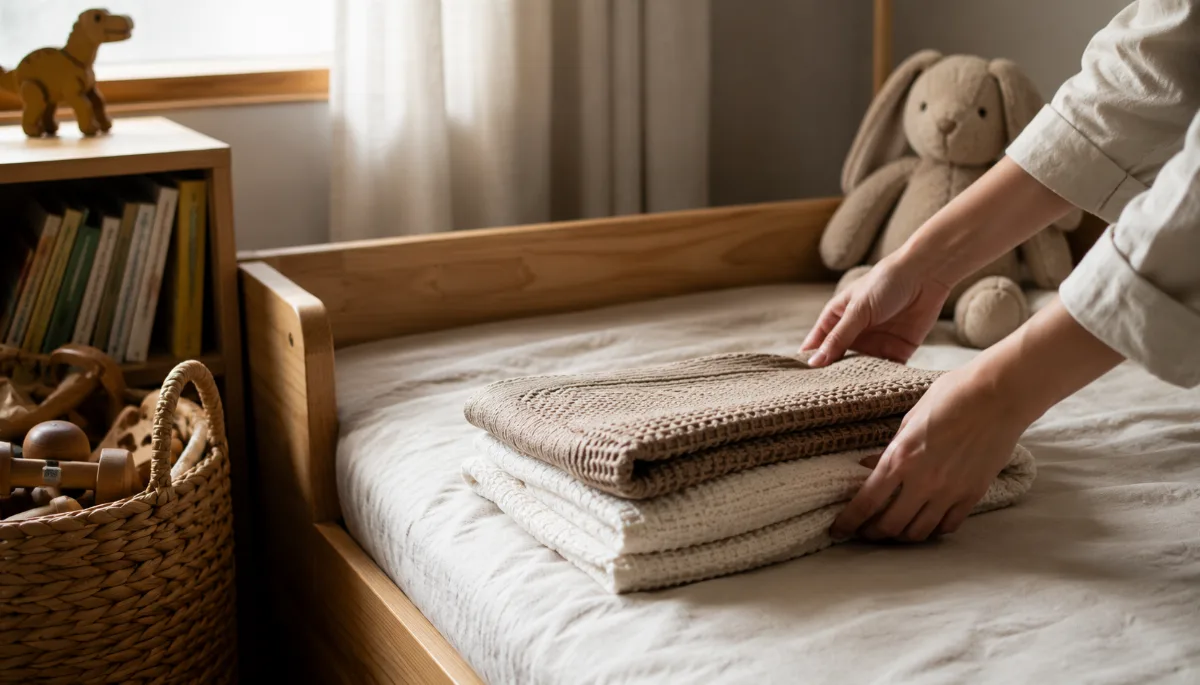
Building this into the daily rhythm is far easier when it is predictable. A half-hour after school before any activities begin, or an hour before dinner when devices are put away, removes the nightly negotiation because the child already knows what to expect. Over a few weeks, most kids stop fighting the open window and start genuinely using it. The connection between open-ended toys and boredom tolerance is direct: children with toys that require imagination to use fill empty time far more easily than children whose toys do all the work for them and leave nothing for the child to add.
The Long-Term Payoff of Regular Boredom
A child who has learned to tolerate and move through boredom carries something genuinely useful into adulthood: the ability to generate direction from within. That capacity — call it self-motivation, or intrinsic engagement — is one of the more consistent markers of independent functioning as kids grow into teenagers and adults.
The flip side is real. A child who cannot sit with empty time without an external stimulus tends, later, to struggle in any context that does not supply constant engagement — a slow class, a solitary afternoon, a task with no immediate feedback. The child who learned early that boredom is survivable, and even productive, arrives at those moments with a different relationship to stillness and to their own capacity to occupy themselves. You are not depriving a child by letting them be bored. You are handing them time to build something that stimulating, scheduled activities cannot produce on their behalf. That capacity forms slowly, across many ordinary afternoons, and it lasts.
The Hardest Part Is Usually the Parent
The genuinely difficult part of letting children be bored is usually the parent's discomfort, not the child's. Watching a kid in the restless, unhappy phase triggers an instinct to fix it. That instinct is not a flaw — it comes from care — but acting on it every time removes the exact experience the child needs to have. Noticing the urge and choosing not to act on it is a practice, and like any practice it gets easier with repetition. A parent who has watched their child grind through boredom into absorbed play a dozen times has real evidence that the process works, and that evidence makes waiting easier the next time the complaint arrives.
Making Boredom Part of the Weekly Rhythm
The households where this works best are the ones that build unscheduled time into the week on purpose rather than hoping it shows up. Two or three afternoons a week with no plans, no screens, and no adult-directed activity is not a heavy prescription. It is enough. The parent's role during those windows is deliberately small: be available if something genuinely goes wrong, but do not step in to fix the absence of entertainment.
Over weeks, you start to see what emerges. Given enough consistent open time, most children land on a handful of activities that genuinely absorb them — building, drawing, reading, inventing elaborate games with rules only they understand. These are not things you assigned. They are things the child found in the absence of a more convenient option, and the finding is the entire point. Protect a few reliably empty afternoons, hold the line through the protest, and the discovery takes care of itself.

Comments
No comments yet.