
Why a De-cluttered Kitchen Countertop Improves Your Mental Health

You know that feeling, right? You walk into the kitchen first thing in the morning, maybe still half-asleep, desperately needing that first hit of coffee.

But instead of calm, you're greeted by a battlefield: mail piles, forgotten homework, a half-eaten snack, yesterday’s coffee mug, a random toy dinosaur. It's like your counter woke up angry, just waiting to attack your peace.

For too long, that was my reality. Every single damn day. I'd stand there, coffee machine hiding behind a stack of permission slips, and just feel this wave of pure, unadulterated dread wash over me before 7 AM.

It’s a tiny moment, but it sets the tone for everything that follows. That initial shot of stress? It colors your patience with the kids, your drive to get work done, even how you talk to your partner.

So, what if I told you that reclaiming your kitchen counters isn't just about looking tidy? It’s a sneaky little hack for your mental health, a way to scoop out some calm in the middle of all the crazy.

We’re going to talk about why that visual noise messes with your head, how to actually clear the damn things, and how to keep them clear without losing your mind in the process. Ready? Let's dive in. 👋

Why This Actually Matters

Okay, so "mental health" sounds like a big, important topic, and a clean counter seems… small, right?

But hear me out. Our brains are constantly processing information, and every single thing we see, even if we don't consciously register it, adds to our cognitive load.

Think of your brain as a computer with a million tabs open. Each item on your counter is another open tab, silently draining your energy, demanding your attention.

I learned this the hard way when my second kid arrived. My counters became the catch-all for literally everything, from stray pacifiers to receipts I'd meant to file (hah! as if!).

One Tuesday morning, I was trying to make breakfast, and I just froze. There was a weird sticky spot next to the toaster, a stack of bills I hadn't opened in weeks, and a toy car that had somehow fused itself to the fruit bowl.

I felt this intense paralysis. I couldn't even start cooking until I moved things, and moving things meant deciding where they went, and deciding where they went felt like an impossible task.

I ended up ordering takeout for breakfast. At 8 AM. Because my kitchen counter had officially broken me.

It wasn’t just about the mess; it was the constant low-level stress, the feeling of things being out of control, the visual reminder of unfinished tasks. That’s why this matters.

The Silent Saboteur: How Clutter Steals Your Sanity

Clutter isn’t just unsightly. It’s a silent saboteur of your peace, happiness, and even your ability to think straight.

When your environment is chaotic, your mind follows suit. A messy kitchen counter isn't just a physical mess; it's a mental one, too.

It tells your brain, without you even realizing it, that there’s always something more to do, that things are out of order, that calm is just out of reach.

My kitchen used to be the command center for everything that didn't have a home. It was like a black hole, sucking in permission slips, keys, rubber bands, unopened mail, half-finished art projects, and random grocery bags.

Every time I looked at it, I saw a mountain of tiny decisions I hadn't made yet. And each tiny, unmade decision added a whisper of guilt and exhaustion to my already overloaded mom-brain.

The Invisible Weight of "stuff"

Each item on your counter, whether it’s a bread machine you rarely use or a stack of junk mail, carries an invisible weight.

It’s not just the physical space it occupies. It's the mental space, too.

  • Decision Fatigue: Every single item on your counter is a potential decision. Do I put this away? Where does this go? Is this trash? Even if you don't act on it, your brain registers the question. Do that 20 times for 20 items, and you're mentally drained before you've even had a sip of coffee.
  • Visual Noise: Our brains are wired to notice changes and patterns. A cluttered surface is a riot of visual information. It's like having twenty different conversations happening at once in your living room; you can't focus on any one thing, and it's just plain exhausting to be around.
  • Time Sink: How many extra minutes do you spend searching for your car keys under a pile of school papers? How much longer does it take to wipe down the counter when you have to move five appliances, three stacks of mail, and a dozen kids’ crafts first? Those minutes add up, and they steal time from things you'd rather be doing, like, I don't know, staring blankly at a wall for five minutes.

I swear, I used to spend a good 10-15 minutes every single morning just relocating things from one spot on the counter to another, never actually putting them away.

It was an exercise in futility, a slow drain on my already meager energy reserves. I felt like I was constantly treading water, and the counter was just this huge, heavy anchor.

From Chaos to Calm: How to Actually do It

Okay, so you're probably thinking, "Eleanor, I get it. My counter is a disaster. But how do I actually fix it without wanting to set the whole kitchen on fire?"

I hear you. The idea of tackling a mountain of stuff when you’re already exhausted feels like a joke, a cruel trick.

But we're going to break this down into tiny, manageable steps. We're not aiming for Pinterest perfection on day one. We're aiming for a tiny bit of breathing room for your brain.

Step 1: the "everything Off" Blitz

This is where we get a little brutal. Take EVERYTHING off your counters. Seriously, everything. Appliances, dish soap, mail, fruit bowls, kid drawings – all of it.

Shove it all into a big laundry basket, a couple of cardboard boxes, or even just onto your dining room table. Just get it off the counter surface.

This is crucial because it creates an immediate visual impact. You'll see your bare counters, maybe for the first time in ages, and feel a tiny surge of "Holy crap, I did that!"

I remember doing this for the first time. I piled everything onto my dining room table, and it looked like a bomb had gone off. But my counters? They were GLORIOUSLY empty. It was like a deep breath for my eyes.

Step 2: the Ruthless Edit – One Item at a Time

Now, go to your "holding zone" (the laundry basket, boxes, dining table). Pick up one item. Just one. And ask yourself some tough questions.

Do I use this item daily or nearly daily? Does it actually belong in the kitchen? Is it broken, expired, or truly trash?

If you don't use it constantly, or if it doesn't belong in the kitchen, it doesn't get to live on your counter. Period.

I found three different sets of measuring spoons when I did this. Three! How did I even accumulate three? One went back in the drawer, one went to the donation pile, and the third? No idea why I even had it, straight to donation.

Step 3: Find a Home (not the Counter)

For every item you decide to keep, it needs a permanent home. And that home should ideally not be on your kitchen counter.

This is where you start using your drawers, cabinets, and pantry. Think about zones: a baking drawer, a coffee station inside a cabinet, a designated mail slot near the door.

Don't just shift clutter from the counter to another visible surface. That's not winning; that's just moving the problem.

My spice rack used to live on the counter, collecting grease and dust. Now, after this step, it’s mounted inside my pantry door. Out of sight, still easy to access, and my counter space is freed up.

Step 4: the "off-counter" Appliance Challenge

This one is tough for a lot of people. That toaster, the stand mixer, the Instant Pot – they're big, they're heavy, and they feel like permanent fixtures.

But seriously, how often do you use your stand mixer? Probably not every day. My rule became: if I don't use it at least every other day, it earns a spot in a cabinet or pantry.

Yes, it's a pain to pull it out sometimes. But that small effort is far less taxing than the constant visual weight of it sitting there, reminding you of all the baking you're not doing.

I used to have my huge food processor out all the time. I love it, but I use it maybe once a month. Now it lives in a bottom cabinet, and my counter feels so much bigger without its hulking presence.

Step 5: the Daily Reset – Your New Non-negotiable

This is the secret sauce to making it stick. Every single night, after dinner, take five to ten minutes to reset your kitchen counters.

Wipe them down, put away stray items, load the dishwasher, or at least gather everything to go into it. It's not a deep clean; it’s a quick sweep.

You’re creating a habit that prevents the clutter from piling up in the first place. Imagine waking up to a clean kitchen every morning. It’s not a dream, I promise.

For me, this looks like loading the last few dishes, wiping down the counters with a wet rag, and asking the kids to put their water bottles in the sink. It takes less than 10 minutes, and the payoff for my morning mood is HUGE.

Step 6: the "one In, One Out" Rule (or "don't Bring More Crap In")

New stuff has a tendency to sneak onto your counters and establish residency. A new gadget, a souvenir cup, a fun new spice blend.

If something new comes into your kitchen and needs a spot, something old has to go. Or, even better, don't let it land on the counter at all.

Create a "landing strip" somewhere else for mail and school papers—a designated bin or hook, far from the kitchen counter.

My kids used to dump their backpacks on the counter the second they walked in. Now, we have hooks right by the back door, and a designated bin for papers that need my attention. It took a while, but it's a game-changer.

Step 7: Embrace Vertical Space & Smart Storage Solutions (after Decluttering)

If you're truly short on cabinet space, look up! Wall shelves, pot racks, or even organizers that mount inside cabinet doors can be lifesavers.

But here’s the critical part: declutter first, then look for storage solutions. Don’t buy more bins to organize things you should have gotten rid of in the first place.

That's just moving stuff around, not actually solving the problem. Storage should be the last step, not the first.

I ended up getting a small, narrow rolling cart for overflow pantry items when I realized my cabinets were bursting. It's tucked into a corner, and it keeps things accessible without adding to counter clutter.

Making It Stick: Avoiding the Re-clutter Trap

Alright, you've done the work, your counters are sparkling, and your brain feels a little lighter. Amazing! But life, as it tends to do, will throw stuff your way.

Kids will bring home new art projects. The mail will pile up. You’ll have a crazy week and let the dishes slide. It’s not about perfection; it’s about persistence.

One of the biggest mistakes people make is thinking this is a one-and-done project. It’s not. It’s an ongoing practice, a habit you cultivate.

I used to beat myself up when my counters got messy again. I’d think, "What's the point? I just spent three hours cleaning, and now it’s back to chaos."

But the difference is, now you have a system. You know how to reset. You know what needs a home. It’s easier to bounce back.

Your counter isn't a storage unit, it's a workspace. Treat it like one, and your brain will thank you.

Another common trap is not involving your family. If you're the only one doing the work, it's going to feel like a losing battle. Talk to your partner, talk to your kids (even young ones can help put away their own cups).

Explain why it matters to you. "Mommy feels less stressed when the counters are clear, and that means Mommy has more patience for games." It's not a threat; it's an honest explanation.

Finally, don't let sentimental clutter take over. Yes, that hand-painted mug from your kid is sweet. But does it need to live on the counter 24/7? Maybe it goes into a special cabinet and only comes out for display on holidays.

It’s okay to love things, but it’s also okay to give them a designated home that isn’t constantly staring you down, adding to your mental burden.

Frequently Asked Questions

What About Appliances I Use Daily? My Coffee Maker? Toaster?
If you genuinely use it every single day without fail, then it earns its spot. Your coffee maker, for sure. But think hard about that toaster. Do you actually make toast daily, or just a few times a week? If it’s not daily, consider a small appliance garage or a spot in a cabinet.
My Kids Constantly Put Their Stuff on the Counter. How do I Stop It?
Oh, the endless battle! Create designated landing zones away from the counter for their things. A basket for homework, hooks for backpacks, a specific drawer for their water bottles. Involve them in the daily reset – "Okay, five minutes, put away everything that's yours."
I have Literally No Cabinet Space. What Then?
This is tough. First, be incredibly ruthless with decluttering inside your cabinets and drawers. Get rid of duplicates, rarely used items, and expired food. Then, look for vertical solutions: wall shelves, pegboards, rolling carts, or even an over-the-sink shelf. You might have to get creative, but it's possible.

How Long does This "decluttering" Thing Actually Take? I'm Exhausted Already

The initial "everything off" blitz and ruthless edit can take anywhere from 30 minutes to 2 hours, depending on the level of chaos. But you don't have to do it all at once. Break it into 15-minute chunks. The daily reset, once it’s a habit, takes 5-10 minutes. The effort pays off quickly in mental calm, I promise.

Is This Worth the Effort if It Just Gets Messy Again?
One hundred percent, yes. It's like brushing your teeth. It gets messy again, but you still do it because the benefits (no cavities, new breath) are worth the daily effort. The mental relief you get from a clear counter, even for a few hours, is invaluable. It gets easier to maintain, like building a muscle.
What if My Partner/family Isn't on Board?
Start with your own stuff and your own habits. Lead by example. Don't nag. Instead, communicate your feelings. "I feel so much calmer when the kitchen is clear, and it helps me focus." Sometimes, seeing your peaceful reaction is enough to inspire them to contribute.
Should I Buy Organizers Before I Start?
No, please don't! This is a common mistake that just adds to the problem. Declutter first, get rid of everything you don't need, and then see what, if any, organizers you genuinely need to contain the items you're keeping. You might be surprised how little you actually require.

The Bottom Line

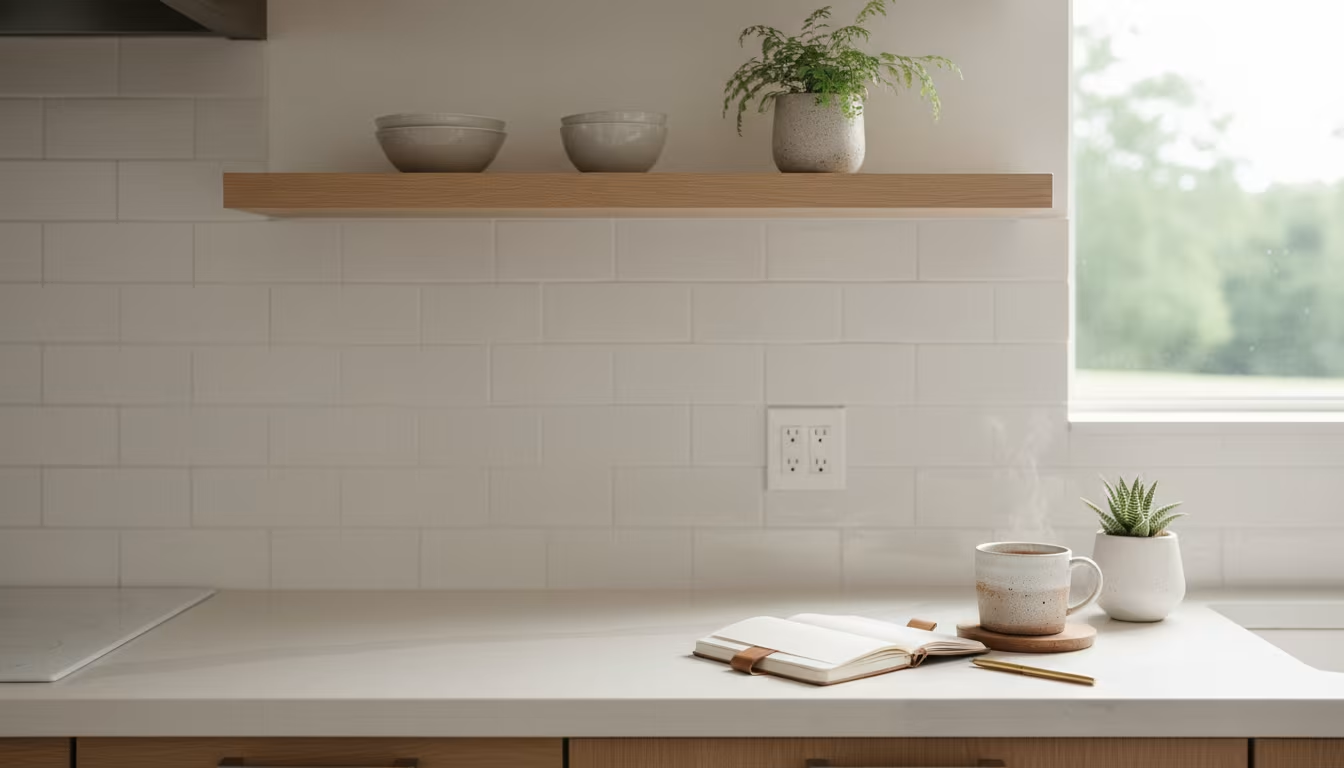
A de-cluttered kitchen countertop isn't about having a magazine-ready kitchen. It's about giving your overwhelmed mom-brain a tiny, quiet corner of your home to breathe.

It's about reducing decision fatigue, calming visual noise, and reclaiming your mornings, even if it's just by a few precious minutes.

You don't need to tackle your entire house in one go. Start with that counter. Get it clear. Feel that calm wash over you.

Give yourself permission to make this one small change. Your mental health, your patience, and your sanity will genuinely thank you for it. You got this, mama. ❤️