
Why Open-ended Toys are the Only Ones Your Child Really Needs

Okay, let's talk about toys. Specifically, the damn mountain of them currently threatening to engulf your living room. You know the drill, right?

It's Christmas morning, or a birthday. Your kid rips open a gift, plays with it for exactly 17 minutes, then moves on to the next shiny thing. By noon, the entire floor is a minefield of plastic, and you're already tripping over parts you haven't identified yet.

Sound familiar? My first kid's playroom used to look like a toy store exploded in there. I thought more toys meant more happiness, more engagement, more… everything. But honestly, it just meant more stress, more cleaning, and more arguments about putting things away.

I was drowning in plastic, and my kids, frankly, weren't even playing with most of it. They'd just dump it out, look overwhelmed, and then ask for the iPad.

If you're nodding along, if you're sick of the toy clutter, the short attention spans, and the constant feeling like you're buying things that just collect dust, then stick with me.

Today, we're going to dive into what open-ended toys really are, why they're basically a superpower for both kids and tired moms, and how you can actually make the switch without feeling like you're depriving your kids (or going broke).

Why This Actually Matters

Look, I get it. This sounds like another thing on your already overflowing plate. Another "mom trend" to try and fail at. But hear me out, because this isn't about being perfect; it's about making your life, and your kids' lives, a hell of a lot easier and more meaningful.

The real reason this matters? Less stuff equals less stress. For everyone. When I eventually culled the crap from our playroom, I felt like I could breathe again. Suddenly, I wasn't spending my precious kid-free time just moving toys from one pile to another.

My kids? They actually started playing. Like, real, deep, imaginative play, not just pressing buttons on a battery-operated contraption. It was wild to witness.

Before, I'd constantly be hovering, trying to "engage" them, suggesting games. Now, I can actually sit and have a cup of coffee while they build an elaborate fort out of cushions and blankets. That, my friends, is priceless.

I mean, seriously, think about it. How much money have you dropped on toys that were loved for a week and then discarded? I tracked it once – it was easily $200 a month on impulse buys, gifts for birthdays, or just trying to solve boredom. That's a damn car payment.

This isn't just about saving money, though that's a huge bonus. It's about giving your kids the tools for genuine creativity and problem-solving. It's about giving yourself more peace and less mess. It's a win-win, I swear.

What the Hell are Open-ended Toys Anyway?

Alright, so "open-ended toy" might sound like some fancy educational jargon. But it's actually super simple. It just means a toy that doesn't have a single, predetermined way to be played with.

Think about it like this: a closed-ended toy is like a puzzle. There's one right way to put it together, and once it's done, the play is usually over. Or a toy car that drives itself and makes specific noises.

An open-ended toy? That's more like a pile of LEGO bricks, or a set of wooden blocks. There's no instruction manual. No specific goal. The kid decides what it is, what it does, and how to play with it.

The play comes from them, not from the toy itself. It's about imagination, not instruction.

I used to fall for all the marketing hype. "This robot teaches ABCs!" "This playset has 10 interactive features!" And sure, those toys might entertain for a bit, but that entertainment is usually passive.

My kids weren't really doing anything beyond pressing a button and watching. Their brains weren't having to work, to create, to problem-solve. And that's the whole damn point of play.

When you give a kid a block, it can be a phone, a car, food for a monster, a castle wall, a stepping stone to the moon. When you give them a plastic dinosaur that roars when you press its head, it's… a plastic dinosaur that roars when you press its head. See the difference?

The Magic of "no Instructions"

It sounds counter-intuitive, right? Like, won't my kid just sit there confused if there's no button to press? Trust me, they won't. Kids are natural explorers and creators. We often just get in their way with too much stuff.

  • They grow with your child: This is a massive one, especially for us minimalists. That same set of wooden blocks that your toddler stacks and knocks over will later be used by your preschooler to build elaborate animal enclosures, and then by your school-aged kid to create a fantastical city for their action figures. One toy, years of use. That's huge for saving money and space.
  • They spark creativity: No pre-programmed sounds or lights means your child has to invent the story. They have to decide what the block is. This kind of imaginative play is like a workout for their brain, building neural pathways that are crucial for problem-solving and critical thinking later in life. It's not just about playtime; it's about brain time.
  • They encourage problem-solving: How do I make this blanket fort stay up? How do I build a ramp that lets this car go fast enough to jump? What happens if I combine these natural elements with these building toys? These aren't questions a battery-operated toy can answer. These are questions your kid's brain has to figure out, often through trial and error. And that, my friend, is where real learning happens.

I saw this firsthand with my son. For a while, he was obsessed with one of those car ramps that lights up and plays music. He'd watch cars go down it for about five minutes, then get bored. Now, with a few cardboard tubes and some masking tape, he spends half an hour designing his own ramps, experimenting with angles, and adjusting tracks. The difference in engagement is night and day.

How to Actually do It

Okay, so you're on board. You're ready to ditch the plastic avalanche and embrace the magic of open-ended play. But how the hell do you actually make this happen without causing a total meltdown, either from your kids or from you?

It's not an overnight transformation. This isn't like flipping a light switch. It takes patience, a bit of strategic purging, and a willingness to observe your kids. But it's totally doable, even for the most toy-hoarding households (and I've been there, believe me).

Step 1: the Great Toy Purge (aka Operation Plastic Avalanche)

This is where the rubber meets the road. You gotta go through what you have. I know, I know. It's daunting. But you need to see what you're working with.

Grab a few bins: "Keep," "Donate/Sell," and "Store Away" (more on this in a minute). Go room by room, or just tackle the biggest problem area first, like the playroom or bedroom.

Hold up each toy. Is it open-ended? Does it require your child to use their imagination? Or does it just do one thing, often with flashing lights and loud noises? Be ruthless. If it's closed-ended and hasn't been played with in weeks, it's probably going in the donate pile.

The "Store Away" bin is for sentimental items, or things you're not ready to part with yet but don't want cluttering up the play space. It's also great for toy rotation, which we'll get to. Don't toss everything if it feels too hard. Just get it out of sight for now.

I remember doing this for the first time. I found 47 different small plastic animals. My kids played with maybe three of them consistently. The rest were just… clutter. My daughter cried about one specific chipped unicorn she hadn't touched in months. It was tough, but I held my ground. Now, she plays with a handful of animals more creatively than she ever did with the whole damn zoo.

Step 2: Start with the Low-hanging Fruit (blocks, Art Supplies, Nature)

You don't need to buy a whole new set of expensive wooden toys right away. Chances are, you already have some fantastic open-ended items. Identify your core categories.

Classic wooden blocks, LEGOs (even if they're Duplos for younger kids), Magna-Tiles, or even just plain old cardboard boxes are golden. Art supplies like crayons, markers, paper, play-doh, and paint are fantastic.

Don't forget nature! A basket of rocks, pinecones, sticks, and leaves can become incredible treasures in a child's imaginative play. My kids once turned a collection of river stones into "magic gems" for an entire week.

Focus on consolidating what you have that fits the bill. A simple set of wooden blocks, maybe some scarves or play silks, and a few art supplies can literally provide hours and hours of play. These are the workhorses of the open-ended toy world.

Step 3: Introduce New Toys Strategically (quality over Quantity)

If you do need to buy new things, or if you're guiding grandparents on gift ideas, think critically. Don't just buy something to fill a void. Prioritize quality over quantity, and versatility over novelty.

Look for materials like wood, natural fabrics, or durable, non-toxic plastics (for LEGOs, for example). Ask yourself: "How many different ways can this be played with?" If the answer is "one," put it back.

Some of our absolute favorites that have stood the test of time (and two destructive kids) include a good set of basic wooden building blocks, a large collection of generic LEGOs, some simple animal figures, play silks, and a mud kitchen for outdoor fun.

Don't fall into the trap of buying "open-ended" toys just because they're trendy. A $20 cardboard box is just as open-ended as an expensive set of Waldorf wooden arches, sometimes even more so.

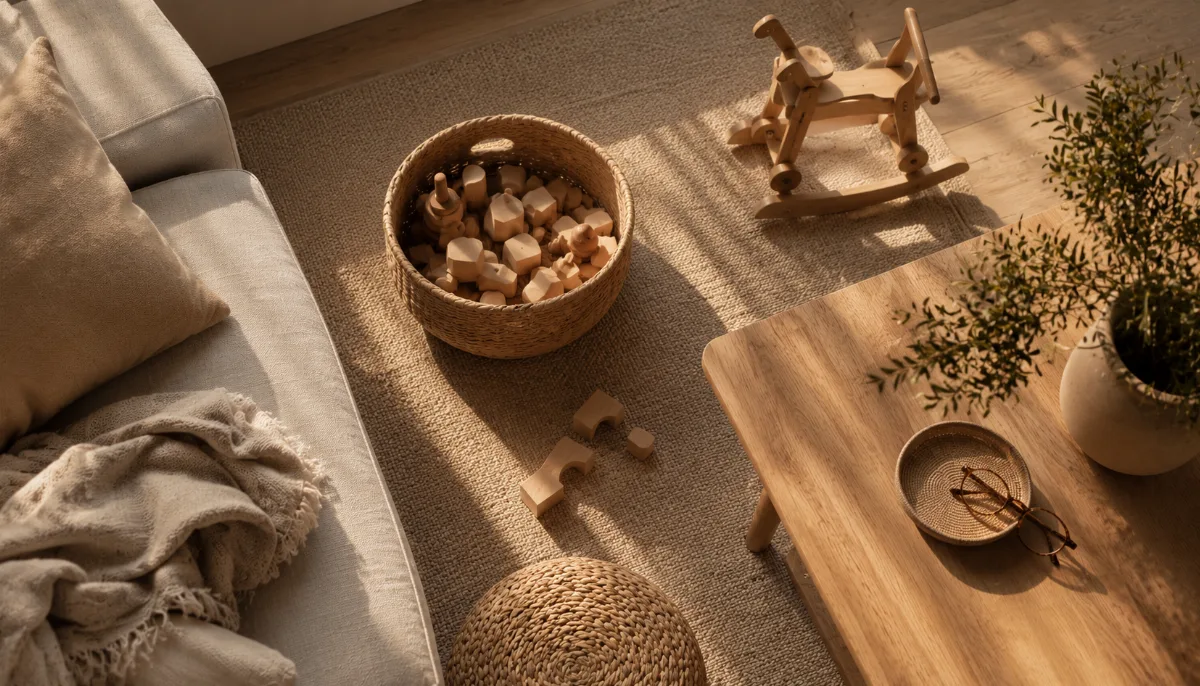
Step 4: Embrace the Power of the "basket" (toy Rotation)

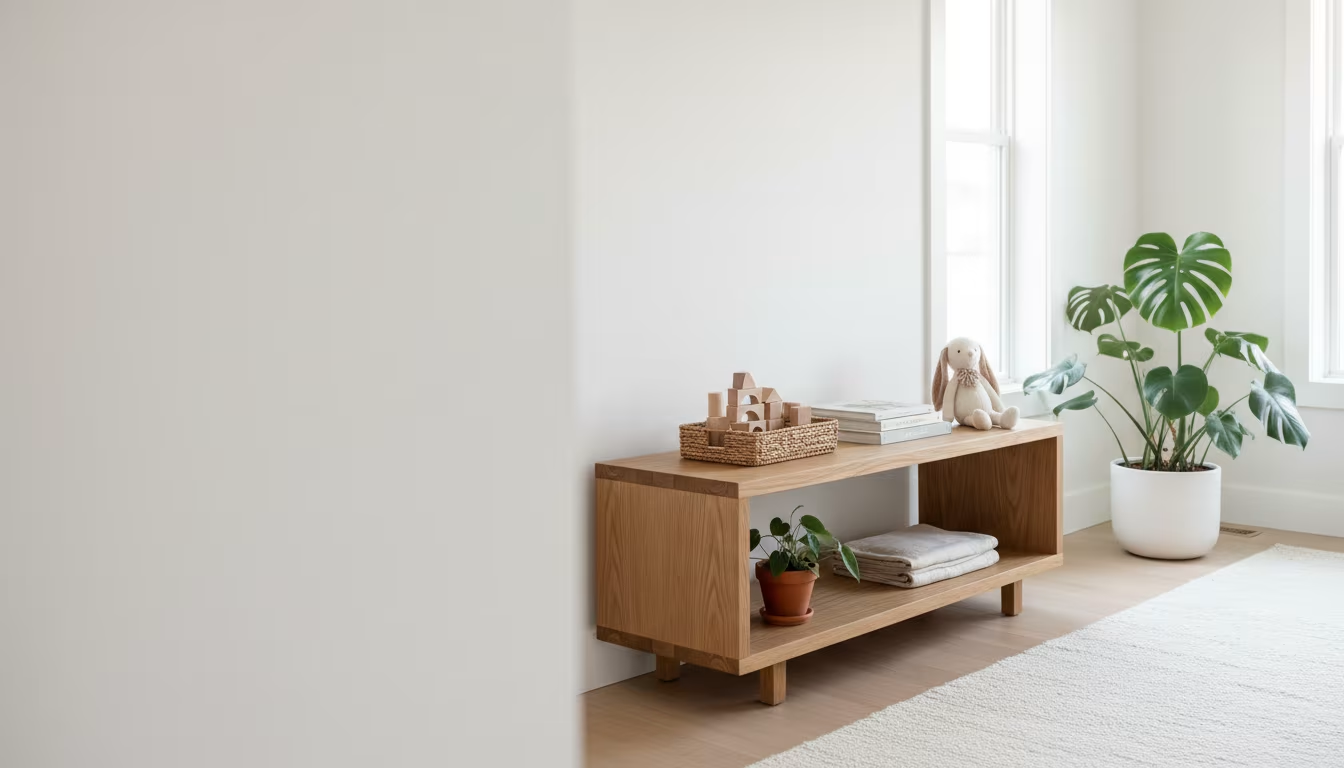
This is where the magic really starts to happen. Toy rotation is exactly what it sounds like: you don't keep all the toys out all the time. Instead, you put a good portion of them away and bring them out periodically.

Why does this work? Because when kids have fewer choices, they engage more deeply with what's available. And when you bring out a "new" basket of toys that they haven't seen in a month or two? It's like Christmas morning all over again, but you didn't spend a dime.

I usually have 3-4 baskets or small bins of toys out at a time, each with a different focus: maybe one has blocks and cars, another has puzzles and fine motor toys, and another has art supplies. Then, every couple of weeks, I swap one or two baskets out for ones I've stored away.

Realistic expectation check: The first week or two of rotation might suck. Your kid will ask for the toy you just put away approximately 47 times. "Where's my specific Paw Patrol vehicle?!" But week two? Week three? Magic. They'll forget about the banished toys and get truly creative with what's in front of them.

Step 5: Model Open-ended Play (show, Don't Tell)

Sometimes, especially if your kids are used to being passively entertained by toys, they might need a little nudge. You don't have to sit there and entertain them for hours, but join in for a bit. Show them the possibilities.

Instead of saying, "Let's build a tower with these blocks," try, "I wonder what we could make with these blocks? A house? A rocket? What do you think?" Ask open-ended questions.

Show them how a blanket can be a cape, a fort, a picnic rug, a magic carpet. Use a stick as a spoon in a mud pie, or a magic wand. Sometimes, all they need is to see you using everyday items in imaginative ways to get their own gears turning.

I'm guilty of trying to direct play sometimes. "No, the car goes this way!" But I have to remind myself to step back. The best moments are when I just add a piece to their "creation" and let them run with it, or simply observe their brilliance from afar.

Step 6: Let Go of the Guilt (it's a Process)

This is not about being a "perfect" minimalist mom. It's not about throwing out every single toy that flashes or makes a noise. My kids still have some beloved action figures and a few specific playsets they adore. And that's totally fine.

This whole approach is about shifting the balance. It's about consciously choosing to prioritize toys that foster imagination and independent play, rather than just accumulating stuff that provides fleeting entertainment.

Don't beat yourself up if you slip up and buy something that's clearly closed-ended because your kid begged for it in the checkout aisle. We've all been there. This is a journey, not a destination. Each small step you take towards less clutter and more intentional play is a win.

You're doing great. Seriously. Just by reading this, you're already thinking about how to improve things for your family, and that's what counts.

Making It Stick / Common Mistakes

So, you've purged, you've rotated, you've got fewer, better toys. Awesome. But this isn't a one-and-done kind of deal. Life happens. Grandparents visit. Marketing is powerful. So, let's talk about what can trip you up and how to avoid it.

Mistake 1: Expecting Instant Results

If your kids are used to a ton of toys, or lots of flashy, battery-operated gadgets, they might seem "bored" at first. They might wander aimlessly. They might even complain. This is normal. This is actually good.

Remember, boredom is the catalyst for creativity. When kids aren't constantly stimulated by external noise and lights, their own internal world has a chance to wake up. Give them space and time to adjust. Don't swoop in immediately with entertainment.

It can take a few days, sometimes even a week or two, for kids to re-learn how to create their own fun. Be patient. Resist the urge to fill the quiet with new toys or screens. That uncomfortable lull is where the magic happens.

Mistake 2: Overthinking It (or Over-buying "open-ended" Toys)

Don't fall into the trap of thinking you need to buy a whole new, expensive collection of "approved" open-ended toys. That defeats the whole purpose of minimalism and mindful consumption.

Open-ended doesn't mean fancy. It means simple. Cardboard boxes, old sheets, cushions, laundry baskets, empty paper towel rolls – these are some of the most incredibly open-ended "toys" you'll ever find. And they're free or nearly free.

Go outside! Nature is the ultimate open-ended playground. Sticks, mud, water, rocks, leaves, sand. These are all incredible tools for imaginative play. My kids will spend hours with a bucket of water and some sticks, concocting "potions" or building dams. It's amazing.

Mistake 3: Not Explaining It to Other Family Members

Ah, the well-meaning grandparents. The aunts and uncles who love to spoil. This is often the biggest hurdle. You've purged, you've simplified, and then a birthday rolls around, and suddenly you're back to square one with a pile of plastic junk.

Have an honest (but polite) conversation before gift-giving occasions. Explain your new approach. Suggest alternatives: experiences (zoo passes, museum memberships, swim lessons), consumable gifts (art supplies, play-doh, craft kits), or contributions to a savings fund.

If they still buy stuff, have a plan. Don't feel guilty about discreetly donating items your kids genuinely won't play with, or storing things for future rotation that might eventually be donated if never used. It's your house, your sanity.

Mistake 4: Not Giving Kids Enough Space (physical & Mental)

Open-ended play often requires space. Space to spread out blocks, to build a fort that takes up half the living room, to make a huge drawing on the floor. If their play area is still too crammed, even with fewer toys, it can stifle their creativity.

And mentally, they need time. Long, uninterrupted stretches of time. Resist the urge to constantly direct or interrupt their play. Step back. Let them get lost in their own worlds.

It can feel weird at first, especially if you're used to being an active playmate. But giving them that space and quiet allows their brains to really dig in and create something amazing.

The best toy is 10% toy and 90% child. Children don't need fancy, they need space and permission to explore.