


Where Food Money Actually Leaks
Most household food budgets leak in three places: the NRDC's Save the Food guidance on reducing household food waste, impulse purchases at the store, and convenience items bought for meals that could have been cooked from scratch. The three leaks are independent, but they share one cause — an unstructured approach to what comes into the kitchen. Nobody decides to waste money on food. It drains out through a hundred small, unmanaged moments.
Waste is the biggest of the three. Studies of household food waste routinely land in the range of a quarter to a third of what a family buys. On a $150 weekly grocery spend, even the low end of that range is roughly $35 to $40 a week walking out to the bin without producing a single meal — call it a couple of thousand dollars a year that bought nothing.
Impulse purchases stack on top of that. The items that weren't on the list, the specialty product that looked good in the moment, the snacks grabbed near the checkout — they add up across trips and inflate the bill without meaningfully improving what anyone actually eats. A minimalist food approach closes all three leaks through structure rather than willpower, which is the only thing that holds up over months.
What "Minimalist Food" Means Here

It isn't eating less or buying only the cheapest options. It's shrinking the variety and complexity of what enters the kitchen down to what actually gets used: fewer ingredients bought in the right quantities, a shorter roster of meals the household cooks well, less stuff on the shelf but far better awareness of what's on it.
The contrast is concrete. It's the difference between a pantry holding 80 items — many of them partial, several past date — and one holding around 30, all in regular rotation and fully used before they're replaced. The smaller pantry wastes fewer dollars, and it produces faster, more confident cooking, because the options are known rather than overwhelming. You're not scanning a cluttered shelf hoping something sparks a dinner idea; you already know what's there and what it becomes.
The 80-Item Pantry vs. the 30-Item Pantry
Picture the 80-item pantry in practice. Three kinds of pasta in half-open bags. Two jars of a curry paste bought for one recipe. A back row that hasn't been touched since a sale two years ago. Every shopping trip adds a little more, because standing in the store it's impossible to remember what's already home, so the safe move is to buy it again.
The 30-item pantry runs the opposite way. A small set of grains and legumes, all cooked regularly. A handful of canned goods with known uses in the meals the household actually makes. Oils, acids, and seasonings that anchor the flavors it actually cooks — not the experimental sauce from a whim two summers ago. Everything on the shelf earns its place by getting used, and the shelf gets restocked by replacement, not accumulation. Getting there takes one honest clear-out; keeping it there is far easier than the initial edit.
The Grocery Bill, Line by Line
The direct financial effect shows up two ways: fewer dollars per trip and less waste per week.
Shopping from a structured list — one built around planned meals and a quick pantry check — strips out the unstructured browsing that generates impulse buys. A shopper who walks in with a complete, specific list and buys only from it consistently spends less than one shopping off a vague mental list. That's not about discipline; it's about decision architecture. A clear list closes off the choices that cost money without adding value, before you ever reach the aisle.
Waste reduction is the second layer. Buying only the quantities that get used before the use-by date means less food in the bin. For households with kids this matters even more, because children's preferences swing without warning: smaller quantities across a wider range means a suddenly-rejected food costs a few dollars, not a full week's worth.
The two effects reinforce each other in a way that's easy to miss. A tighter list doesn't just spend less at the register — it buys food that's more likely to get eaten, because every item was tied to a plan before it went in the cart. The unplanned bag of salad greens bought on a health impulse is the one most likely to wilt untouched; the greens bought for a specific Thursday dinner get used Thursday. Cutting impulse buys and cutting waste turn out to be the same discipline viewed from two angles, which is why structure beats willpower here: you're not resisting temptation aisle by aisle, you're removing the moments where temptation gets to operate.
Meal Planning Is a Budget Tool

A weekly meal plan isn't mainly a scheduling convenience — it's a spending control. When meals are planned first, the list derives straight from the plan, and every item bought has a specific job. Nothing gets purchased on the hope you'll figure out a use for it later, which is precisely how half-bags and mystery jars accumulate.
Planning also sets up deliberate pantry rotation: building the week around what's already in the house before buying anything new. The full sequence for that is in this walkthrough on how shopping your own pantry before the grocery run cuts waste. Even a loose plan — knowing the rough shape of five or six dinners — beats no plan by a wide margin. The planning itself runs 15 to 20 minutes a week and saves considerably more than that in both time and money on the other end.
The Convenience Premium

Ready-made meals, pre-chopped vegetables, single-serve packaging, and grab-and-go products all cost meaningfully more per unit than their scratch equivalents. Pre-diced onion often runs close to double the price of a loose onion. A tub of pre-cut fruit can cost two to three times the whole fruit by weight. The premium is real, and sometimes it's genuinely worth paying — the bagged salad that gets eaten beats the whole head that rots in the drawer.
The premium only becomes a budget problem when convenience quietly turns into the default rather than the occasional exception. A minimalist food approach makes that call deliberately: keep the convenience items that actually prevent a worse outcome, like skipping a home-cooked meal entirely, and cut the ones that are just habit. The math looks different for every household. The point is to make it on purpose instead of drifting into a baseline where convenience is always assumed.
How the Savings Compound
The gains don't all land in the first week. The first thing to change is usually the list structure, and that shows up fast as lower per-trip spending. The pantry-management habits take longer. The meal-planning rhythm needs a few weeks before it feels natural rather than effortful.
The compounding shows over months. A household running this way for three to six months typically has a cleaner pantry, a shorter list, a faster store run, and a lower weekly bill than when it started — with no drop in the quality or enjoyment of what it eats. The savings come from cutting waste and unplanned buys, not from eating worse. And the money that used to fund food waste simply stays in the budget, which also leaves the household better positioned for the low-effort, low-cost weeks that busy stretches demand.
What a Minimalist Pantry Looks Like
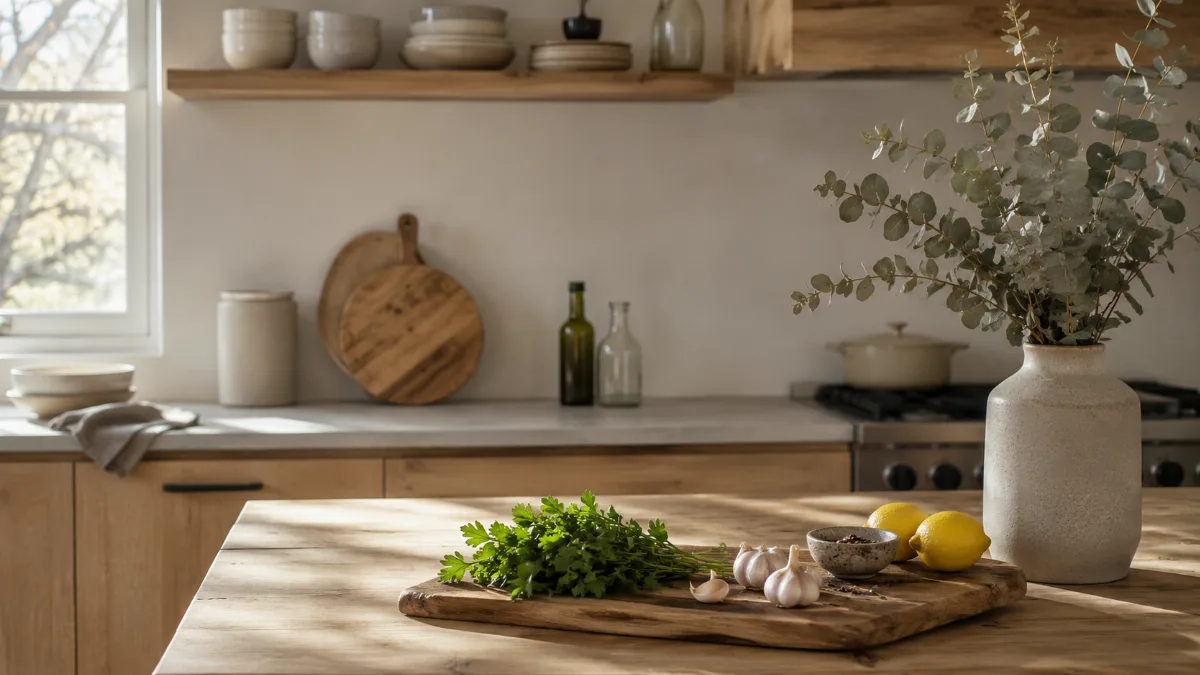
The practical version is a pantry with fewer total items but higher turnover. Everything present is there because it gets used regularly — not because it seemed like a good idea at the time, not because it was on sale, not because it's been there so long it went invisible. A smaller selection of grains and legumes, all cooked; a handful of canned goods with real uses; the oils and seasonings that carry the household's actual flavors.
Reaching that state takes one clear-out: pull what hasn't been used in six months, finish the partial packages, discard what's past date. Expect the first edit to feel wasteful — you'll be throwing out things you paid for — but that's sunk cost, and the point is to stop repeating the pattern that created the pile. After that, maintenance is far lighter than the first edit, because the rule going forward is simple: buy to replace, not to accumulate. When the rice bin runs low, rice goes on the list; until then, it doesn't, no matter how good the sale looks.
The Payoff Beyond Money
The dollar savings are concrete, but there's a parallel benefit that's harder to put a number on: less daily cognitive load. A kitchen with a known inventory and a familiar rotation of meals asks for far fewer micro-decisions than one with 80 pantry items and no structure behind them.
Fewer choices about what to cook, fewer decisions at the store, fewer moments of opening the fridge and feeling stuck — across a week that's a real reduction in decision fatigue. The less-cluttered kitchen is, in a functional sense, simply less demanding to live with, and that frees up mental energy for everything outside the kitchen. Start with the one-time clear-out this weekend, then hold the buy-to-replace rule for a month and watch where the weekly bill settles.
The 80 vs 30 pantry:
| Number | Meaning |
|---|---|
| $35–$40 / week | binned food on a $150 grocery spend |
| 80-item pantry | partials, expireds, duplicates |
| ~30-item pantry | everything visible, everything used |


Comments
No comments yet.