
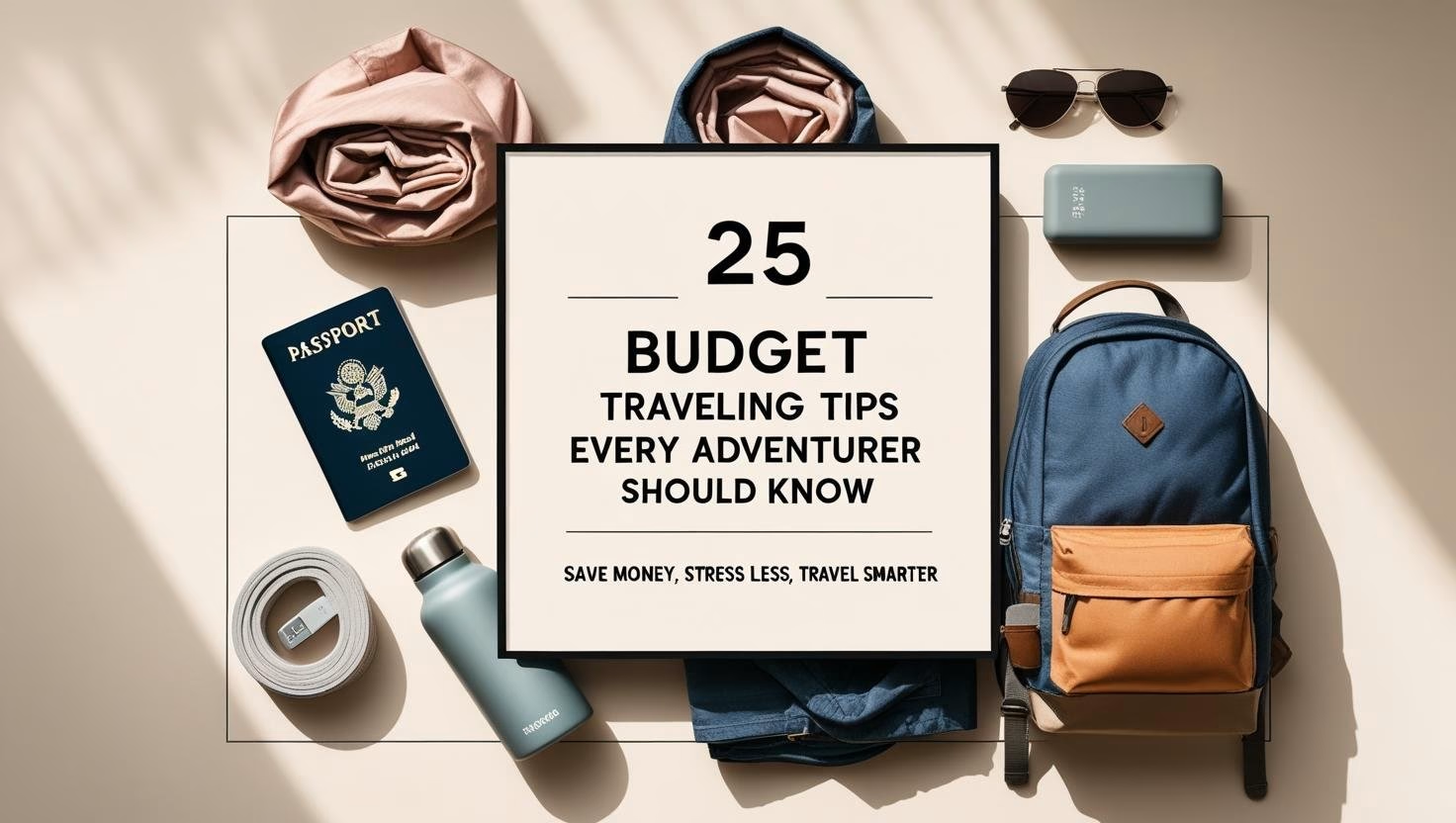

Budget travel isn't about suffering through bad rooms and gas-station meals. It's about making deliberate choices at the few decisions that actually set what a trip costs, and ignoring the micro-savings that burn time without moving the number. These 25 tips are sorted by where the money really goes.
Booking and Timing
1. Travel shoulder season, not off-season. True off-season often means closures and genuinely bad weather. Shoulder season — a month or two on either side of peak — runs 20 to 40% cheaper with most of what makes a place worth visiting still open. Think early November in European cities, late April in US national parks, September on Southeastern beaches.
2. Check midweek fares. Airlines re-price constantly, and Tuesday and Wednesday mornings tend to surface more of the lower fares. The effect isn't dramatic on every route, but checking midweek costs nothing.
3. Set price alerts instead of checking daily. Google Flights and Hopper will watch a route and date range and notify you when the fare drops — more effective than obsessive manual checking and far less draining.
4. Consider positioning flights. Flying into a major hub and connecting onward by budget carrier or train often beats a direct fare. A cheap Gatwick-to-Lisbon hop after a transatlantic leg can undercut the one-ticket routing meaningfully.
5. Stay flexible on the origin airport. If two airports sit within 90 minutes of you, check both. Departure airport is one of the highest-impact variables in the whole fare.
6. Search in private browsing. Whether airlines actually price off your search history is debated, but incognito mode is free and removes the question entirely.
Timing and booking are where the biggest single numbers on a trip get set, which is why they lead the list. A $200 swing on airfare or a shoulder-season hotel rate dwarfs anything you can save later by skipping a coffee. Spend your planning energy here, at the top of the funnel, and treat the smaller tactics further down as cleanup rather than the main event.
Accommodation
7. Stay in one place longer. Weekly rates beat nightly ones at most short-term rentals. One 7-night base usually costs less per night than three 2-night stops, and the logistics overhead drops sharply.
8. Book apartments for families and groups. For three or more travelers, an apartment with a kitchen usually costs less per person than hotel rooms and lets you cook, which cuts food spending.
9. Stay just outside the tourist core. A room 10 to 20 minutes from the main attractions is reliably cheaper than one in the middle of the tourist zone, and transit or a walk bridges the gap.
10. Favor guesthouses and locally owned places. In most international destinations, family-run guesthouses and small hotels undercut international chains and connect you better to the place.
11. Read reviews for what's not said. Five-star averages aren't reliable. The absence of recent complaints about noise, location accuracy, or cleanliness tells you more than the star count.
Food and Drink

12. Eat where locals eat at lunch. The restaurant on the main square exists for tourists. Two streets off it, at lunchtime, is where locals eat — consistently better food at 30 to 50% lower prices.
13. Cook a few meals on longer trips. One grocery run and two or three meals at the apartment saves the equivalent of several restaurant meals bought at tourist prices.
14. Carry a refillable water bottle. Bottled water at tourist sites is marked up and wasteful; tap water is safe across most Western destinations, and a filtered bottle covers the rest. This lines up with the National Park Service's camping guidance.
15. Make lunch your big meal. Lunch menus are often the same kitchen and quality as dinner at lower prices. Shifting the main restaurant meal to midday saves on every eating-out day.
Food is where budgets quietly bleed, because it's a small decision made three times a day. Nobody blows the trip on one meal, but eating every meal out at tourist prices for ten days adds up to more than most flights. The fix isn't never eating out — the market lunch and the local dinner are half the reason to travel — it's making a couple of those meals deliberate splurges and covering the rest with a grocery run and a hotel breakfast.
Transportation
16. Walk or bike anything under three miles. In most cities a three-mile walk is 45 to 60 minutes, free, and shows you more than a cab does. Bike rentals cover longer hops cheaply.
17. Buy transit passes, not single tickets. Most cities sell multi-day or unlimited visitor passes. Past three or four rides a day, the pass pays for itself.
18. Don't rent a car in cities. Urban rentals stack up parking ($30 to $60 a day in tourist areas), navigation stress, and traffic. Transit, walking, and the occasional ride-share win in dense places.
19. Rent a car only where transit can't reach. Rural regions, national parks, and transit-free coastlines justify it. Take the smallest practical vehicle, compare every platform, and check your credit card's coverage before buying the counter insurance.
The Habits That Quietly Inflate a Trip

20. Audit the "experience" purchases. Tour operators and activity platforms are real cost centers. Plenty of what they sell — walking tours, cooking classes, museum entry — can be done independently for less or free. Book deliberately, not out of convenience.
21. Skip the airport currency markup. Exchange before you leave or pull cash from a destination ATM with a no-foreign-fee card, rather than airport exchange booths, which post the worst rates in most countries.
22. Pack your own travel-day snacks. Airport food is expensive. Bringing food through security or buying at a grocery store first adds no time and saves $15 to $30 per travel day.
23. Stop buying travel-sized toiletries every trip. A $5-to-$10 set of reusable containers refilled from full-size products at home pays for itself within a few trips.
24. Be intentional about souvenirs. Shops by the big attractions sell the same items at tourist prices. A consumable from a local market — food, wine, a small regional product — costs less and travels better; often the best souvenir is a photograph.
25. Review your card and bank fees before you go. Foreign-transaction fees (typically 1 to 3% per purchase), ATM fees, and dynamic currency conversion (always decline it) add up over ten days. A no-foreign-fee credit card plus a fee-reimbursing debit card covers most of it.
Choosing Where to Sleep

Accommodation has the most room for savings, but the right pick depends on who's traveling and for how long. The table below sketches the default choice for each situation.
| Traveler | Best-value default | Typical nightly range |
|---|---|---|
| Solo, tight budget | Hostel dorm, or a private hostel room | $15–40 (dorm) |
| Couple or small family | Short-term apartment with a kitchen | Beats two hotel rooms at 4+ nights |
| Longer stay (weeks or more) | Monthly rate in any category | Lowest per-night by far |
For solo travelers, hostel private rooms cost more than a dorm but less than most budget hotels, while keeping the social infrastructure that makes solo trips easier. For couples and families, an apartment's kitchen quietly pays for itself in meals not eaten out. And a month at monthly rates in Eastern Europe, Southeast Asia, or parts of Latin America can total less than a single week in Western Europe or a US resort.
When Budget Travel Isn't Worth It
Some tactics cost more time than they save. Spending 45 minutes hunting the cheapest transit for a 20-minute taxi ride makes sense if the gap is large; it doesn't if the saving is $3 and those 45 minutes were the last quiet hour of the day. Budget travel works when its constraints line up with what you already enjoy — discovery, local interaction, a slower pace — and chafes when they fight how you actually want to travel. The point is to save hard on what you don't care about so the money stays available for what you do. That line is personal.
See also: minimalist travel packing list and budget remote work travel itineraries.

Comments
No comments yet.