
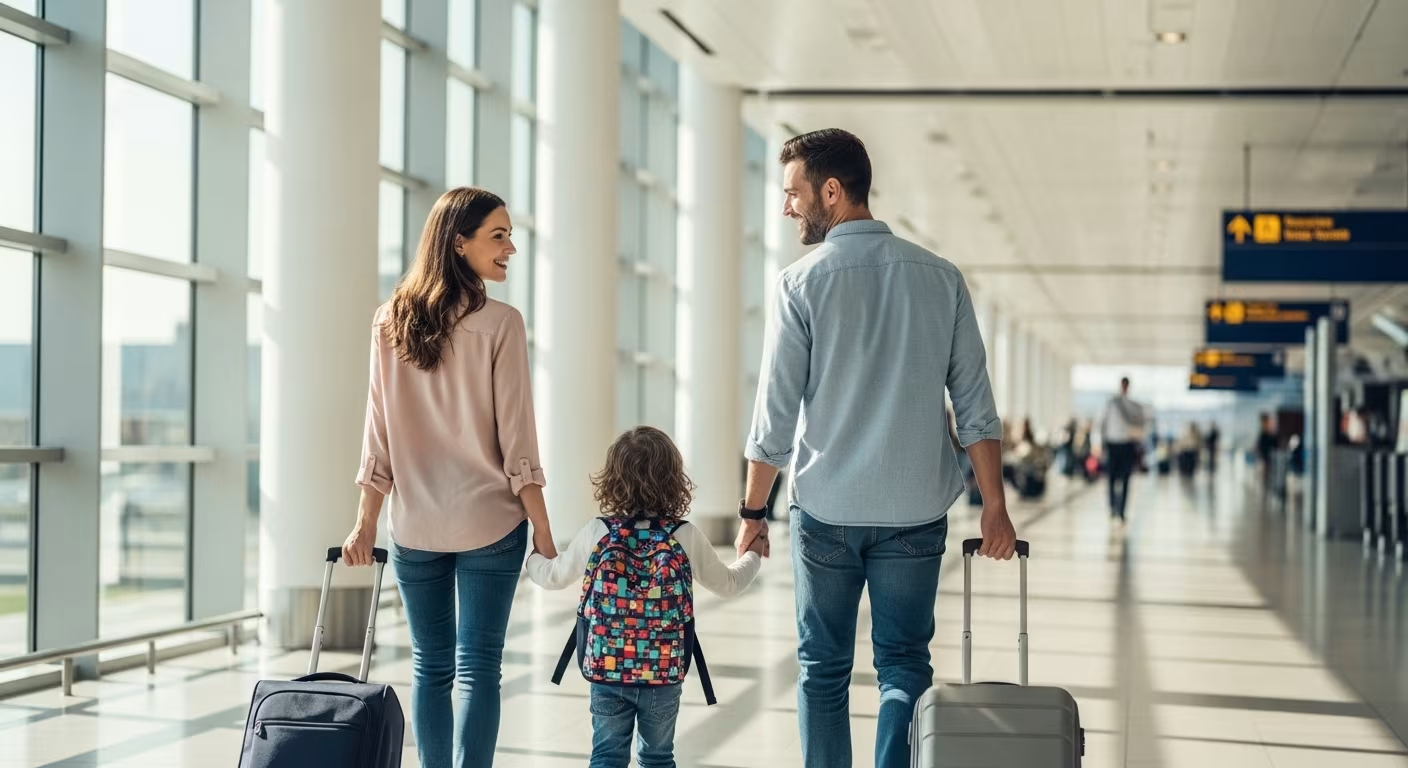

Guides to traveling with children almost always turn into packing lists, and the lists keep growing: a dedicated product for every scenario, a specialized piece of gear for every category. What arrives at the airport is more luggage than two adults can carry while also carrying a tired three-year-old, and much of it never gets used. A week away with a toddler might use the travel cot on three of seven nights and never touch half the essential items packed for problems that didn't happen.
A lighter approach starts from a narrower question: what does this specific trip, for a child of this specific age, over this many days, actually require? Babies who aren't walking yet genuinely need more — a carrier, a sleep surface, feeding supplies — but even then, packing for the feeds and nights that will happen beats packing for every contingency. Older children need far less child-specific gear than the market suggests, and the minimalist approach here is mostly a matter of trusting that.
What Children Actually Need
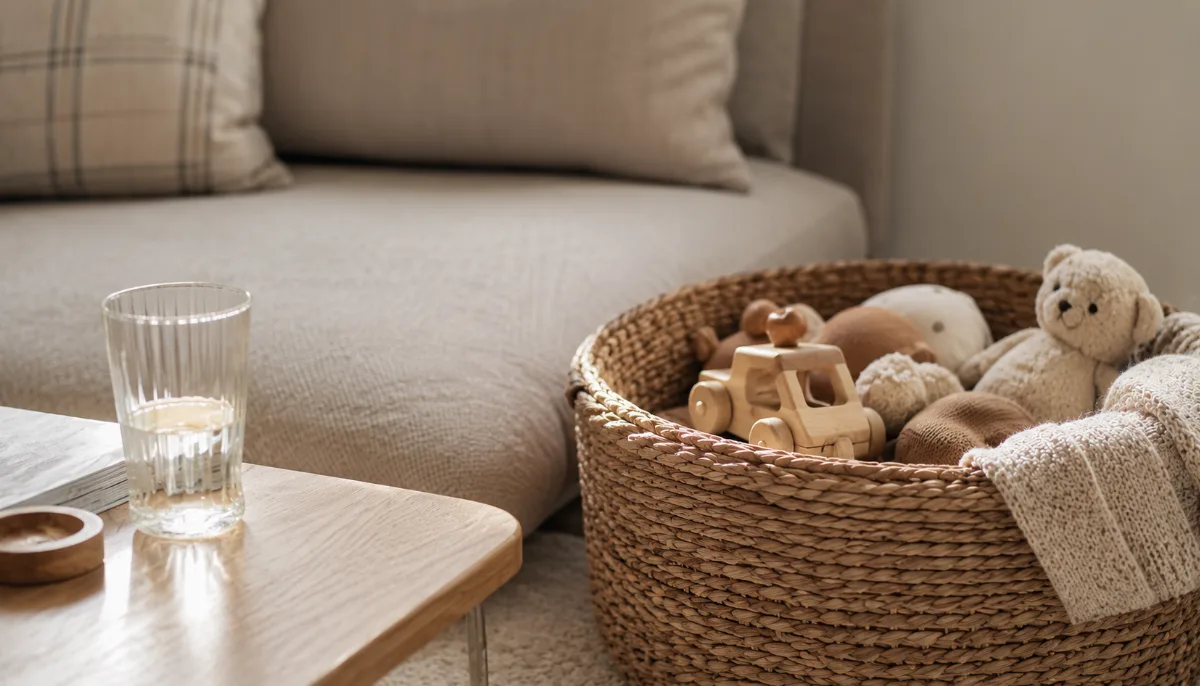
Most children past toddler age travel well on a short list: a favorite toy or small stuffed animal, a couple of changes of clothes, and whatever comfort items they use at home. Everything else the destination usually supplies. The one category worth over-packing is snacks. A bag of familiar food — crackers, dried fruit, a few cereal bars — handles the gap between a two-year-old's hunger and whenever the next real meal actually arrives, and it costs almost no bag space. USA.gov's travel resources makes a similar point.
Clothing follows the same logic as adult packing: fewer pieces, easy to wash, chosen to mix. For younger children, add extra changes because spills and accidents are frequent, and pack shoes that are already broken in rather than a new pair that blisters on day one. Two outfits per day for a potty-training toddler is realistic; the same ratio for a seven-year-old is overpacking.
Choosing a Destination That Does the Work
The destination itself can remove most of the friction before a bag is packed. Places that work well for families share a few traits: predictable infrastructure, food children will actually eat, room to run, and short daily distances. Long transit days — multiple connections, overnight flights, six hours in a car seat — are the hardest part of family travel and worth designing around rather than pushing through.
Somewhere children are welcome in ordinary settings matters more than any specific attraction. Much of Southern and Eastern Europe folds children into normal restaurant and public life as a matter of course, which turns an evening meal from a negotiation into part of daily life. Staying in one city for a week rather than moving every two days lets a child settle into a rhythm and gives parents time to find the good playground and the bakery that opens early.
Pacing, Accommodation, and Rest
Young children have a small budget for museums and walking tours. One major activity per day, with loose time around it, beats an itinerary that tries to reproduce a childless trip. Do it in the morning: children wake early anyway, and a museum at 9am with a two-year-old is a different experience than the same room at noon. Then protect the afternoon nap or quiet hour as fiercely as you would at home — skipping it trades one extra sight for a tired, unhappy evening for everyone.
Accommodation with a kitchen earns its place quickly. Being able to make breakfast and a simple dinner removes the dependence on restaurant timing, handles a fussy eater without an audience, and cuts food costs over several days — self-catering apartments are often cheaper than a hotel room that sleeps four anyway. A place near a park or square is worth more than one near the sights; the best family memories tend to come from ordinary local space, not ticketed attractions.
Pacing rules that hold up with children under 10: one main activity per day, not two; a mid-afternoon return to the accommodation for 1 to 2 hours, which prevents the late-afternoon collapse that ends most family days badly; and a minimum of 3 nights per location, since packing and moving consumes most of a travel day and children pay the cost of it twice.
Accommodation choice matters more than location for young families. A place with a kitchen removes the requirement to eat every meal out — usually the single largest cost and the largest source of friction. Separate sleeping space matters once children go to bed before adults do; a one-room hotel means the adults' evening ends at 8 pm. And laundry access halves what needs packing, which changes the luggage from two large cases to one.
Planning for Illness and the Unpredictable

Children get sick on trips more often than parents expect — disrupted sleep, unfamiliar food, and new environments make a minor bug likely on anything longer than a week. A small kit for their ages covers most of it: a fever reducer, an antihistamine, rehydration salts, and plasters, with the correct doses noted before you leave so you're not doing conversions at 2am. Check where the nearest clinic sits relative to each accommodation on arrival, and confirm your travel insurance covers pediatric care specifically — not every policy treats children on the same terms as adults, and private care abroad can be expensive.
Beyond illness, children simply don't run on schedule; they have off days and refuse the plan. A day that included one interesting thing and two enjoyable meals is a good travel day, and holding a "good enough" standard removes the pressure of trying to optimize a trip around a toddler's cooperation. Pack for the youngest child's pace rather than the oldest's — older children adapt to slower days far more easily than younger ones adapt to faster ones. Start the next trip by cutting the packing list in half; it will almost certainly still be too much.
A small kit removes most of the emergencies that otherwise cost a day of the trip. Children's paracetamol or ibuprofen in the correct dose for weight, a thermometer, rehydration sachets, antihistamine, plasters and antiseptic, motion sickness remedy, and any regular medication in original packaging with enough for the trip plus 3 days.
Three documents are worth having on the phone and on paper: the child's medical details including allergies and weight (dosing is weight-based), the travel insurance policy number with the emergency line, and a photograph of each child taken that morning in the clothes they are wearing — the last one takes 5 seconds and is what search procedures ask for first if a child becomes separated in a crowded place.
Pacing rules that survive kids:
| Rule | Number | Why |
|---|---|---|
| Main activities | ONE per day | the second one breaks everyone |
| Museum timing | 9 a.m., not 2 p.m. | kids wake early anyway |
| Afternoon | return to the room | rest resets the evening |
| Sleep space | separate once kids sleep first | one room ends the adults' evening |
| Health kit | weight-dosed fever reducer, antihistamine, rehydration salts, plasters | covers most of it |

Comments
No comments yet.