
The Minimalist Approach to Back-to-school Shopping on a Budget

Okay, raise your hand if the words "back-to-school supply list" make your eye twitch a little. Yeah, mine too. Every damn year, it feels like this huge financial and mental burden just drops on your head right when you're trying to savor the last few weeks of summer.

I remember staring at my kindergartener's list for the first time, back when my oldest, Leo, was starting school. It was like 27 items long. And some of it was so specific: "Ticonderoga #2 pencils, 24 count," "1-inch, 3-ring binder with clear view cover." I swear, I almost cried trying to find the right shade of blue folder.

And the cost? Holy hell. It adds up so fast, right? One minute you're thinking, "Oh, just some pencils and paper," the next you're staring at a $200 receipt for things that will probably be lost or broken by October. It's a lot.

But it doesn't have to be this way. We can totally ditch the frantic, expensive, overwhelming back-to-school rush. I’ve learned a few tricks over the years, mostly by messing up and overspending myself.

So, today we're going to talk about how to tackle that monster list and all the other back-to-school madness without losing your mind or blowing your budget. We're going to simplify it, find those hidden savings, and maybe, just maybe, actually enjoy the transition back to school. No guilt trips, just real strategies from one tired mom to another. 👋

Why This Actually Matters

Let's be real, back-to-school shopping isn't just about the stuff. It's about the financial pressure, the mental load, and the stress of trying to keep up with what everyone else seems to be doing.

You know that feeling? Scrolling social media, seeing all these perfectly curated "back-to-school hauls" and feeling like your kid needs every single branded item to be ready. It’s a lot of pressure, and it’s totally unnecessary.

Last year, I sat down and crunched the numbers from the year before. I’d spent almost $300 on school supplies and new clothes for my two kids. Three hundred bucks! That's a solid week of groceries for us. Or a new pair of running shoes for me. Or, you know, a date night that doesn't involve takeout on the couch.

And half of that stuff? It was either never used, lost in the black hole of their backpacks, or immediately replaced by something "cooler" a month later. Like the special sparkly gel pens I bought my daughter, only for her to use the free ones the teacher handed out.

The real benefit of a minimalist approach isn't just saving money, though that's a huge damn plus. It's about reducing decision fatigue for you. It's about teaching your kids resourcefulness. And it’s about having less junk cluttering up your house.

When you buy less, you have less to organize, less to keep track of, and less to replace next year. It frees up your time and your mental energy, which, let's be honest, is already in short supply for most of us moms.

Rethinking the "needs" List

The first step to minimalist back-to-school shopping is to really challenge the idea of what's "needed." We're bombarded with marketing, and those school supply lists can feel like commandments handed down from above.

But here's a secret: a lot of it is just noise. Your kid doesn't need a specific brand of colored pencils to learn fractions. They just need colored pencils that work.

The "essential" Myth

So many things get lumped into the "essential" category, but if you look closely, you’ll find a lot of fluff. It’s okay to question the list, and it’s okay to push back, gently.

  • School-Mandated vs. "Suggested." Teachers give lists, and some items are definitely critical. A specific binder size for a middle schooler's organization system? Probably important. But often, there are items that are more "nice to have" or "if you can" suggestions. Ask around. Check with parents of older kids or even the school office if you're unsure about specific items. Sometimes, last year's teacher had different needs.
  • The Brand Trap. Does it really have to be the $10 character folder or the name-brand markers? For basic items like folders, notebooks, and glue sticks, a generic brand often works just as well. My kids honestly couldn't care less if their crayons say "Crayola" or "Happy Arts." The goal is functionality, not branding. Save your money for the things that truly benefit from a specific brand, like Ticonderoga pencils which are actually pretty good and don't break as easily.
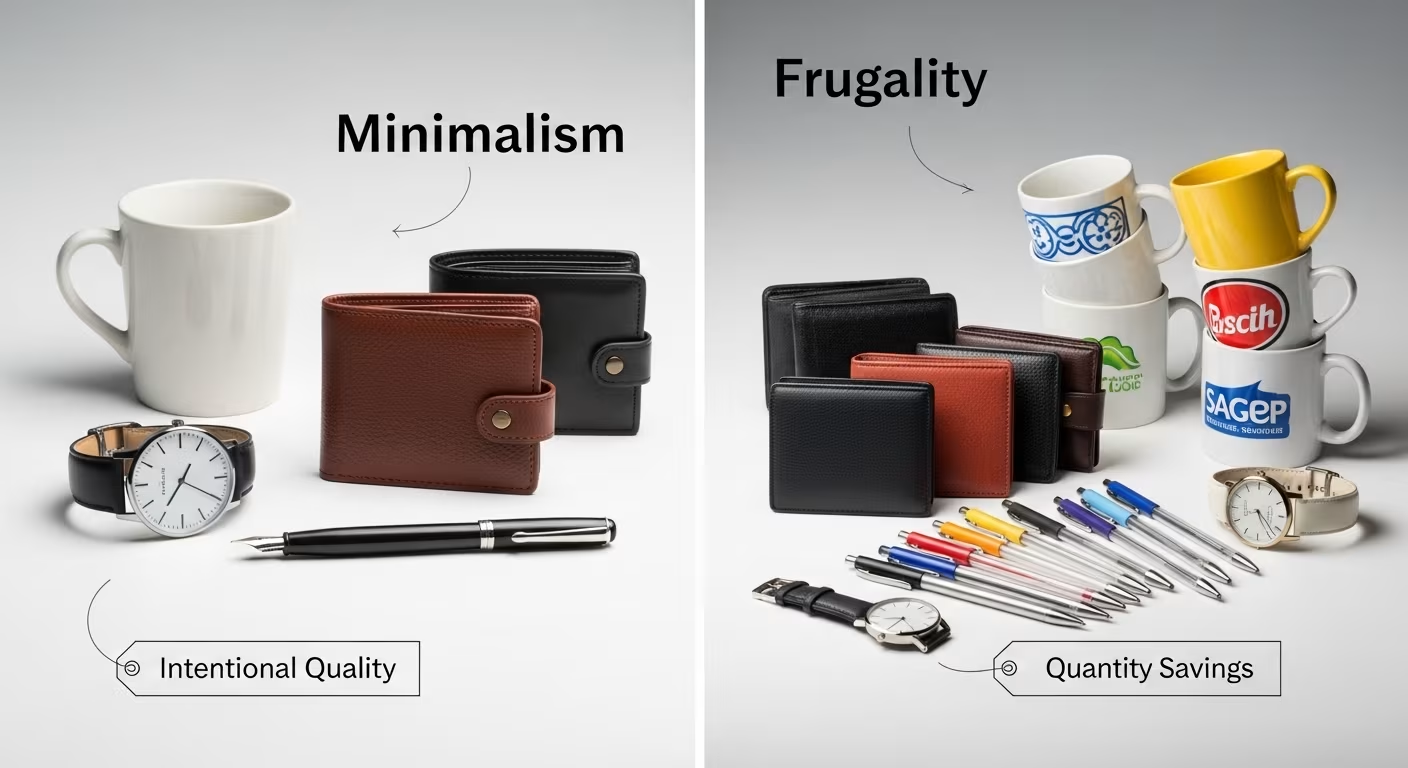
  • Quality Over Quantity. Instead of five cheap notebooks that fall apart by Thanksgiving, consider one or two sturdy ones. Instead of a dozen flimsy pens, get a smaller pack of decent ones. Fewer, better-quality items mean less waste, less frustration, and ultimately, less replacing. You're not buying more stuff; you're buying smarter stuff.

This initial mindset shift is probably the hardest part, because it goes against years of conditioning. We’re taught to buy, buy, buy. But once you start questioning, you’ll be amazed at how much you can cut.

How to Actually do It

Okay, enough with the philosophy. Let’s get down to brass tacks. How do we actually do this back-to-school thing without spending a fortune or ending up with a mountain of unnecessary junk? It’s all about a few practical steps and a little planning.

Step 1: the "inventory First" Rule

This is probably the most crucial step, and one I used to skip every single year. Don't be like past me.

Before you even glance at that school supply list, gather all the existing school-related stuff in your house. Backpacks, lunchboxes, pencil cases, half-used notebooks, crayons, rulers. Everything. Create a designated spot for it, even if it's just a corner of the dining room table for an hour.

Go through it. What's salvageable? Is last year's backpack still perfectly good, maybe just needs a wipe-down? Are there three packs of unopened crayons from last Christmas hiding in the art bin? You'd be surprised what you find.

I swear, last year I found two pencil boxes that were practically new, tucked under a pile of my daughter’s craft projects. They just needed a good clean. That saved me an immediate $10 right there.

Involve the kids, if they're old enough. Make it a treasure hunt. "Who can find the most glue sticks?" It teaches them resourcefulness and shows them that we don't just toss things out after one use. Plus, it gives them a little ownership of their supplies.

Make a "keep" pile, a "donate/toss" pile, and a "needs a wash" pile. Then, and only then, are you ready for the next step.

Step 2: Scrutinize the School List (with a Red Pen)

Now that you know what you actually have, it’s time to look at that dreaded list. Grab a pen and get ruthless. This isn't about ignoring the teacher; it's about smart purchasing.

Go through the list item by item. Put a star next to the "absolute must-haves" – things that are specific and truly non-negotiable (e.g., a specific type of binder, a composition notebook). These are your priority items.

Circle anything that's a "maybe need" or "nice to have" – like specific colored folders (do they really care if it’s blue or red?), or an extra box of tissues. For these, consider if your existing stock from home can cover it, or if you can find a cheaper alternative.

Put a question mark next to anything that seems like a luxury or an "overkill" item. My kids' lists always have things like "10 glue sticks" or "4 boxes of crayons." Do they really use ten glue sticks in a year? Probably not. You can probably get away with 3-4 and replenish if needed. You’ll save money, and have less clutter in their desk at home.

It sounds intense, but this focused approach saves you so much time and money later. You’re building a strategic shopping list, not just a grab-and-go one.

Step 3: Hunt for Deals, Smartly

Okay, now you have your pared-down, prioritized list. Now we shop. But we shop smart. This isn't about buying any deal; it's about finding deals on the items you actually need.

Comparison shop. Check Amazon, Target, Walmart, your local dollar stores, even office supply stores. Prices can vary wildly, even on basic items. Use store apps to check prices before you go, or open a few tabs on your computer.

Look for sales cycles. School supply sales usually kick off in mid-July and run through August. Don't feel pressured to buy everything the first week of sales. Often, the best deals are closer to the actual start date, or even the week after, when stores are clearing out stock.

Consider going in on bulk buys with other moms for common classroom items. Things like extra boxes of tissues, hand sanitizer, or paper towels often get requested for the classroom. Splitting a bulk pack from Costco or Amazon can save everyone a few bucks. I’ve done this for years with my mom friends and it's a godsend.

Also, don't be afraid of store brands for basic items. For things like rulers, scissors, basic notebooks, and pencil sharpeners, the store brand is often just as good and significantly cheaper. Again, functionality over fancy branding.

Step 4: the Clothing Conundrum (capsule Wardrobe for Kids)

Back-to-school clothes can be a financial black hole. Kids grow fast, and they're damn hard on their clothes. My daughter, Lily, can get a stain on a brand new shirt faster than I can say "don't touch that."

Here’s how I approach it: Inventory their current wardrobe. What still fits? What's in good condition for school? Separate "play clothes" from "school clothes," though honestly, there's a lot of overlap for younger kids.

Then, make a list of actual gaps. Not "I want five new outfits," but "Leo needs 2 more pairs of school pants, 3 long-sleeved shirts, and his sneakers are too small." Focus on versatile pieces that can be mixed and matched.

Think about a mini capsule wardrobe for school. For elementary kids, maybe:

  • 3-4 pairs of comfortable pants/leggings
  • 5-7 tops (enough for one per school day plus a couple of extras)
  • 2-3 sweaters or hoodies
  • 1 pair of good, sturdy school shoes (plus gym shoes if needed)
  • Underwear and socks (replenish as needed)

That’s it. Kids don't need a different outfit for every day of the month. They need functional, comfortable clothes that they can move in. And let's be honest, they'll probably wear their favorites on repeat anyway.

Where to shop for these? Thrift stores, consignment shops, hand-me-downs from friends or older siblings. My kids don’t care if their jeans were "pre-loved." You can find amazing quality clothes for a fraction of the price. My best score was a practically new Patagonia fleece for Leo for $8.

If you do buy new, look for sales, and prioritize quality for items like shoes and outerwear that need to last.

Step 5: Lunchbox & Backpack Reality Check

This is another area where the "new year, new everything" mentality can take over. Does your kid really need a brand new backpack every year? Probably not, if last year's is still good.

Pull out last year's backpack. Check the zippers, inspect the straps for wear and tear, and give it a good clean inside and out. A cycle in the washing machine (check care label first!) can work wonders. If it's functional and not falling apart, it's good to go.

Same goes for lunchboxes. Are all the containers still there? Does it seal properly? Is it reasonably clean? My kids love their character lunchboxes, and if it works, it works. Don't upgrade just for the sake of it.

If you do need a new one, think durable and timeless. A solid color backpack might not be as "fun" as the latest superhero, but it will likely last longer and be less embarrassing in a year or two. Avoid flimsy, trendy items that won't hold up to daily kid abuse.

Step 6: Don't Forget the "hidden" Costs

Back-to-school isn't just about pencils and clothes. There are a bunch of other costs that sneak up on you and can blow your budget if you're not prepared.

Think about classroom fees, field trip money, school pictures, subscriptions to online learning tools, after-school clubs, sports registrations, instrument rentals. These things can easily add up to another couple hundred bucks throughout the year.

Try to factor these into your budget from the start. Talk to other parents if you can, especially those with kids a grade ahead. They can give you a heads-up on what to expect. This isn't about buying less; it's about being aware of the full financial picture so you're not scrambling later.

Even small things like extra snacks for the class party or a gift for the teacher during holidays can add up. Keep a small "school buffer" in your budget to cover these unexpected expenses. It'll save you a lot of stress down the line.

Step 7: the "holding Station" & Organization

You’ve done all the hard work: inventoried, scrutinized, shopped smartly. Now, don't just dump all the new supplies into random drawers or leave them in the shopping bags. This is where you bring the minimalist magic full circle.

Designate a specific "school supplies" bin or drawer in your home. This is where all the extra pencils, glue sticks, and crayons go. When a pencil breaks or a glue stick runs out, your kids know exactly where to go to get a replacement.

This does two things:

  1. It makes it easy to find things, reducing frustration for everyone.
  2. It allows you to clearly see what you have, so you don't accidentally buy duplicates later in the year.

For backpacks and lunchboxes, establish a clear home. A hook by the door, a specific shelf. Simple routines make a damn difference. Less stuff to manage means less mental clutter for you, and more independence for your kids.

This organized "holding station" is key to making your minimalist approach sustainable throughout the school year. It's not just about the initial shop; it's about managing what you have effectively.

Making It Stick / Common Mistakes

Even with the best intentions, it's easy to fall back into old habits. Here are some common mistakes I’ve made (and still occasionally make, let's be honest) and how to avoid them.

Mistake 1: The "Everything New" Mentality. We get this idea that kids need new everything to have a fresh start or to succeed. They don't. They need a good teacher, a safe learning environment, and a parent who isn't stressed about money and time. Their learning isn't tied to the newness of their pencil case. Your wallet will thank you for letting go of this.

Mistake 2: Buying Too Much. The "just in case" buys. Oh, an extra pack of pens. Three packs of erasers. These "extras" quickly become clutter, or they get lost, or they just sit there taking up space. Buy what’s on your actual needs list, and replenish only when something is truly used up or broken. Trust me, you can get a single pack of pencils mid-year if you run out.

Mistake 3: Shopping Last Minute. This is the cardinal sin of budget shopping. Rushed decisions always lead to overspending. You'll grab whatever is available, regardless of price or true need. Plan ahead, start your inventory in late July, and spread out your shopping over a few weeks. It reduces stress and gives you time to find deals.

Mistake 4: Not Involving Kids. If they're old enough, bring them into the process. Let them help with the inventory. Give them a budget for their "fun" item (like that character backpack). It teaches them value, responsibility, and that money doesn't just grow on trees. It also makes them more likely to take care of their chosen items.

Mistake 5: Comparing to Others. This is a killer. Instagram is not real life, my friend. Your kid doesn't need the latest name-brand sneakers or the trendiest graphic folder to be happy or smart. Focus on what works for your family and your budget. Your peace of mind is worth more than keeping up with the Joneses.

The best back-to-school list is the shortest one you can get away with. Seriously, challenge every single item.

Frequently Asked Questions

My Kid Insists on the Character Backpack. What Then?
Compromise is key here. If it's truly important to them, maybe let them choose one "fun" item, like the backpack or a special pencil case. The rest of the items, like notebooks and pens, can be practical and budget-friendly. This teaches them about making choices and living within limits.
How do I Deal with Teacher Requests for Specific Brands?
Sometimes, teachers have a valid reason. Ticonderoga pencils, for example, really do break less often. If it's a few key items, it might be worth the small splurge for the specific brand to ensure quality. For non-critical things, if a generic brand is significantly cheaper, you can send a quick email to the teacher asking if a generic substitute is okay. Most teachers are understanding if you communicate.
Is It Okay to Buy Used School Supplies?
Absolutely! Books, binders (especially cloth ones), pencil boxes, calculators, even some craft supplies (like half-used packs of construction paper or fabric scraps). Give them a good clean or wipe down. It saves a ton of money and is much better for the environment. You'd be amazed what you can find at thrift stores or online marketplaces.
How Long Should I Budget for This Entire Process?
The initial inventory and list scrutiny can take 1-2 hours. Shopping itself doesn't have to be a marathon. Spread it out over a few weeks, grabbing a few items here and there for 30-60 minutes at a time. Trying to do it all in one day will just burn you out and lead to impulse buys. Breaking it up makes it much more manageable.
My Kids are in High School. is This Still Relevant?
Even more so! High schoolers often have stronger opinions about brands and styles, but their needs are also more expensive (calculators, specific tech). Involve them heavily. Give them a budget and let them prioritize. My oldest helped me with her list last year, and having to choose between a trendy binder and extra fancy pens really taught her about financial limits and wants versus needs. It was a revelation for her.

The Bottom Line

Back-to-school season doesn't have to break the bank or your spirit. By adopting a minimalist approach, you're not just saving money; you're gaining mental space, reducing clutter, and teaching your kids valuable lessons about resourcefulness and conscious consumption.

It's about focusing on purpose, not perfection. It's about what your kids truly need to learn and thrive, not what marketers tell you they need. Start small, challenge one item on that list, and see what a difference it makes.

You've got this, mama. Your kids just want your presence, not a pristine pile of new stuff. Go enjoy those last few moments of summer. ❤️