
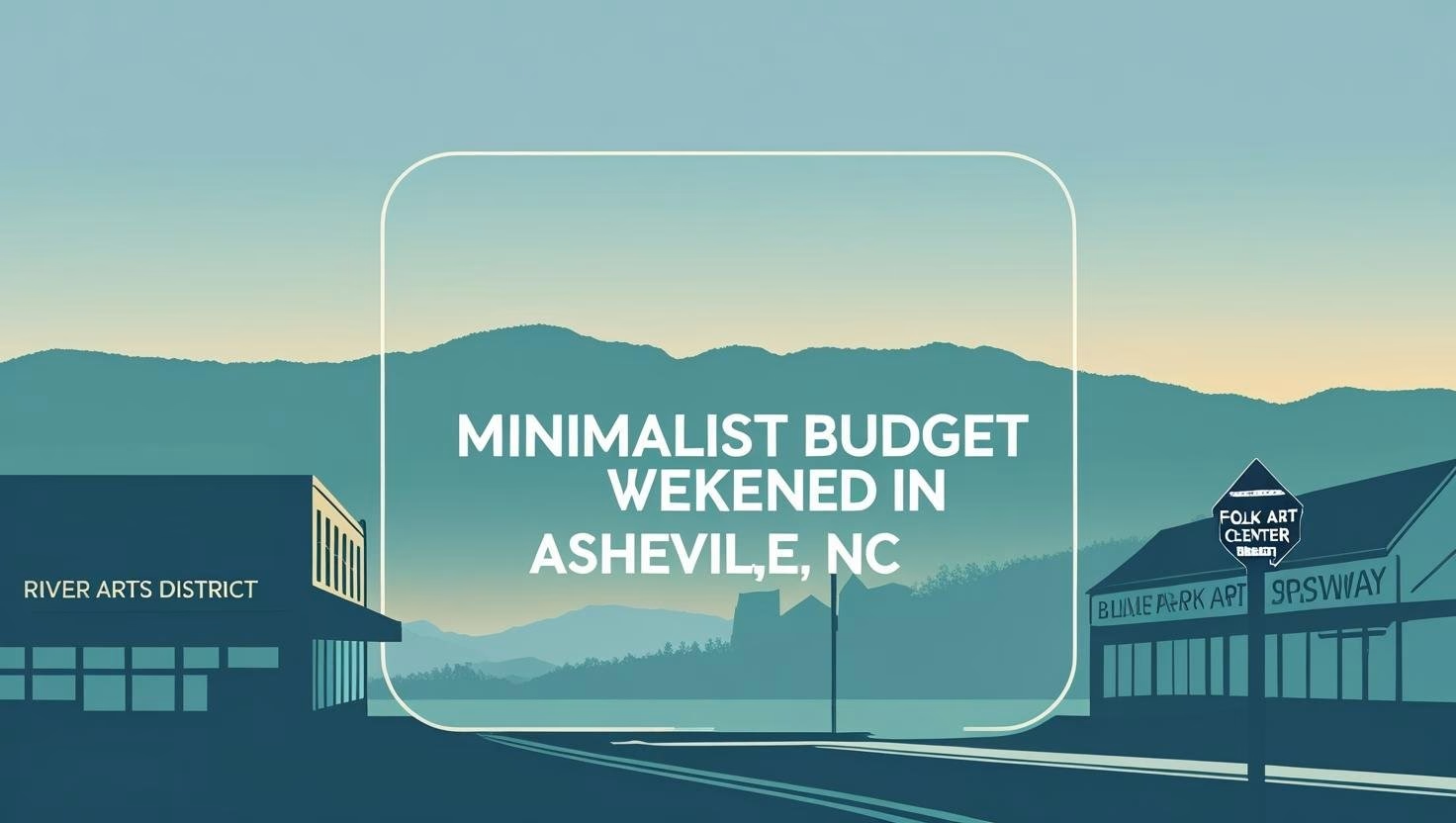

Asheville is one of the most-visited small cities in the Southeast, and its tourism economy shows it. Downtown hotels run $200 to $300 a night in peak season, restaurant prices track the demand, and the brewery-tour-package circuit adds up fast. The useful gap for a budget traveler is this: the landscape that draws people here — the Blue Ridge Parkway, the French Broad River, the hiking in the surrounding national forest — is free, and the food scene, which is genuinely good, is far more affordable at lunch than at dinner. A budget trip is built around that gap rather than fighting it.
The Blue Ridge Parkway: Free and Worth the Drive
The Blue Ridge Parkway runs 469 miles along the Appalachian crest, from Shenandoah National Park in Virginia to Great Smoky Mountains National Park in North Carolina. There is no fee to drive it. The section around Asheville is among the most accessible, entering from the northeast and curving south and west past the city.
Several overlooks sit within 30 minutes of downtown. The Folk Art Center at milepost 382 has a free gallery of Appalachian craft and a Parkway information desk, which makes it a good first stop for orienting the rest of the drive. Craggy Gardens at milepost 364 offers a 1.4-mile loop through high-elevation heath bald to a summit at 5,892 feet, one of the best clear-day views in the eastern US. Because the Parkway holds ridge elevation the whole way, you get long views east over the piedmont and west across ridge-and-valley terrain without a single paid gate. Plan the drive for early or late in the day when the light is better and the popular overlooks are quieter.
River Arts District: Free to Walk and Browse
The River Arts District — locals call it the RAD — is a 0.75-mile corridor of working studios in converted industrial buildings along the French Broad River. More than 200 artists keep studios open to the public, and entry to the buildings is free; they're laid out so you can walk through and watch people at their benches. Weekday mornings are best: studios are staffed and artists are actually working, while weekends are busier and some spaces sit unattended.
Plan on 2 to 3 hours with coffee stops, since the corridor has several cafes. The adjoining French Broad River Greenway gives flat, free walking and cycling along the water, and rental bikes are available from vendors in the district if you'd rather cover the riverfront on wheels than on foot.
Farmers Markets: City Market and West Asheville Tailgate
The Asheville City Market runs downtown on Saturdays from 8 a.m. to noon, April through December, with local produce, crafts, and prepared foods. The West Asheville Tailgate Market, held Tuesdays from April through October, is smaller and less crowded, with more direct contact with the farmers themselves.
Both are free to browse, and the prepared-food vendors serve meal-quality plates for under $10 — often better, from a cooking standpoint, than the tourist-facing restaurants nearby, and sourced from the same farms. A market breakfast or lunch is one of the easiest ways to eat well here without paying dinner prices, and it doubles as a way to see how the region actually cooks.
The markets are also the cheapest way to feed yourself for the rest of the day if you're staying somewhere with a kitchen. A hostel dorm or a rented room with fridge access turns a $6 bag of market produce and a loaf of bread into two or three meals, which matters more here than in a city where cheap chain food is everywhere — Asheville's downtown skews toward sit-down restaurants, so self-catering a couple of meals a day is a real lever on the trip's total cost.
Hiking Without a Tour Package

The Pisgah National Forest wraps around Asheville to the south and west, and most of it is free to enter. A few developed areas near the city cover most first-time visits.
Bent Creek, about 10 minutes from downtown, has mountain-biking and hiking trails through a river corridor; the trails are free and parking is free or low-cost at the main lot. Looking Glass Rock, 30 minutes south on Route 276, is a half-day, 5-mile round-trip climb with 1,700 feet of gain to the bare granite dome at the top, where the view runs across multiple Blue Ridge lines — no permit, no fee. Graveyard Fields, at milepost 418.8 on the Parkway and roughly 40 minutes south, reaches two waterfalls on a 2.3-mile loop; it's popular, so arrive before 9 a.m. on summer weekends to get one of the small lot's spaces.
The practical planning picture, all of it free to access:
| Destination | From downtown | Hike | Entry |
|---|---|---|---|
| Folk Art Center (MP 382) | ~15 min | Gallery, no hike | Free |
| Craggy Gardens (MP 364) | ~30 min | 1.4-mi loop, 5,892 ft summit | Free |
| Bent Creek | ~10 min | Multiple, easy–moderate | Free (parking free/low) |
| Looking Glass Rock | ~30 min | 5 mi round trip, 1,700 ft gain | Free |
| Graveyard Fields (MP 418.8) | ~40 min | 2.3-mi loop, two waterfalls | Free |
Accommodation: The Hostel Option

Asheville has two well-regarded hostels that keep lodging out of the $200-plus hotel bracket. Sweet Peas Hostel, two blocks from Pack Square downtown, runs dormitory beds at $35 to $55 a night and private rooms under $100; it's clearly well cared for, from the common spaces to the kitchen and bathrooms. Bon Paul & Sharky's Hostel, over in West Asheville, sits in a similar price range with a more residential feel.
Both put you within walking distance or a short bus ride of downtown, the River Arts District, and the weekend markets, and the Asheville ART transit system connects downtown, West Asheville, and south Asheville on a $1.25 flat fare. Rates shift with the season, so confirm current pricing when you book — but even a private hostel room typically undercuts a downtown hotel by more than half.
The hostel math also changes what you do with the car. Because both hostels sit close to the walkable core, you can park and leave the car for a full day of downtown, RAD, and market time, then use it only for the Parkway and forest drives that actually require it. That cuts downtown parking costs and the low-grade stress of moving a vehicle around a busy tourist center. If you're traveling solo or as a pair and comfortable in shared space, the dorm bed is the single biggest saving on the trip; a couple who wants privacy still comes out well ahead in a private hostel room versus a hotel. This lines up with Recreation.gov.
What to Pay For, and What to Skip
One thing worth the money is a single sit-down dinner that shows what the city's kitchens actually do — Nine Mile for Caribbean-influenced plates at moderate prices, Early Girl Eatery for Southern cooking across breakfast, lunch, and dinner, or the Grove Park Inn's buffet breakfast if you want to walk through the historic hotel while you eat.
What to skip is the organized brewery tour package. The same breweries — New Belgium, Sierra Nevada, and Burial Beer Co. among them — have taprooms with open hours you can reach on foot or by bike, no tour required, and the taproom visit is usually the better experience anyway. Spending on one memorable meal and skipping the packaged extras is the core budget trade for the trip.
See also: least-visited national parks on a budget.
Avoiding the Peak-Season Price Spike

Asheville's peak season runs April through October, with a second surge in late September and October for fall foliage. October is the priciest month to sleep here: leaf-peeper traffic pushes hotel rates to their ceiling, and the Parkway overlooks fill to National Park levels.
For a cheaper trip, aim for early April — before full spring color but with mild temperatures — June after Memorial Day weekend, or November once the foliage crowds clear. The mountains are open year-round, and winter Parkway hiking is possible when segments aren't closed for ice, so check current road status before a cold-weather drive. Shifting the trip a few weeks off the foliage peak is the single biggest lever on the total cost.
The trade-off is honest: an early-April or November trip means bare trees at the higher overlooks and a real chance of a cold, gray day. But the Parkway views, the summit panoramas, and the waterfalls read just as well without leaves, the trails are quiet, and the money saved on a room in the off-weeks can easily fund the one dinner and the rafting or gem-mining splurge that make the trip memorable. If your dates are fixed in October, book lodging as far ahead as you can and plan to hike early in the day, before the overlook parking fills.
The Food Scene at Accessible Prices
Asheville's food reputation rests on farm-to-table sourcing, an unusually high restaurant density for a city its size, and the influence of the culinary program at AB-Tech Community College. The affordable entry point is breakfast and lunch. Button & Co. Bagels and Biltmore Coffee both keep breakfast under $10. The food-hall concept on Broadway gathers several vendors with most lunch options under $12. Chai Pani, an Indian street-food spot on Lexington Avenue, is routinely named among the Southeast's best restaurants and runs lunch thali plates under $15.
Build the trip around the free landscape, sleep in a hostel, shop the markets and lunch counters, and spend deliberately on one dinner and maybe a bucket of something local, and Asheville costs a fraction of its hotel-and-tour reputation. Eat your big meals midday and the food scene stops being a budget problem. See also: Franklin NC budget road trip.

Comments
No comments yet.