


Five minutes of decluttering without a plan produces shuffled clutter: items moved from one surface to another, things dropped into a box labeled "miscellaneous," a counter that looks better while holding the same objects in a slightly different arrangement. The same five minutes with a structure produces a real result. SORT — Sort, Organize, Remove, Track — fits inside a five-minute window because it handles one surface at a time and forces an actual decision about each item instead of a rearrangement.
Sort: Separate Before You Tidy
The first move is not putting things away. It is dividing everything on the surface into four groups: belongs here (its designated home is this spot), belongs elsewhere (it lives in another room and drifted over), donate or sell, and trash. In a typical kitchen counter or coffee table this pass takes about two minutes.
The value is in what it sets up. The "belongs elsewhere" items now have a specific destination rather than a vague "away." The donate items go straight into a bag that will leave the house, not back into a cabinet. Skipping this split is the most common five-minute failure: the whole session gets spent nudging the same objects around one surface without a single decision landing.
A concrete example: a kitchen counter holding a stack of mail, two coffee mugs, a phone charger, a school permission slip, and a takeout menu. Sorted, that becomes mail to the mail slot (belongs elsewhere), mugs to the cabinet (belongs here), the charger to its drawer (belongs here), the signed slip into the kid's backpack (belongs elsewhere), and the menu into the trash. Thirty seconds of sorting, and every item now has one move rather than an open question.
Organize: Give Everything a Home
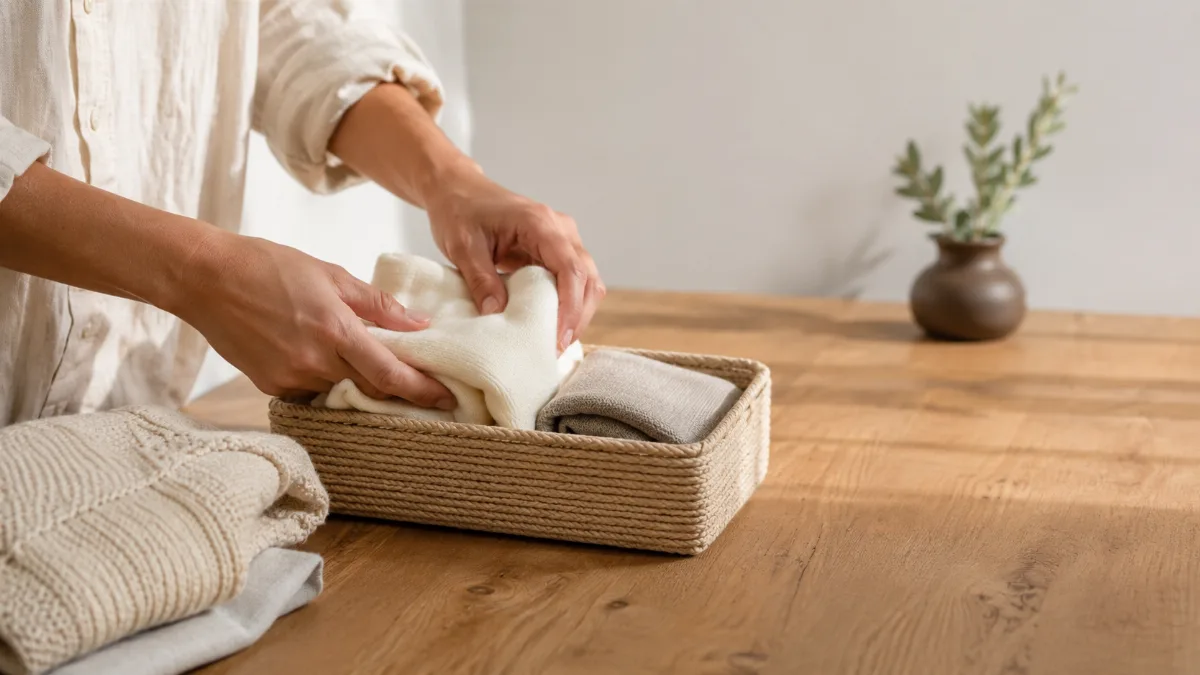
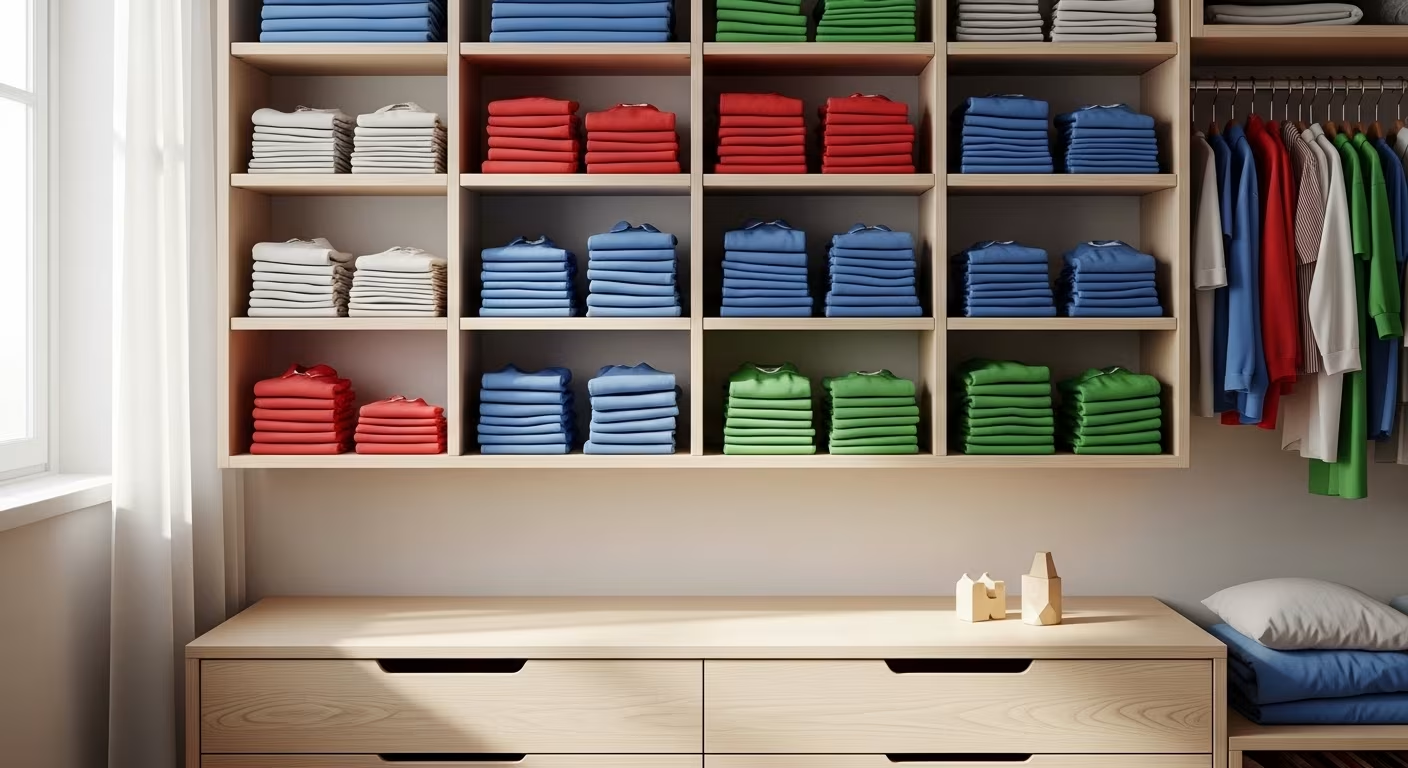
Only the "belongs here" pile needs organizing; everything else already has a next step. Organizing what stays means a consistent spot, a container that fits the quantity, and placement matched to how often the item is used. Daily items go to the front at reachable height. Weekly items go to a second tier. Occasional items go to the back or a top shelf.
The usual mistake is a container too small for the real volume. A key bowl that holds three keys and overflows by Tuesday is not working; a four-hook entry rack for a household of four is. Size the home to the actual load, not the tidy photo of it.
Remove: Move the "Elsewhere" Items Now
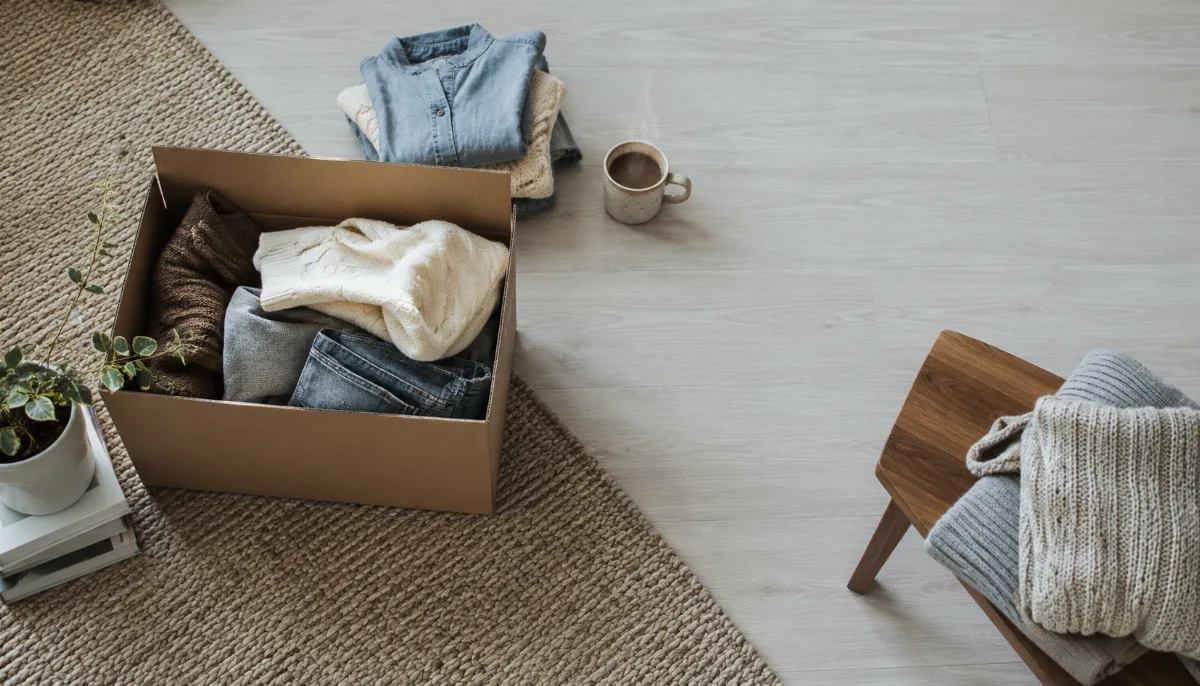
This is where five-minute sessions stall. The "belongs elsewhere" items need to travel to another room, carrying them gets deferred, and within three days they migrate back to the surface they came from. The fix is to walk them over before the timer ends. If the kitchen pass turned up things for the bedroom, the bathroom, and a closet, drop them in those rooms now. They do not need to be perfectly put away — just landed in the right zone, where tomorrow's session in that room finishes the job.
Donate items go directly into a standing donation bag kept somewhere accessible, never into a pile or an "I'll find a bag later." The bag by the door is what makes the removal immediate instead of theoretical.
Track: Notice What Keeps Coming Back
The most underused step is watching for repeats. If the kitchen counter has mail on it every time you sort, the mail has no home. If the entry produces loose shoes daily, the shoe storage is not where people actually drop shoes. A one-sentence note after each session records what reappeared, and after a week the pattern is obvious. This lines up with the KonMari method.
That pattern is what separates two kinds of work. The five-minute sessions are maintenance — they keep accumulation from passing the point the next session can absorb. Adding a mail basket, a charging spot, or a row of hooks at kid height is structural problem-solving. Without the structural fix, the same category surfaces every session and you stay in a maintenance loop indefinitely. A counter that fills with mail needs a mail station; a cable pile needs one designated charging drawer.
Applying SORT Room by Room
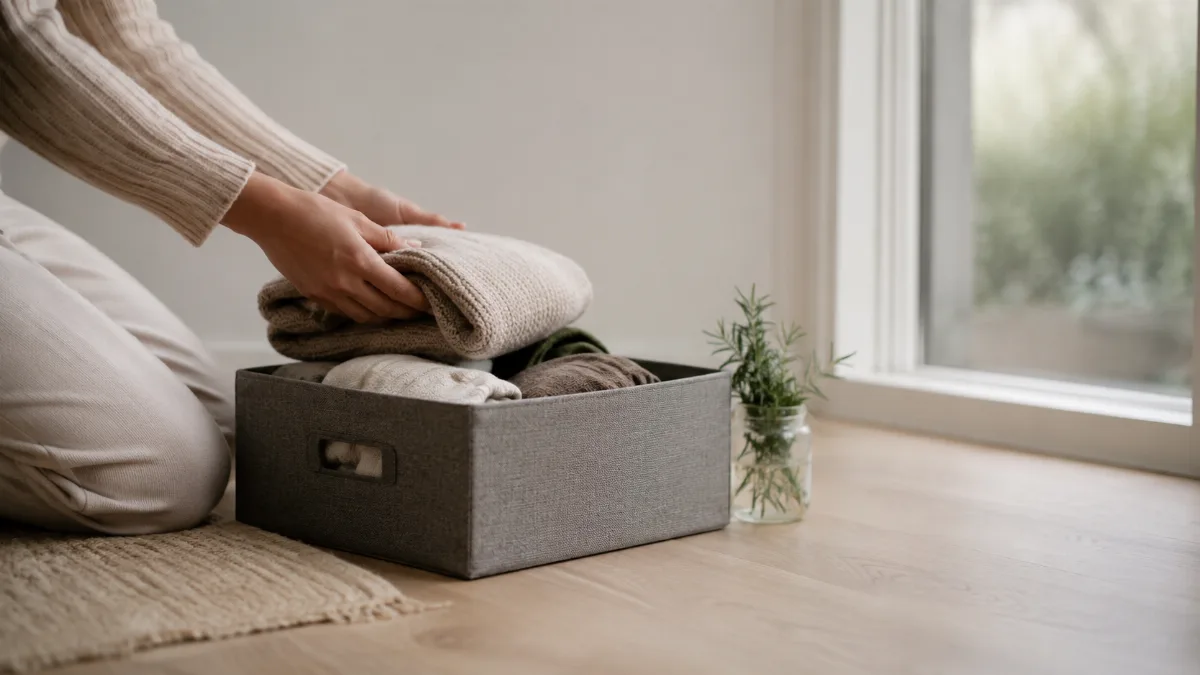
Each room has a natural five-minute target — the surfaces that collect the day's drift. The point is never to set the whole room right; it is to keep nothing accumulating past what the next short session can handle.
| Room | Where to focus | Rough time |
|---|---|---|
| Kitchen | Counters, then the one drawer most in need | 5 minutes |
| Bedroom | The floor and the nightstand | 2–3 minutes |
| Bathroom | Counter, plus under-sink if it was opened | 3 minutes |
| Living room | Coffee table, side tables, media console top | 5 minutes |
| Entryway | Shoes, bags, and the drop surface by the door | 2–3 minutes |
The method also tolerates gaps. For a household with kids or shared spaces, the Track step works best as a shared observation — "the entry keeps collecting backpacks, we need hooks at kid height" is a decision the household makes together, not a mandate from whoever tidies most. And anchoring the session to a behavior rather than a clock time ("before the first screen of the day," "after the last meal before bed") survives a shifting schedule better than a fixed hour. Miss a day or three and nothing resets: five minutes today after a week off restores the state that five minutes a day would have held. For a longer path, see the 30-day declutter challenge, one area per day and the one-in-one-out rule that prevents clutter from returning.

Comments
No comments yet.