

The Permission You Didn't Know You Needed
For most of the twentieth century, sportswear and everyday clothing occupied separate categories. You wore athletic clothing to exercise and changed back into regular clothes afterward. The crossover was socially unacceptable in most contexts beyond very casual ones.
That boundary has shifted substantially. Athleisure — performance-oriented clothing worn in everyday contexts — is now accepted in a wide range of settings that would not have accommodated it a generation ago. The practical implication for minimalists is significant: a wardrobe that functions for exercise, errands, casual social situations, and comfortable work-from-home contexts eliminates the need for two separate clothing systems.
What Athleisure Actually Includes
Athleisure is not a single garment category — it is a set of garments designed to perform well during exercise while looking presentable in non-exercise contexts. This includes fitted training trousers in solid neutral colors, zip-front hoodies and track jackets in clean cuts, sports bras and fitted tanks worn under open shirts or jackets, and training shorts cut in lengths and fabrics that read as casual rather than specifically athletic.
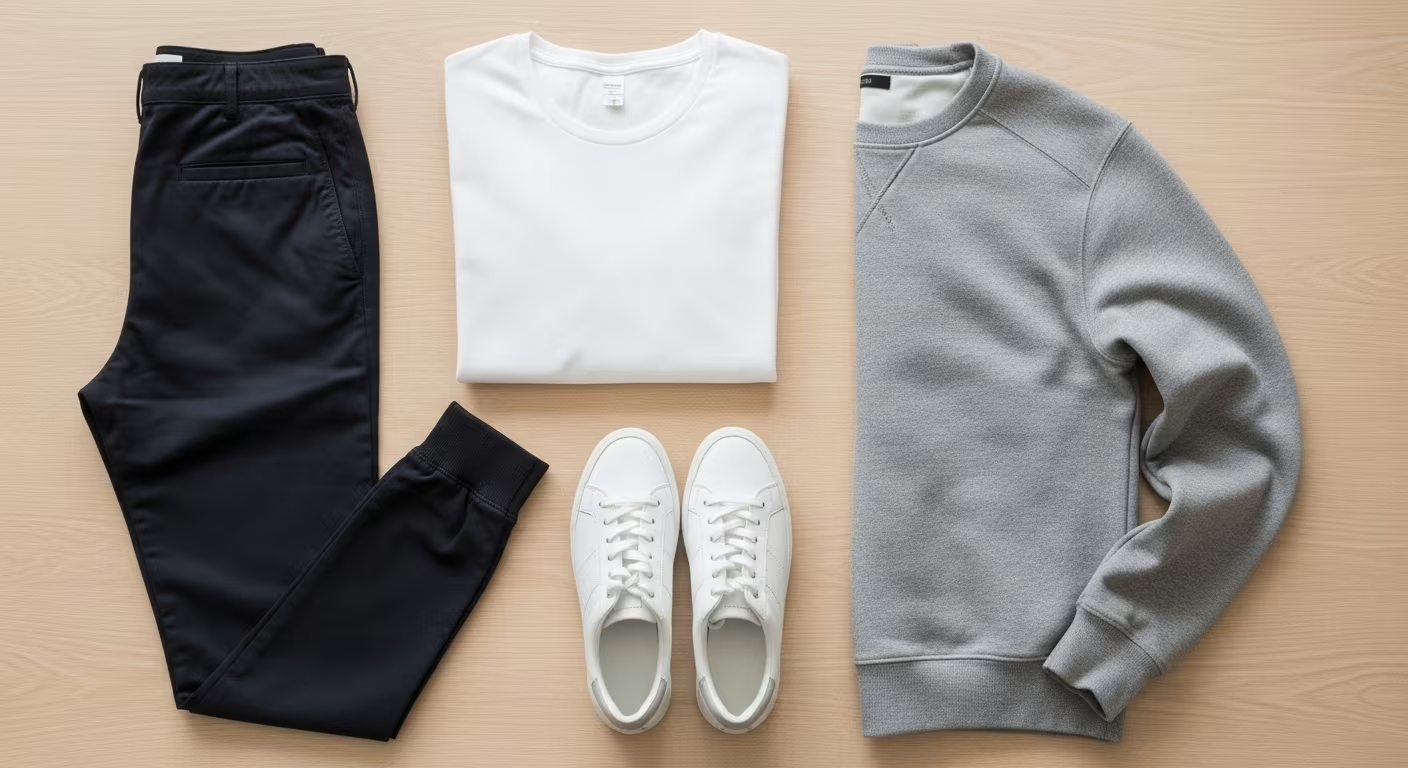
The category also includes footwear — clean training shoes or lifestyle sneakers that work for both gym use and everyday contexts. A white or grey training shoe in good condition reads very differently from a visibly performance-specific trail shoe or a worn gym-only trainer.
The key word in all of this is clean. Athleisure as everyday wear requires cleaner cuts, more neutral colors, and less visible technical detailing than athleisure worn only in gym contexts. The performance fabric remains; the aggressive visual language of high-performance sportswear does not.
Building the Minimalist Athleisure Wardrobe
A functional minimalist athleisure wardrobe starts from a color palette — the same principle that applies to any minimal wardrobe. For athleisure, the most versatile neutrals are black, grey, navy, and white. These combine easily, work with most footwear, and read as intentional rather than haphazard.
The piece count for a functional everyday athleisure wardrobe is low. Three to four training trouser or legging options in the palette neutrals, three to four long-sleeve or short-sleeve tops, two zip-front layers, and one to two pairs of clean training shoes cover the majority of daily contexts for most people. Each piece serves multiple contexts rather than being assigned to a single use.
The Contexts Athleisure Does Not Cover

An honest case for everyday athleisure acknowledges the contexts it does not serve. Formal professional environments, black-tie social occasions, conservative client-facing roles — these require clothing that athleisure cannot replicate. A minimalist athleisure wardrobe works as a complete wardrobe for people whose daily life does not regularly include these contexts, and as a primary wardrobe supplemented by a small selection of formal pieces for people whose life occasionally does.
The supplementary formal selection can be genuinely small: one well-fitting trouser, one blazer, one dress shirt or blouse, one pair of clean leather shoes. These four pieces handle most formal contexts without requiring a full second wardrobe.
Quality Considerations in Athleisure

Performance athletic clothing spans a wide quality range. At the lower end: fabrics that pill quickly, colors that fade after a few washes, elastic that loses its recovery within a season. At the higher end: fabrics that maintain their appearance through hundreds of washes, elastic that retains its shape over years of use, construction that holds at stress points.
For a wardrobe built on few pieces worn frequently, the quality end of the range is the better value. A well-made training trouser worn three times per week for two years has a lower cost per wear than a cheaper version worn for one season before it pills and fades. The investment in fewer, better pieces is particularly clear in athletic clothing, where frequent washing accelerates the deterioration of cheaper materials.
Maintaining the Athleisure Wardrobe
Athletic fabrics require specific care to maintain their appearance and performance. Washing in cold water preserves elastic and prevents shrinkage. Air drying rather than machine drying extends the life of technical fabrics and elastic. Avoiding fabric softener, which coats synthetic fibers and reduces moisture-wicking performance, maintains the functional properties of performance fabrics.
These care practices are simple and become habits quickly. The maintenance investment for a small, high-quality athleisure wardrobe is less than the maintenance investment for a large, mixed wardrobe of varied fabric types.
Seasonal Adjustments Without New Purchases

Athleisure neutrals work across seasons through layering rather than replacement. A lightweight hoodie over a tank handles spring mornings before temperatures rise. That same tank worn alone covers summer training and outdoor errands without needing extra pieces. Layering within a fixed set rather than buying for each season keeps the total count stable year-round.
Thermal leggings or a windproof half-zip extend core pieces into colder months. These function as practical layers that pair with existing tops rather than creating entirely new combinations. When every addition works with everything already owned, the wardrobe grows in capability without growing in volume.
The test for any seasonal addition: does it pair with at least four items already in the rotation? If yes, it earns its place. If only one or two combinations exist, the piece is too specialized and should be skipped.
Care Habits That Keep the System Working
Athletic fabrics — particularly blended synthetics in lighter shades — require more deliberate care than standard clothing. Washing on cold cycles and air-drying rather than machine-drying extends fabric life meaningfully. Heat degrades synthetic fibers and causes pilling on performance materials, which shortens a garment's useful appearance well before it actually wears through.
Quick-dry fabrics like polyester or a poly-cotton blend dry overnight after washing, which matters when total piece count is low. Four or five tops that dry quickly means nothing sits damp or unavailable the next morning.
Rotating through pieces evenly — rather than repeatedly reaching for two favorites — distributes wear and extends lifespan across all items. It also reduces visible differences between older and newer pieces, keeping the whole set looking uniform rather than patchy.
Reviewing the set twice a year rather than shopping reactively handles natural attrition. When a piece finally shows genuine wear, replacing it with the same type in the same neutral color preserves the system. The result is a wardrobe that functions identically five years from now as it does today. Stability of this kind is only possible when the original choices were sound — quality construction, practical neutrals, and genuine versatility rather than trend-dependent styling. Keeping a record of which pieces exist and what purpose each serves helps at purchase time, reducing the chance of buying something that duplicates what already works.
What crosses over and what does not:
| Piece | Everyday-ready when |
|---|---|
| Training trousers | fitted cut, solid neutral |
| Hoodies / track jackets | zip-front, clean lines |
| Shoes | clean white/grey trainers — not trail or gym-worn |
| The payoff | one clothing system for gym, errands, WFH |
Comments
No comments yet.