
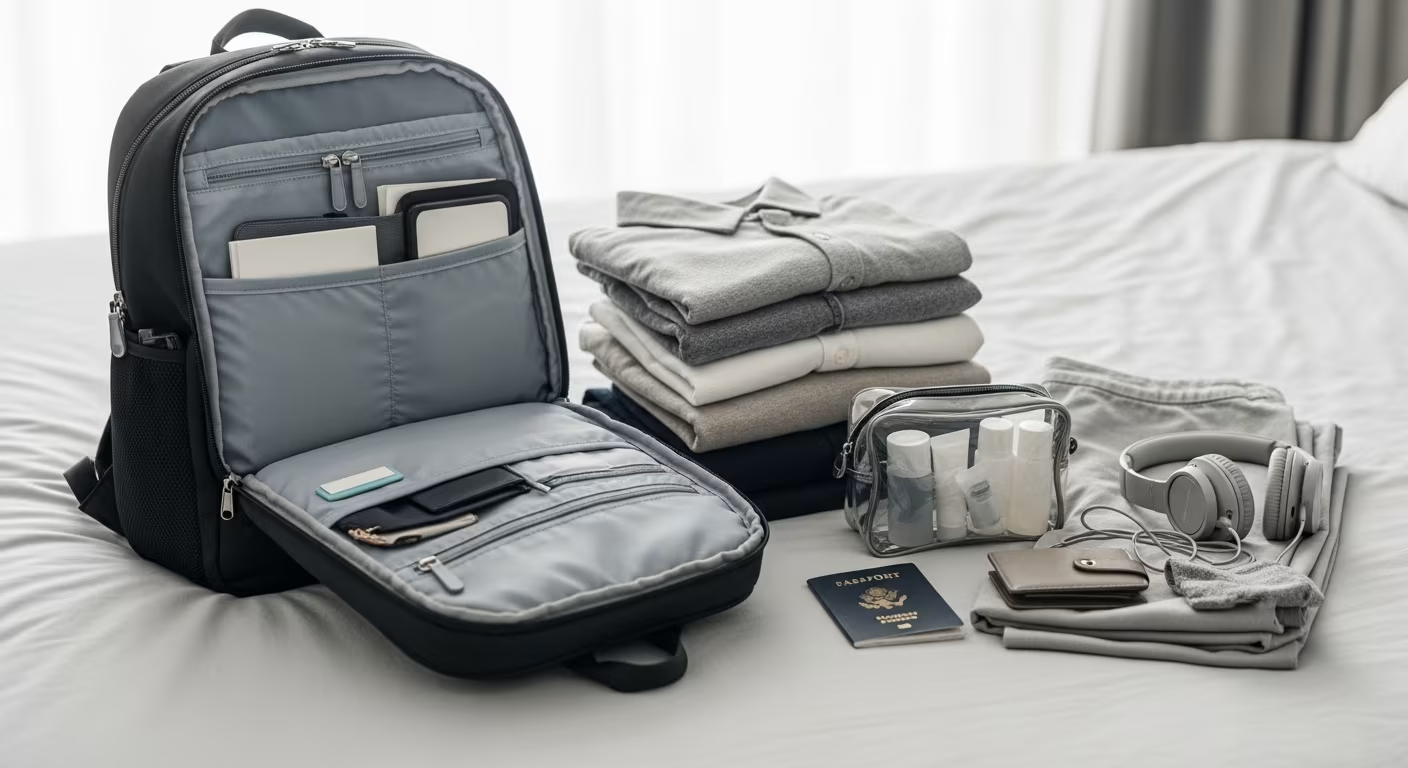

The Overpacking Default
Most people pack for a trip by taking out everything they might possibly need, adding extra options for uncertainty, and arriving at the destination with roughly half their choices unworn. The pattern is consistent across trip lengths and destinations: overestimate what will be needed, overpack in response, underuse most of what is brought.
The consequences are practical. Heavy luggage costs money on flights with checked bag fees, takes longer through airports, and makes ground transit harder. It also produces a packing-and-unpacking burden at each destination that turns the bedroom of every hotel into a temporary clothing management problem.
The alternative is not underpacking — arriving without something genuinely needed — but accurate packing, which requires knowing what the trip actually involves before deciding what clothing serves those activities.
Starting From the Activity List
The single most useful packing tool is a written list of the specific activities the trip includes. Not categories — not "casual," "evening," "beach" — but the actual activities: two business meetings, one dinner at a nice restaurant, four days of sightseeing on foot, one beach afternoon, five casual dinners.
From this list, the specific clothing needs become clear. Two business meetings require one complete professional outfit, possibly two if meetings fall on separate days with visibility to the same people. One nice restaurant dinner requires one dinner-appropriate outfit. Four days of foot-based sightseeing require comfortable walking shoes and casual clothing appropriate for the destination's climate and culture. One beach afternoon requires swimwear and a beach cover. Five casual dinners require casual evening clothing that overlaps with sightseeing clothing.
Mapping the activities to clothing needs typically produces a much shorter list than packing by instinct produces.
The Neutral Palette Advantage in Travel

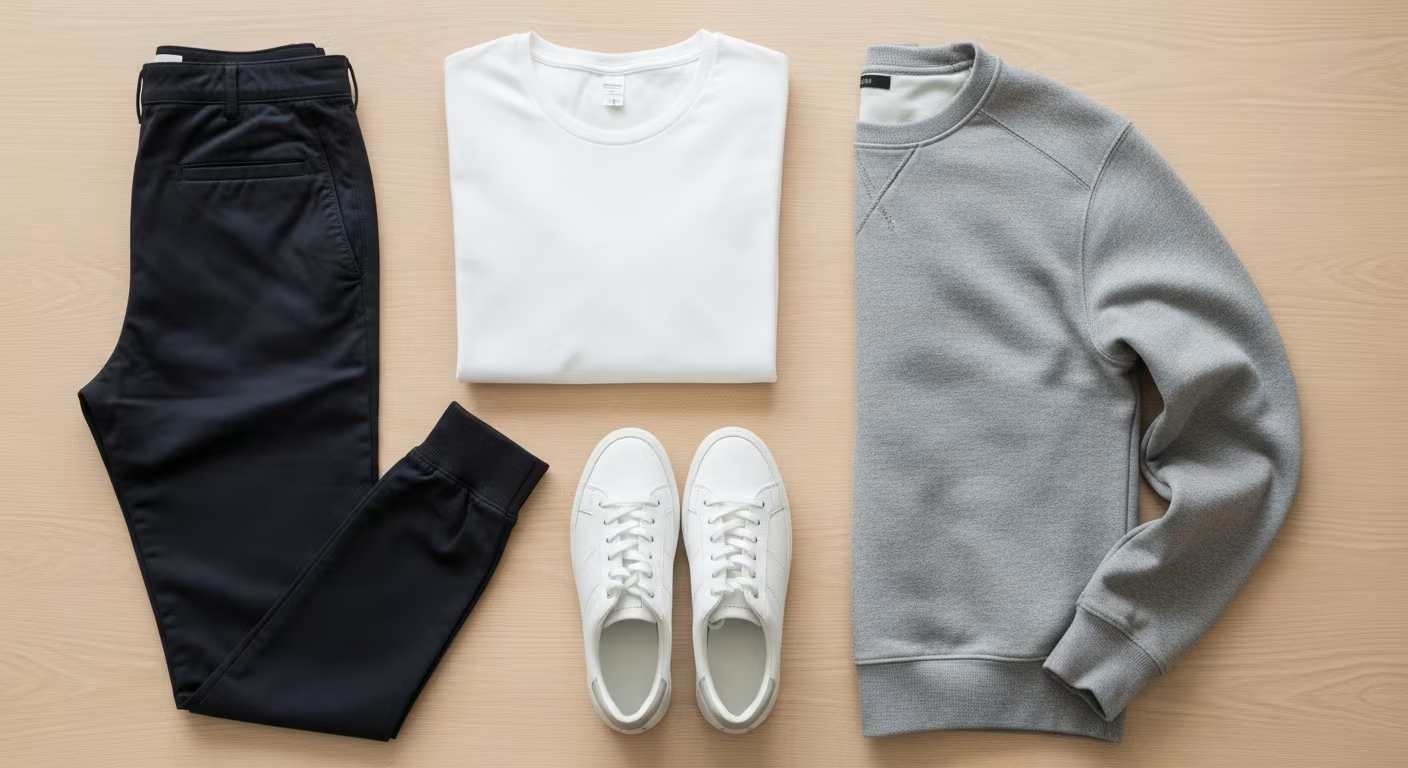
The neutral palette principle serves travel better than everyday life. When every piece shares a color relationship, every piece combines with every other piece, which multiplies the effective outfit count from a small number of items.
Five pieces in a navy-white-grey palette — two bottoms and three tops — produce substantially more distinct outfit combinations than five pieces in mixed colors with no shared palette. The traveler packing a defined palette arrives at a destination with more usable combinations than the traveler who packed more pieces without palette discipline.
The specific pieces that travel well are those that pack small without wrinkling, that dry quickly after washing, and that work in both active and slightly more formal contexts. Merino wool tops satisfy all three conditions for most climates. Dark-wash denim or chinos that read as casual or slightly smart depending on what accompanies them are foundational pieces for most trip types.
One-Bag Travel as a Practice
Carry-on travel — fitting everything in a bag that can go overhead or under the seat — is achievable for most trips of up to two weeks with deliberate packing. The constraints it imposes are exactly the constraints that produce better packing decisions: every item must justify its space, duplicates are not permitted, items that serve only one purpose are questioned.
The first carry-on trip after a period of checked-bag travel is typically revealing: the restriction forces the discovery that most of what was previously checked was not used or could have been purchased at the destination if genuinely needed. Most destinations sell toothpaste, sunscreen, and toiletries that are cheaper to buy on arrival than to carry in the quantities that checked luggage enables.
Laundry During Travel

The willingness to do small amounts of laundry during a trip significantly reduces the minimum clothing needed. A trip of ten days requires different packing than a trip of ten days without any laundry access. Three days of clothing with a mid-trip laundry session — at a laundromat, in a hotel sink for small items, or using a hotel laundry service — covers ten days without requiring ten days of clothing.
Planning one laundry session per week of travel is the calculation that makes extended carry-on travel viable. Quick-dry fabrics facilitate this: a merino base layer washed in the sink in the evening dries by morning in most climates. A cotton base layer washed in the same conditions may still be damp the next day.
What Stays Unworn and Why

Most overpacking happens in three categories: alternative-occasion clothing, shoes that do not match the primary footwear, and items packed as insurance against unlikely scenarios. The formal outfit held back just in case a nice dinner happens. The heavier jacket added in case the weather turns cold. The extra pair of shoes that coordinates differently than the main pair.
None of these additions are irrational in isolation. Collectively, they add multiple kilograms and multiple hours of decision fatigue across the trip. The insurance items stay at the bottom of the bag every time, and their weight is carried for the entire journey regardless.
A useful diagnostic: after returning from a trip, lay out everything that was packed and mark what actually got worn. Most travelers find they used roughly sixty percent of what they brought. The unused forty percent is the overpacking target — it should not make the next trip.
The Logistics Advantage of Traveling Light
A bag that fits in overhead storage means no checked luggage fees and no waiting at baggage claim. On short trips this is purely convenient. On trips with multiple legs or tight connections, it removes a significant category of logistical risk. A bag that stays with you cannot be delayed, lost, or sent to the wrong destination.
Lighter bags also allow more flexibility on arrival. Walking from a train station to a hotel is straightforward rather than a minor physical ordeal. Changing accommodation last-minute, adding a spontaneous day trip, or moving between cities stays practical when everything fits in one bag that moves easily through crowds and narrow corridors.
The physical cost of heavy luggage over a long trip is also underestimated. Shoulders and lower back accumulate strain across multiple days of carrying or maneuvering a heavy bag through transit systems. A bag that weighs six kilograms rather than fourteen produces noticeably less fatigue by day four of a longer journey.
Building a travel wardrobe that works with one bag is a skill that improves with each trip. The first attempt will still include unused items. The second attempt will be tighter. By the fourth or fifth time using the same approach, the bag will contain exactly what the trip requires and nothing else. At that point the process of packing becomes faster and less stressful than it was before, which itself removes a meaningful friction point from travel planning.
From activities to outfits:
| Activity (written down) | Clothing it actually requires |
|---|---|
| Two business meetings | one professional outfit, two if same audience on separate days |
| One nice dinner | one dinner outfit |
| Four days of walking | broken-in shoes + climate-right casuals |
| One beach afternoon | swimwear + a cover |
| The principle | accurate packing — not under, not “might need” |
Comments
No comments yet.