

Why Kids' Clothing Gets Out of Control
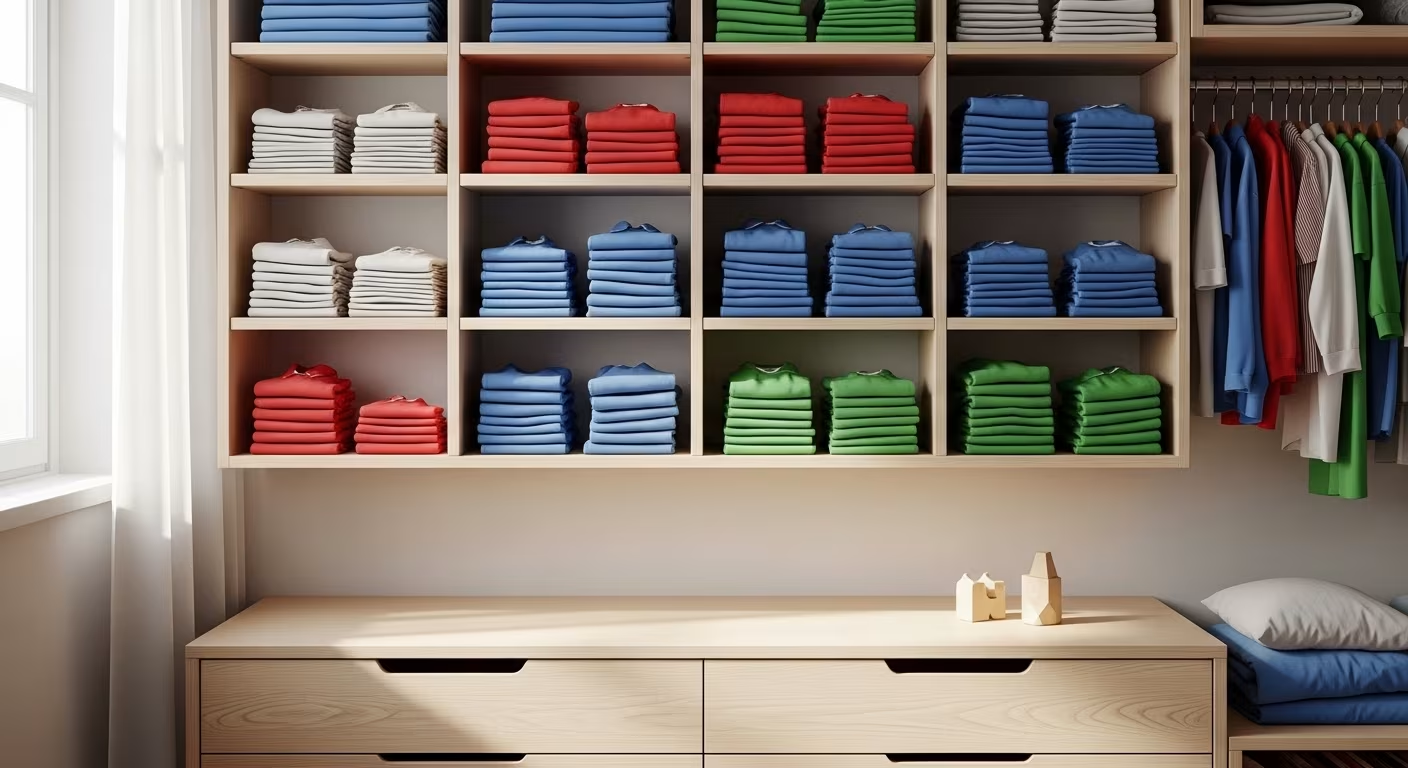
Children's clothing enters households through more channels than adult clothing does. Parents purchase. Grandparents gift. Cousins pass down hand-me-downs. End-of-season sales produce bulk buys for sizes the child will grow into. Birthday presents arrive as clothing. The result, for many families, is a child's closet with more clothing than the child will wear before outgrowing it — and more clothing than the parents can keep organized.
The children's capsule wardrobe addresses this by establishing a specific piece count and a color palette, and using those as filters for what enters the child's wardrobe. New pieces replace existing ones rather than joining them; gifts are redirected toward consumables or experiences; hand-me-downs are edited to the capsule rather than accepted wholesale.
The Seasonal Approach for Children
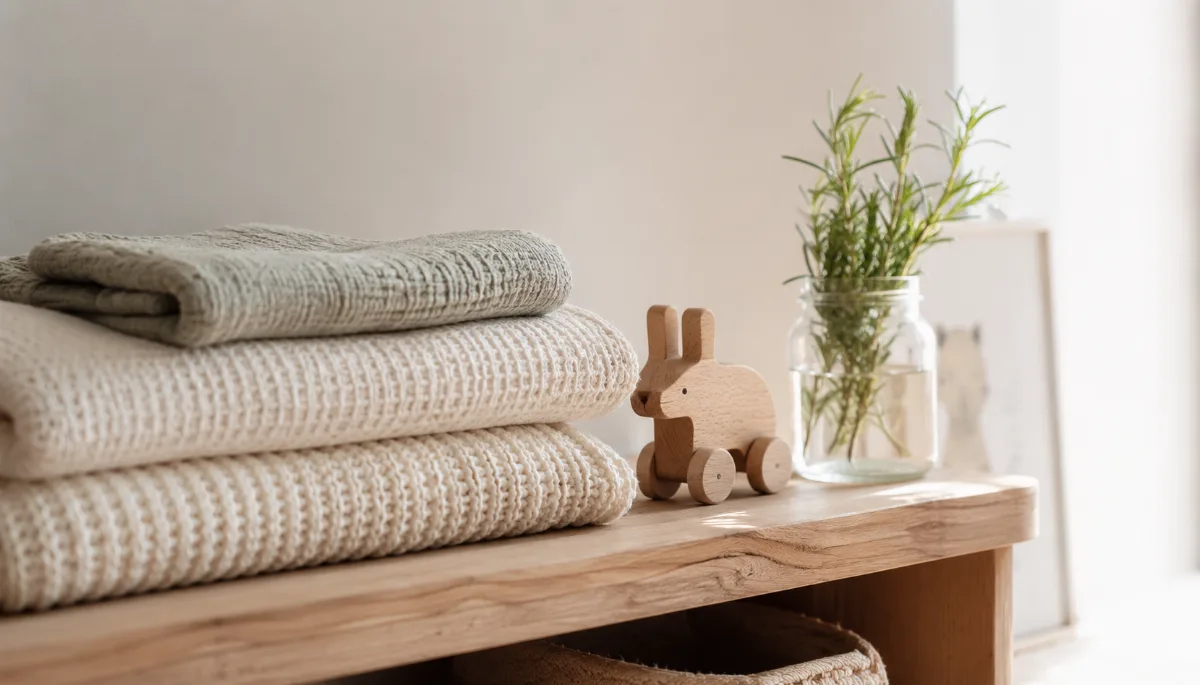
Children's clothing needs vary more between seasons than adults' needs do, because children are typically more active outdoors and less able to regulate temperature through layering adjustments. A seasonal capsule for children covers the specific clothing needs of each season without maintaining a full year-round wardrobe in active circulation.
A spring-summer capsule might contain seven to ten pieces: three to four tops, two to three bottoms, one light layer, appropriate footwear for the season, and one or two pieces that overlap with the next season. An autumn-winter capsule adds warmer layers and appropriate footwear. The seasonal transition is also an opportunity to assess: what grew out of, what wore out, what was never worn, and what will genuinely be needed for the next season.
The Neutral Base With Accent Colors
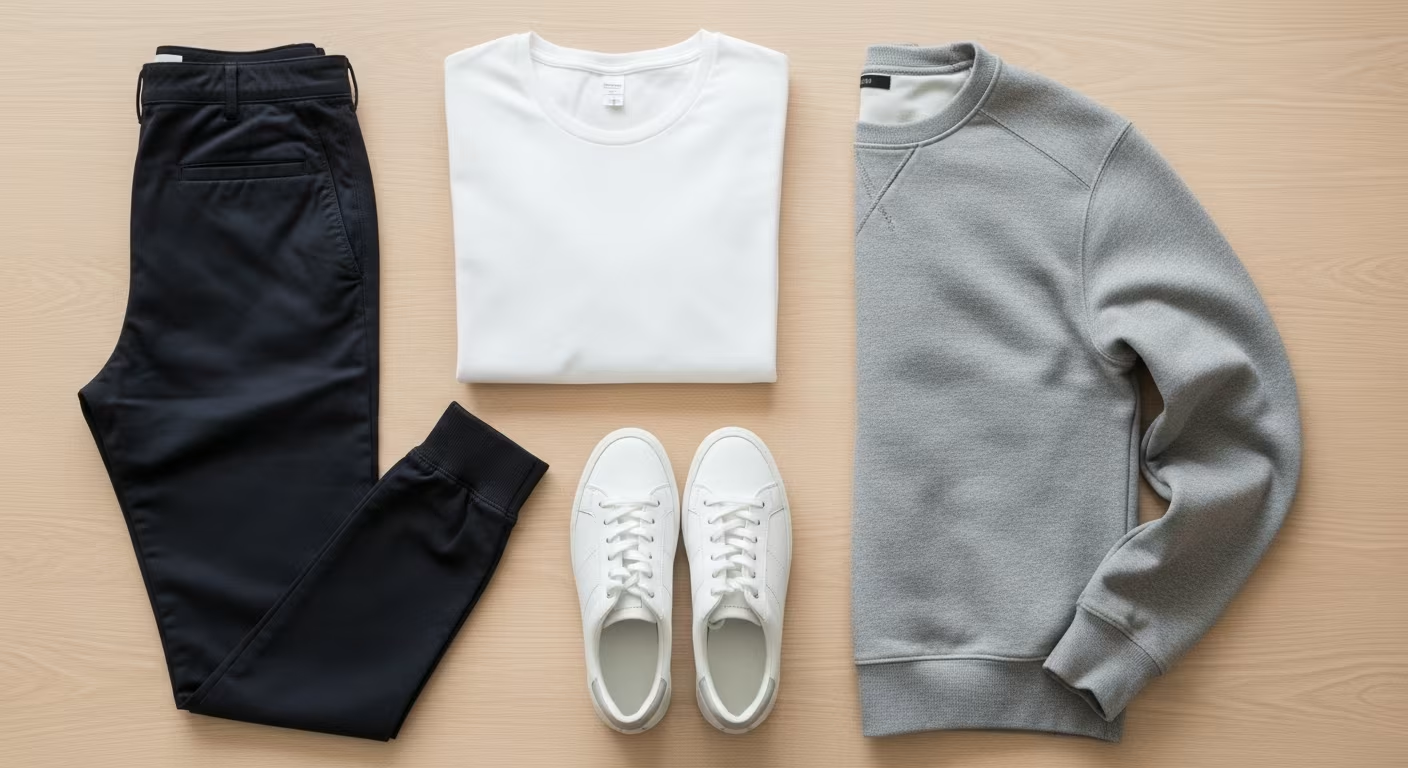
The neutral palette principle that works for adult wardrobes works equally well for children's wardrobes, with modification for the reality that children's clothing often includes prints and colors beyond the adult palette. A useful approach for children's capsules: neutral bases — grey, navy, cream, tan — with accent colors and prints appearing primarily in tops rather than bottoms.
Neutral bottoms combine with any top. Print or colored tops are interchangeable with each other over the neutral base. This structure allows visual variety and the bright colors appropriate for children while maintaining the combinatorial flexibility that makes a small piece count feel larger than it is.
Managing Gifts and Hand-Me-Downs

Gifts and hand-me-downs are the primary sources of accumulation outside parental control, and managing them requires some communication and some selectivity.
For grandparent gifts: providing a specific list of what is genuinely needed — both in terms of type and size — redirects gift energy toward things that will actually be used. Most grandparents prefer to give things that will be worn over things that will accumulate in a drawer.
For hand-me-downs: accepting selectively rather than wholesale. When a box of hand-me-downs arrives, assessing each piece against the capsule criteria — does it fit the palette, does it fill a gap, is it in good condition, will it be worn this season — and accepting only the pieces that meet these criteria. Passing the rest along immediately rather than storing them eliminates the accumulated hand-me-down problem that fills many children's closets.
Sizing for Growth

Children's clothing needs to account for growth in a way that adult clothing does not. Purchasing one size ahead for end-of-season sales is a strategy that can work for the capsule approach if it is done selectively — buying only the pieces that will fill genuine gaps in the next season's capsule, rather than buying broadly because sizes are available.
The temptation of deeply discounted children's clothing is real and frequently produces over-buying for future sizes. A useful check: before buying anything for a future size, identify the specific gap it would fill in the capsule for that size. If the gap is genuine, the purchase is justified. If the gap is not yet identifiable, the purchase is speculative and likely to contribute to the accumulation problem.
The Duration of the Children's Capsule System
The children's capsule system requires more active management than the adult version because the sizing changes require completely rebuilding the capsule every one to two years rather than simply maintaining an existing one. This management burden is worth acknowledging — it is real. It is also substantially less than the management burden of a large, disorganized children's wardrobe that is difficult to sort, keep track of, and refresh as children grow.
The system works best when the seasonal transition is treated as a deliberate, brief project: assess what was used, what grew out of, what wore out; identify the gaps for the next season; acquire selectively to fill those gaps. Treated as a quarterly or biannual project rather than an ongoing task, the management burden is modest.
Managing the Inflow Problem

Children's clothing accumulates from multiple directions simultaneously. Family members give items as gifts at holidays and birthdays. Clothing swaps with other parents introduce pieces that may or may not fit the household's current needs. Seasonal sales make low-cost additions feel justified even when the existing supply is more than adequate.
The inflow problem is more significant than the organization problem. No organizing system fixes a wardrobe that keeps expanding. A clear ceiling on total pieces — say, twelve tops and six bottoms per season — creates a natural gate. When new items arrive, something leaves. This is not deprivation; it is basic inventory management applied to children's clothing.
Communicating the approach to family members who give clothing as gifts is worth doing once. Most people are happy to give gift cards, experiences, or books instead, once they understand the household preference. A defined donation bin for overflow handles continued clothing gifts gracefully without creating household conflict.
When Children Develop Their Own Preferences
Children develop clothing preferences earlier than most parents expect, typically around age five or six. A capsule wardrobe becomes more collaborative at this stage — children can participate in choosing pieces within a defined set of options, all of which meet the household's quality and neutral-palette criteria.
Giving children input within a constrained framework teaches practical decision-making without the chaos of unlimited choice. A child who chooses between three shirt options is exercising preference and developing taste. A child who chooses from forty items is overwhelmed and often lands on novelty over quality.
The neutral base palette also allows hand-me-downs to transfer more efficiently. If a younger sibling wears the same color range, nearly everything transitions between children without coordination problems. Solid neutrals survive this transfer almost every time, regardless of age gap between children.
Revisiting the capsule count as children age makes sense every twelve to eighteen months. Activity levels change, school dress requirements shift, and growth rates slow considerably after the early years. The system adapts without needing to be rebuilt from scratch at each stage, which is one of its practical advantages over an unstructured approach to children's clothing.
The per-season count:
| Season | Pieces | Breakdown |
|---|---|---|
| Spring–summer | 7–10 | 3–4 tops, 2–3 bottoms, 1 light layer, footwear, 1–2 overlap pieces |
| Autumn–winter | the same + warm layers | — |
| Inflow control | gifts → consumables/experiences; hand-me-downs edited, not accepted wholesale | — |


Comments
No comments yet.