

Why Sentimental Items Stop a Declutter Cold
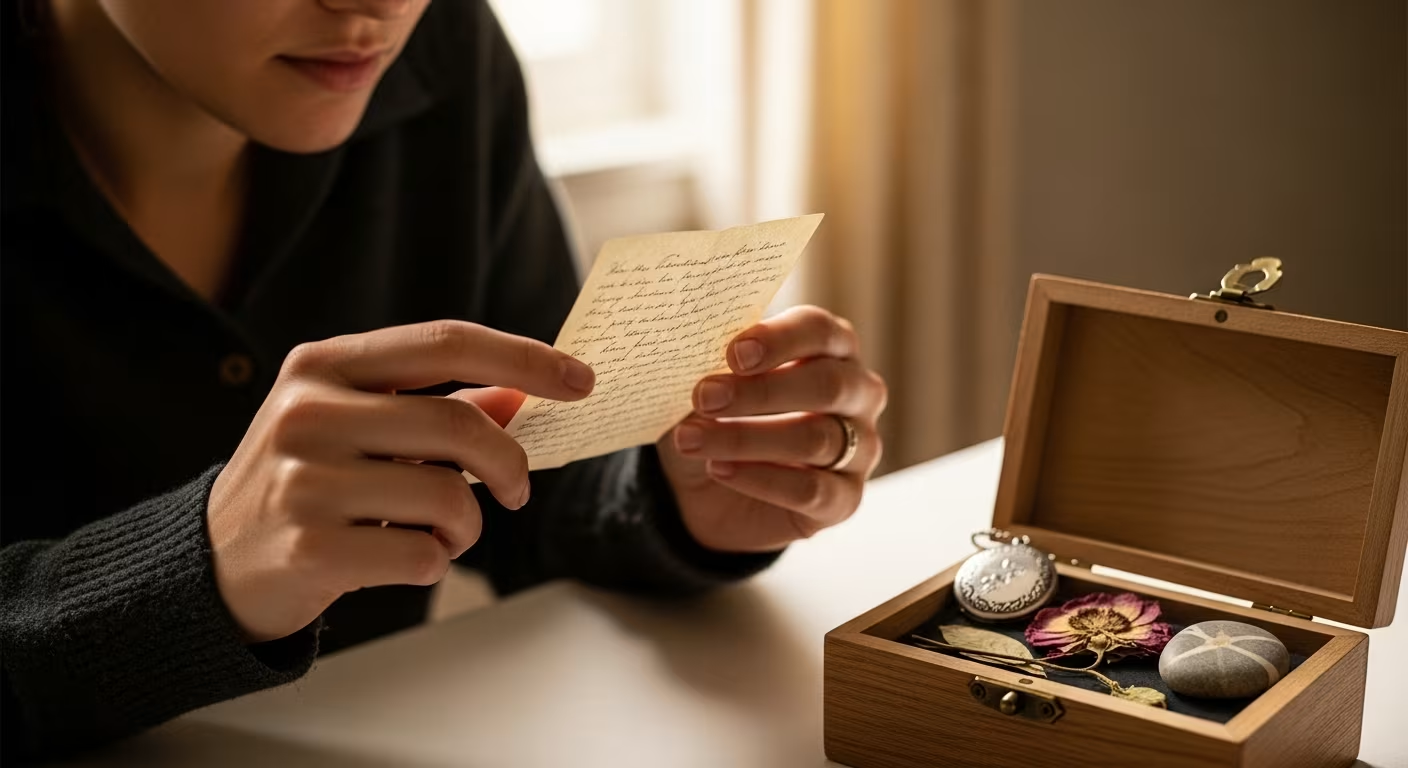
Most decluttering moves along steadily until it reaches the sentimental pile, and then it stops. A drawer of old photographs, a box of childhood keepsakes, the belongings of someone who has died: these do not yield to a simple useful-or-not test. Each decision feels less like sorting an object and more like ruling on a relationship, a person, or a whole period of life.
The stall is normal, not a personal failure. Sentimental items run through a different emotional circuit than functional ones. Releasing a duplicate can opener takes two seconds; deciding what to do with a parent's jewelry or a child's first drawing can feel genuinely weighty. Recognizing that the difficulty is built into the category, rather than a sign the process is broken, is what keeps the sentimental box from becoming a permanent fixture in the corner of the room.
Separate the Object From the Memory
The single most useful reframe is that the object and the memory are not the same thing. A photograph of a meaningful trip is a representation of the memory; the memory itself lives in you and continues whether or not you keep the print. A sweater that belonged to someone who has died carries strong associations, but those associations sit with the person holding it, not inside the fabric. Oklahoma State University Extension is a useful outside reference here.
This matters in practice because it makes it possible to release the object while keeping the memory whole. Someone who lets go of their grandmother's china is not letting go of their grandmother; they are releasing dishes that held associations. The relationship, the feelings, the memories all remain intact afterward. Not everyone finds this reframe freeing, and there is no point forcing it. But for people who have held on mainly because releasing felt like erasing the person, separating the two often opens doors that were shut.
Match the Method to the Item
Different kinds of sentimental items call for different handling, and picking the right method removes a lot of the paralysis. Paper items, where the meaning is in the content, digitize well: a box of children's artwork photographed into a dated album preserves the visual record without keeping every original, and a stack of handwritten letters can be scanned before release so the words stay reachable. Objects whose meaning lives in their physical properties, the weight of a ring, the texture of a garment, cannot be captured by a scan and are better handled by keeping one representative piece rather than the whole set.
| Item type | Best approach | What you keep |
|---|---|---|
| Photos, letters, cards, drawings | Digitize, then release most originals | The images and words, in a dated album |
| Jewelry, textiles, physical objects | Keep one representative piece | A single ring or garment, not the full set |
| Mixed keepsakes from a period of life | Curate to a fixed-size memory box | The 15 to 20 most significant items |
| Inherited belongings | Wait 6 to 12 months before deciding | Whatever still feels important after the pause |
The curated-box approach deserves its own note because it suits people who do better with a positive frame than a negative one. Instead of asking what to throw away, you define a container, a box of a set size, a shelf with a set number of slots, and select the most meaningful items to fill it. A box holding the twenty most significant mementos from a chapter of life tells a clearer story than a bin holding everything that was ever kept without a decision.
When Items Belonged to Someone Who Has Died
Inherited belongings are usually the hardest of all, because the person who could make decisions about them is gone, and releasing anything can feel like a second loss. The most reliable guidance is to give yourself a defined pause, six months to a year, before deciding. Some items that feel impossible to release in the raw early months become manageable once the acute grief has eased, and the ones that still feel essential after a year are genuinely worth keeping.
For the items that stay difficult, there are gentler options than a straight donation. Another family member who shared the relationship may be better placed to hold them. A specific destination, giving tools to a trade school or clothing to a cause the person cared about, can feel more fitting than a generic drop-off. And keeping one piece rather than the entire collection, a single item of jewelry instead of all of it, honors the relationship without requiring you to store everything.
Releasing Without Guilt
The most stubborn obstacle is guilt: the sense that letting an object go is a form of ingratitude or forgetting. It is worth examining head-on. Someone who releases a parent's collection of ceramic figurines, kept only out of obligation and enjoyed by no one, is not showing a lack of love. The love was never inside the figurines. A household that hangs onto unwanted inherited items out of guilt is not honoring anyone; it is storing guilt in physical form. Releasing things that serve no purpose, with care for where they land, is a respectful act, not an act of erasure. For items that feel wrong to hand to a general thrift store, offering them to a specific person who shared that chapter of life, a sibling who would treasure a parent's cookbook, gives the object a genuinely meaningful new home.
Give It More Time Than You Think
The most practical thing you can do is schedule far more time than the pile appears to need. A box of old photographs that looks like a thirty-minute job usually takes two to three hours once the pictures are actually in your hands and the memories they raise are given room. Treat sentimental categories as their own dedicated sessions, separate from ordinary decluttering, and run them when your energy is good and the day is genuinely open. The emotional labor here is real labor, and it does its best work when it is not squeezed between the linen closet and the garage.
Comments
No comments yet.