
How to Create a Calm Minimalist Dining Area for Family Meals

Okay, raise your hand if your dining table is currently holding anything other than, you know, dinner. Anyone? My hand is definitely up. Right now, mine's got a pile of my son's artwork, a half-empty coffee mug from this morning, a permission slip I need to sign, and honestly, I'm pretty sure there's a rogue sock under that stack of junk mail. Sound familiar?

It’s fine. We’ve all been there. It feels like every flat surface in our homes just screams "dump your stuff here!" especially when you're racing against the clock between school pickup and dinner prep.

But what if it didn’t have to be that way? What if your dining area could actually be a calm spot, instead of just another stress zone? That’s what we’re going to dig into today. We’ll talk about why this even matters, some easy steps to clear out the crap, and how to keep it that way without adding more to your already overflowing to-do list.

Why This Actually Matters

Look, I get it. We're moms. We're juggling a million things. The dining room often feels like the least of our worries when the laundry mountain is threatening to engulf a small child and someone just peed on the rug (again).

But think about it: where do most families try to connect at the end of a long day? Usually around a table, right? Or at least, that’s the dream. But it’s hard to connect, hard to even breathe, when you’re staring at a chaotic mess of bills, toys, and crumbs.

For me, the tipping point was when my daughter, who was maybe four at the time, actually asked, "Mommy, can we eat dinner on the floor tonight? There's no room on the table." Damn. That hit me hard. It wasn’t just about the clutter anymore; it was about the experience we weren't having.

When your dining area is free from visual noise, it suddenly becomes a space for something else. It becomes a space for conversation, for slowing down, for looking each other in the eye. For me, that meant less yelling at bedtime because we actually had a moment to chat about the day. It’s a small change, but it makes a hell of a difference to your mental load and family connection.

What Even is a "minimalist Dining Area"?

Okay, let's clear something up right away: "minimalist" doesn't mean your dining room needs to look like a sterile art gallery. Nobody's got time for that, especially not with sticky toddler hands.

What it does mean is that every item in that space serves a purpose, brings you joy, or helps create the atmosphere you want. It’s about clarity and intention, not deprivation.

It means when you walk in there, you don't feel overwhelmed by stuff. You don't immediately see a dozen things you need to put away or clean. Instead, you see a table that's ready for food, chairs that are ready for butts, and maybe a simple, beautiful centerpiece that makes you smile.

For my family, it meant getting rid of anything that wasn't actively contributing to family meals, homework time (sometimes, I'm not a monster!), or a quiet morning coffee. It’s about making that space work for you, not against you.

The Core Principles of a Calm Dining Area

Think of these less as rules and more like gentle nudges. These are the things that helped me finally get a handle on our dining space, and surprisingly, they’re pretty simple.

  • Clarity Over Clutter: If an item isn't enhancing the primary function of the room (eating, connecting, maybe some homework), it probably doesn't belong. This was a tough one for me because I love a good knick-knack. But the knick-knacks were just collecting dust and making the room feel heavy.
  • Function First: Before you even think about how pretty something looks, ask if it's actually useful. Do you really need that enormous decorative bowl taking up half the table, or could that space be better used for, you know, serving dishes?
  • Comfort and Connection: Your dining area should feel inviting, a place where people actually want to sit down and hang out. When chairs are jammed in, or the table is covered in junk, it sends the opposite message. Making it comfortable means making it accessible and easy to use.

These principles helped me reframe my thinking. It wasn't about getting rid of stuff just for the sake of it, but about making room for the experience I wanted my family to have. And honestly, that felt a lot less intimidating than just "decluttering."

How to Actually do It (the Nitty-gritty)

Alright, enough with the theory. Let's talk about getting your hands dirty. Or, more accurately, getting your hands on all the crap that's probably accumulated in your dining area. This isn’t a one-and-done thing, but if you tackle it in chunks, it becomes a lot less overwhelming.

I remember feeling completely defeated before I started. Like, where do you even begin when there's a mountain of forgotten things on every surface? So, let's break it down into manageable steps. Don't try to do it all today. Just pick one or two, and see how it feels.

Step 1: the "everything off the Table" Purge

This is where you start. Seriously. Take everything off your dining table. Everything. Bills, homework, stray toys, that random charger, the half-eaten snack from yesterday. Put it all in a laundry basket or a box.

Now, look at your bare table. Ahhh, deep breath. That's the feeling we're going for. From that basket, only put back items that truly belong on the table for its primary purpose. Maybe a small, simple centerpiece (we'll get to that) or coasters if you use them. Everything else needs a home elsewhere or goes in the donate/trash pile.

When I did this, I found a permission slip from three weeks ago, two dried-up markers, a single plastic dinosaur, and enough crumbs to feed a small army of ants. It was embarrassing, but also incredibly freeing to finally see the surface of my table again. It makes dinner prep so much easier when you don't have to clear a landing strip first.

Step 2: Decluttering the Dining Furniture (beyond the Table)

Okay, the table is clear. Now look at the chairs, any buffets, hutches, or sideboards you might have. Are those chairs truly being used? Do you have eight chairs for a family of four, and the extra ones are just collecting laundry?

For the chairs, consider keeping only what you genuinely use on a regular basis. If you only host big dinners twice a year, maybe store those extra chairs in a garage or basement. We used to have six chairs, and four of them were always covered in backpacks or jackets. Now we have four, and the difference in how the room feels is huge.

Next, open up those cabinets and drawers in any other dining furniture. My buffet used to be a graveyard for random office supplies, expired coupons, and a bunch of serving platters I used maybe once a year. Be ruthless. If it’s not related to dining or special occasions, it probably doesn’t belong there.

Step 3: What's Hiding in Your Dining Room Storage?
This is often the secret stash of random crap. Buffets, china cabinets, sideboards – they all have a magnetic pull for things that don't have a clear home. We all have that one drawer that's a mystery box, right?

Pull everything out of one drawer or shelf at a time. I mean everything. You'll likely find things you forgot you even owned. Ask yourself for each item: Do I use this? Does it belong here? Does it bring me joy? If the answer is no to all three, it’s out. Donate, toss, or relocate.

I found three sets of placemats that were either stained beyond repair, or just didn't match anything else I owned. And a weird assortment of candle holders that I thought I "might use someday." Someday never came. Clearing out that one buffet drawer felt like shedding 10 pounds of mental weight.

Step 4: Table Linens and Place Settings – Enough is Enough

How many tablecloths, placemats, and cloth napkins do you actually use? Be honest. I had a stack of tablecloths that I loved, but they were a nightmare to wash and iron, so I never actually used them.

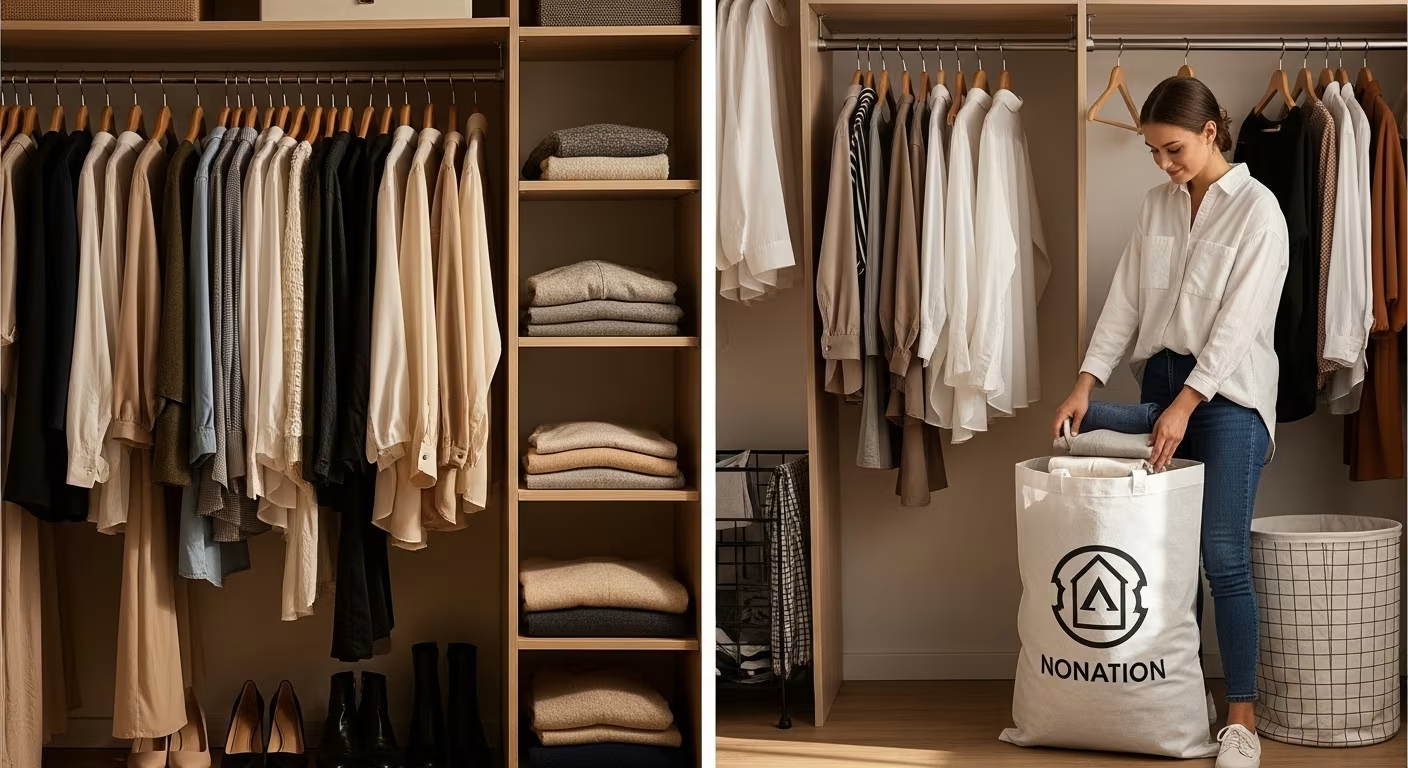
Keep a practical number of items. Maybe two tablecloths for everyday use (if you even use them), a few sets of placemats, and a reasonable stack of napkins. For plates, bowls, and cutlery, aim for enough for your family plus a few extras for guests. You don't need a formal china set for 12 if you only host Thanksgiving for six people once a year. And even then, do you really need a special set? We ditched our "good china" years ago and just use our everyday dishes. Nobody cares, I promise.

I realized I had enough mismatching "kids' plastic plates" to serve a small daycare center. My kids are 8 and 10 now. They can handle a real plate. Letting go of that mountain of plastic was surprisingly liberating. And it made more space in the cabinet for actual food storage.

Step 5: Kids' Dining Gear – the Pile That Never Shrinks

High chairs, booster seats, special plates, sippy cups, splash mats... the list is endless. These items multiply when you're not looking. If your kids are past a certain age, do you really need that high chair in the corner of the dining room? Could it go to a friend or be donated?

For the items you do need, like booster seats, try to store them neatly when not in use. Maybe under the table, or in a nearby closet. And consolidate those kid-friendly dishes. You probably only need 2-3 plates and bowls per child, not ten. Same for cups. Less stuff means less to wash, less to store, and less visual chaos.

My biggest culprit here was the "special occasion" kids' cups. We had ones with cartoon characters, holiday themes, everything. My kids just wanted the cup with water in it. Simplifying this meant fewer arguments about which cup was "theirs" and a much tidier kitchen cabinet.

Step 6: Decor with Intention (or No Decor at All)

Now that the practical items are sorted, let's talk decor. A minimalist dining area doesn't mean no decor, but it means intentional decor. Instead of a huge vase of fake flowers that just collects dust, consider a simple potted plant or a small bowl of fresh fruit.

On the walls, choose one or two pieces of art that you truly love and that make the space feel calm. Avoid a gallery wall in this room if you're aiming for serenity – too much visual information can be distracting. A single, large piece can have a much bigger impact than a dozen smaller ones.

I swapped out a dusty, elaborate centerpiece for a simple, live plant. It immediately made the room feel fresher and less cluttered. It was a small change that made a big difference in how I felt when I walked into the room.

Step 7: the Daily Reset – Making It Stick

This is the most crucial step for maintaining your newfound calm. It’s a simple, daily routine that takes maybe five minutes. After every meal (or at least once a day), clear everything off the table. Wipe it down. Push in the chairs. This simple habit prevents the junk from accumulating again.

Establish a "home" for things that tend to migrate to the dining table. Bills go in an inbox by the door. Homework goes in a designated basket. Toys go back to the playroom. If something doesn't have a home, create one, or question if you really need it.

For us, the "daily reset" became non-negotiable. My husband and I take turns. It’s quick, it’s easy, and it means we wake up to a clean space every morning. It’s amazing how much better your day starts when you’re not staring at yesterday’s mess first thing.

Making It Stick / Common Mistakes

Okay, you’ve done the work, cleared the space. Now how do you keep it from turning back into a dumping ground? Because let’s be real, life with kids is messy, and old habits die hard.

One of the biggest mistakes I made early on was expecting perfection. Like, one clear-out and BAM, my dining room would forever be pristine. Ha! No. It's an ongoing effort, a daily mindfulness. It's not about being perfectly minimal; it's about being consistently intentional.

Another pitfall is trying to do it all at once. You get super motivated, tackle everything, and then crash and burn, because you're exhausted. Break it down. One step at a time. It’s better to make small, consistent progress than to aim for a perfect sprint and then give up.

A calm home isn’t about having nothing; it’s about having everything in its right place, ready to serve you and your family.

Don't fall into the trap of thinking you need to buy all new "minimalist" decor. Use what you have, or buy nothing. The goal isn't a magazine-worthy dining room, it's a functional and peaceful one for your family.

And finally, be kind to yourself. Some days, that sock will find its way back onto the table. That’s okay. Just clear it off tomorrow. The whole point is to reduce the mental burden, not add more guilt to your plate.

Frequently Asked Questions

What if My Dining Room is Also My Office/playroom?
Oh, this is a common one! My dining room definitely doubles as a homework station and sometimes even a craft zone. The key here is containing the clutter. Use baskets or bins that can be easily stowed away when the table needs to transition to mealtime. A rolling cart is also a lifesaver for craft supplies.
How do I Deal with Kids' Art/homework on the Table?
Create a designated landing spot. For homework, I have a specific folder or tray that it goes into immediately after it's done. For art, we have one spot on the fridge for current masterpieces, and then a "memory box" for rotating special pieces. Everything else gets photographed and then recycled. It’s hard, but necessary.
Is It Really Worth It if We Mostly Eat at the Kitchen Island?
Even if you mostly eat at the island, having a clear, calm dining area still contributes to the overall feeling of your home. It’s a visual break, a place for quiet moments, or even just an overflow surface when you’re cooking. Plus, if you ever do want to have a sit-down meal, it's ready without a huge pre-dinner clear-out.
How Long Should This Whole Process Take?
Honestly? It can be a weekend project or a month-long slow declutter. It really depends on how much stuff you have and how much energy you can dedicate. Don’t rush it. Take an hour or two on a Saturday for each step. The daily reset part is ongoing, but the initial clear-out can be done in chunks.

What About Sentimental Items?

Sentimental items are tricky. If it's something truly special, give it a place of honor somewhere else in your home, or consider a dedicated memory box. If it's a sentimental item that's just collecting dust in your dining room, ask if it's truly adding to the calm or just adding to the clutter. Sometimes, letting go of physical items doesn't mean letting go of the memory.

The Bottom Line

A calm, minimalist dining area isn't about perfection or having nothing. It's about creating a functional, peaceful space where your family can connect without being drowned in visual noise and forgotten junk. It’s about making room for what truly matters.

You don't have to overhaul your entire house in a day. Just pick one small thing, maybe clear that table right now, and see how it feels. Even a tiny step can make a big difference in how you experience your home. You've got this. 👋