

Kitchen tools pile up faster than almost anything else in a house. A gadget bought for one recipe, a set that came as a wedding gift, a $12 spiralizer grabbed on sale — the drawer that started neat becomes a tangle of rarely-used implements inside a year. The cost is not just space. It is that the whisk you reach for nightly is now buried behind the melon baller you have used twice, so every cooking session opens with a small excavation.
A minimalist kitchen is not an underpowered one. It is a kitchen where every tool present actually gets used, which in practice means far fewer tools than most households own and a noticeably better place to cook. The list below is what genuinely earns a spot, roughly what it costs, and what quietly does not.
The Two Knives That Do Ninety Percent of the Work
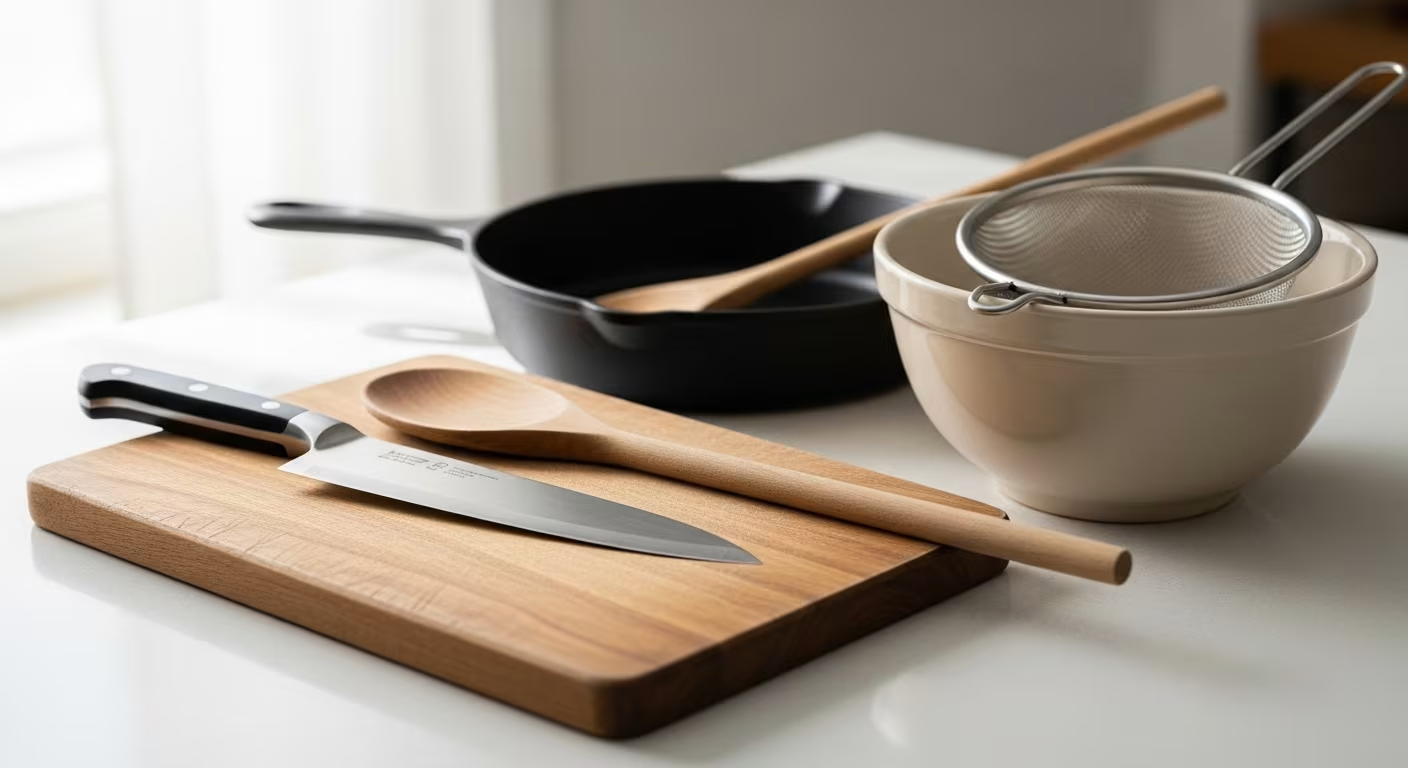
A working kitchen needs two knives: a chef's knife, roughly 8 inches, for nearly everything, and a paring knife for small, in-hand tasks like hulling strawberries or trimming garlic. A serrated bread knife makes it three if you regularly cut crusty loaves or soft tomatoes. Past those, most extra knives are redundant — the santoku that overlaps the chef's knife, the "vegetable cleaver" a sharp chef's knife handles just as well, the block of eight that came bundled together.
Quality matters far more than count here. One sharp, well-kept chef's knife outperforms a ten-piece block of dull ones on every single task. A solid workhorse chef's knife runs about $40 to $50 — a Victorinox Fibrox is the standard budget recommendation — and paired with a honing steel used before each session plus a proper sharpening once or twice a year, it will cut better than a $200 set left to go dull in a drawer. Buy two good knives, not eight mediocre ones.
Four Pieces of Cookware Cover Almost Every Dinner
The minimum functional set is four pieces: one large skillet of 10 to 12 inches, one medium saucepan of 3 to 4 quarts, one large pot of 6 to 8 quarts for pasta and soup, and one sheet pan. Between them they cover sautéing, searing, braising, sauce-making, boiling, and roasting — the overwhelming majority of what home cooking asks for. A Dutch oven earns a fifth slot for households that make braises, stews, and no-knead bread often, since it moves from stovetop to oven in one vessel.
For the skillet, pick cast iron, stainless steel, or carbon steel; a Lodge cast-iron pan costs around $20 and lasts decades. For the saucepan and big pot, any decent material is fine. The material affects durability and how the pan cooks, but the specific brand matters much less than clearing a basic quality bar. Four good pieces beat a twelve-piece boxed set where half the pans never leave the cabinet.
The Prep Tools Worth Their Drawer Space
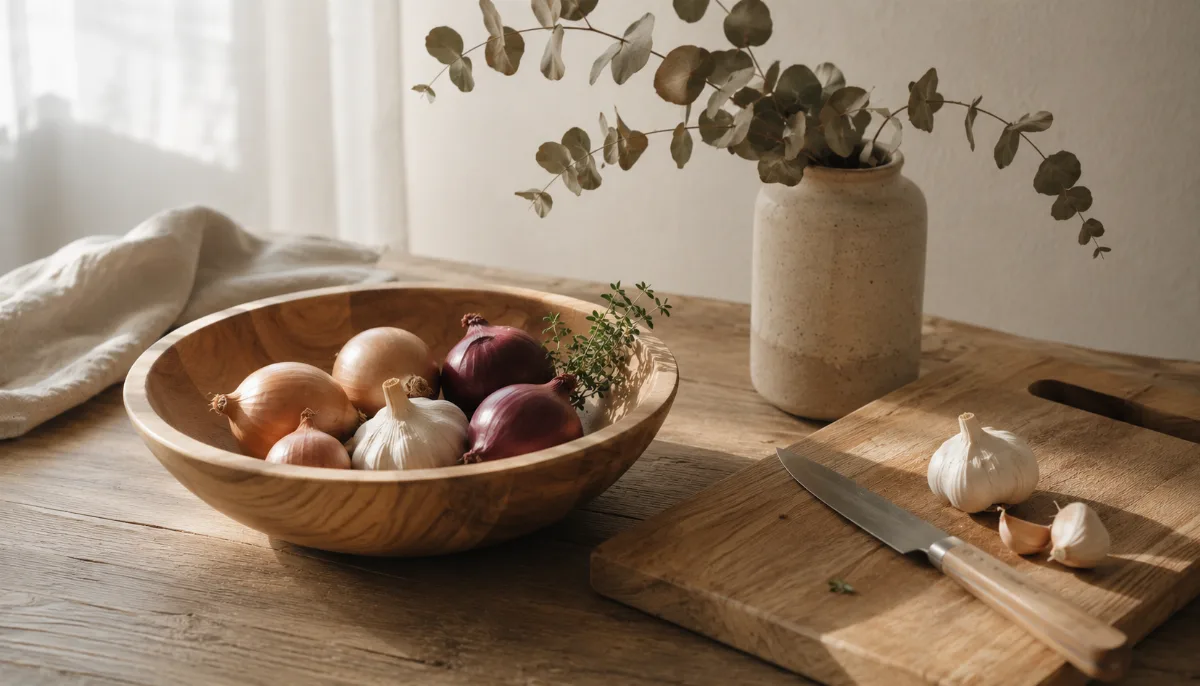
Prep gear is where the drawer really bloats, so keep it to the genuine workhorses: one large cutting board used for everything (better than four small task-specific ones that all need washing and storing), a colander, one or two nesting mixing bowls, a box grater, a vegetable peeler, a can opener, and a set of measuring cups and spoons. That short list handles the prep for nearly all home cooking.
The specialty prep tools each do exactly one thing that a knife does slightly less conveniently but perfectly well — the egg slicer, the avocado cutter, the apple corer, the garlic press. If you honestly perform that one task often enough to justify the storage, keep the tool. A household that eats avocado daily can defend the slicer. For nearly everyone else, the chef's knife and the board already cover it. A good OXO peeler is a few dollars and worth owning; the single-purpose gadgets mostly are not.
What Bakers Actually Need
If you bake, the core is small: two baking sheets, one 9-by-13 pan, one loaf pan, mixing bowls (shared with your prep tools), a whisk, a rubber spatula, and measuring cups and spoons (also shared). A stand mixer or a hand mixer earns its counter or cabinet space only if you bake often; for the occasional batch of cookies, a whisk and a wooden spoon do the job.
The specialty baking pans — the springform, the tart pan, the bundt, the madeleine tin — are recipe-specific rather than generally useful. If you make cheesecake several times a year, the springform stays. If you bought the bundt pan for one holiday cake in 2023, weigh the storage cost against how rarely it comes out. Most kitchens have two or three of these pans standing in for baking they no longer actually do.
Which Appliances Actually Earn Their Spot
Countertop appliances are where the "might use it someday" reasoning does the most damage, because each one claims prime real estate. A short list covers most kitchens: a coffee maker or kettle if you drink either daily, and a blender if smoothies or soups are a regular thing. Everything past that should have to justify itself against how often it truly runs. the Academy of Nutrition and Dietetics is a good place to verify the details.
The heavy hitters are the ones people buy on optimism and use twice — the bread machine, the ice cream maker, the electric fondue set, the second toaster. A stand mixer is worth its footprint only for someone who bakes most weeks; for occasional baking, a hand mixer that lives in a drawer does the same job for a fraction of the space and around $25. An air fryer or multi-cooker earns a permanent spot only if it is genuinely in the weekly rotation rather than a novelty from last year. The honest test is the same one you would apply to a gadget: if it has not run in the past month, it is a storage problem wearing the disguise of a convenience.
The One-Month Test for Everything Else
The most revealing exercise is also the simplest. Pull everything out of the drawers, cabinets, and utensil crock and set it on the counter. Over the next month, put a tool away only when you have actually used it. Whatever is back in the drawer after four weeks is in genuine rotation. Whatever is still sitting on the counter — untouched for a month — is a donation candidate.
This almost always surfaces the same cast of characters: implements bought for a single recipe, gifts that were never needed, and tools purchased for a style of cooking that never materialized. The mandoline used twice, the fondue set, the second garlic press. The kitchen without them is more functional, not less, because the tools you use daily are finally the tools within easy reach instead of the ones buried behind the ones you do not.
Why a Smaller Set Cooks Better
A short list of tools is easier to keep at a high standard, and that is the quiet argument for owning less. Two knives honed before every use and sharpened a couple of times a year stay genuinely sharp; eight knives nobody maintains all drift toward dull. Three pieces of good cookware washed and dried properly after each use hold their finish for years, while a big collection of cheaper pans crammed together and washed inconsistently degrades in a season or two.
The reduction in quantity creates the conditions for better care of what remains — and better-maintained tools produce better food across their whole life. There is also a findability dividend: when every tool is visible and has a home, cooking stops beginning with a search. A crowded kitchen defaults to accumulation with no system; a minimal one makes maintenance almost automatic because there is simply less to keep track of.
Lean Into the One-Pan Habit
The same logic that trims the knife block applies to how you actually cook. One large, versatile pan used for sautéing, searing, and finishing one-pan meals beats a specialized fleet of smaller pans divided by task. A 12-inch stainless or cast-iron skillet that sears a steak on Monday and roasts a tray of vegetables on Wednesday covers ground that three narrower pans would otherwise split — and it means one pan to wash instead of three.
Building a few reliable one-pan and one-pot dinners into the weekly rotation reinforces the whole approach. Sheet-pan chicken and vegetables, a skillet stir-fry, a big pot of soup that lasts two nights: meals like these are the reason the minimal set never feels limiting. The constraint shapes the cooking rather than restricting it.
It All Fits in One Cabinet and One Drawer
A fully equipped minimalist setup — two or three knives, a four-piece cookware set plus maybe a Dutch oven, a cutting board, a colander, a mixing bowl or two, and the basic prep tools — fits comfortably in a single cabinet and a single large drawer. That is not a deprivation setup; it is enough to cook almost anything a home kitchen produces.
The storage you free up by clearing out the rarely-used specialty tools is itself a real benefit. The shelf that held a bread machine used twice becomes the shelf for the bowls you reach for every day. The point is not to hit some minimum number for its own sake — it is that a kitchen holding only what it uses is faster to cook in, faster to clean, and easier to keep in working order. Start with the one-month test on a single drawer this week, and let what stays out earn its place from there.
The 90% kitchen:
| Tool | Spec / cost | Note |
|---|---|---|
| Chef's knife | ~8 in, $40–$50 | Victorinox Fibrox = standard budget pick |
| Paring knife | the second of the only two you need | — |
| Skillet | 10–12 in; Lodge cast iron ~$20 | lasts generations |
| Cookware total | four pieces cover almost every dinner | skillet, pot, saucepan, sheet pan |

Comments
No comments yet.