
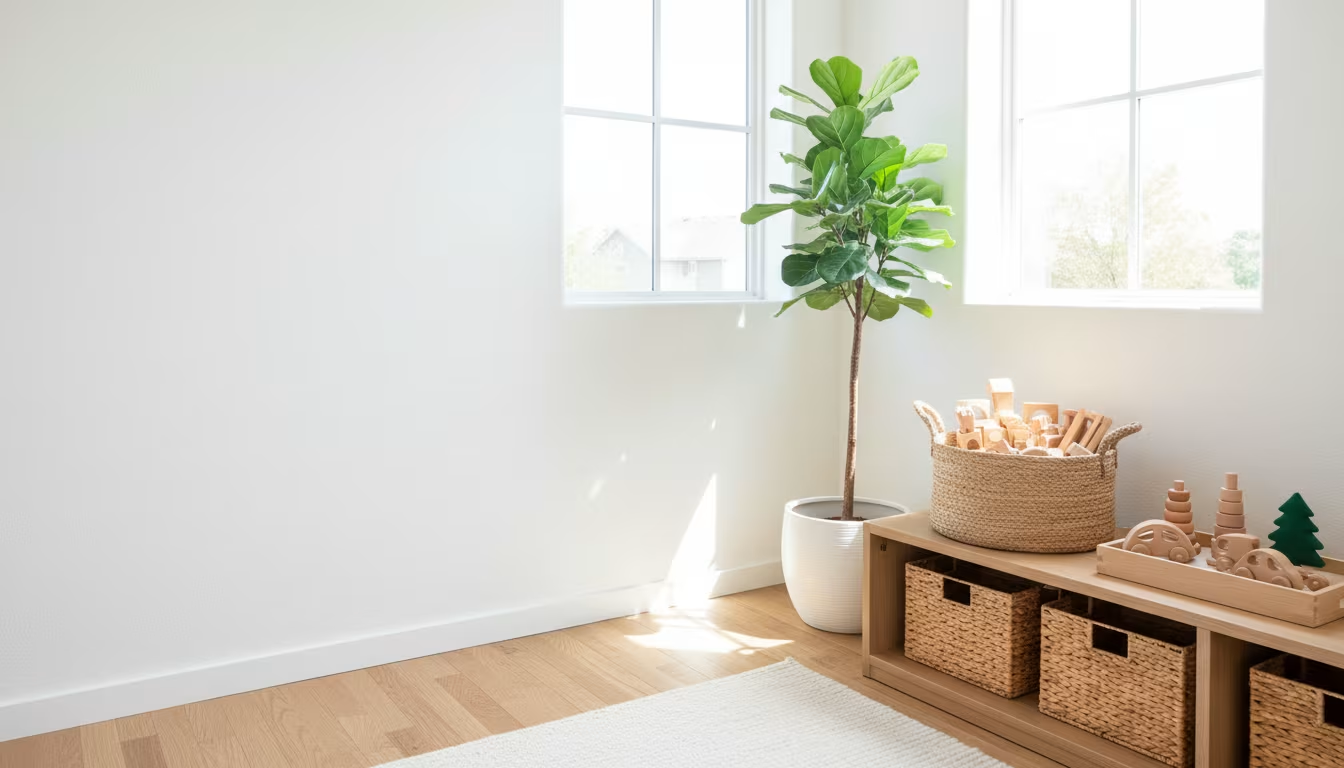

Two rooms can hold the exact same amount of stuff and feel nothing alike, depending on how much of it is visible at once. A room where most things sit behind closed doors, in drawers, or on a few organized shelves reads as calm. A room where the same objects are spread across open shelving, counters, and every flat surface reads as busy and hard to settle into, even after it has been cleaned.
Visual clutter and actual clutter overlap but are not the same thing. Reducing what is visible, rather than reducing what you own, is often the faster move, and it changes how a room feels to be in almost immediately. Most of the work is deciding what genuinely belongs on a surface and moving everything else out of sight.
Living Room
The living-room surfaces that collect the most visual clutter are coffee tables, end tables, bookshelves, and window ledges. The usual culprits are remote controls, books and magazines mid-read, decorative objects that multiplied past the original arrangement, charging cables, and small items that landed on the nearest surface and stayed.
The reset is to clear every surface in the room completely, then rebuild each one with only what belongs there: remotes gathered into a single tray or box, one or two books, nothing that does not serve a living-room purpose. Decorative objects come back as a deliberate selection, roughly two to five per surface with real spacing between them, rather than an accumulated display that crept outward over months. Closed storage does the rest of the work, a drawer, a cabinet, or lidded baskets holding the things that need to be reachable but not seen: charging cables, spare remotes, extra blankets, the odds and ends that otherwise migrate onto tables.
Three sources produce most of the visual noise in a living room, and each has a specific fix. Cables: a 12 to 18 in cable sleeve behind the media unit and adhesive clips along the back edge remove the single largest tangle. Remote controls: one shallow tray, and batteries checked twice a year so dead remotes stop accumulating. Colour count: rooms read as calm when the palette holds to roughly 3 colours plus wood and metal tones, and busy when it runs past 5 — this is why a tidy room can still feel cluttered.
One more measurement is worth checking, because it is invisible until pointed out: leave at least 30 to 36 in of clear walking path through the room, and 14 to 18 in between the sofa and the coffee table. Furniture spaced tighter than that makes a room feel crowded regardless of how few objects are on display.
Kitchen
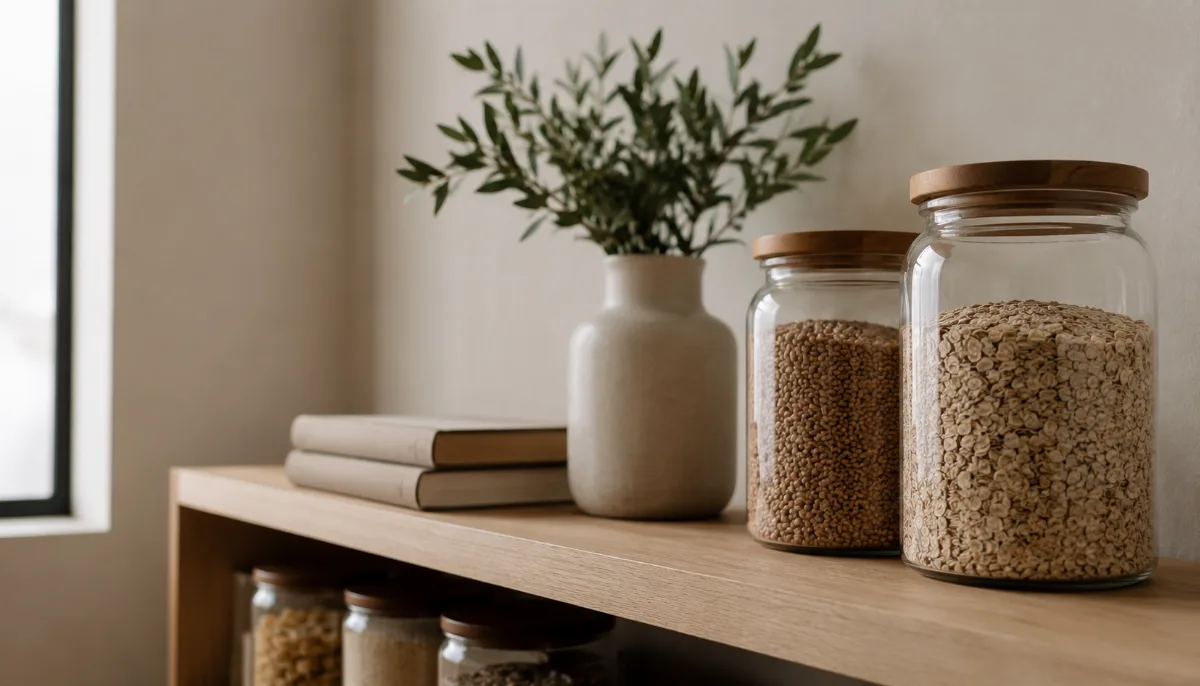
Kitchen surfaces, countertops, the top of the fridge, and windowsills, are the highest-accumulation spots in most homes, because the kitchen sits at the center of household traffic and every trip through it is a chance to set something down. Mail, keys, a stray container, a small appliance used twice a year: they arrive and they linger.
A counter holding nothing but the appliances used daily, the coffee maker, maybe a toaster, plus what has to stay reachable like hand soap and the drying rack when it is in use, is a fundamentally different room from one buried under occasional-use appliances, mail, and objects that never found a home. The one-time reset, remove everything, wipe the surface, and return only what truly belongs, quickly sorts what the counter actually needs from what merely landed there and stayed by default. For most kitchens the honest answer is that the bulk of what sits on the counter belongs in a drawer, a cabinet, another room, or the bin.
Bedroom
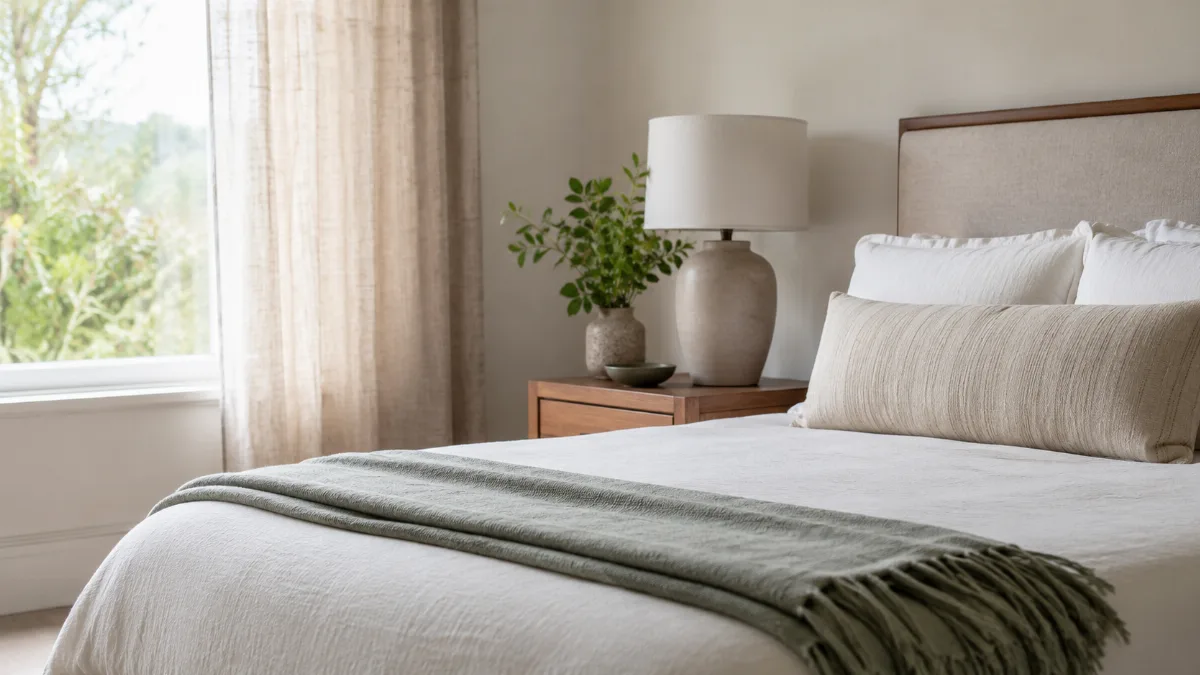
In the bedroom the surfaces that generate clutter are the nightstands, the dresser top, and any chair that has quietly become a clothing rack. The usual contents are books and devices, water glasses, phone chargers, accessories, and clothes that were tried on or worn briefly and set down instead of put away or dropped in the laundry.
A bedroom with little on its surfaces, one book and a lamp on the nightstand, a clear dresser top, no clothing draped over furniture, is a noticeably calmer place to fall asleep and wake up than one crowded with visible objects. The visual load in the last minutes before the bedroom lights go off, and the first minutes after they come back on, shapes how restful the room feels; the broader principles behind that are what the Sleep Foundation's guidance on sleep hygiene describes as a restful sleep environment. The single most effective fix for the clothing-on-the-chair pattern is a covered hamper placed right where clothes come off. The friction that sends clothing onto furniture is almost always the distance to the laundry basket, and closing that distance removes the habit at its source.
Home Office or Desk Area
The desk is the surface where visual clutter most directly costs you function rather than just calm. A working surface covered with papers, supplies, cables, reference material, and decorative objects splits your attention even when you are actively trying to focus, because each visible item is a small standing pull on it.
A minimal desk is a short list: the monitor or laptop, a keyboard, one pen, and nothing else on the working surface. Papers get filed right after use instead of stacked "for reference," cables run behind or under the desk rather than across it, and supplies live in a drawer instead of a cup in your eyeline. Supplies in view are a passive distraction even when you are not reaching for them, and a drawer six inches away costs nothing in access while removing them from sight.
The end-of-workday version of the reset matters more here than in any other room. Spend the last two minutes of the day clearing the desk back to that short list, so tomorrow starts on a clear surface rather than in yesterday's residue. A desk that greets you with a stack of half-finished paperwork and three coffee cups sets the tone for the first hour; a clear one lets you begin on the actual work instead of on the cleanup that should have happened the night before.
Bathroom
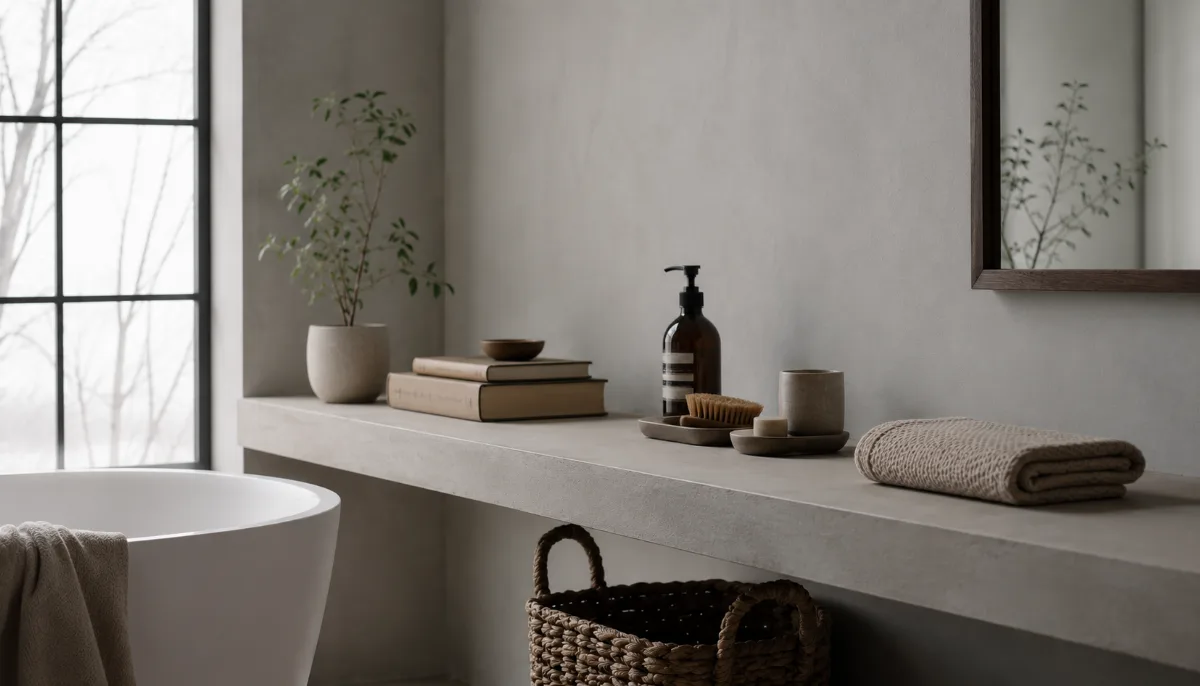
Bathroom counters and shower ledges accumulate product clutter faster than any other surface in the home. Every household member adds their own products, discontinued ones are rarely thrown out, and backup stock gets parked in the prime positions meant for daily use. The result is a counter carrying a dozen bottles and a scatter of accessories.
A counter holding only what is genuinely used every day, not the full supply, not the backups, not the remnants of a routine abandoned three months ago, is a far calmer place to start and end the day. Anything used less than daily belongs in the cabinet, a drawer, or a shelf inside the shower. The only things that earn a spot on the counter are the ones reached for every single day; everything else is visual noise that makes the routine feel more complicated than it actually is.
The Daily Maintenance Habit

Keeping visual clutter down is a brief daily habit far more than a recurring big sort. A short surface scan, ideally paired with something you already do each evening like the five-minute kitchen cleanup, in which you check every visible surface and return anything out of place to where it lives, stops the slow accumulation that otherwise forces a full room-by-room reset later. The habit costs a few minutes and prevents the hours.
The Twenty-Minute Full-Home Visual Reset
When surfaces across the whole home have drifted, a single walk through every room with a basket, collecting everything that is visible and does not belong where it sits, produces an immediate improvement without requiring any decluttering decisions or storage reorganization at all. That pass takes about ten minutes. Sorting the basket afterward, returning items to their correct rooms and storage spots, or setting aside anything that should leave the home entirely, takes another ten. Twenty minutes total resets the visual environment of the whole house.
This is neither a declutter nor a deep clean; it is a visibility reset, aimed only at what is on display. For a home where the decluttering is already done and the real issue is maintenance, running the twenty-minute reset once or twice a week is the whole maintenance system. For a home where the bigger sort has not happened yet, it is the fastest way to change how the space feels while that longer project is still underway. The visible layer is where you experience your home every day, and it responds to far less effort than the stored layer behind it, which is exactly why starting there pays off first.
Twenty minutes covers a whole home when the time is allocated per room rather than spent wherever attention lands:
| Room | Time | Target |
|---|---|---|
| Living room | 5 min | Coffee table down to 3 items, sofa cleared, cables tucked |
| Kitchen | 5 min | Counters down to 5 items, sink empty, fridge door cleared |
| Entryway | 3 min | Shoes to their place, one coat per person on hooks |
| Bedroom | 3 min | Bed made, nightstand down to 2 items, chair cleared |
| Bathroom | 2 min | Counter cleared except daily-use items |
| Desk | 2 min | Surface cleared, one visible cable maximum |
The counts in the target column do more work than the times. "Tidy the living room" is unbounded and expands; "three items on the coffee table" finishes. Setting a number per surface converts a judgement into a task with an end.


Comments
No comments yet.