
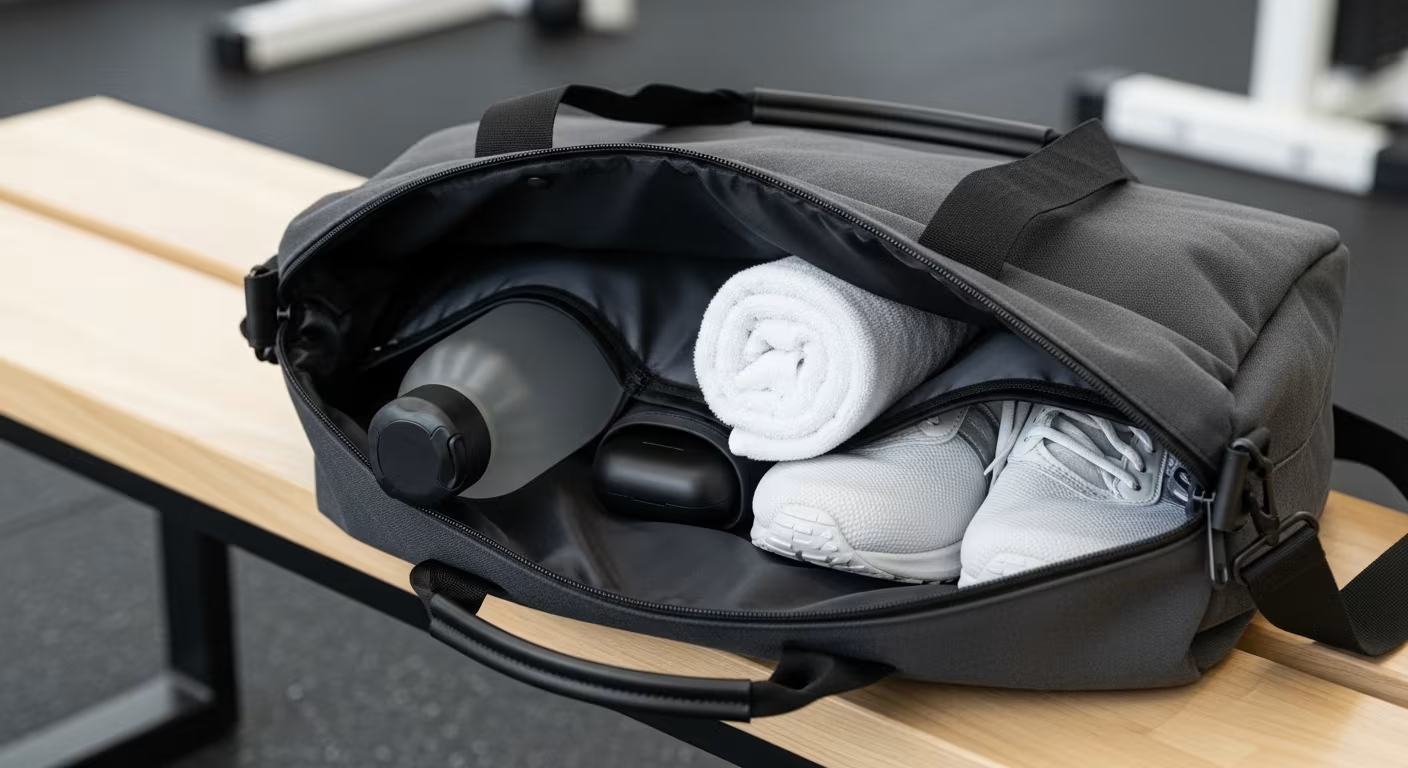

The Overpacked Gym Bag Problem
Look at the bags most people bring to a gym and they are disproportionately large. Rolling duffels that take up an entire locker. Bags with more compartments than a briefcase. Contents that extend well beyond what training requires: multiple changes of clothes for contingencies that will not occur, equipment for exercises not planned, products for post-workout preparation that could happen at home.
None of this extra content improves the training. It adds weight to carry, time to pack and unpack, and complexity to managing the bag between sessions. The friction of packing a large bag can become one of the low-level barriers to actually getting to the gym.
What Training Actually Requires

The contents that genuinely affect training quality are few and predictable. For most gym workouts: clothing appropriate for the activity, footwear appropriate for the training type, water, and whatever small equipment the specific workout uses — lifting straps for heavy deadlifts, a resistance band for specific accessory work, a training journal if one is kept.
Everything beyond this list requires honest justification. Multiple towels when one will serve. Three protein bar options. A full-size shampoo when travel-size works. Backup clothing for scenarios that do not occur. Each of these additions is a small decision that accumulates into a bag significantly heavier than it needs to be.
The One-Bag Minimum
A functional gym bag for most training contexts fits the following: one complete set of training clothing plus the clothing worn to the gym, one pair of training shoes, a water bottle or the knowledge that water is available at the facility, one towel, any personal hygiene items needed immediately post-workout, and any specific small equipment the planned workout requires.
For most people on most days, this fits in a bag roughly the size of a school backpack rather than the large duffel that gym culture tends to promote. The smaller bag is easier to carry, faster to pack and unpack, and easier to store in a locker if one is used.
Post-Workout Routines and Bag Size

One of the primary drivers of oversized gym bags is the aspiration toward a full post-workout grooming and nutrition routine performed at the facility rather than at home. Gym bags grow to accommodate the products required for this routine: full-size shampoo, conditioner, body wash, a towel large enough for a full shower, styling products, a change of professional clothing.
For people who genuinely need to go directly from the gym to a professional context, this routine is necessary and the bag size is justified. For people who return home after the gym before their next commitment, the entire post-workout routine can happen at home with the products already there, and the bag can be much smaller.
Maintaining the Minimal Gym Bag

The minimal gym bag drifts toward accumulation over time. Products used once and left in the bag rather than removed. A backup item brought for one session and forgotten rather than taken out. Small purchases at the facility that get stored in the bag indefinitely.
A simple maintenance habit: after each gym session, remove everything from the bag that was brought for that specific session and is not a permanent fixture. Pack the bag fresh for the next session rather than adding to an accumulating permanent contents. This habit keeps the bag reset to its minimum between sessions rather than allowing the gradual accumulation that produces the overloaded bag.
The Psychological Effect of a Light Bag
There is a small but real effect of bag weight on the decision to go to the gym. A heavy, complicated bag is a slightly higher barrier to leaving the house than a light, simple one. Eliminating packing decisions, reducing carrying weight, and removing the friction of managing a large amount of gear makes the threshold to actually going slightly lower.
This effect is modest for highly motivated people with established habits, and somewhat larger for people who are building a new habit or whose motivation is more variable. For the latter group, reducing every marginal barrier — including bag weight and complexity — is a legitimate strategy.
What Belongs in the Bag Permanently

Some items justify permanent residency in a gym bag: a small towel, a water bottle if the facility does not provide them, appropriate footwear for the training environment, and a lock if the facility requires one for locker access. These form the functional baseline — the items whose absence directly prevents or disrupts training.
Toiletries belong in a separate small pouch that gets added before sessions requiring a post-workout shower and left out otherwise. Packing a full toiletry kit for every session when only post-work sessions actually need it means carrying unnecessary weight three or four times a week without benefit.
A resistance band or jump rope occupy minimal space and cover enough supplemental training applications to justify their presence. These belong to the category of items that genuinely expand training options rather than just providing backup coverage for unlikely scenarios. The distinction is worth making deliberately when deciding what earns a permanent spot.
Reviewing the Bag on a Schedule
A bag review every eight to twelve weeks catches accumulation before it becomes unwieldy. Gym bags accumulate gradually through small additions: a protein bar wrapper that was never removed, a second pair of earbuds added as a backup, a notebook tossed in once and never retrieved, the roll of athletic tape needed for one session months ago.
During the review, empty the bag completely and handle each item individually. Items used within the past eight weeks stay. Items that were never touched return to wherever they belong or leave the household if they serve no function outside the bag either.
The capacity of the bag itself matters as much as its contents. A large bag with a small permanent kit invites filling — empty space reads as available space. A bag sized to hold exactly what training requires does not have room for gradual accumulation. Choosing the right bag size for the right content, rather than filling whatever bag is on hand, prevents the problem from recurring between reviews. This single decision is often more effective than any sorting effort applied after the bag has grown too large. Right-sizing the container is the structural fix; periodic reviews maintain what that fix creates. Most people find that after two or three review cycles, the bag stabilizes and maintenance becomes a five-minute task rather than an hour of sorting through accumulated items. That stability is the goal — a bag that requires no decisions beyond packing the toiletry pouch before sessions that need it.
A bag that is quick to pack is more likely to come along.
The one-bag list:
| In the bag | Count |
|---|---|
| Training clothing | one complete set (plus what you wore in) |
| Shoes | one pair for the training type |
| Water + towel | one each |
| Session-specific gear | straps / band / journal — only if today's plan uses them |
| Everything else | weight, friction, and one more reason to skip the gym |



Comments
No comments yet.