

Why Sleep Affects Everything Else
Sleep is the period during which the body conducts the majority of its repair, consolidation, and regulatory processes. Memory consolidation — the transfer of information from short-term to long-term storage — occurs primarily during sleep. Hormonal regulation, including cortisol patterns, growth hormone release, and insulin sensitivity, depends on adequate sleep duration and quality. Immune function, cardiovascular health, and metabolic rate all show measurable degradation with chronic sleep restriction.
The practical consequence is that sleep quality functions as a multiplier on every other health behavior. Exercise produces more adaptation when followed by adequate sleep. Good nutrition is less effective when sleep deprivation increases appetite-regulating hormones in ways that drive overconsumption. Cognitive performance, emotional regulation, and decision-making all degrade measurably after even one night of shortened sleep.
Improving sleep is therefore not a narrow quality-of-life improvement — it is a foundational intervention that amplifies the return on nearly every other healthy behavior.
The Schedule Is the Primary Variable
Sleep timing is the single most impactful variable in sleep quality for most people. The body's circadian rhythm — the internal biological clock that regulates sleepiness and wakefulness — operates most efficiently when sleep and wake times are consistent from day to day, including weekends.
Varying sleep timing by more than one to two hours between weekdays and weekends produces a state called social jet lag, where the circadian rhythm is chronically misaligned with the actual sleep schedule. The effects resemble those of crossing time zones: difficulty falling asleep at the usual bedtime, difficulty waking at the usual time, and reduced alertness during the day. Social jet lag is a common and underappreciated source of sleep problems.
A consistent wake time, maintained even after nights of poor sleep, is the most powerful tool for correcting disrupted sleep patterns. The wake time anchors the circadian rhythm. Consistent wake time with natural light exposure within thirty minutes of waking reinforces the rhythm more effectively than any other behavioral intervention.
The Environment: Dark, Cool, and Quiet
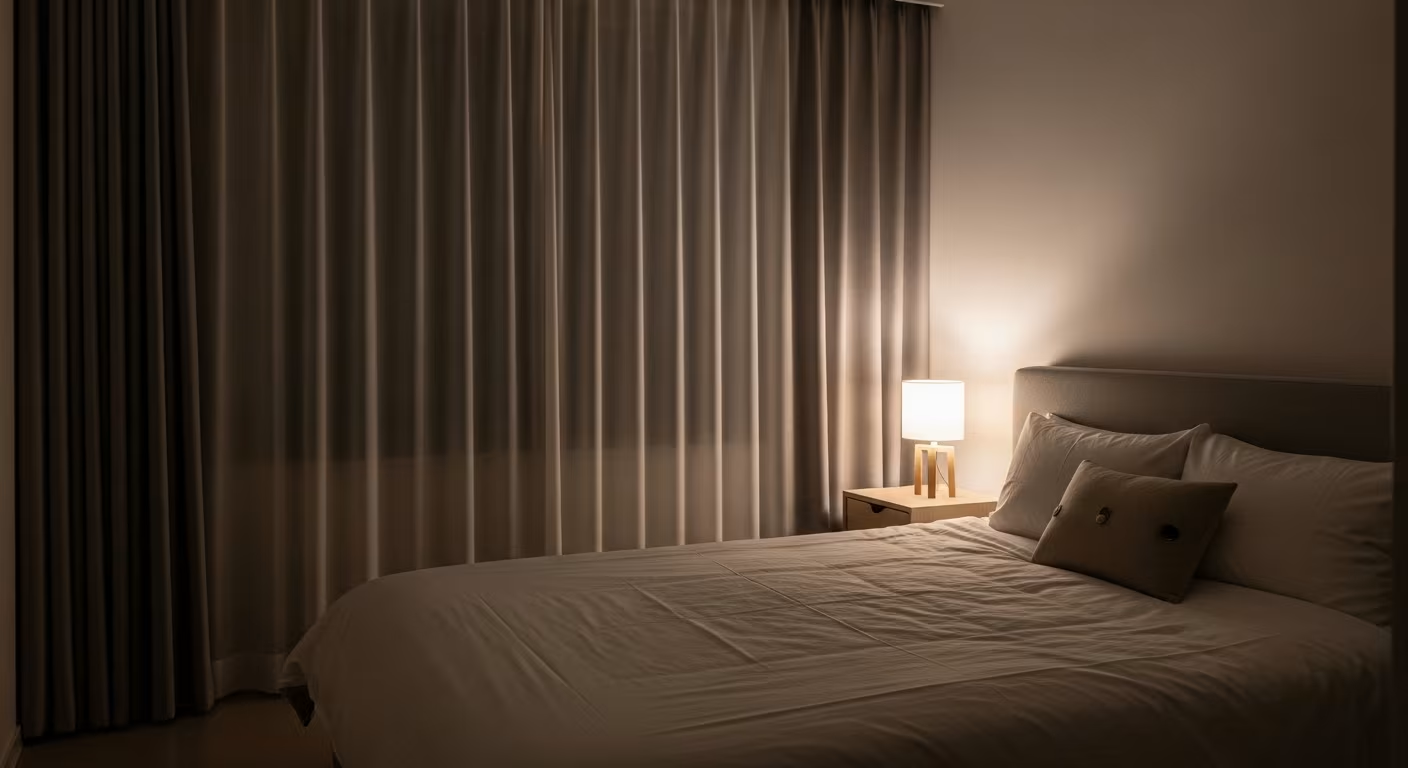
Light exposure during sleep suppresses melatonin, a hormone that signals nighttime to the body's circadian system. Even low-level ambient light — a streetlamp visible through thin curtains, the standby light on an electronic device — can affect sleep architecture and reduce sleep quality. Blackout curtains or a sleep mask eliminate this source of disruption at minimal cost.
Temperature significantly affects sleep depth and continuity. The body's core temperature naturally drops during sleep as part of the circadian rhythm. A room that is too warm prevents this temperature drop and fragments sleep. A room temperature between 16°C and 20°C supports the natural cooling process. This is cooler than most people keep their bedrooms while awake and often requires a specific adjustment rather than defaulting to ambient building temperature.
Sound disruption is context-dependent. Continuous background sound — a fan, white noise — often improves sleep by masking sudden environmental sounds that would otherwise wake the sleeper. Intermittent or unpredictable sounds are more disruptive than continuous ones. Earplugs are a practical solution where sound cannot be controlled environmentally.
The Wind-Down Period
The transition from the stimulation level of normal waking activity to the lower arousal needed for sleep benefits from a deliberate transition period. A thirty to sixty minute wind-down period before the target sleep time — where activity intensity reduces and light exposure decreases — supports the natural onset of sleepiness.
This does not require an elaborate routine. The key elements are reducing bright light exposure (particularly from screens, which emit short-wavelength blue light that suppresses melatonin disproportionately) and reducing cognitive stimulation. Reading a book under a lamp, light stretching, or a brief conversation require less cognitive arousal than email, news, or social media review. The content of the activity matters as much as the format.
The wind-down period is also when practices that reduce physiological arousal — deep breathing, progressive muscle relaxation, brief meditation — can be most effective. These practices do not need to be long to be useful. Five to ten minutes of slow breathing, where the exhale is longer than the inhale, reduces heart rate and initiates the autonomic shift toward lower arousal that facilitates sleep onset.
What to Remove from the Bedroom
The bedroom's function determines the associations it builds. A bedroom used for sleep and little else becomes a strong contextual cue for sleepiness. A bedroom used for work, screen viewing, and other alert activities becomes a mixed-signal environment that weakens the sleep association.
The most impactful removal for most people is the smartphone from the bedside table. The device's presence creates a pull toward checking — notifications, news, social feeds — that extends the stimulation period and introduces the irregular notification sounds and light pulses that fragment sleep. Charging the phone outside the bedroom and using a separate alarm clock removes this source of disruption with no functional loss.
A television in the bedroom creates similar problems. Falling asleep to a screen provides apparent sedation through fatigue rather than genuine sleep readiness, and the light and sound from even background television affect sleep architecture negatively. Removing the television from the bedroom or establishing a consistent policy of switching it off before the target sleep time addresses this.
Supplements and Sleep
The sleep supplement market is large and largely unnecessary for people who address the foundational behavioral and environmental factors. Melatonin supplementation can be useful for circadian rhythm adjustment — crossing time zones, shift work, or correcting delayed sleep phase — but does not address the underlying causes of poor sleep in most cases.
Magnesium, L-theanine, and various herbal preparations like valerian and chamomile show modest effects in some studies on specific sleep parameters, but the evidence base is weaker than for behavioral interventions. Any supplement benefit is likely to be marginal compared to the impact of a consistent schedule, an appropriate environment, and a genuine wind-down period.
Addressing the environmental and behavioral factors first, before turning to supplements, is the rational sequence. Most people who implement a consistent sleep schedule, darken and cool their bedroom, and create a genuine wind-down period see meaningful sleep improvement without needing any supplementation.
Caffeine and Sleep Timing
Caffeine has a half-life of approximately five to seven hours in most people, with significant individual variation based on genetics and habitual caffeine use. A cup of coffee consumed at 2pm still has roughly half its caffeine active in the body at 7-9pm. For people who have difficulty falling asleep, cutting off caffeine after noon or at latest 2pm is often the single most impactful behavioral change available.
Caffeine does not prevent sleep onset for everyone at the same level — some people can drink coffee in the evening with no apparent effect on sleep, while others are sensitive to caffeine consumed mid-morning. The individual difference is real, but people often overestimate their tolerance to evening caffeine by failing to observe what their sleep would be like without it. Eliminating evening caffeine for two to three weeks and observing the difference provides better evidence than self-assessed tolerance.
Alcohol affects sleep similarly in a less recognized way. Alcohol facilitates sleep onset but fragments sleep in the latter half of the night as it is metabolized. People who drink alcohol in the evening often sleep fewer total hours and wake more frequently in the second half of the night without connecting this to the alcohol consumed hours earlier.
Comments
No comments yet.