
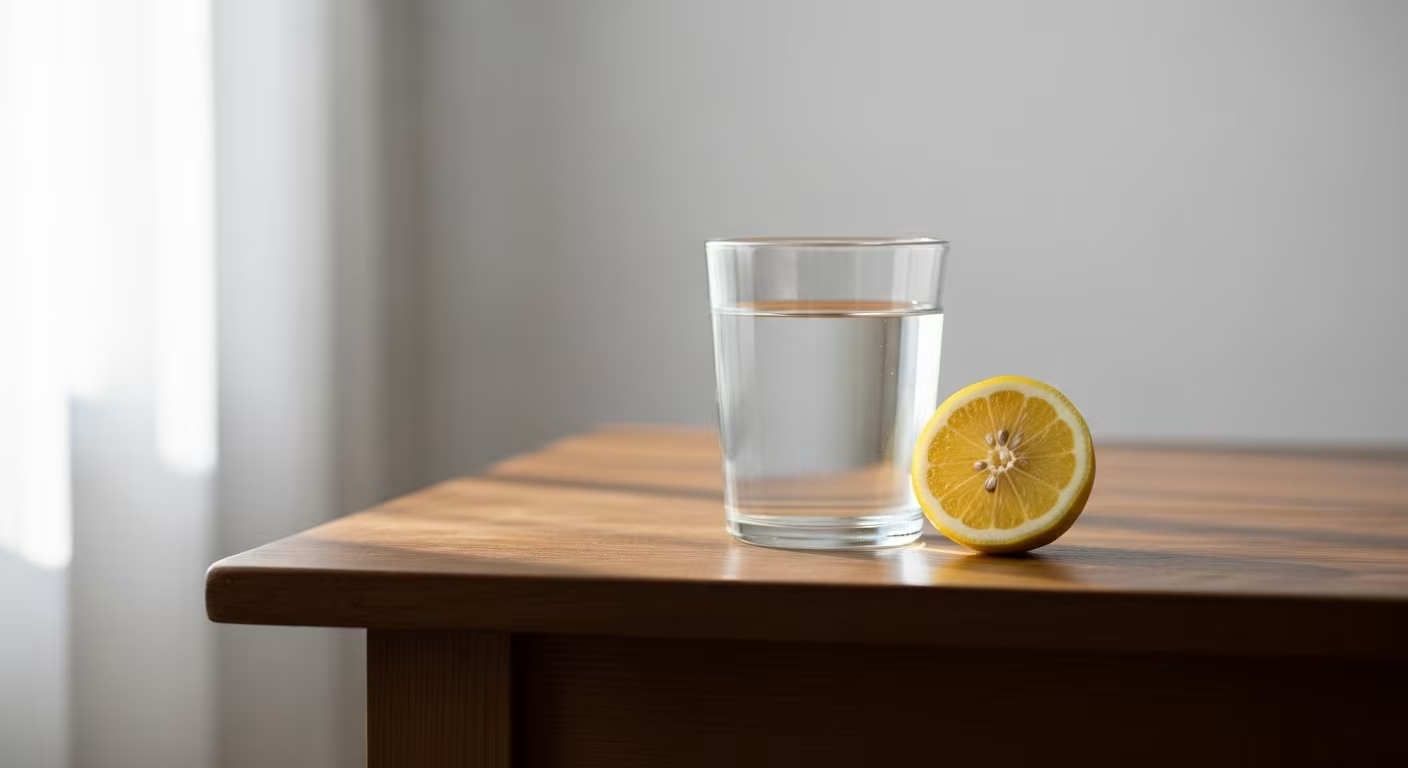

What Hydration Actually Requires
The body's fluid requirements are primarily met by water. For the majority of people in ordinary daily circumstances — moderate activity, temperate climate, no unusual health conditions — water covers all hydration needs without supplementation. The body regulates fluid balance through thirst signals, urine concentration, and fluid retention mechanisms that work efficiently when plain water is consistently available.
The sports and beverage industry has invested substantially in creating the perception that plain water is insufficient — that electrolytes must be replenished, that hydration requires specific formulations, that water is inadequate without added minerals, sugars, or functional ingredients. For typical daily activity, this is not accurate. For extended endurance exercise lasting more than ninety minutes at high intensity, particularly in hot conditions, electrolyte replacement becomes relevant. For office work, moderate exercise, and everyday movement, plain water handles the requirement.
Understanding where water is genuinely insufficient — versus where the beverage industry has successfully created artificial demand — allows for practical decisions about what to actually drink rather than what marketing suggests is necessary.
Thirst as a Reliable Signal

Thirst is a reliable indicator of fluid need for most healthy adults. The sensation of thirst appears before meaningful dehydration occurs in healthy individuals. Drinking when thirsty and stopping when thirst is satisfied is a functional hydration strategy for most people in most circumstances.
The advice to drink eight glasses of water per day regardless of thirst exists without meaningful scientific support and creates unnecessary concern for people who do not feel thirsty at that frequency. Fluid requirements vary substantially between individuals based on body size, activity level, climate, and diet. Some people genuinely need more than eight glasses; many need less.
People with certain conditions — kidney disease, heart failure, medications that affect fluid balance — may have altered thirst responses and need specific fluid targets set by a physician. For healthy adults without these conditions, thirst is an adequate signal and does not require overriding with a prescribed daily number.
What Plain Water Covers
Water hydrates. It supports every metabolic process that requires fluid. It maintains blood volume, regulates body temperature through sweating, supports kidney function, and lubricates joints. No other beverage ingredient is necessary for these functions.
Coffee and tea, consumed in moderate amounts, contribute to daily fluid intake despite their caffeine content. The diuretic effect of caffeine at typical beverage concentrations does not exceed the fluid provided by the coffee or tea itself for most people. Three to four cups of coffee per day do not cause net fluid loss in people accustomed to caffeine.
Food provides fifteen to twenty percent of daily fluid intake for most people eating a normal diet. Fruits, vegetables, soups, and cooked grains all contribute water. Someone eating a diet with substantial fruit and vegetable content requires less fluid from beverages than someone eating a diet composed primarily of dry or processed foods.
When Electrolytes Actually Matter

Electrolytes — primarily sodium, potassium, magnesium, and chloride — are minerals that affect fluid balance, nerve function, and muscle contraction. They are lost in sweat. For activities lasting less than sixty to ninety minutes at moderate intensity, the electrolytes lost in sweat are minimal and replaced through normal food intake without any supplementation.
Extended endurance exercise — marathon running, long-distance cycling, triathlon — depletes sodium specifically to a degree that can cause problems if replaced by plain water alone. Drinking large volumes of plain water during extended exercise without replacing sodium can cause hyponatremia, a condition where blood sodium concentration drops to dangerously low levels. For these activities and durations, electrolyte replacement is genuinely relevant.
For daily life, a standard diet with normal salt intake replaces the electrolytes lost through typical sweating. The marketing of electrolyte drinks, tablets, and packets for everyday hydration overstates the typical daily electrolyte loss and understates the electrolyte replacement that normal food provides.
The Cost of Marketed Hydration Products

Branded electrolyte drinks, enhanced waters, hydration packets, and functional beverages cost substantially more than plain water. The ingredients that justify these prices — electrolytes, vitamins, amino acids, herbal extracts — provide minimal benefit for everyday hydration needs. Some contribute negligible amounts of nutrients relative to what food provides. Others are present in doses below what would produce any measurable physiological effect.
A reusable water bottle filled from a tap costs nothing per serving. An electrolyte drink costs one to three dollars per serving. For a person consuming one electrolyte drink per day rather than plain water, this represents a significant annual cost for a benefit that most people do not need. Over years, this cost compounds without producing proportional benefit.
The environmental cost of packaged beverages — plastic bottles, aluminum cans, cardboard packaging — adds a second dimension to the cost calculation. Single-use packaging for hydration that plain water could provide is an unnecessary environmental burden as well as an unnecessary financial one.
Practical Hydration Habits
Keeping water consistently available is more effective than scheduled drinking. A reusable bottle within reach at a desk, in a bag during commuting, and near the kitchen ensures that drinking when thirsty is always convenient. The barrier to drinking water is primarily availability — people drink whatever is accessible.
Tap water quality varies by location. In most high-income countries, tap water meets drinking water standards and is safe to consume without filtering. In areas where tap water quality is uncertain, a simple carbon filter reduces taste and odor concerns at much lower cost than bottled water.
Starting the day with water before any other beverage replaces fluid lost overnight and often reduces the perception of morning fatigue. The body loses fluid through respiration and sweating during sleep. Replacing this fluid before caffeine or food addresses the most straightforward hydration gap in the average day without any product or supplement.
Hydration During Exercise

Exercise increases fluid loss through sweating, and the rate depends on intensity, temperature, and individual sweat rate variation. At moderate intensity in temperate conditions, sweat loss is typically manageable through normal drinking behavior — drinking when thirsty before, during, and after exercise.
In hot conditions or during prolonged high-intensity exercise, proactive hydration — drinking consistently rather than waiting for thirst — becomes more relevant. Thirst lags behind actual fluid loss during intense exercise, particularly when sweat rate is high. For sessions lasting more than sixty minutes in hot conditions, drinking consistently every fifteen to twenty minutes rather than only when thirsty reduces performance decline from dehydration.
The volume required varies widely by individual, intensity, and conditions. Body weight before and after exercise provides a rough guide to fluid loss — each kilogram of weight lost during exercise represents approximately one liter of fluid to replace afterward. This measurement is more useful for understanding individual sweat rate under specific conditions than as a daily practice for casual exercisers.
Recognizing Adequate Hydration
Urine color is the most practical indicator of hydration status for everyday use. Pale yellow to straw-colored urine indicates adequate hydration. Dark yellow or amber urine indicates deficit. Completely clear urine may indicate excess hydration, which in extreme cases can dilute blood sodium to problematic levels.
The goal is not to make urine as clear as possible — this is a common overcorrection that results in more fluid intake than is actually needed. Pale yellow, not clear, is the target. Drinking enough to maintain this through the day, adjusting upward during hot weather or exercise, and then stopping rather than drinking to a fixed daily target is an individually calibrated approach that is more accurate than a standardized volume.



Comments
No comments yet.