
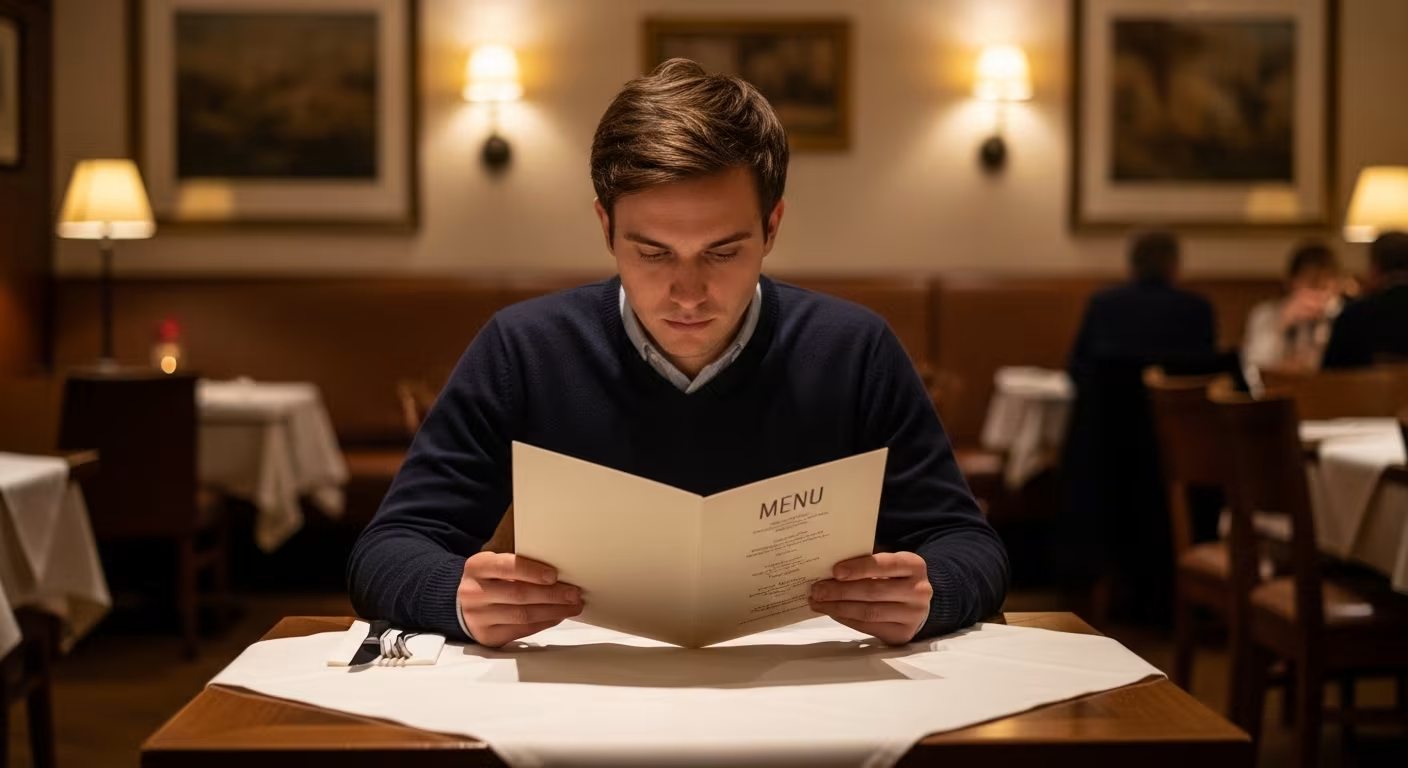

There is a version of eating out that feels like a treat and a version that feels like surrender at 6:45 on a Tuesday. The difference is rarely the food. It is whether the meal was chosen or defaulted into. A household can spend the same money on restaurants two very different ways: a few meals it looks forward to, or a steady drip of forgettable takeout ordered because cooking felt like one task too many.
Minimalism applied to dining is not a rule against restaurants. It is the practice of spending a fixed amount of money and attention on fewer, better meals out, and letting simple home cooking carry the ordinary weeknight.
How Takeout Quietly Becomes the Default
The slide happens without a decision. One convenience dinner a week becomes three, three become an expectation, and the expectation becomes a line in the budget nobody remembers approving. A single takeout order for a family of four might run $45 to $70 with fees and tip. Fifteen of those in a month is a real number, often larger than a monthly grocery bill would be to cook most of the same meals at home.
The cost is easy to undercount because it arrives in small installments. No individual order feels reckless. It is only in aggregate, at the end of the month, that the total registers, and by then the money is spent and the meals mostly forgotten. What makes the pattern worse is that default ordering rarely produces good meals. The dinner chosen because nobody wanted to cook is chosen under low standards, so the money buys food that is fine at best and disappointing often, which is the least satisfying way to spend a restaurant budget.
A Short List Beats Endless Variety
The most useful habit is also the least intuitive: eat at fewer places, more deliberately. A household that keeps a working list of five to eight restaurants it genuinely trusts, each one known for a particular kind of meal and a particular price point, orders with almost no friction. Thursday is the Thai place that has never once disappointed. Friday, when there is something to celebrate, is the one nicer spot worth the drive.
Compare that to opening a delivery app cold. Twenty minutes of scrolling, a speculative order from somewhere untested, and a mediocre meal at a marked-up price is a common outcome. The short list removes the decision that produces most bad restaurant spending. Predictability here is not boredom; it is efficiency, the same reason a home cook keeps a rotation of reliable dinners instead of improvising nightly.
Building the list takes almost no effort. Write down the three to five places you have most enjoyed in the past year, note what each does well, and treat those as the core. Add one new candidate a season, after an intentional trial visit, so the list evolves without collapsing back into constant searching.
The Full Cost, Added Up Honestly
The menu price is the smallest part of the number. On delivery, the delivery fee, service fee, and tip commonly add 30 to 50 percent on top of the food itself. Dining in, the drink order, an appetizer, and dessert can quietly double an entrée-only bill. None of it is hidden, but it is easy to ignore when the habit is running on autopilot.
A cleaner approach is to decide the restaurant budget first and spend against it, rather than spending freely and discovering the total afterward. A household that sets a fixed monthly figure for all eating out, then cooks at home once that figure is spent, makes sharper choices about where the money goes. Setting the ceiling in advance produces different decisions than reviewing the damage after the fact, and it requires no per-meal tracking to work.
Ordering With Less on the Table
The same restraint carries into the meal itself. A main course with one shared starter is usually more comfortable, and cheaper, than a full three-course structure ordered on menu momentum. Drinks are the highest-margin items on almost any menu; choosing water or a single glass rather than a second and third round trims the bill noticeably without touching the quality of the meal. It helps to cross-check ideas like these against the Academy of Nutrition and Dietetics.
Sharing is the quiet upgrade. A table that orders three or four dishes to pass around tastes more of the menu, spends less per person, and eats more sociably than four people each guarding a separate plate. At places with generous portions, sharing is often the more satisfying way to eat regardless of cost.
Making Home Cooking the Easy Default
Eating out stays special only when it is the exception. When home cooking is the norm, a restaurant meal becomes a genuine occasion, chosen for a specific place on a specific night. When takeout is the default, even good restaurants blur into the routine and stop registering as anything.
Most frequent takeout is really a response to one problem: cooking after a long day feels like too much. The fix is not willpower but a small set of dinners that are genuinely fast. Three reliable fifteen-minute weeknight meals change the math of the 6:45 decision entirely. Our guide to one-pot meals for busy weeknights is a good place to build that rotation, so that ordering in becomes a choice you make on a good night rather than an escape you reach for on a tired one.
The 6:45 decision, priced:
| Option | Cost | Note |
|---|---|---|
| Takeout for four | $45–$70 with fees and tip | — |
| Delivery overhead | +30–50% on the food itself | delivery + service fees + tip |
| The alternative | three reliable 15-minute meals | changes the weeknight math entirely |
Comments
No comments yet.