

Why Breakfast Variety Works Against You
Most kitchens hold the makings of far more breakfasts than anyone eats in a month. The pantry has oats, nut butter, eggs, bread, frozen fruit, yogurt, and granola, yet on a typical weekday only one or two of those get touched — and the question of which one gets answered from scratch every single morning. That small repeated decision, made when the clock is already tight, spends mental energy before the day has properly begun.
A minimalist approach to breakfast is not about eating less or eating worse. It is about settling on a handful of breakfasts that reliably work and cycling through them without deliberating. A household that runs three breakfasts on rotation — say overnight oats Monday and Wednesday, eggs and toast Tuesday and Thursday, yogurt with fruit Friday — never has to decide. The choice was made once, and now it runs on autopilot. the American Psychological Association's guidance on managing stress makes a similar point.
The Two-Ingredient Principle
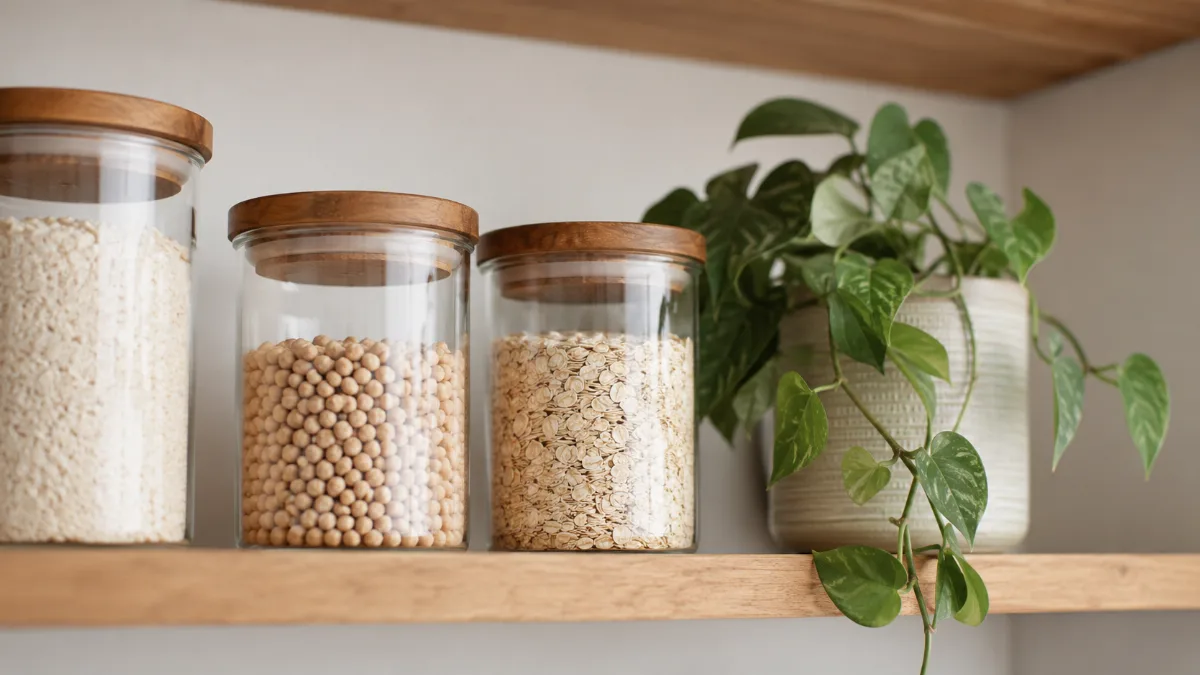
The most durable breakfasts are built on two core ingredients with optional extras, not a long list of required parts. Overnight oats need oats and a liquid; everything else is negotiable. Eggs need eggs, scrambled or fried or poached with whatever is at hand. Greek yogurt needs yogurt, and the toppings float depending on what is in the fridge.
A breakfast anchored to two required ingredients survives the grocery week better than one that demands five or six. If a single ingredient is missing, the meal still happens. That resilience is a genuinely practical trait on a weekday: the morning the berries run out does not derail anything, because the yogurt still works with a drizzle of honey, and the oats still work with a spoon of peanut butter. Fewer required parts, fewer ways for the routine to break.
Five combinations cover most weeks and each takes under 5 minutes:
| Breakfast | Prep | Keeps |
|---|---|---|
| Overnight oats — 1/2 cup oats, 1/2 cup milk | 2 min the night before | Up to 5 days refrigerated |
| Yoghurt with fruit and nuts | 2 min | Assembled fresh |
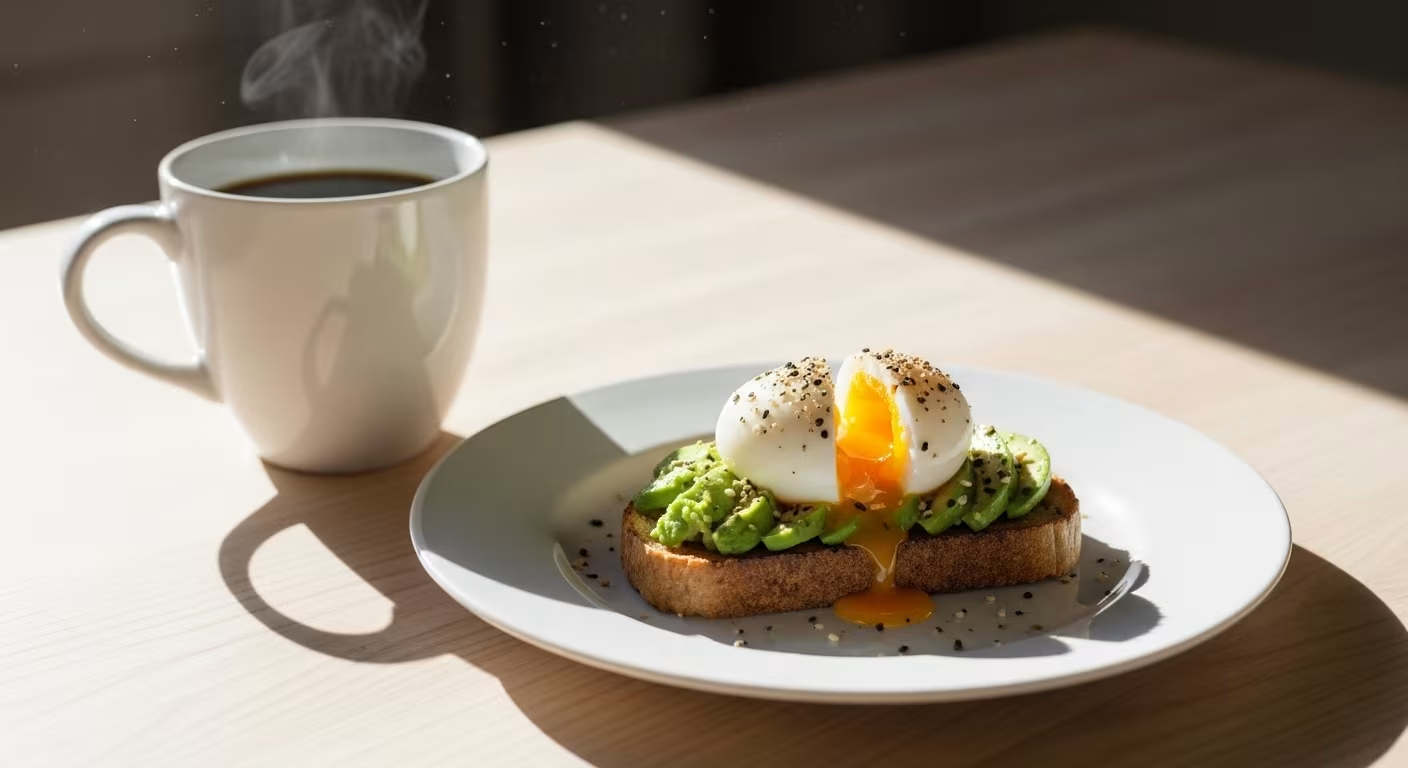
| Eggs on toast | 5 min | Cooked fresh |
| Hard-boiled eggs with fruit | Batch of 6, 12 min | Up to 1 week in the shell |
| Smoothie — frozen fruit and milk or yoghurt | 3 min | Bags pre-portioned in the freezer |
Rotating three of these rather than seven is the point. A three-option rotation removes the morning decision entirely while still avoiding the monotony that ends single-breakfast experiments in the second week.
Prep the Night Before, or Batch It on Sunday

The single most effective tool for a no-fuss morning is moving the work to the night before. Overnight oats — oats and milk or a non-dairy alternative combined in a jar and left in the fridge — ask nothing of you in the morning beyond opening the lid and adding a topping. Assembling five jars takes about ten minutes on a Sunday evening and covers the whole workweek. For households where the morning is the tightest part of the day, shifting that ten minutes from 7 a.m. to 9 p.m. the night before changes the entire feel of the start without adding any total time.
To see how little time this really costs, picture a Sunday-evening block of about fifteen minutes: five jars of overnight oats assembled in roughly ten minutes, and a pan of eggs set to hard-boil for another five of active work. Those two preparations alone cover close to ten breakfast servings and remove every morning decision for the days they touch. Monday then looks nothing like a Monday without prep, and that visible contrast — the calm morning versus the scramble — turns out to be a stronger motivator than any abstract belief in being organized.
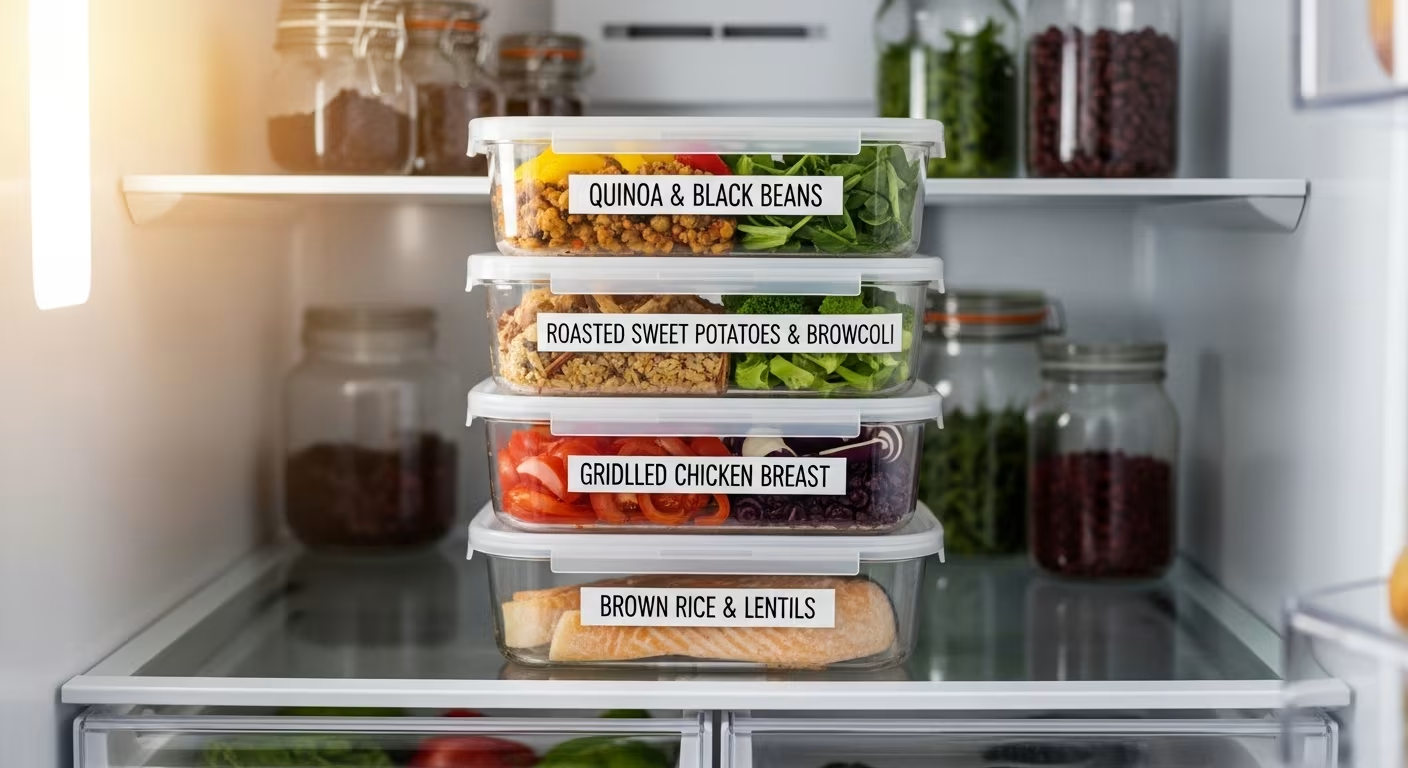
The same batch logic that works for dinner works here. A pot of oatmeal cooked once and portioned into containers takes the same effort as a single serving but yields five. A tray of egg muffins — eggs beaten with vegetables and baked in a muffin tin — turns one thirty-minute session into a dozen portable breakfasts. A batch of hard-boiled eggs, five minutes of work plus twenty of unattended cooking, feeds three or four mornings. The batch cooking habit shines on anything cooked; raw components like fruit, yogurt, and nut butter need no batching, though portioning them into containers still trims the morning assembly.
What is worth batching depends on how long it keeps. Overnight oats hold 4 to 5 days, so a Sunday batch of 5 jars covers the week. Hard-boiled eggs keep a week unpeeled and about 3 days peeled. Smoothie bags — fruit portioned into freezer bags — keep 3 months and turn a smoothie into a 60-second job. Cooked grains keep 4 to 5 days.
Two things are not worth preparing ahead: cut fruit that browns, and anything with a texture that depends on being fresh. A 20-minute Sunday session covering oats, eggs and smoothie bags removes about 15 minutes from each weekday morning, which is a better return than an hour spent making five identical assembled meals.
A Shorter Grocery List as a Bonus
A household running a small, fixed breakfast rotation buys fewer distinct ingredients than one chasing an aspirational range of options. The weekly list for a three-breakfast rotation is predictable — the same items return week after week, with only small adjustments for what needs restocking. That predictability trims spending, because you stop buying specialty ingredients on speculation and then throwing them out when the breakfast they were meant for never gets made.
It keeps the pantry honest too. Three or four ingredients used constantly stay visible and within reach; the one-off specialty jar bought for a single breakfast never gets a chance to migrate to the back of the shelf and expire there. A tighter list also shops faster — the same loop of oats, eggs, yogurt, bread, and fruit means you can move through the store on near-autopilot instead of rereading recipes in the aisle. The same rotation principle scales to the rest of the day — see our guide to minimalist meal planning for how a fixed set of options simplifies lunch and dinner the same way.
Make It One You'll Actually Eat
None of this requires eating worse. The most effective minimalist breakfasts pair a protein source (eggs, yogurt, nut butter), a complex carbohydrate (oats, whole-grain bread), and fresh or frozen fruit — a combination that carries energy through the morning better than something more elaborate that takes longer to make but skimps on protein. For kids who resist breakfast or have firm preferences, a rotation still works: keep a consistent base and let the additions vary. A child who eats oatmeal with banana every day gets a steady, nourishing start, and the parent making it spends less effort than one endlessly reinventing the meal to hold interest.
The catch is that a rotation nobody enjoys gets abandoned, however simple it is. A daily breakfast has to be one the person genuinely looks forward to, or at least feels good after eating. So choose the two or three by what is actually enjoyed, not by what sounds most virtuous. Overnight oats with banana and peanut butter is a real pleasure for a lot of people; plain oats with water is technically simpler and almost nobody sticks with it. The best minimalist breakfast is the one that gets eaten without resistance every morning — start with the versions you already like, run them for a week, and let the routine settle from there.

Comments
No comments yet.