
Minimalist Kitchen Organization Tips for Tiny Apartments

My tiny apartment kitchen used to be a damn war zone. Seriously.

I’d spend fifteen minutes just trying to find a clean cutting board, usually under a pile of mail, kid drawings, and that random toy my toddler decided belonged on the counter. Dinner prep felt less like cooking and more like an extreme sport.

You know that feeling? When you just wanna make some damn pasta but you can’t even see your stovetop?

If your kitchen feels perpetually cluttered, cramped, and totally overwhelming, especially if it’s on the smaller side, you're in the right place. We’re going to talk about how to get that little space under control.

It’s not about buying a bunch of expensive organizers, I promise. It’s about ditching the junk, setting up some smart systems, and making your kitchen work for you, not against you. Even with tiny square footage.

Why This Actually Matters

Okay, so it's just a kitchen, right? Who cares if it's a little messy?

Well, mama, I care. And I bet deep down, you do too. Because a cluttered kitchen isn’t just about ugly counters; it’s about mental clutter.

It’s about the stress of trying to cook a healthy meal for your family when you can’t find the garlic press, or the pot you need is buried under three others. It's about wasted money because you keep buying things you already own but can't find.

I used to spend a good 30 minutes every single day just clearing a space to chop veggies or load the dishwasher. That’s 30 minutes I don’t have, not with a five-year-old and a two-year-old.

That’s 30 minutes of chasing toddlers, reading a book, or, hell, just staring at the wall in silence. I swear I bought five bags of flour in a year because I could never find the damn one I already had. Think about that wasted money!

A minimalist approach to your kitchen, especially in a tiny apartment, gives you back time, money, and most importantly, your sanity. It makes cooking less of a chore and more of a pleasure.

It turns a frustrating space into a functional one, and that, my friend, is worth its weight in gold.

What Even Is Minimalist Kitchen Organization?

First things first, let’s clear something up. Minimalist doesn't mean you have to eat all your meals off a single plate with one fork.

It's not about deprivation, or living in some cold, sterile, all-white space. Nope.

It's about intentionality. It's about only keeping the stuff you actually use, genuinely love, or truly need to function. And in a tiny kitchen, that philosophy is your absolute best friend.

It’s about making conscious choices about what earns a spot in your limited real estate. Every single item has to justify its presence.

The "One In, One Out" Rule (And Why It's Your New Best Friend)

This rule is simple, but it's a damn game-changer for preventing future clutter creep.

Every time you bring a new item into your kitchen – a new coffee mug, a new spatula, a new serving bowl – an old, similar item has to leave. No exceptions.

Seriously, make it a non-negotiable family rule. It sounds intense, but it works like magic.

  • Prevents Accumulation: This rule acts as an automatic bouncer for your cabinets and drawers. It stops the endless influx of new stuff that slowly suffocates your space. You'll never again find yourself with three worn-out wooden spoons and a shiny new one all fighting for space.
  • Forces Conscious Decisions: It makes you pause and think before you buy. Do I really need that novelty avocado slicer if I have to get rid of my perfectly good veggie peeler? Probably not. It encourages mindful consumption, which saves you money and space.
  • Keeps Clutter at Bay Automatically: Once you get into the rhythm, you're constantly curating your kitchen without even thinking about it. There's no need for huge decluttering sessions because you're doing small, continuous ones. It's the ultimate low-maintenance approach to keeping things streamlined.

I learned this the hard way with coffee mugs. My husband and I kept accumulating them from various events and trips. Soon, we had like, fifteen mugs for two people. It was ridiculous.

Now, if someone brings home a new mug from a work event, we have to pick one to donate or toss. It works. It truly, truly works.

How To Actually Do It: Your Step-by-Step Kitchen Purge

Alright, enough theory. Let’s get down to the dirty work. This might feel overwhelming at first, but stick with me. We're gonna tackle this bit by bit.

Remember, this isn't about perfection right away. It's about making progress.

Step 1: The Kitchen Dump (Everything Out!)

This is where it gets real. You need to pull everything out. Every single item from every drawer, every cabinet, every pantry shelf, even that random corner where you stash grocery bags.

Lay it all out on your counters, dining table, or even the floor. Yes, it’s going to look like a bomb went off. Prepare for that moment of sheer panic.

Just breathe. This part has to happen. You can't see what you truly have until it's all exposed. You'll probably find duplicates you didn't even know you had. Or that ancient bag of stale marshmallows from Christmas 2020.

My kids found a half-eaten bag of goldfish crackers from a playdate three months prior when I did this. True story. It’s gross, but it's part of the process.

Step 2: The "Keep, Donate, Trash" Gauntlet

Now that everything is out, it's time to be brutal. Pick up each item and make a quick decision. Don't overthink it.

  • Keep: These are the things you use regularly (at least once a month), things that aren't broken, and things you genuinely love. Your go-to spatula, your favorite coffee mug, the pot you use for pasta every week.
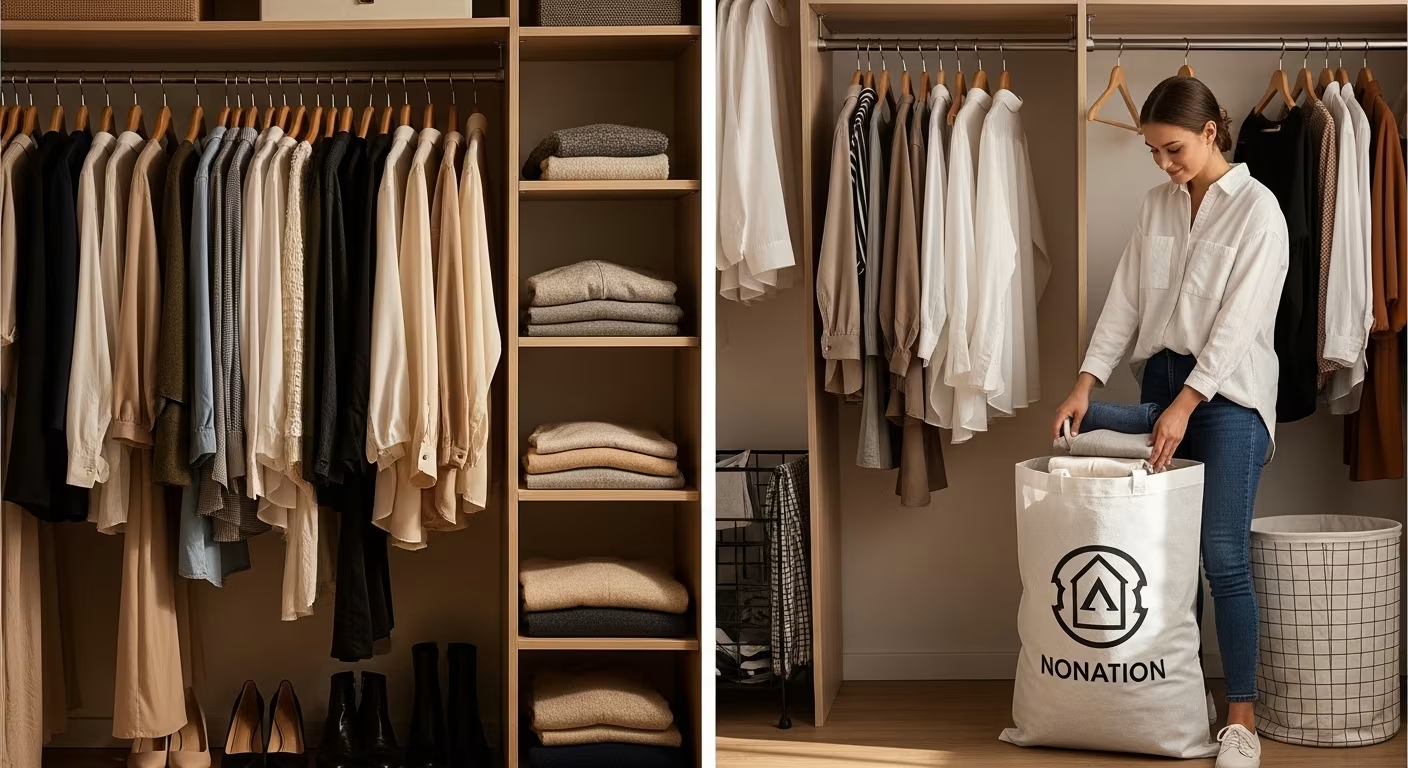
  • Donate/Sell: These are items in good condition that you no longer use or need. That fancy stand mixer you got for your wedding and used twice. The pasta maker that seemed like a good idea. The 12 shot glasses you've had since college. Somebody else could actually use these.
  • Trash/Recycle: Broken items, cracked bowls, rusty cookie sheets, expired spices, food items that are questionable or beyond their prime. Don't feel bad about tossing things that are beyond saving or simply dangerous to use.

For tiny kitchens, the "just in case" mentality is your worst enemy. "Just in case" means "taking up valuable space for eternity" in my book. If you haven't used it in six months (or a year for seasonal items), it probably needs to go.

I once found three cheese graters. Three! I only use one. I have no idea how I ended up with so many. Two went to Goodwill, no regrets.

Step 3: Categorize Like a Pro (Or a Slightly Obsessed Mom)

Once you’ve got your "keep" pile, start grouping like items together. This might seem obvious, but seeing all your forks together, all your spices together, all your baking supplies in one spot, is crucial.

You'll quickly see if you have five pairs of kitchen scissors (I did) or enough plates to host a wedding for 50 (also me, pre-purge). This step helps you visualize what you actually have.

My baking supplies used to be scattered between three different cabinets. A bag of flour here, some sprinkles there, vanilla extract under the sink. It was a disaster every time I wanted to make cookies.

Now, they all live together. It’s so much easier. You might find you have five boxes of pasta in different spots. True story, it happens to the best of us.

Step 4: Zone Out: Assigning Homes

This is where the magic of organization for a small space really kicks in. Think about your kitchen in zones.

Cooking utensils should be near the stove. Plates and bowls near the dishwasher or drying rack. Cleaning supplies under the sink. Spices near where you do most of your cooking.

For tiny apartments, you have to think vertically. Wall space is prime real estate. Magnetic knife strips are a lifesaver for freeing up drawer space. Command hooks can hold measuring cups and spoons inside cabinet doors.

Our microwave used to live on a cart in the dining room because we had no counter space. Now, with strategic decluttering and smart placement, it has a dedicated spot on a small kitchen shelf. It makes a huge difference.

Step 5: Smart Storage Solutions (Without Breaking the Bank)

Okay, now you've decluttered and zoned. Now you can think about storage solutions. Do NOT buy containers before you declutter. That's organizing clutter, not getting rid of it.

You don't need fancy custom cabinets or expensive inserts. There are tons of budget-friendly options.

  • Clear Bins: For your pantry, clear plastic bins or glass jars are amazing. You can see what you have, they stack well, and they keep things fresh. They're great for pasta, snacks, baking supplies. I swear by those cheap plastic bins from Target.
  • Drawer Dividers: Even simple adjustable bamboo dividers can transform a chaotic utensil drawer into an orderly one. No more digging for a fork.
  • Stacking Solutions: Pot and pan organizers (the vertical kind) are amazing for freeing up cabinet space. Stackable shelves inside cabinets can double your usable height for plates or canned goods.
  • Multi-Purpose Items: Think about items that can do double duty. A cutting board that’s also pretty enough to be a serving tray. Bowls that nest perfectly.

Remember, less stuff means less need for excessive storage. The goal isn't to buy more bins, it's to have fewer things to bin.

Step 6: The "Everyday Essentials" Rule

In a small kitchen, accessibility is everything. Your everyday essentials need to be within easy reach. The items you use multiple times a day or every single day should have prime real estate.

Your daily coffee mug, your go-to pan, your most-used knife, your preferred cutting board. These should be easy to grab without having to move five other things.

Less frequently used items – the turkey baster, the special occasion platter – can go into higher cabinets, deeper drawers, or less accessible spots.

My coffee mug lives on a hook by the coffee maker. The kettle stays on the stove. My go-to cutting board leans against the backsplash. Everything else? Hidden away, but still organized.

This simple shift reduces daily friction and makes your kitchen feel more spacious and functional.

Step 7: Pantry Power: Maximize Your Food Storage

Your pantry, no matter how small, needs special attention. Food items can quickly become a chaotic mess, especially when you're trying to feed a family.

Decant bulk items like flour, sugar, rice, and pasta into those clear containers we talked about. This saves a ton of space, keeps things fresher, and lets you see exactly how much you have at a glance.

Use the "first-in, first-out" (FIFO) rule: when you buy new groceries, move older items to the front so they get used first. This cuts down on food waste, which saves you money.

Avoid having multiple open bags of the same thing. One open box of cereal, one bag of flour, one jar of peanut butter. If you open a new one, make sure the old one is finished or tossed.

I used to have three open bags of chips. Now? One, and it lives in a designated snack bin. It’s a small victory, but it adds up to a much tidier pantry.

Step 8: Flat Surfaces Are Not Storage (Seriously, Eleanor!)

This one is probably the hardest, especially with a busy family. But in a tiny kitchen, your counter space is sacred. It is NOT for storage.

The only items that should live permanently on your counters are things you use every single day that can't easily be tucked away. For me, that's the coffee maker and maybe a toaster (if it’s a skinny one).

Everything else? It needs a home inside a cabinet or drawer. This includes mail, kids' school papers, random charging cables, half-empty water bottles, and all those knick-knacks.

A clear counter surface immediately makes your tiny kitchen feel twice as big and infinitely more calming. It’s also way easier to clean, which is a huge win.

This is a constant battle in my house. My husband and kids always try to pile stuff. It's an ongoing effort, but the payoff is so worth it. Every night, before bed, I do a 5-minute counter sweep. It's non-negotiable.

Making It Stick / Common Mistakes

Okay, so you’ve done the purge, you’ve set up your zones, and your kitchen looks amazing. Now what?

The biggest mistake people make is thinking this is a one-and-done thing. It's not. Minimalism is an ongoing practice, not a destination.

Life happens. Kids bring home projects. New gadgets appear. You will accumulate stuff again. The trick is to have systems in place to manage it.

Another common mistake? Buying a ton of organizers before you declutter. Don't do it. You need to know exactly what you're keeping before you figure out how to contain it. Otherwise, you're just organizing clutter, and that's a waste of money.

Also, don't let sentimental items hold you hostage. Grandma’s entire collection of ceramic measuring cups might be lovely, but if you only use one set and the others are taking up prime cabinet space, it’s time to make a tough choice.

Not getting family buy-in can also trip you up. If you're the only one trying to keep things tidy, you'll feel like you're constantly fighting an uphill battle.

And finally, being too ambitious. Don't try to declutter your entire kitchen in one go if you only have an hour. You'll burn out. Start small, one drawer, one cabinet. Build momentum.

A minimalist kitchen isn't about having nothing; it's about having everything you need, and nothing you don't. It's about freedom, not deprivation.

Frequently Asked Questions

What if my spouse isn't on board with decluttering?
Oh, I know this one well. My husband was initially skeptical. Start with your own stuff first. Lead by example. Show them the benefits – how much easier it is to find things, how much less stress you have. Don't demand they change; gently demonstrate the positive impact. My husband saw how much easier it was for me to cook, and he slowly came around to appreciating a less cluttered space.
I have so many sentimental items! How do I let them go?
This is tough, especially with family heirlooms. Take a really good photo of the item. Create a digital album of all those cherished pieces. Sometimes, just having that visual memory is enough to let the physical item go. If there’s one truly iconic piece, keep that one and display it. I kept my grandma's cookie cutters, but the 17 ceramic platters from various aunts? A photo album of them did the trick. You can honor the memory without keeping all the things.
How do I store food for a family in a tiny pantry?
It's all about aggressive meal planning and smart vertical storage. Plan your meals for the week so you're only buying what you need. This prevents stockpiling excess food you don't have space for. Utilize those clear, stackable containers we talked about. Use tension rods to create extra shelves for spices or small cans. Maxi-mise every inch of vertical space. And be diligent about the "first-in, first-out" rule to avoid waste.
What are the absolute must-have kitchen items for a minimalist kitchen?
For me, it’s a good chef's knife, one versatile pot (like a Dutch oven), one versatile pan (cast iron or stainless steel), a sturdy cutting board, and essential cooking utensils like a spatula, whisk, and ladle. You'll also need a few plates, bowls, and cups per person in your household. Don't go overboard with specialized gadgets you'll rarely use. You probably only cook with your favorite few things anyway, so focus on quality over quantity for those essential pieces.
How do I keep my counters clear when I have small kids?
This is a daily battle, friend. My best advice: designate a "landing strip" for kid stuff away from the kitchen. We have a basket by the front door where school papers, lunchboxes, and random toys get dumped. It's not perfect, but it keeps them off the kitchen counters. Also, make clearing the counters a non-negotiable part of your evening routine. Five minutes before bed, everyone helps put things away. Consistency is key, even when you're exhausted.

The Bottom Line

You don't need a huge kitchen to have a functional, calm, and organized space. You just need less stuff, smarter systems, and a little bit of intentionality.

Less stuff means less stress, less cleaning, and more actual usable space. It means finding what you need when you need it, and making cooking a joy instead of a chore.

It might feel like a massive undertaking, but I promise you, it's worth it. Start small. Pick one drawer today. Empty it, sort it, put back only what you need. Then tackle another one tomorrow. You’ve got this, mama.