
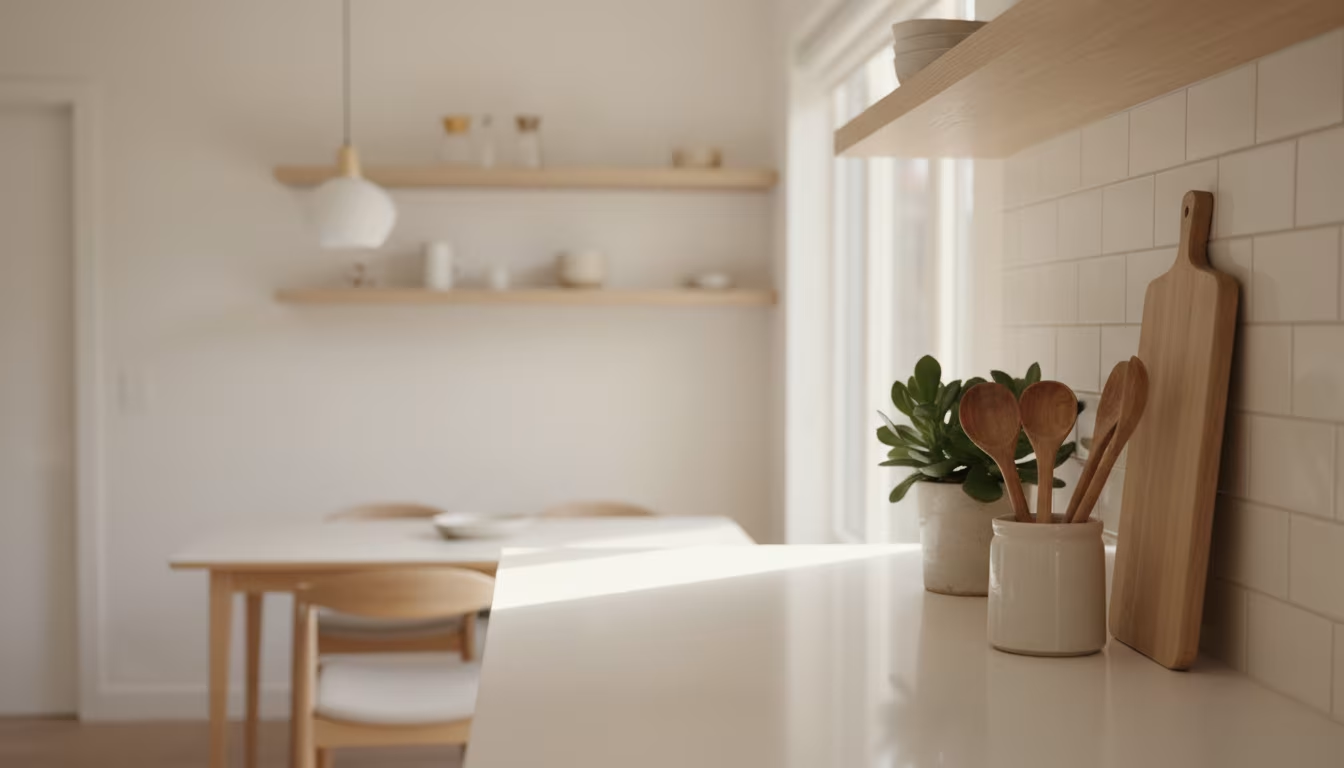

The small kitchen storage industry — the drawer dividers, the cabinet door racks, the over-the-door systems, the $30 tiered organizers — is built on the premise that a small kitchen has a storage problem. In most cases, it doesn't. The small kitchen that's hard to cook in is usually a small kitchen with too much in it: appliances that haven't run in months, dishes for twelve in a household of two, a drawer of gadgets for cooking that doesn't happen. Editing comes first. Storage decisions come after, and they get dramatically easier once there's less to store.
This guide walks through that order of operations for a typical apartment kitchen: roughly 8 to 12 linear feet of counter, four to six cabinets, and three or four drawers. The numbers below assume a one- or two-person household; scale up modestly for more people, not proportionally.
Step 1: Edit Before You Organize
The organizing failure pattern runs like this: buy organizers, put everything into the organizers, discover the kitchen is still hard to navigate because the volume didn't change. The organizer made the crowded drawer neater, not more usable.
Pull everything out — countertop, cabinets, drawers — and assess each category against a concrete threshold:
Appliances
Anything not used in the past 90 days that doesn't serve a genuine seasonal purpose exits. Duplicates exit. The appliance used once since purchase exits. A typical apartment kitchen ends this pass with four to six appliances total, and most of those live in cabinets, not on the counter.
Dishes and glasses
Count the realistic maximum number of people served at one meal in this kitchen. Add two to four pieces per category for flexibility. That's the ceiling. A studio apartment kitchen serving one or two people does not need 12 dinner plates and 8 pasta bowls; six plates and four bowls covers dinner for guests with margin to spare.
Cookware
One 10- or 12-inch sauté pan, one stockpot or Dutch oven, one small saucepan, and one sheet pan covers the overwhelming majority of everyday cooking. Each additional piece beyond that core four should have to justify itself with actual, recent use — not a hypothetical future recipe.
Gadgets and utensils
Each gadget faces the same 90-day question. Duplicates of any utensil go. The avocado slicer, the egg separator, the specialized press bought for one recipe in 2024 — this is the category where the editing pass typically removes the most items by count.
Counter Space: Earn a Permanent Spot or Get Stored
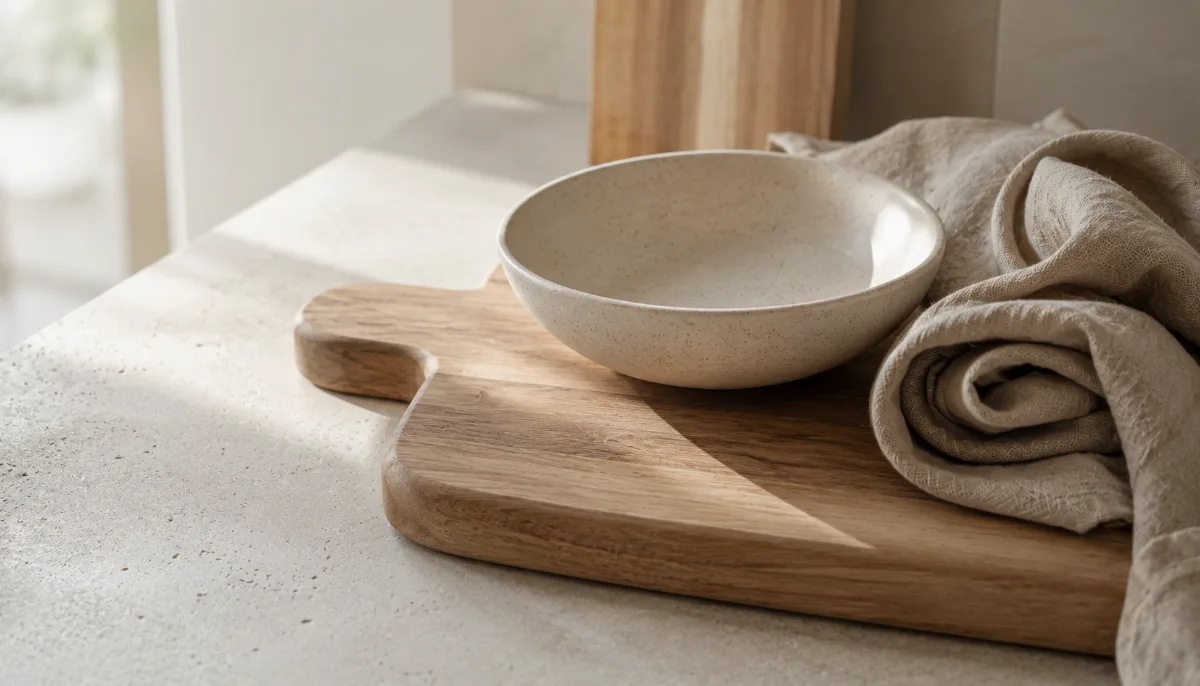
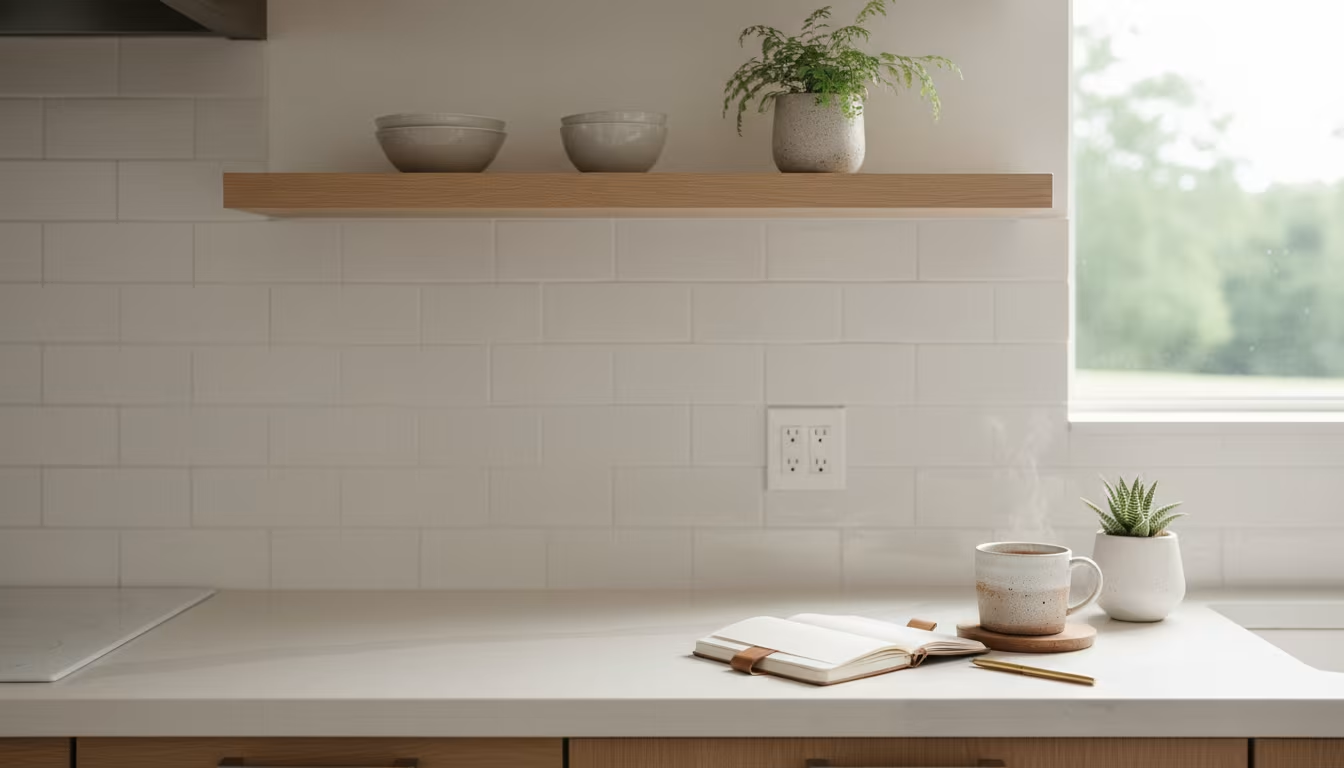
Counter space is the most valuable real estate in a small kitchen. In a large kitchen, a few underused counter appliances are an inconvenience. In an 8-foot kitchen, they eliminate the working surface entirely — the difference between having a prep area and chopping vegetables on a cutting board balanced over the sink.
The rule: only items used daily or near-daily earn a permanent counter position. Everything else gets stored and retrieved when needed. Retrieval feels like friction the first week; by the third week it's routine, and the permanent working surface is worth far more than the 20 seconds saved by leaving the blender out.
| Item | Typical frequency | Counter or stored? |
|---|---|---|
| Coffee maker / kettle | Daily | Counter |
| Cutting board | Daily | Counter (leaned upright) |
| Toaster | 3–7× per week | Counter only if used most days |
| Blender | 1–3× per week | Stored, front of an easy cabinet |
| Stand mixer | 1–2× per month | Stored, back or high shelf |
| Air fryer / Instant Pot | Varies widely | Counter only with 4+ uses per week |
| Knife block | — | Replace with in-drawer insert or wall strip |
| Dish drying rack | — | Collapsible model, stored between uses |
Applied honestly, the table usually leaves one or two items on the counter. The countertop that's clear except for those is a functional cooking surface. The countertop with four appliances, a knife block, a fruit bowl, a utensil crock, and a drying rack is an obstacle course.
Cabinet Organization: Vertical Space and Zone Logic

Small kitchen cabinets work best when organized by zone — items used together stored together — and when vertical space is used instead of stacked depth.
Three zones cover most apartment kitchens. The cooking zone holds pots, pans, and the six to ten spices actually in rotation, in the cabinet nearest the stove. The prep zone holds knives, boards, and mixing bowls near the main counter workspace. The serving zone holds plates and glasses in the cabinet closest to the table or the dishwasher, whichever drives the put-away routine.
Two cheap upgrades do most of the vertical work. A shelf riser (usually under $15) turns one tall shelf into two usable levels instead of a stack of things on top of other things. And storing pot lids vertically — in a lid organizer, or simply slotted between the pot and the cabinet wall — cuts the pots' footprint by roughly a third compared to nesting them with lids on. This lines up with the USDA's MyPlate guidance on eating well on a budget.
Drawer Strategy: One Purpose Per Drawer
Drawers holding multiple unrelated categories produce the "I can never find anything" problem. One purpose per drawer eliminates it.
In a three-drawer kitchen: an everyday utensil drawer (spatulas, tongs, ladle — and nothing else), a knife-and-prep drawer with a bamboo insert to protect blades, and a gadget drawer holding the specific tools that survived the edit — peeler, can opener, grater. If a junk drawer exists, it lives outside the kitchen's functional drawers, and its contents are bounded by the drawer itself: when it doesn't close easily, it gets ten minutes of attention.
A kitchen with three clearly-purposed drawers where everything belongs is faster to cook in than a kitchen with three mixed drawers that require searching. No divider system fixes a drawer whose real problem is volume.
The Deep Drawer Problem
The deep drawer deserves its own mention because it's the most common small-kitchen complaint after the crowded counter: a jumble of items at varying depths where finding anything means moving everything. The instinct is to buy a tiered organizer. The better move is reducing the drawer's contents until the organizer isn't necessary.
A deep drawer holding 8 items, each retrievable without moving another, is functionally superior to the same drawer holding 20 items in tiers. The organizer adds complexity to a volume problem; editing solves it directly.
The Pantry in a Cabinet
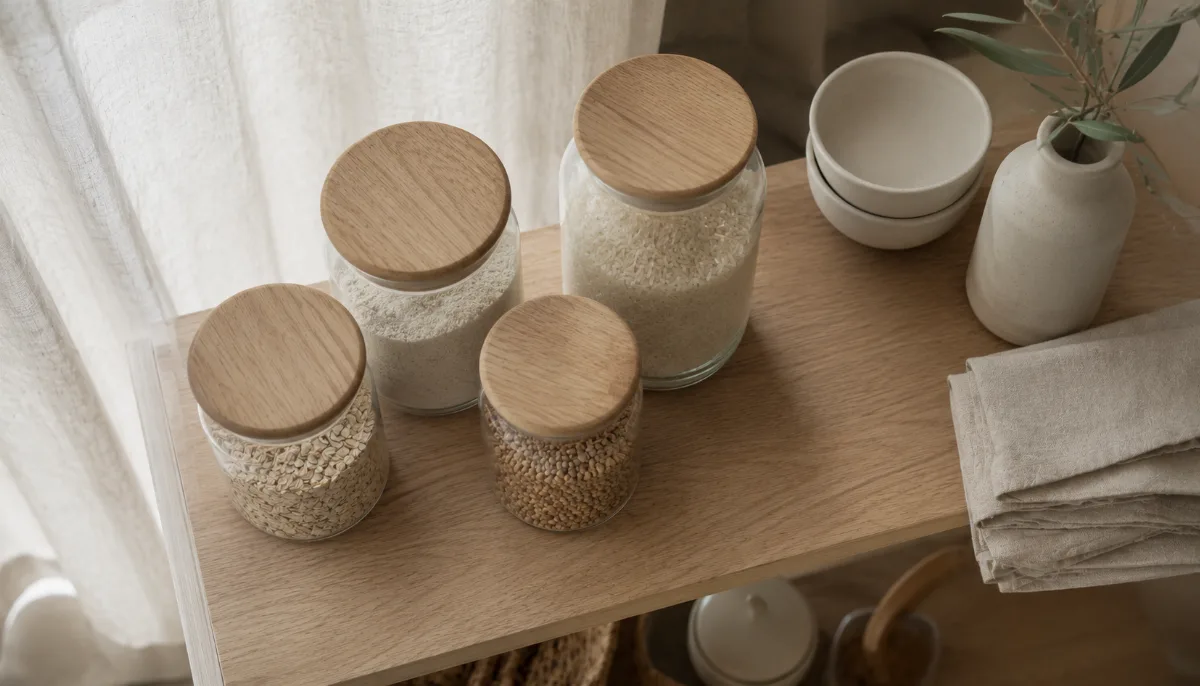
Pantry organization in an apartment kitchen usually means one or two cabinets, not a pantry room. The same principles apply at smaller scale: first-in-first-out rotation, categories grouped together, and a capsule pantry model — 30 to 40 staples that support a full week of cooking — instead of the "stock up on everything on sale" model that produces overstuffed shelves and expired duplicates.
Two mechanical fixes matter here. A lazy Susan on a deep shelf converts the unreachable back into usable space. And decanting the highest-turnover dry goods (pasta, rice, oats, lentils) into labeled clear containers takes an hour to set up but ends the daily archaeology of digging through half-open bags.
See also: capsule pantry guide and one-in-one-out rule for kitchen gadgets.
Maintenance: Keeping the Kitchen Edited
An edited kitchen doesn't stay edited on its own. Gifts arrive. A new cooking interest brings three new tools. Items accumulate at the path of least resistance — the nearest flat surface, the front of the nearest drawer.
Two habits protect the work. One-in-one-out for any new kitchen item: the new pan means an old pan leaves the same week. And a 15-minute quarterly audit: open every cabinet and drawer, pull anything that migrated in without earning its place, and check the counter against the frequency table above. The audit takes less time than cooking dinner and prevents the slow six-month drift back to the previous state.
The difference shows up in daily cooking, not in photos. Organizing rearranges the same volume; editing reduces it. The kitchen with less in it is easier to clean, easier to move through mid-recipe, and easier to reset after dinner — because there are simply fewer things that can be out of place. Start with one category this week (appliances are the fastest win), apply the 90-day test, and only then decide whether any organizer is still worth buying.

Comments
No comments yet.