
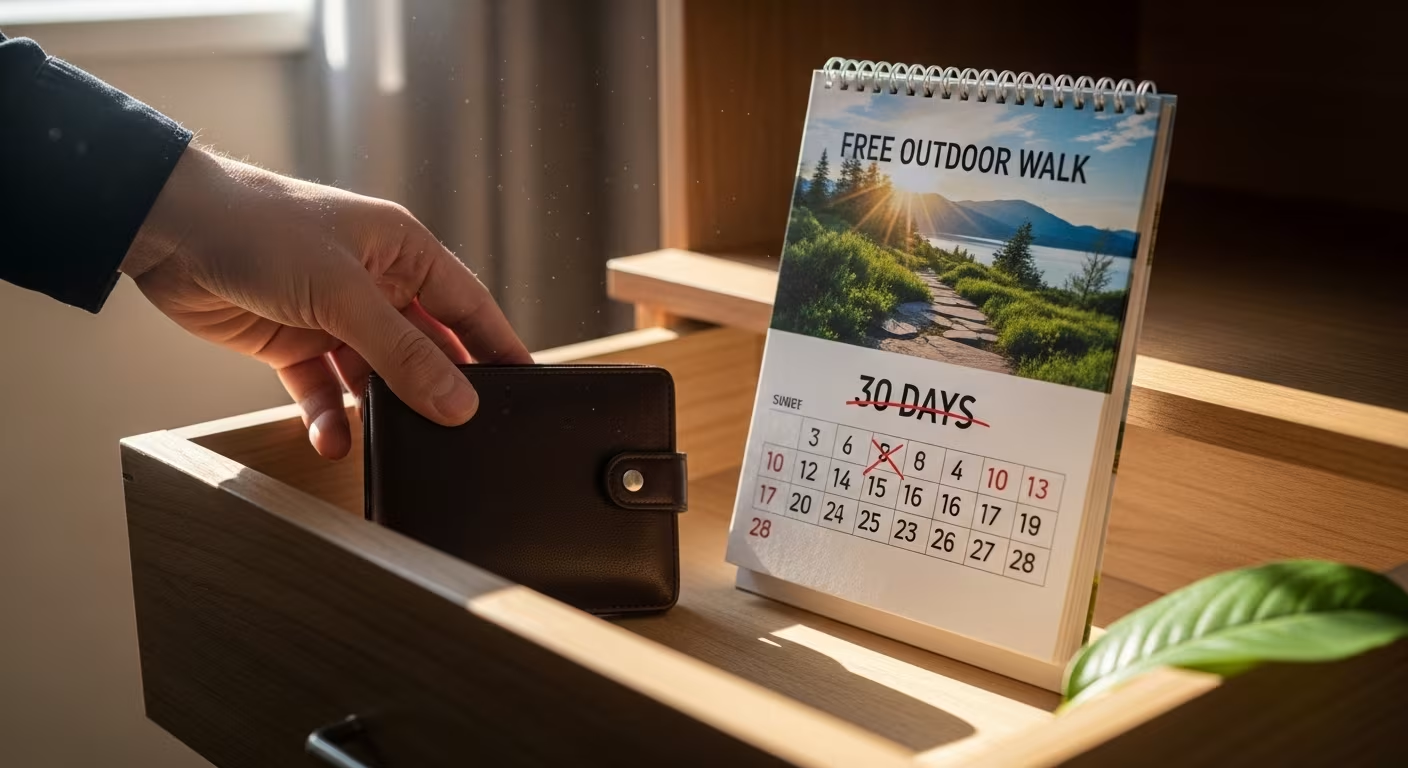

A no-spend challenge is exactly what it sounds like: a defined stretch of time — usually thirty days — during which no money goes to non-essential categories. Rent, utilities, groceries, and necessary medical costs continue. Everything else stops for the duration: dining out, entertainment, clothing, household extras, non-essential subscriptions, and any other discretionary spending.
The savings are real, but they are not the main event. The challenge works mostly through the behavioral reset it forces. Thirty days of making "we are not buying non-essential things this month" the automatic answer to every purchase impulse reveals how many of those impulses exist in a normal week — and how few of them actually require acting on.
Drawing the Essential Line Before You Start
The border between essential and non-essential is not always obvious, and a clear definition set in advance heads off the mid-month negotiation over whether a specific purchase counts. A workable rule for most households: essential covers fixed commitments, consumable necessities that genuinely run out during the month, and real emergencies. Everything else is non-essential for the duration.
| Category | Essential? | Reasoning |
|---|---|---|
| Rent, utilities, insurance, loan payments | Yes | Fixed commitments that cannot be paused |
| Groceries, toilet paper, dish soap, medications | Yes | Consumables that actually run out mid-month |
| Cafe coffee | No | Coffee can be made at home |
| Work lunches bought out | No | Lunch can be brought from home |
| Birthday gifts | No | Can be made, or delayed past the month |
| New apps and digital content | No | Existing subscriptions cover the month; add none |
The exact placements matter less than the fact that they were agreed before the month began. Mid-challenge debates about whether something qualifies almost always end in approval, so the point is to have those debates up front, when the answer is still honest.
Living Off What You Already Own
One of the most useful effects of a no-spend month is the enforced use of what the household already has. Most pantries hold enough for several weeks of meals if the contents get used creatively instead of topped up at every gap. Most bookshelves, streaming libraries, and game collections hold far more unread, unwatched, and unplayed content than a single month could get through.
By switching off the constant availability of new things to buy, the no-spend month redirects attention back to that existing supply. The fresh experience stops being a purchase and becomes the novel it never got to, the recipe built from what the pantry already holds, or the free afternoon that was available the whole time.
This is also where the challenge tends to be quietly enjoyable rather than grim. Cooking down a pantry into a run of odd, improvised dinners has a puzzle-like satisfaction to it. Working through a stack of unread books or a backlog of saved shows costs nothing and clears a small guilt that had been sitting there for months. A no-spend month reframed as "use the good things I already own" is far easier to sustain than one framed as thirty days of denial.
Handling Social Pressure
The hardest part of a no-spend month is usually the social dimension: the dinner invitation, the ticketed event, the group outing that assumes spending. Three approaches cover most of it. Explain honestly when comfortable — most people respond fine to "we're doing a no-spend month," and many are curious or supportive. Offer a free alternative — a meal at home rather than a restaurant, a walk or a park visit instead of a paid activity. And where an event can be attended without real cost, go, bringing something inexpensive rather than skipping the connection entirely.
What the Challenge Reveals
The most valuable output is not the money saved but the patterns it exposes. A purchase that has become so automatic it no longer registers as a decision — the daily coffee, the weekly takeout, the app bought without a second thought — suddenly becomes visible when all non-essential spending stops and the impulse to make it shows up anyway.
Those automatic purchases are the ones to address once the month ends. A household that discovers it was quietly spending a few hundred dollars a month on habits it barely noticed now has a concrete target for its ongoing budget. The reflex of asking "do I actually need this," built over thirty days, keeps sharpening discretionary decisions well after the formal challenge is over.
The revelations are usually specific rather than dramatic. It is the $6 coffee bought five mornings a week without a thought, the streaming service no one had opened in two months, the app-store purchase made in a distracted moment. None of them feels large in isolation. Stacked across a month and then a year, they are often the single biggest gap between what a household earns and what it keeps. Seeing that stack laid out is the point; the thirty-day pause is just the tool that makes it visible.
Running a Modified Version

A full thirty-day no-spend is the most demanding version and the highest-impact one. Several lighter versions capture most of the benefit: a no-spend week run once a month, a challenge limited to a single category — clothing, or dining, or entertainment — rather than all of them at once, or a "spend half as much" month that reduces discretionary spending without cutting it to zero.
The modified version is the right entry point for anyone who finds a complete no-spend month unrealistic. The behavioral awareness produced by any constrained-spending period still contributes to the longer shift in how a household relates to discretionary spending, even when the constraint is only partial. Starting narrow and succeeding beats starting broad and quitting in week two.
Timing helps a first attempt as much as scope. A month with a heavy social calendar, a birthday, or a holiday stacks the odds against a full challenge, while a quieter month gives the habit room to form. Running it with a partner or a friend adds a light accountability that carries through the harder days, and tracking the growing total somewhere visible — a note on the fridge, a running figure in a budgeting app — turns the restraint into something with momentum rather than a string of small refusals.
What to Do With the Savings

Part of what makes the challenge motivating is the accumulated savings that surface at the end of the month. A household that normally spends around $400 on dining, entertainment, and miscellaneous purchases finds that money sitting available at month end — often more than expected, because some of the ordinary spending was invisible to begin with.
Decide what happens to that money before the challenge starts, not after. A specific destination — an emergency fund built to cover unexpected costs, a debt payment, or a named savings goal — gives the total a concrete purpose and makes it far less likely to dissolve back into the next month's regular spending. Money with a job assigned in advance tends to keep that job.
The Shift That Outlasts the Month
The reset a no-spend month produces is not only the balance it leaves behind; it is a changed relationship with the purchase impulse that lingers afterward. People who finish a no-spend month consistently report that spending decisions feel more deliberate for several weeks — the habit of pausing to ask "do I need this" keeps running past the official end date.
That carryover is the real long-term payoff. The month's savings are a one-time gain; the changed decision-making habit is ongoing. A household that runs a no-spend month once a year and carries the shift for several months afterward produces meaningful, lasting spending reduction from a single concentrated month of effort. And for anyone who finds the full month too rigid, thirty days aimed at one high-spending category — dining out only, clothing only, entertainment only — delivers similar insight within a narrower scope and makes an approachable first attempt at spending on purpose.


Comments
No comments yet.