


The advice to spend a few hours on Sunday cooking a week's worth of meals is sound in theory and unreliable in practice for households with young children and full schedules. A different structure, small daily prep windows instead of one big block, survives contact with a real week far better. Here's why it holds up, and how to run it.
Why Full Meal Prep Often Fails
The appeal of Sunday batch cooking is obvious: cook once, eat well all week. The problem for most working-parent households is that it depends on a sustained block of uninterrupted time that doesn't reliably exist when kids are home, activities are scheduled, and the usual weekend demands are stacking up. The session needs two or three clear hours; a typical Sunday offers them maybe half the time.
When the session doesn't happen, because something came up or the time was needed for rest, the week reverts to its default: scrambled, more expensive, and often less nutritious than intended. That's the structural weakness of an all-or-nothing plan. A missed session isn't a small setback; it's a failed week, and the failure repeats often enough that many people conclude meal prep "doesn't work for them" when what didn't work was the one specific format.
The 15-minute daily model is built differently. Rather than concentrating preparation into a single large session, it spreads small, high-value tasks across daily moments, while the coffee brews, in the gap between finishing one thing and starting the evening routine, or while something is already cooking on the stove.
What 15 Minutes Can Actually Accomplish

The value of a daily window depends entirely on choosing the right tasks, because not all prep pays off equally. The ones with the highest return per minute:
- Washing and chopping vegetables to store ready-to-use in the fridge
- Cooking a large batch of a single grain, rice, quinoa, or farro, that underpins several days of meals
- Marinating proteins the evening before they'll be cooked
- Making a simple sauce or dressing to use across two or three meals
- Portioning and freezing proteins bought in bulk
These tasks compound: they cut the active cooking time on nights when the prep is already done. A dinner that would run 45 minutes with the chopping folded in becomes a 25-minute dinner because the 15 minutes were spent the previous morning. The prep isn't extra work so much as work moved to a moment when it costs less attention.
What doesn't belong in the window is fully assembling and cooking a dish, that just moves the whole cooking session earlier and defeats the point. The 15 minutes is for the components that turn a from-scratch weeknight meal into an assembly job: a container of cooked grain, a jar of dressing, a bag of washed and cut vegetables, a marinating protein. On a Wednesday when all four are already in the fridge, dinner is a matter of combining and heating, and the difference between that and starting cold is what determines whether the household actually cooks or orders in on a tired night.
When to Find the 15 Minutes
The best prep window differs for every household, and finding it takes a week or two of honest observation about when pockets of time actually exist rather than when you wish they did. For many families the most reliable one is the morning. The seven to ten minutes while the coffee brews and the kids are getting ready is enough to wash salad greens, portion a day's snacks, or hard-boil a batch of eggs, prep that needs almost no active attention and rides alongside what's already happening. Nemours KidsHealth's parenting resources is a useful outside reference here.
Evening is the second option, specifically the 10 to 15 minutes while dinner cooks. If something is in the oven for 30 minutes, those minutes can absorb tomorrow's start: setting out ingredients, washing produce, thawing a protein from the freezer. The reason this works is that the prep is stacked onto time that was already occupied in a lower-value way, so it doesn't register as another task on an overloaded schedule. A separate 15-minute prep block is one more thing to schedule and defend; prep folded into coffee-brewing or a simmering pot is not. Identifying two or three reliable stacking moments in the household's real daily rhythm, and assigning the most useful task to each, is the step that turns the strategy from theory into something that actually runs.
The Weekly Structure That Supports Daily Prep
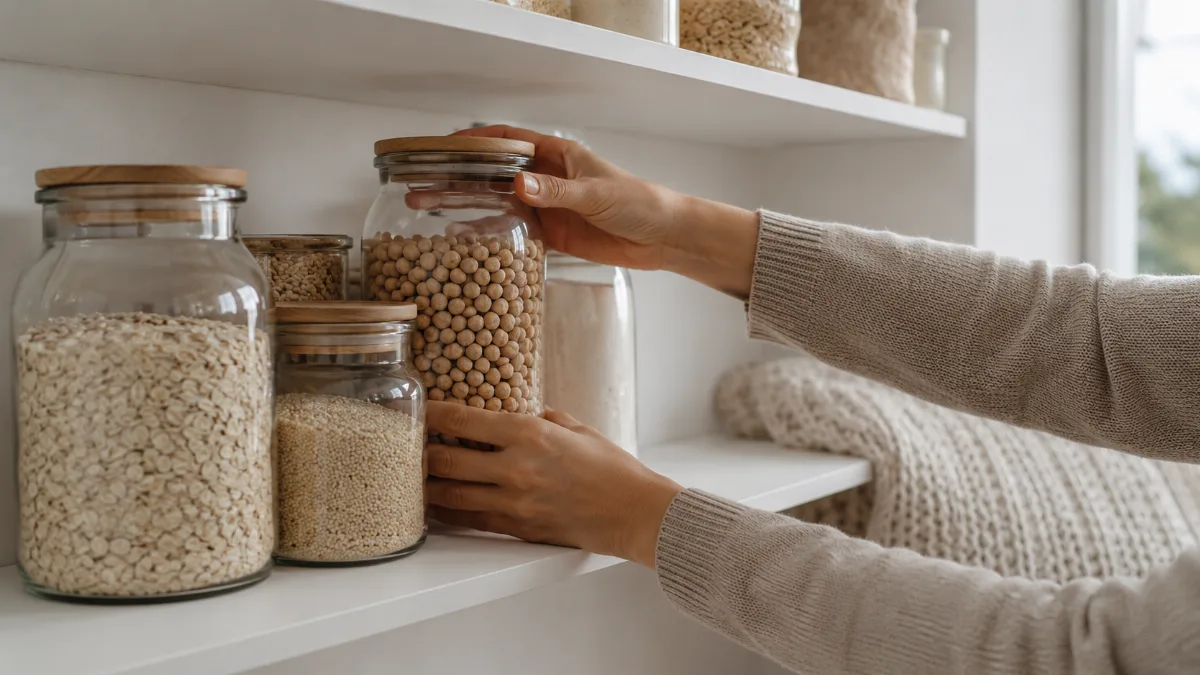
Daily prep works best on top of a simple weekly plan: five to seven dinners sketched at the start of the week, each with its prep tasks identified in advance. This doesn't need to be elaborate. A note on the fridge or a quick list on your phone, "Tuesday: chicken stir-fry, prep the vegetables Monday evening," is enough. The plan makes the daily window purposeful; without one, the 15 minutes still exist but get wasted because deciding what to prep carries its own mental load right when you have the least to spare.
A meal rotation approach makes this weekly planning faster, because the meals are already chosen from a familiar set. The only open question is which day each one lands on, not what to cook from scratch, which removes most of the decision fatigue that stalls a Sunday planning session before it starts.
Involving Children in Daily Prep
The daily model creates more natural openings for children to help than a single long Sunday session does. A child who washes vegetables for five minutes while you chop, who is shown how to measure rice into a pot, who learns to portion snacks into containers, is building competence in small, repeated increments rather than being managed through one intense stretch. The age-appropriate task approach applied to daily prep tends to produce children who can handle real food preparation on their own by the time they're ten or eleven. The five-minute daily contribution compounds across years into genuine cooking ability, which is a return the Sunday marathon rarely delivers because it's too rushed to teach through. A younger child can tear lettuce or press the blender button; an eight-year-old can measure and rinse rice; an older one can run a full component start to finish. Matching the task to the age keeps the help real rather than supervised busywork.
Scaling Up Without Depending On It
The model extends easily on days when more time genuinely exists, a slower Sunday morning, a day the kids are out, without becoming dependent on them. The system works at 15 minutes and simply benefits from extra time when it shows up. That's the core advantage over batch cooking: the floor is lower. The minimum viable version, 10 minutes of morning prep on a hectic day, still improves the dinner that follows. A system that collapses when ideal conditions aren't met is less useful than one that degrades gracefully, and this one degrades gracefully by design.
The Weekly Reset and the Long-Term Payoff

Even without a full Sunday session, a brief weekly reset of 20 to 30 minutes gives the daily prep its orientation. The reset checks what's in the fridge and pantry, sketches the week's dinners, notes what needs prepping by when, and starts one simple task, soaking beans, rinsing grains, thawing a protein. It isn't batch cooking; it's the coordination that keeps the daily windows adding up to a coherent week rather than a string of disconnected tasks. The daily prep handles execution; the reset handles the plan.
Held consistently over months, the habit produces a household that eats better without spending more time actively cooking. No single 15-minute session is dramatic on its own. Across 52 weeks it adds up to roughly 60 hours of preparation folded into moments that were already occupied, and it shows up on every weeknight dinner: more varied, less expensive, less reliant on delivery, and noticeably less stressful to get on the table on the busiest nights.
What 15 minutes buys:
| Number | Meaning | |
|---|---|---|
| 45 → 25 minutes | tonight's dinner, because chopping happened yesterday | |
| The content | components, not meals: cooked grain, washed greens, cut vegetables | |
| Finding the window | a week or two of honest observation | different for every household |

Comments
No comments yet.