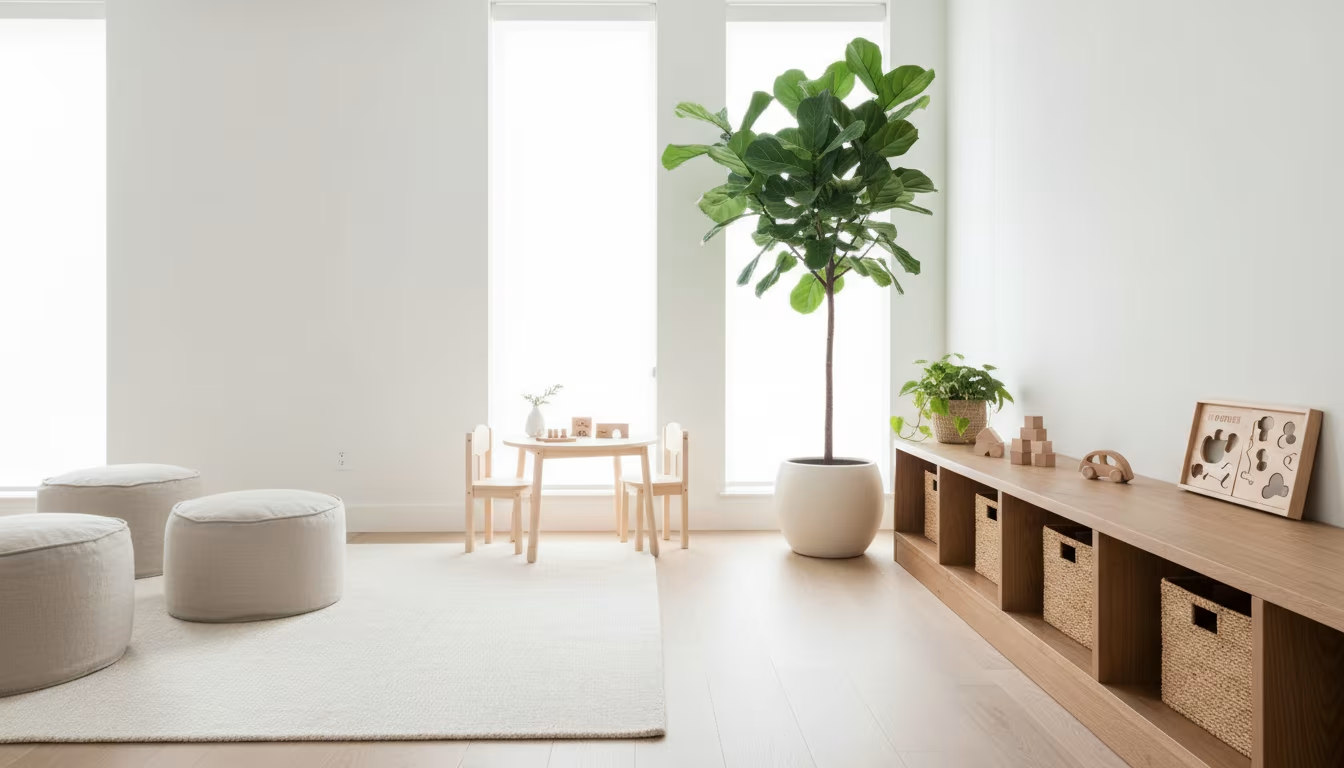

The Impact of a Minimalist Bedroom on a Child’s Sleep Quality
Okay, raise your hand if your kid’s room looks like a toy store exploded, then a laundry bomb went off, and then maybe a craft project decided to take over the whole damn floor. My hand is definitely up. For years, my son’s room was a wild jungle of plastic animals, LEGO bricks, and half-eaten snacks that I swear materialized out of thin air.
Bedtime was a battlefield. Every night was a struggle, not just to get him into bed, but to get him to actually settle down. I blamed sugar, screen time, the phase he was in, the phase I was in, everything but the actual environment he was trying to sleep in. Turns out, his messy room was a huge part of the problem.
We’re gonna talk about how a minimalist kid's bedroom isn't just about looking tidy for Instagram. It's about calm. It's about less chaos for their little brains, which, let's be real, are already working overtime.
I’ll share what worked for us, some tough truths, and how you can make a few basic changes to hopefully get everyone a little more sleep. Because, damn, we all need more sleep.
Why This Actually Matters
You know that feeling when your house is super messy, and you just feel… twitchy? Like you can't quite relax, even if you’re just sitting on the couch? Kids feel that too, but they can't always articulate it.
Their bedrooms are supposed to be their sanctuaries, right? A place for rest, comfort, and peace. If it’s overflowing with stuff, it’s hard for their minds to wind down and switch off for sleep.
For my daughter, Lily, her room used to be packed. We had every princess toy, every fluffy stuffed animal, and a million tiny accessories. She’d spend twenty minutes before bed, trying to find her favorite blanket, or getting distracted by a toy she hadn't seen in a while, totally derailing our calm bedtime routine.
The real benefit of a minimalist bedroom isn’t just about having less to trip over. It’s about creating an environment that whispers, "Hey, calm down. It's time to rest." That translates to easier bedtimes, fewer middle-of-the-night wake-ups, and generally happier mornings for everyone. And seriously, who doesn't want happier mornings?
The Bedroom Overload: More Than Just Mess
Let's be honest about what a typical kid's room looks like these days. It’s often a microcosm of our consumer culture. Every birthday, every holiday, every "just because" brings more stuff.
We accumulate so much. Brightly colored plastic, towering piles of books (many unread), craft supplies exploding from every drawer, clothes they’ve outgrown still taking up space. It's not just clutter; it's visual noise, and it’s loud.
Think about a toddler trying to choose a toy from a bin overflowing with twenty different things. Or a five-year-old trying to find their favorite pajamas under a mountain of clean clothes that didn't make it to the drawer. It’s exhausting just thinking about it.
This constant visual input and the pressure of choice can be incredibly overwhelming for little brains. They're still learning how to process the world, and we're throwing a sensory overload party in their supposed "quiet space."
The Brain's Bedtime Battle
You know that feeling when you're trying to work, but your desk is a mess, and you keep getting distracted by random papers or emails? Your child's brain experiences something similar when they're trying to wind down in a cluttered room.
Even if they're not actively playing with the toys, their brains are still processing the presence of all that stuff. It’s like their mind is constantly on alert, scanning for potential play opportunities or remembering that unfinished LEGO castle.
This overstimulation makes it incredibly difficult for their little nervous systems to shift into "rest and digest" mode. Instead of getting sleepy, their minds are buzzing, recalling adventures or planning new ones.
-
Overstimulation: Too many colors, shapes, and potential play items keep their brains engaged and excited. It’s hard to switch off when there's so much to look at, even in the dark.
-
Decision Fatigue: Even subconsciously, seeing so many options for play can create a sense of choice overload. Their brain might still be processing which toy they could play with, instead of focusing on sleep.
-
Disrupted Routines: If the room is messy, it's harder to stick to a consistent bedtime routine. You might spend precious wind-down time searching for a toothbrush, the right book, or their sleep buddy, adding stress instead of calm.
Clearing the Clutter, Welcoming the Zzz's
Okay, so we know why this matters. Now for the "how." I’m not gonna lie, the thought of tackling a kid’s room can feel like a mountain to climb. Trust me, I’ve been there, staring at a pile of discarded art projects thinking, "How did it get this bad?"
But here’s the thing: you don’t have to do it all in one day. Or even one weekend. Small steps, done consistently, are where the magic happens. And trust me, the payoff in terms of peaceful bedtimes is so, so worth it.
Grab a garbage bag, a donation bin, and maybe a glass of wine for after the kids are in bed. Let's get started, shall we?
Step 1: the Grand Tour (and the Honest Assessment)
First things first, take a good, hard look at the room. And I mean really look. What feels overwhelming? What’s taking up too much space? What just makes you sigh when you see it?
I find it helpful to take pictures. It’s amazing how a photo can really highlight the chaos in a way your tired eyes might gloss over day-to-day. You don't have to show them to anyone, just use them for your own motivation.
Don't jump in and start pulling everything out yet. Just observe. Identify the biggest pain points. Is it the overflowing toy box? The dresser drawers that won't close? The endless parade of stuffed animals?
Step 2: Start Small, Start with Obvious Trash
Before you get into the hard decisions, let’s go for some easy wins. This builds momentum and makes the room feel a little lighter right away.
Grab a trash bag and walk through the room. Look for broken toys, dried-up markers, torn books, random wrappers, socks with no match, and anything else that is clearly garbage. Don't think too hard; just toss it.
This step usually takes less than 15 minutes, but it can make a surprising difference. You’ll feel a little boost, and the room will immediately look a tiny bit better. It's a perfect way to ease into the decluttering process without feeling overwhelmed.
Step 3: the Toy Triage – Keep, Donate, Store
Now for the big one: toys. This is where most of the visual noise usually lives. You need three bins: Keep, Donate/Sell, and Store (for toy rotation).
Go through every single toy. Yes, every tiny block and plastic animal. Ask yourself: Is it broken? Is it outgrown? Do they actually play with it, or does it just sit there?
For younger kids, it’s often easier to do this when they’re not around, to avoid meltdowns. For older kids, you can involve them by giving them clear choices, like "You can keep five of these cars, which are your favorites?"
My son had this giant train set that he played with maybe once a year, but it took up half his floor. We put it in storage, and suddenly he had room to spread out with his LEGOs. He didn't even notice the train was gone until months later, and then only casually. We now do toy rotation with the "Store" bin.
Step 4: Clothing Chaos – Less is More (really)
Kids grow so fast, and yet their closets seem to perpetually overflow. Go through all their clothes: drawers, closet, under the bed. Pull everything out.
Sort into piles: too small (donate/sell), stained/damaged (trash), wrong season (store), keep. Be ruthless. Do they really need ten pairs of leggings? My daughter once had 47 onesies. She was three. Half still had tags. It was insane.
Kids do not need a massive wardrobe. A few versatile outfits that fit well and are comfortable are much better than a closet packed with things they never wear. Less clothing means less laundry, less decision-making in the morning, and fewer arguments.
Consider a capsule wardrobe for your kids – it might sound fancy, but it just means having a limited, coordinated set of clothes. It saves so much mental energy for everyone.
Step 5: Books, Art, and Sentimental Items
This category can be tricky because these items often hold emotional weight. You don't have to get rid of everything, but you can certainly curate.
For books: Keep favorites, rotate others to a living room shelf or donate ones they've outgrown. My kids have about 10-15 books in their room at any given time, and we swap them out regularly. It keeps things fresh without overwhelming the space.
For art: Keep a special portfolio or box for masterpieces, and display only a few pieces at a time. Rotate them out every few weeks. You don't need every scribble from preschool adorning every wall. Trust me, they won't remember.
For sentimental items (special gifts, family heirlooms): Designate a small, special box or shelf. These aren't playthings; they're treasures. Limiting their display ensures they remain special and don't contribute to general clutter.
Step 6: Furniture and Functionality
Look at the furniture in the room. Does every piece serve a clear purpose? Is there anything that could be removed to create more open space?
For example, if you have a huge toy chest that just becomes a dumping ground, maybe swap it for a smaller, lidded basket for just a few special items. Or, if there's a desk that's always covered in clutter and never used for homework, consider if it's really needed.
The goal is to make the bed the undisputed star of the room. Everything else should support rest and quiet play, not distract from it. We took out a secondary bookshelf that was always packed with random junk, and suddenly the room felt so much bigger and calmer.
Ensure the furniture that is there is functional and safe. A simple dresser, a good bed, and maybe a small nightstand. That’s really all a child needs in their sleep space.
Step 7: Creating a Soothing Sleep Zone
Once you’ve tackled the clutter, it’s time to focus on making the space actively promote sleep. Think about what makes your bedroom feel relaxing and apply those principles.
Start with the bed itself. Is the bedding comfortable? Are there too many pillows or stuffed animals? Keep it simple and inviting. Dark curtains or blinds are non-negotiable for blocking out light, especially in the summer months.
Consider the lighting. A dim nightlight is fine, but avoid bright overhead lights or flashing toys before bed. A warm, soft lamp for reading is ideal. Remove any screens – tablets, TVs, video games – from the bedroom entirely. These are known sleep disruptors.
The overall color scheme can also play a role. Calming colors like soft blues, greens, or neutrals can help create a more serene atmosphere compared to vibrant, stimulating hues. It's about creating a cave-like, cozy space where sleep feels natural and easy.
Step 8: the Power of Open Space
This is often the hardest part for people. After you’ve decluttered, you might look at the empty corners or the clear floor space and think, "It looks too empty! I need to put something there." Resist that urge.
Empty space is a luxury. It allows the eyes and the mind to rest. It gives your child room to actually move and play without tripping over things. It makes the room feel breathable, expansive, and incredibly calm.
I remember feeling a bit uneasy after decluttering my son’s room for the first time. It felt sparse. But then I saw him actually sit on the floor and spread out his blocks, building something elaborate without having to navigate a maze of other toys. He was playing more intently, not less. And later, he settled into bed much quicker.
Embrace the emptiness. It’s not a void to be filled; it’s a canvas for peace and imagination. It's a visual sigh of relief for everyone.
Keeping It Minimal: Making It Stick & Common Pitfalls
Okay, so you've done the work. You’ve tackled the room, and it feels lighter, calmer. Awesome! But here’s the thing: clutter has a sneaky way of creeping back in. Maintaining a minimalist space is an ongoing practice, not a one-time event.
I learned this the hard way. I'd declutter, feel amazing, and then three months later, it was back to square one. It felt so frustrating. But then I realized I was missing a few crucial steps, and I was making some pretty common mistakes.
It's not about being perfect, because that’s just not realistic with kids. It's about consistent, small efforts and understanding where the pitfalls usually lie.
Here are some things that often trip people up:
-
Bringing in new stuff too quickly: The "one in, one out" rule is your best friend. If a new toy comes in, an old one needs to go. This applies to clothes too. It prevents accumulation before it even starts.
-
Not involving kids (when age-appropriate): If your kids are old enough to understand, involve them in the decluttering and the daily tidy-up. They'll learn responsibility and respect for their space. My five-year-old now knows where everything goes, and he's surprisingly good at putting things away.
-
Expecting perfection: Your kid’s room is not going to look like a magazine spread 24/7. Kids play! They make messes! The goal isn't sterile perfection; it's a manageable level of clutter that can be tidied quickly. Give yourself grace.
-
Forgetting maintenance: Decluttering isn't a one-and-done deal. A quick 5-10 minute tidy before bed each night, and maybe a deeper declutter session once a quarter, will prevent the overwhelm from returning. It’s like brushing your teeth – gotta do it regularly.
-
Not having designated homes: If every item doesn’t have a specific place to live, it will just end up on the floor or on a random surface. Simple bins, clear labels, and easy-to-reach shelves are game-changers.
The goal isn't an empty room; it's a calm room.
Frequently Asked Questions
The Bottom Line
Look, I'm not saying a minimalist bedroom is a magic wand that will instantly grant you eight hours of uninterrupted sleep every night. But what I am saying is that a calmer, less cluttered environment makes a huge difference in how your child winds down, settles, and stays asleep.
You don't need to be a perfect minimalist. You just need to be willing to take a critical look at the "stuff" and prioritize peace over possessions in your child's sleep space. Start small. Take one step. You might be surprised by how much lighter everyone in your house feels. ❤️