

The stress of hosting a dinner party is almost never about the guests. It comes from the gap between the menu you imagined and what your kitchen, your equipment, and your available hours can actually deliver on a Saturday afternoon. Close that gap and most of the anxiety disappears — not because you tried harder, but because you asked less of the evening.
Elaborate menus with several dishes cooking at once, a recipe attempted for the first time while guests are in the room, a three-course structure where each component has to be ready in sequence: those are the conditions that manufacture hosting stress. The guests require none of it. People sitting at a table with others they like are mostly there for the company, not for a technically impressive plate. The single most useful reframe is that a dinner party is a dinner with guests, not a restaurant service. The standard is homemade and generous, not intricate.
A Menu Built in Three Parts
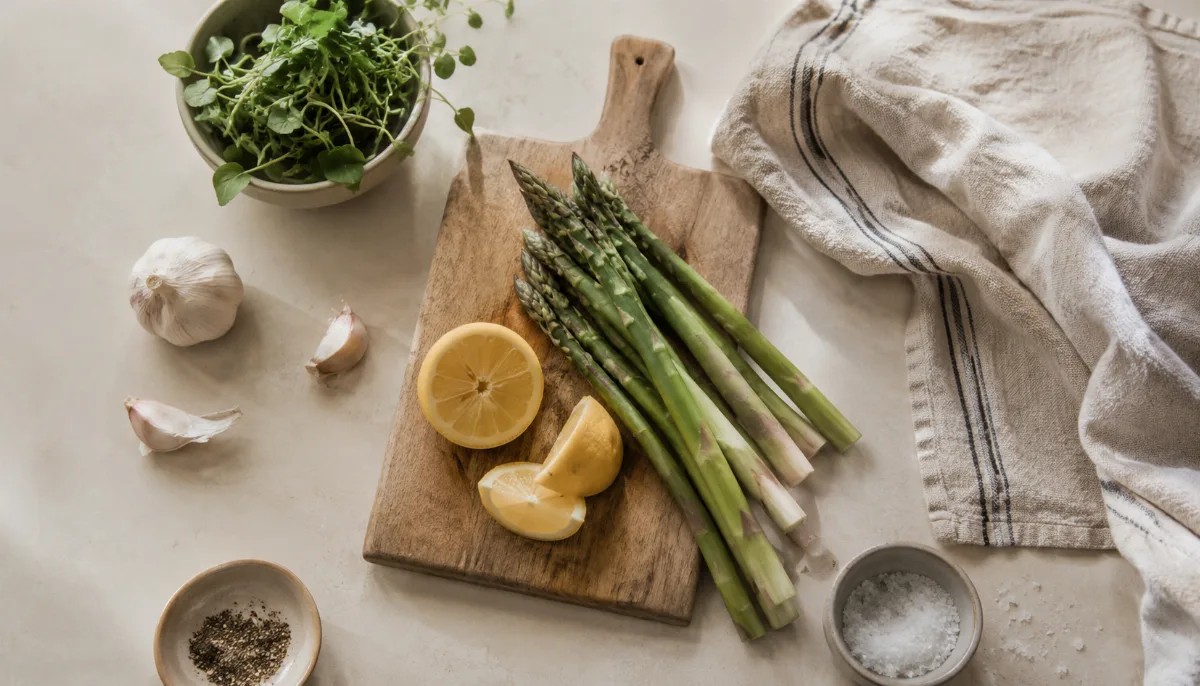
A low-stress menu has exactly three components: something to graze on as people arrive, one main dish that can be mostly prepared ahead, and a dessert that needs no work the day of. That is the entire architecture, and it holds for four guests or ten.
The arrival food should require zero assembly — bread and a good olive oil, a board of cheese and crackers, olives, a bowl of roasted nuts. Something people can pick at while the last of the cooking finishes and everyone settles in. It takes ten minutes to set out and it removes the impossible task of timing the meal to the exact moment the doorbell rings. The main dish is the real decision point, and the dessert, honestly, can come from a good bakery without anyone thinking less of the evening.
Choose a Main That Cooks Itself
The main should be something that spends its time in the oven unattended — a roast chicken, a braise, a big tray of vegetables and sausage, a pot of chili or curry that only improves sitting on low heat. Anything in that family lets the host stand in the living room with a drink instead of chained to the stove. A roast chicken with herbs and a sheet of potatoes is a genuinely good dinner-party main, and it asks for about fifteen minutes of active work before it goes in the oven for an hour. This lines up with Harvard's Healthy Eating Plate.
The dishes to avoid are the ones that demand constant attention or must hit the table the instant they finish: risotto that needs twenty minutes of stirring, anything fried, a fish fillet with a narrow window between perfect and overdone. They are not impossible, but they cost you the one thing guests actually notice — your presence at the table. A tense host who nailed the sear is remembered less fondly than a relaxed one who served a straightforward roast.
Cook Something You've Already Made
A dinner party is the wrong night to try a recipe for the first time. A dish you have made twice before — whose timing you know, whose failure points you have already hit and learned — is categorically less stressful than one you are cooking blind with guests waiting. The urge to impress with something ambitious is understandable and it backfires reliably. An uneven version of a complicated new dish generates more stress and a worse dinner than a confident version of something plain. The guests will never know what they missed; they only experience what is actually on the table, so make it the thing you can execute without thinking.
This is where having two or three trusted party mains in your back pocket pays off. A roast chicken, a big pot of chili or a braise, and a baked pasta will each feed a crowd, forgive a distracted cook, and hold at temperature if guests run late. Rotating among a small set you have already proven means you are never improvising in front of an audience. If a guest becomes a regular, repeating a main they loved is not a failure of imagination — it is the reason they keep coming back, and it is exactly how a household builds a reputation for feeding people well.
A Make-Ahead Timeline That Keeps You in the Room
Most hosting panic is really a timing failure — too much crammed into the final ninety minutes. Spreading the work backward across the day fixes it. The point of the schedule below is not efficiency for its own sake; it is to arrive at the moment guests knock with almost nothing left to do.
| When | Task | Why it helps |
|---|---|---|
| Day before | Make dessert; shop; ask about restrictions | Removes the most time-consuming item from the day entirely |
| Afternoon of | Prep the main; set the table; chill drinks | Front-loads the work while you still have calm and counter space |
| 1 hour before | Main goes in the oven unattended | Frees you for the arrival window instead of active cooking |
| 15 minutes before | Set out arrival food and glasses | Grazing food is ready the moment the first guest walks in |
| On arrival | Pour drinks, sit down | Nothing left that needs you at the stove during the first half hour |
Followed loosely, that sequence means the only thing happening while guests arrive is the oven doing its job on its own. No timeline survives contact with a real evening perfectly, but having one converts a frantic final hour into a series of small, already-finished steps.
The Table and the Setting
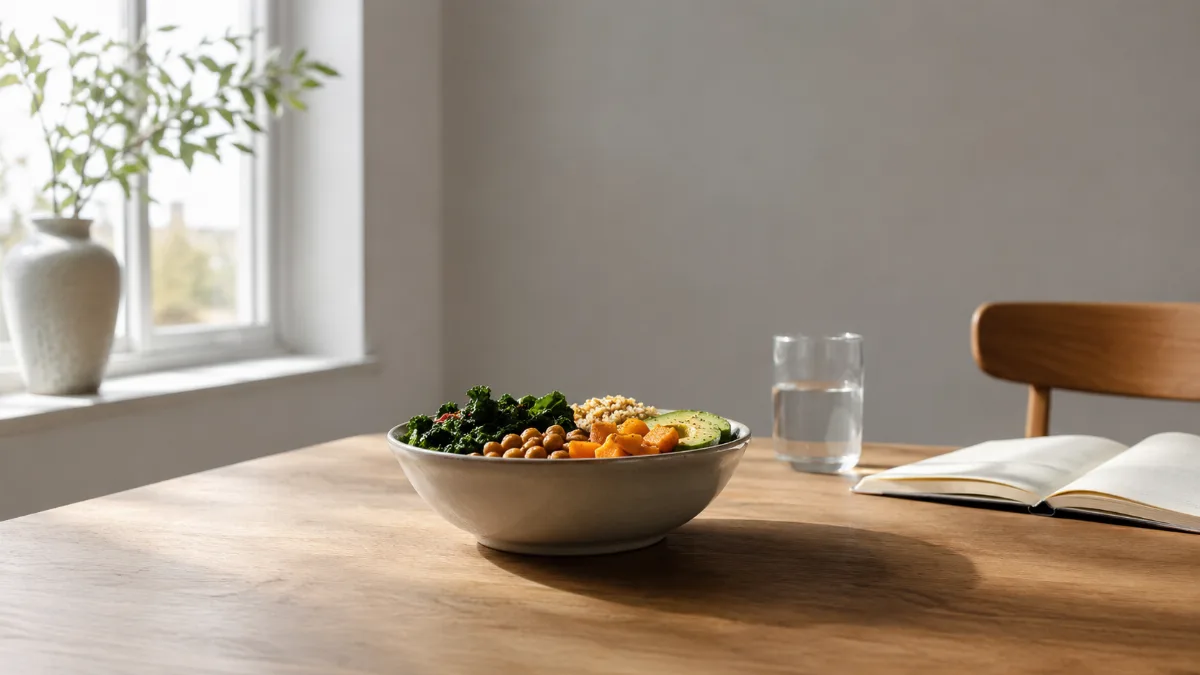
The table does not need to look like a magazine spread to make a good dinner. A clean surface, candles if you have them, cloth napkins if they are around, a simple arrangement of whatever is in the kitchen — that is enough. What actually makes a table feel good is the same thing that makes the food feel good: generosity without performance. Large serving dishes rather than individually plated portions. More food than strictly necessary. Good bread within reach. Wine, or whatever the household drinks, poured freely. The warmth comes from abundance, not from styling.
Serving family-style, with the dishes in the middle of the table, does quiet work beyond saving effort. It turns the meal into something guests participate in — passing, reaching, offering seconds — rather than a service performed for them. It also spares you the fussy, cooling task of plating ten portions in the kitchen while everyone waits. Set the food down, let people help themselves, and the table starts feeling like a shared meal rather than a presentation the moment the first dish moves from one pair of hands to the next.
Handling Dietary Restrictions Without a Second Menu
Asking guests about restrictions ahead of time is considerate and it removes any surprise on the night. The response almost never needs to be a parallel menu. Usually it just means designing the main to be naturally inclusive — roasted vegetables and grains most people can eat, with a protein served on the side rather than cooked into everything. When a restriction is significant, a short conversation with that guest in advance about what will work beats guessing. Most people who navigate dietary limits do it constantly and have no expectation that you will rebuild the meal around them; they appreciate the acknowledgment and quietly manage the rest.
Drinks and the First Thirty Minutes
The twenty to thirty minutes between guests arriving and dinner being served sets the tone for the whole evening. A host who has something cold ready and is not vanishing into the kitchen to babysit a first course creates the conditions for people to relax and conversation to start. Keep the drinks simple — wine, sparkling water, one non-alcoholic option mixed in advance. Bottles or a pitcher on the table, glasses within reach, the arrival food already out: that setup lets you be genuinely present for the opening half hour instead of running a hospitality service from behind a counter. Those first thirty minutes, more than the food, are what guests remember as the feel of the night.
Letting Go of the Multi-Course Structure
The starter-main-dessert format is a real hospitality tradition, and it also generates a real amount of work. For most dinners among friends, a generous single course with good bread and a no-plating dessert produces an equally warm evening with roughly half the effort. Guests are not restaurant customers expecting a designed tasting progression. They are people who want to eat well and spend time with people they like. A beautifully roasted chicken and a big salad, served family-style at a table where the conversation is already going, is a better dinner party than a technically ambitious multi-course meal cooked by a host who spent the night in the kitchen.
The Standard Actually Worth Holding
The dinner remembered fondly is almost always remembered for how the host made people feel, not for what was served. The evening where the host was relaxed, present, and visibly glad to have everyone there is the one guests bring up later. The elaborate meal where the host disappeared for most of the night and came back frazzled rarely gets called a success, however good the food was. Simplifying the menu is simply the mechanism that keeps you in the room — the food is downstream of that, not the other way around.
The same principle that eases a dinner party runs everyday cooking too: limit the decision space and the work shrinks with it. If you want that idea applied to ordinary weeknights rather than guests, assigning each night a loose theme does the same trick for the family table. For the next time you host, pick one main you already trust, make the dessert the day before, set the table in the afternoon, and let the oven carry the evening while you carry the conversation.
Comments
No comments yet.