
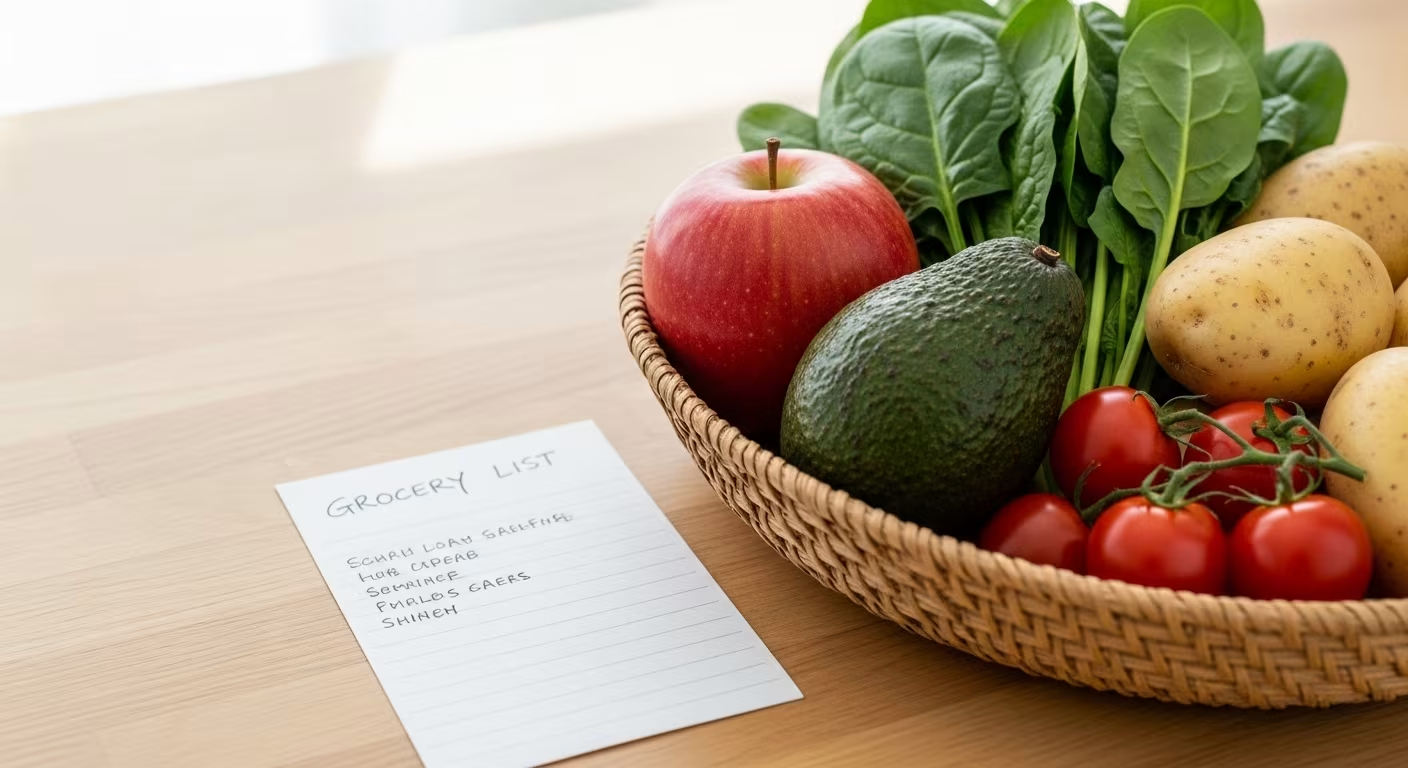

Most grocery trips bring home more food than the household eats. The gap shows up later, in the produce drawer: the half-used bunch of cilantro, the spinach gone slimy, the second bell pepper that was never part of any real plan. The U.S. Environmental Protection Agency's guidance on preventing wasted food at home notes that a large share of what households buy is thrown out rather than eaten, and the cause is rarely appetite. It is a shopping list built to cover every meal that might happen, stocked for recipes that never get cooked.
A minimalist grocery list is built around what will actually be cooked this week, not what could theoretically be cooked if energy, time, and inspiration all lined up on a Wednesday night. That single shift — planning from real meals instead of vague possibility — does more to cut the bill and the waste than any coupon strategy.
Build the list from meals, not from a general sense of need
The usual list starts from "what are we low on" and grows by association: pasta sounds good, so does chicken, and those peppers look nice. The minimalist version starts from three or four specific dinners and works backward to the exact ingredients each one needs.
Three or four planned dinners is enough for a week. A household cooking five or six nights still wants room for one night of leftovers, one takeout or restaurant meal, and one improvised plate from pantry staples. Planning all seven dinners is both unrealistic and the fastest way to overbuy.
Where the meals can share ingredients, they should. One bunch of cilantro spans the Tuesday tacos and the Thursday curry instead of being bought twice and composted once. A single can of coconut milk carries both the curry and a weekend soup. One pot of rice or farro becomes the base for two or three dinners. That overlap is what keeps a short list from ever feeling restrictive.
Check the pantry before you write a single item
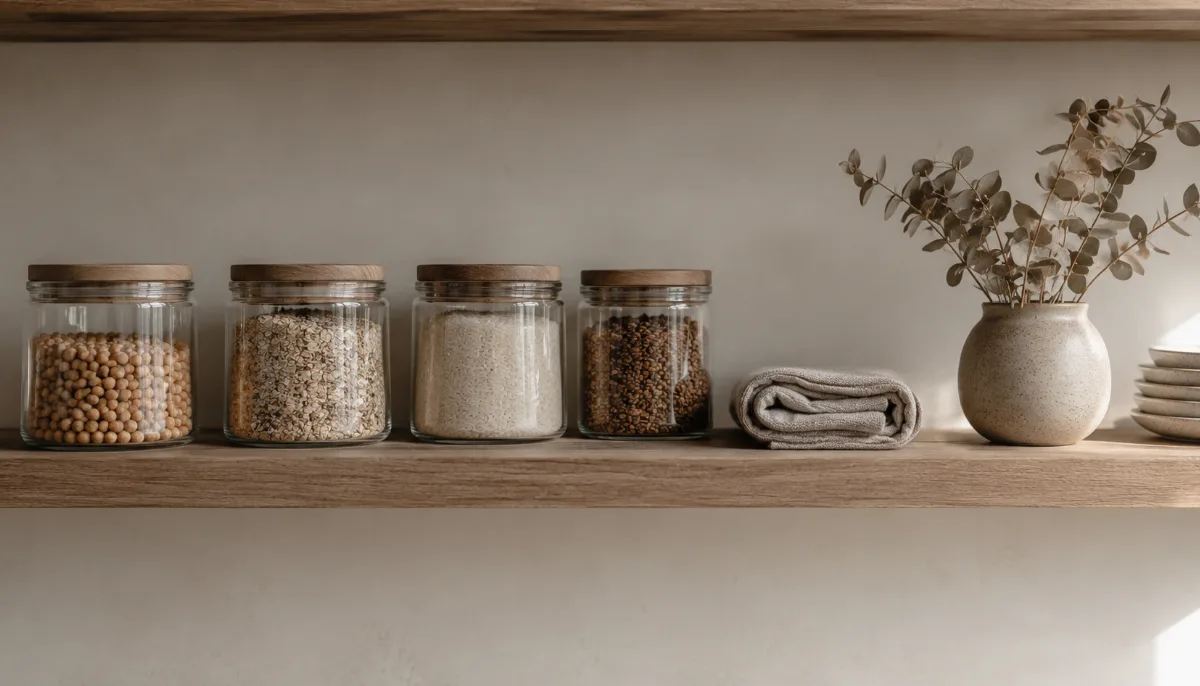
The biggest source of overbuying is simply not knowing what is already in the house. A two-minute scan of the pantry, fridge, and freezer before the list gets written surfaces the box of pasta that does not need replacing, the three cans of tomatoes already on the shelf, the chicken thighs in the freezer that should be this week's protein.
Skip that step and the pattern is predictable: a fourth jar of cumin, a second bag of rice opened before the first is gone, a tub of yogurt bought while an unopened one sits behind the milk. The audit turns food already paid for into this week's meals and keeps duplicates out of the cart.
A twelve-item list gets followed; a thirty-item list gets improvised
A list with twenty-seven scattered items invites substitutions, forgotten items, and "while I'm here" additions. A list of roughly twelve to fifteen items — the specific ingredients for the planned meals plus the staples genuinely running low — can be walked through the store without decision fatigue.
That fatigue is where the budget leaks. Every unplanned decision in the aisle is an opening for a $6 impulse snack, a convenience item, or a second version of something already at home. A short, specific list shrinks the number of in-store decisions, and the cart that comes out matches the meals that went in.

Favor versatile staples over single-recipe ingredients
A cart built on versatile core ingredients — eggs, onions, garlic, olive oil, dried grains, canned beans, one or two rotating proteins, and whatever produce is in season — produces far more meals per dollar than one built on specialty items. The jar of a specific paste bought for one recipe and used once is the most expensive thing in the kitchen per meal it produces.
This does not mean eating the same thing every night. The staples stay constant; the produce and protein rotate with the season and with appetite. A specialty ingredient earns a spot on the list only when it will show up in more than one meal.

Small habits that keep the list short
Two systems keep this from drifting. The first is a running list — a shared note on a phone or a pad on the fridge — where an item gets added the moment it runs out, not reconstructed from memory on shopping day. The second is a fixed shopping day, with the list built the night before, which cuts the mid-week "quick trips" that always end with three unplanned items.
Buying is also a place to resist bulk out of habit. Warehouse-size quantities only pay off for things used every single week without fail: rice, canned beans, olive oil, coffee. For everything used sometimes or in variable amounts, regular quantities waste less and keep the pantry legible at a glance. A shelf packed with six-month-old backstock is harder to cook from, not easier.

Where does the saved money go? A household that shifts from a sprawling list to a planned one usually watches the weekly total drop, mostly from waste that no longer happens and impulse buys that never enter the cart. Even $20 or $30 a week redirected to savings adds up over a year. The point of buying less is not deprivation — the meals are better, because the food gets cooked while it is fresh instead of discovered, too late, at the back of the drawer.
The list-versus-aisle math:
| Fact | Number |
|---|---|
| Each unplanned aisle decision | an opening for a $6 impulse |
| Weekly redirect | even $20–$30 to savings compounds over a year |

Comments
No comments yet.