


The hard part of wardrobe decluttering is that almost everything looks potentially useful while it hangs in the closet. The blue shirt might get worn next summer. The dress could suit some future occasion. The trousers fit well enough. Without concrete proof of actual use, "might wear it" feels reasonable for nearly every item, and the closet stays full of clothes that get shoved aside each morning during the search for what will actually go on. The reverse hanger trick fixes this by turning a vague feeling into visible, physical evidence of what you really wear.
How the Reverse Hanger Method Works
The method costs nothing and takes a few minutes to set up. Turn every hanger on the rod backward, so the hook faces out toward you instead of away. From that point on, whenever you wear something and return it to the closet, hang it back the normal way. After three to six months, every item still on a backward-facing hanger is something you have not worn in that entire stretch.
A backward hanger is not automatic grounds for discarding the item. Seasonal pieces, special-occasion clothing, and things set aside for a specific use will show backward hangers without being unworn by neglect. What the backward hanger provides is a reliable prompt for an honest question: has this gone unworn because of its season or occasion, or because it simply is not part of how you actually dress? For most closets, the share of backward hangers after six months is larger than expected. Clothes that felt like plausible parts of the wardrobe turn out, once the evidence is in front of you, to have gone untouched across a whole season or more.
The Morning Rack Variation
A faster variation on the same idea is the morning rack: a simple clothing rack kept near the closet where every worn item goes after wearing, instead of straight back onto the rod. At the end of the week, whatever is on the rack is your genuine worn wardrobe; whatever is still in the closet was available but never chosen. Stretch it to a month and the rack holds your actual working wardrobe while the closet holds the theoretical one. The gap between the two is the starting point for every decluttering decision, and it appears in weeks rather than the half-year the hanger method needs.
The One-Season Rule
The one-season rule is blunter: any item not worn within its appropriate season becomes a candidate for removal. Assess all the winter clothing at the end of winter and all the summer clothing at the end of summer. An item that spent an entire season hanging available and still went unworn has produced the concrete evidence that "might wear it" never turned into wearing it.
There are legitimate exceptions, mainly clothes tied to occasions that simply didn't come up, a formal garment, a specialized outdoor piece for an activity done every other year. Those are worth keeping, but with a specific note attached: worn at this type of event, next relevant occasion roughly this far out. An exception backed by a concrete rationale is a different thing from a general, open-ended "might wear it" hope, and keeping the two categories distinct is what keeps the rule useful.
The one-season rule also pairs well with the reverse hanger method rather than competing with it. The hanger trick supplies the raw evidence across the whole year; the seasonal check is the moment you sit down and act on it. Running the assessment at the two natural turning points, packing away winter and packing away summer, folds the decision into a task you were already doing, so the sort never becomes a separate project you have to schedule and dread. University of Georgia Extension is a good place to verify the details.
Confronting the Fit Issue
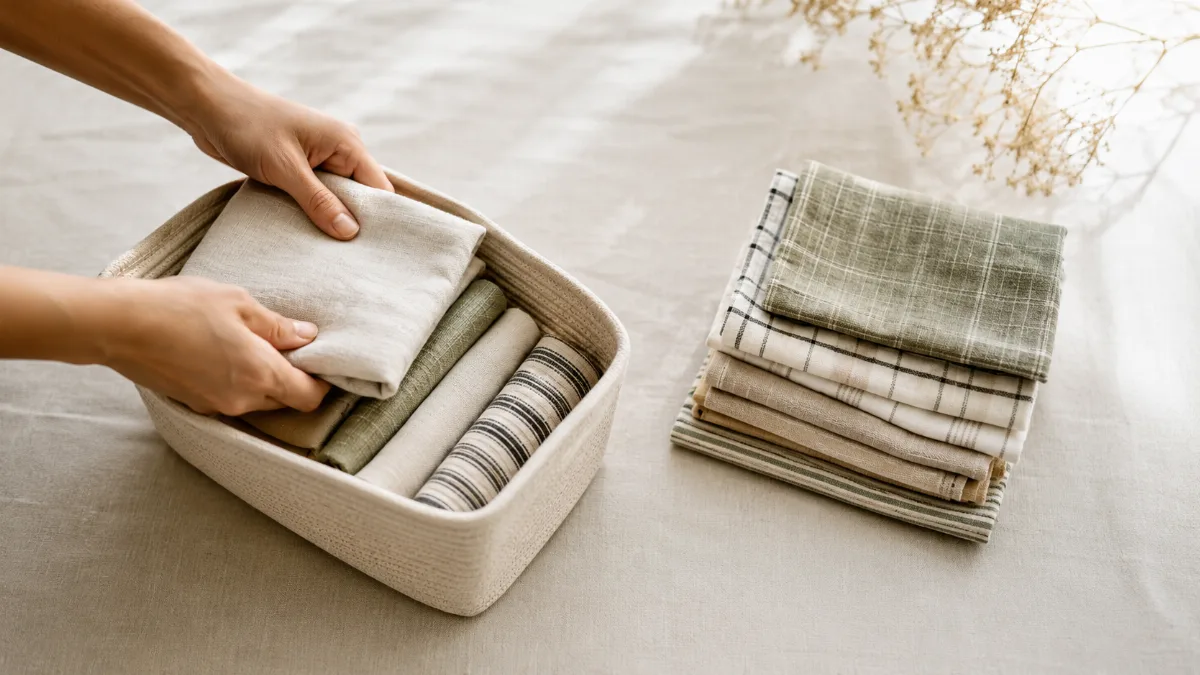
A large share of unworn clothing is clothing that doesn't currently fit, kept in case a body change brings it back into rotation. This category needs honesty more than optimization, because clothing waiting for a different body size is not part of the current wardrobe; it is storage taking up prime closet space. The honest test is straightforward: if the item would be a first choice to wear the moment it fit again, keeping it for a defined period is understandable. If it wouldn't be especially wanted even at the right size, then the fit issue is quietly providing cover for a decision that should really be made on preference. Moving fit-hold items into a labeled box outside the daily closet keeps them from crowding the clothes you wear now, and setting a review date on the box, six months or a year out, prevents it from quietly becoming permanent storage under a different name.
Handling Gifts and Sentimental Clothing
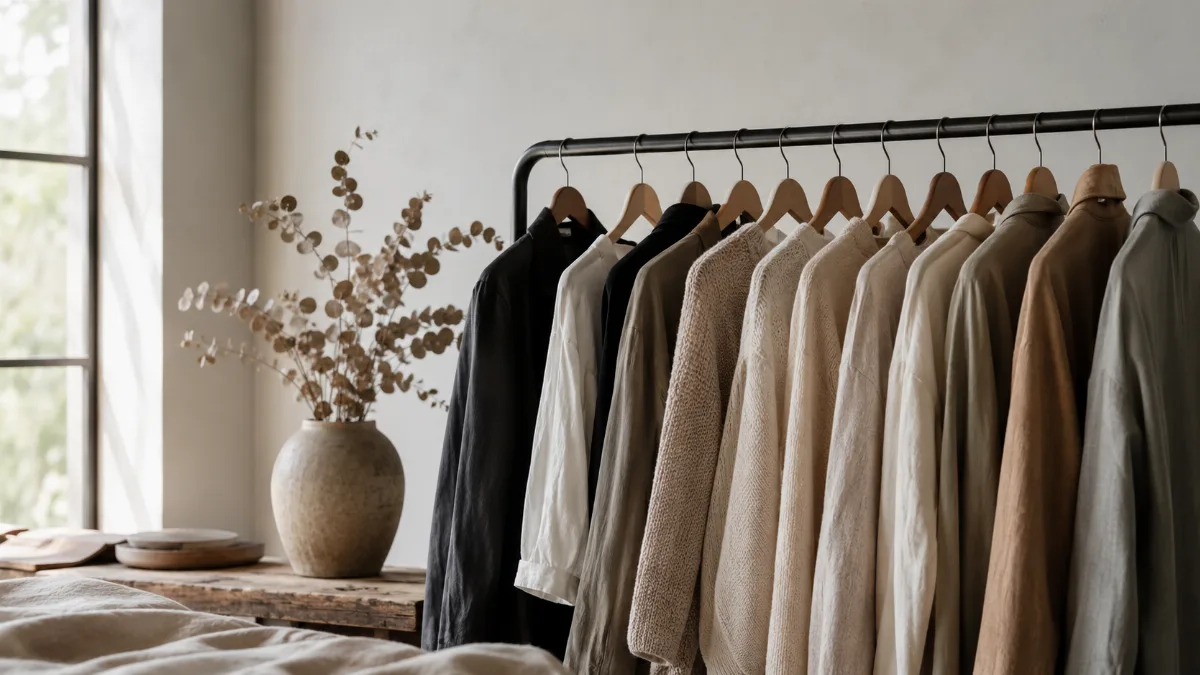
Gifted clothing and clothing carrying sentimental weight are what turn a practical sort into an emotional one. The gift sweater that isn't part of how you dress, the band shirt from a concert twenty years ago, the outfit tied to a particular chapter of life, none of these get evaluated on current use, and pretending otherwise usually stalls the whole project. The workable approach is to keep sentimental clothing that is genuinely looked forward to wearing, and to give the truly kept-for-meaning pieces, a child's first outfit, a parent's garment, a small dedicated box or shelf. Sentimental items belong in a defined, limited space rather than scattered through, and steadily expanding, the main working wardrobe.
Comparing the Methods
These approaches are not mutually exclusive, and they suit different situations and temperaments. Someone who wants certainty before parting with anything will prefer the slow, evidence-heavy hanger method; someone who wants a decision within a month will reach for the rack. Laying them side by side makes it easier to pick a starting point.
| Method | Time to results | Best for |
|---|---|---|
| Reverse hanger | 3-6 months | Whole closets, when you want proof before discarding |
| Morning rack | 2-4 weeks | A faster read on what you actually reach for |
| One-season rule | One season | Seasonal wardrobes assessed at season's end |
| Fit-hold box | Immediate sort | Clothes kept for a future body size |
| Sentimental shelf | Immediate sort | Gifts and keepsakes, kept but contained |
Most people end up combining two or three: the hanger trick running quietly in the background, a one-season pass at each changeover, and a fixed box for fit-hold and sentimental items so they never leak back into the daily rotation. The point of having several methods is not to run all of them at once but to reach for the one that matches the closet in front of you, a slow read when you want certainty, a fast read when you want a decision this month.
Maintaining and Updating the Wardrobe

A wardrobe pared down to what actually gets worn drifts back to excess unless one-in-one-out governs future purchases. Each new item that comes in displaces an existing one, which then gets donated rather than added as a sixth pair of jeans beside the new pair. The thirty-day waiting rule applied to clothing heads off the impulse buys that pad a closet with things it never needed; a garment still wanted after a thirty-day wait is far more likely to earn regular wear than one grabbed on the spot.
Updating a lean wardrobe means thoughtful replacement, not refilling the empty space. Replace worn-out pieces with single quality purchases rather than treating the gap as license to expand, add a new item only after naming what it replaces, and use every addition as a prompt to reassess the piece it displaces. Handled this way, the wardrobe stays roughly the same size across the years instead of ballooning through accumulated additions. The payoff is practical rather than aesthetic: getting dressed takes less time and friction when every item in the closet is a viable answer to "what should I wear," and the reverse hanger method is what supplied the evidence to get there, so the decision was made by actual behavior rather than argued about hanger by hanger.

Comments
No comments yet.