

The Equipment Myth
The fitness industry is built around equipment. Better machines, more accessories, upgraded tracking technology — the message is consistent: better gear produces better results. This message is frequently inaccurate or wildly overstated.
The human body produces force against resistance. Equipment provides organized, convenient resistance, but the body does not require machines to encounter resistance. Its own weight, the ground, and gravity provide the fundamental training stimulus. Bodyweight training uses these universal tools to develop strength, endurance, coordination, and movement quality that compares favorably with equipment-based training in most respects.
The Fundamental Movement Patterns

Bodyweight training covers the same fundamental movement patterns as equipment-based training: push, pull, squat, hinge, carry, and core stabilization. The specific exercises differ, but the patterns and their training effects are equivalent.
Pushing movements — push-up variations, dip variations — develop horizontal and vertical push strength. Without a pulling apparatus, pulling movements require creativity: a low bar for rows, rings, or a tree branch for pull-up variations. Squat and lunge variations develop lower body strength without additional load. Hip hinge movements — single-leg deadlift variations, glute bridge progressions — train the posterior chain effectively with bodyweight alone.
The implication is that bodyweight training, practiced seriously, develops the same physical qualities as equipment-based training for most people in most training phases. Equipment becomes advantageous primarily for advanced strength development that requires loads substantially above bodyweight.
Progression Without Added Weight

The most common question about bodyweight training is how to progress when the load cannot be increased the way it can with barbells or dumbbells. Bodyweight training progresses through several mechanisms: range of motion, mechanical advantage, tempo, stability demands, and movement complexity.
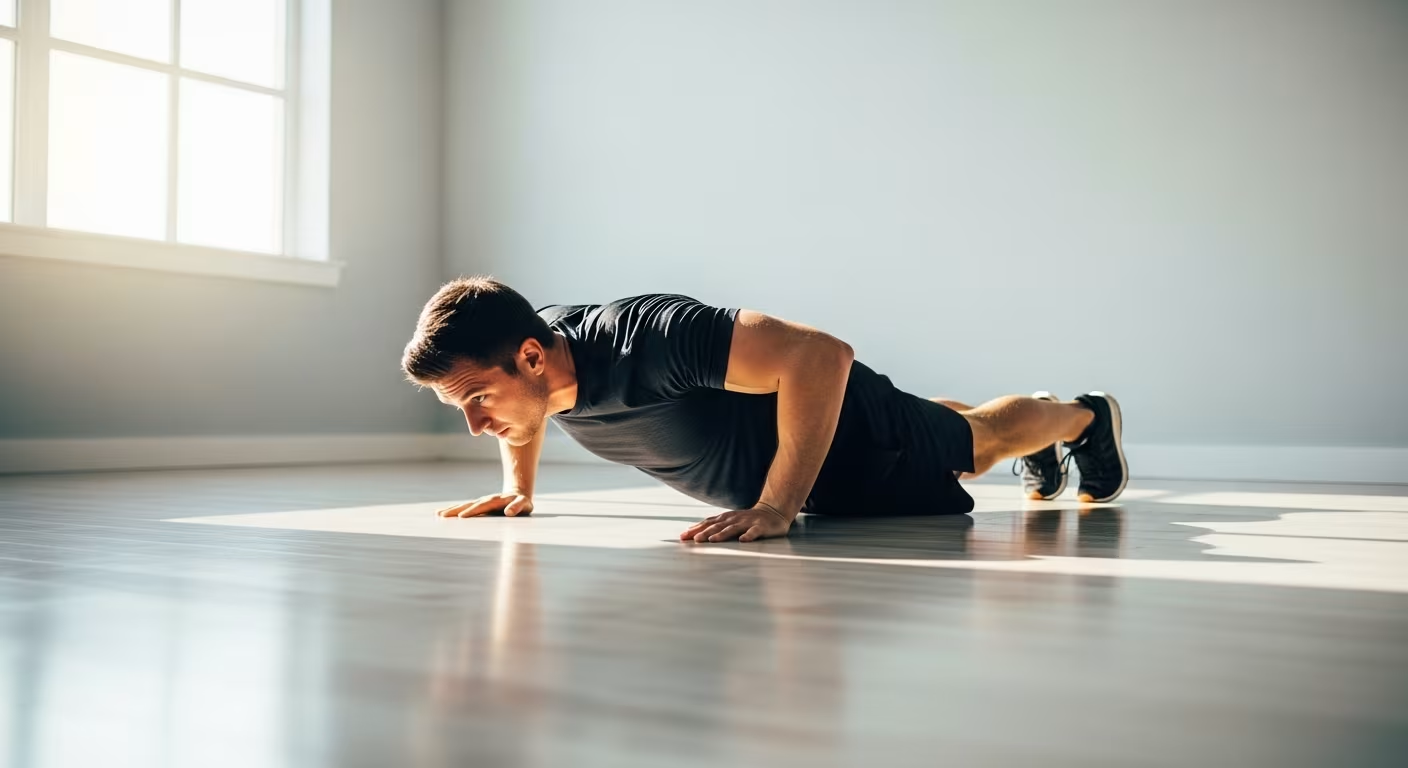
A push-up becomes more demanding when the hands are raised (increasing range of motion), when the feet are raised (shifting load toward the shoulders), when one hand is raised on a surface while the other is on the floor (increasing stability demand), when performed on rings rather than a stable surface (maximal stability demand), or when performed with a slow eccentric phase (tempo manipulation). This progression from a standard push-up to a challenging rings push-up represents a substantial range of difficulty that remains productive for most trainees throughout their training.
What You Need and What You Don't
A complete bodyweight training practice requires a floor and enough space to move. Everything beyond this is optional and progressive.
A pull-up bar — either a doorframe model or a wall-mounted one — extends the pulling options significantly and is genuinely useful. A set of gymnastics rings extends the difficulty ceiling of most upper-body movements substantially. A resistance band adds versatility for pull-apart movements and assisted pull-up progressions.
These additions are small, inexpensive, and together cost less than one month's gym membership. They are also the only additions that meaningfully extend the range of bodyweight training. Everything beyond them — push-up handles, balance boards, ab wheels, various rollers and mobility tools — provides marginal additional benefit that a thoughtfully designed bodyweight program achieves without them.
The Consistency Advantage

The most significant practical advantage of bodyweight training over gym-based training is the elimination of the travel and scheduling barrier. A gym requires travel, scheduling around facility hours, locker room management, and negotiating equipment availability. Bodyweight training requires opening the floor space already available in any home or outdoor area.
This barrier reduction has a substantial effect on training consistency. A training session that requires thirty minutes of travel overhead is easier to skip than one that begins by stepping into an available room. The consistency advantage of frictionless access to training tends to produce more total training over months and years than the equipment advantage of a fully equipped facility used intermittently.
Building Practice Without a Facility

The absence of a gym removes scheduling constraints that prevent many people from training consistently. No membership fees mean no financial guilt about missed sessions. No travel time means training can be completed in fifteen minutes if that is all that is available on a given day. No facility hours mean early morning and late evening sessions work equally well.
These factors matter more to long-term consistency than most equipment-based training variables. Research on exercise adherence consistently identifies convenience and schedule flexibility as more predictive of sustained practice than program sophistication. A simple bodyweight routine completed four times per week produces better outcomes over a year than a complex gym program attended twice.
The floor space required for effective bodyweight training is minimal. A two-meter by two-meter area covers push-ups, squats, lunges, planks, hip hinges, and the most effective mobility work. This fits in bedrooms, living rooms, outdoor spaces, and hotel rooms. The barrier to beginning a session drops to near zero when no travel or setup is required.
The Role of Rest Between Sessions
Bodyweight training creates the same physiological demands as weighted training — sufficient mechanical stress to prompt the body to rebuild tissue stronger than before. This means recovery matters equally to the training itself. Training every day without adequate rest between sessions does not produce faster progress; it produces accumulated fatigue and stalled adaptation.
Two to three full sessions per week with intentional rest days produces steady progress for most people. On non-training days, light movement such as walking or gentle mobility work maintains the habit without adding training stress that impairs recovery.
Sleep quality affects adaptation significantly. The majority of tissue repair and strength consolidation happens during sleep, not during the sessions themselves. Consistently sleeping less than seven hours reduces the return from training without changing the effort invested. Managing sleep with the same attention given to training sessions closes the gap between effort and actual results more effectively than adding more training volume.
Progress in bodyweight training is measured not only in repetitions but in range of motion, control through full movement, and reduction in compensation patterns. A deep, controlled squat performed through complete range indicates more meaningful adaptation than a faster, shallower version performed for a higher rep count. Tracking these qualitative markers alongside simple rep counts gives a more complete picture of how the practice develops over time. Many people find that slowing down movement to improve control produces strength gains faster than adding reps at a speed that bypasses the full range. This principle applies equally to push-up variations, hinge patterns, and horizontal pulling exercises, making controlled tempo the common thread across all bodyweight training progressions.
Adapting this principle to the specific demands of each movement pattern — adjusting tempo, range, and control rather than just adding repetitions — is what separates productive bodyweight training from activity that accumulates volume without producing adaptation.
Patterns and their no-equipment versions:
| Pattern | Bodyweight version |
|---|---|
| Push | push-up and dip variations |
| Pull | low-bar rows, rings, a solid branch |
| Squat / lunge | variations, tempo, single-leg |
| Hinge | single-leg deadlifts, glute bridges |
| Carry / core | loaded walks with anything; planks and holds |



Comments
No comments yet.