


The common misunderstanding about minimalist wardrobes is that building one starts with a shopping trip: that you first buy ten high-quality pieces, and only then get to call your approach minimalist. That framing pushes people in two unhelpful directions. Some overspend on a "capsule wardrobe" that photographs well but doesn't fit their actual life, then quietly stop wearing half of it. Others price the idea out in their heads and dismiss it as something only people with money to burn can do.
A minimalist wardrobe is built the opposite way: gradually, out of what you already own, extending into new purchases only when something wears out or a genuine gap appears. Done this way it costs less than a conventional wardrobe over time, not more, because the pieces in it get worn constantly and replaced rarely.
You don't have to buy ten pieces first
The starting cost of a minimalist wardrobe is zero. The first step isn't acquiring anything; it's deciding what, among the clothes already hanging in the closet, genuinely works. The people who treat this as a buying project almost always end up with more clothing than they started with, which is the exact reverse of the goal.
Skipping that first free step is the most expensive mistake in the whole process. A closet you haven't audited is a closet you'll shop to "complete," and completion never arrives when you don't know what's already there.
Start from what you already wear
The most reliable way to find your working wardrobe is to watch your own behavior rather than your intentions. The reverse-hanger method makes it concrete: turn every hanger backward, and after you wear something, return it facing the normal way. Give it three to six months. A one-season version works the same way with a note or a bin.
What this almost always surfaces is a "real wardrobe" of roughly twenty to thirty items you wear on constant rotation, sitting inside a much larger collection you barely touch. That real wardrobe is the foundation. It's already there, it's already proven itself through actual use, and identifying it costs nothing. Everything that follows builds outward from those pieces rather than from a magazine's idea of a complete closet.
Grow by replacement, not addition

Once the real wardrobe is defined, it grows through replacement rather than accumulation. When a core item wears out, one replacement of equal or better quality takes its place. When a real need shows up that the current wardrobe can't meet, one item fills it. Nothing else gets bought. That single rule is what separates a wardrobe that improves over time from one that just expands.
In practice it looks unglamorous and works well. The white t-shirt that's gone gray after two years is swapped for a better white t-shirt that will outlast it. The jeans worn through at the knee are replaced with one deliberately chosen pair rather than three on a sale rack. Each swap is a considered decision instead of an automatic one, and the closet slowly gets better without getting bigger.
The replacement model also removes the two situations that quietly inflate most closets. The first is the sale that has nothing to do with a need: a good price on an item you weren't looking for, bought because passing it up felt wasteful, then worn a handful of times. The second is the duplicate hedge, the third black sweater bought because the first two are somewhere in the drawer and it's easier to buy another than to find them. Under a strict replace-only rule, neither purchase clears the bar, because nothing wore out and no real gap opened. What's left is a closet where every item entered for a reason you could name at the time.
Cost per wear is the real price

The number that should drive wardrobe spending isn't the price on the tag; it's the price divided by the number of times you'll wear the thing. A $50 shirt worn once cost $50 to wear. A $150 jacket worn two hundred times cost about 75 cents a wear. The tag misleads you in both directions, and cost per wear corrects it.
| Item | Purchase price | Times worn | Cost per wear |
|---|---|---|---|
| Trend top worn twice | $40 | 2 | $20.00 |
| Fast-fashion jeans, worn out in a season | $35 | 25 | $1.40 |
| Well-made everyday t-shirt | $30 | 150 | $0.20 |
| Quality wool coat kept for years | $220 | 400 | $0.55 |
| Leather boots, resoled once | $180 | 500 | $0.36 |
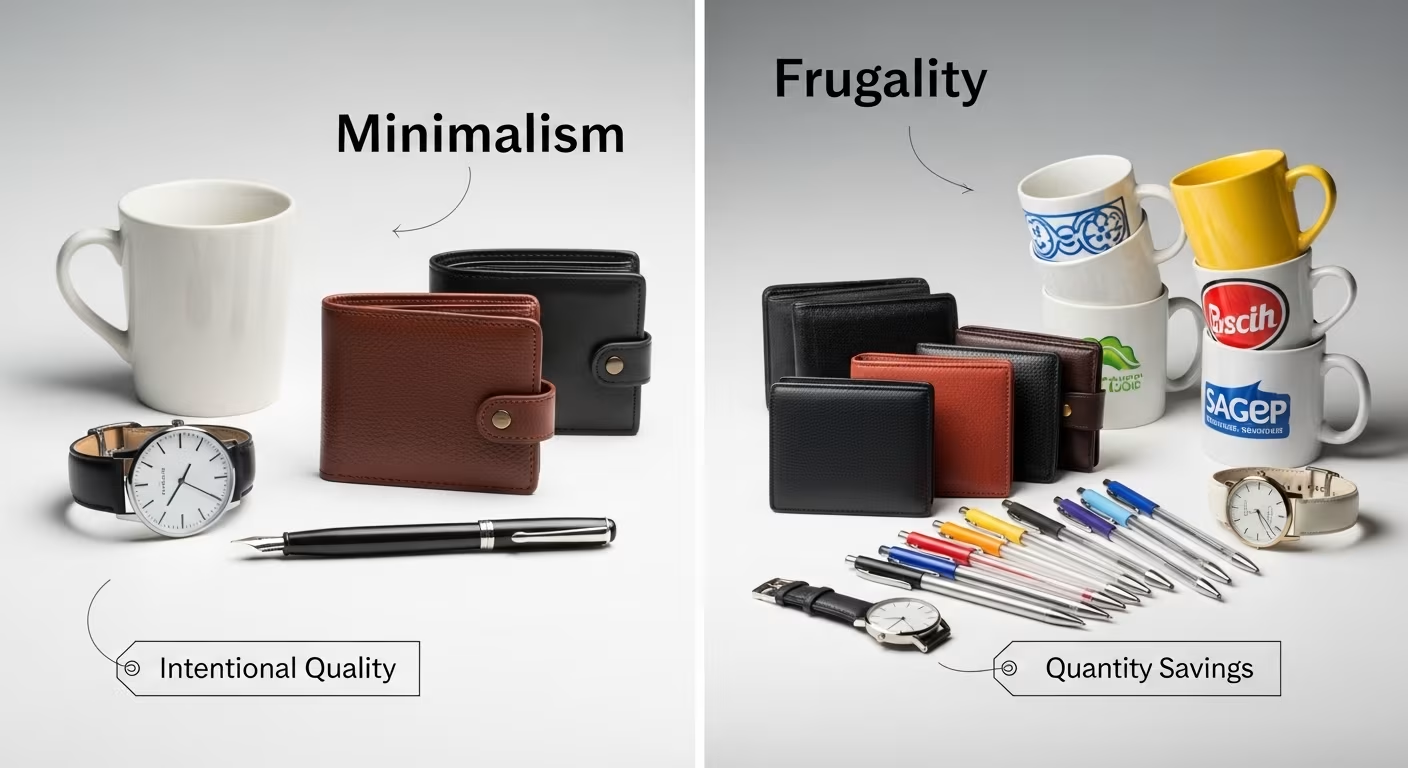
Read that way, "expensive" flips meaning. The $220 coat is one of the cheapest things in the table, and the $40 top is by far the most costly. A high-quality, versatile piece worn frequently for years almost always undercuts the low-quality piece that wears out or gets abandoned in a few months. A wardrobe built on cost per wear ends up cheaper than the alternative, because its contents are worn often and replaced rarely.
Secondhand makes quality affordable
Secondhand shopping is the shortest route to quality pieces at minimalist prices. A cashmere sweater at a thrift or consignment shop costs a fraction of the same sweater new, and it's the same sweater. Wool trousers, leather shoes, silk blouses, and well-made denim all turn up secondhand in excellent shape, offloaded by people who over-bought or changed their style before the clothes wore out.
The outcome of buying a genuinely good item secondhand is identical to buying it new: a well-made, long-lasting piece that fits a deliberate approach to clothing. The only difference is the price, which is what moves quality from exclusive to accessible. For someone building a wardrobe on the replacement model, secondhand is often the first place to look when a core item finally gives out.
There's a rhythm to shopping this way that new-retail shopping doesn't have. Secondhand inventory is unpredictable; you can't decide on Tuesday to buy a navy wool coat and reliably find one that afternoon. That's usually framed as a drawback, but for a minimalist wardrobe it's an advantage. Because the right piece appears on its own schedule, you learn to keep a short mental list of the specific items you're genuinely looking for and buy them when they surface, rather than buying on impulse because something was simply on sale. The search itself filters out purchases you didn't really need. This lines up with Oklahoma State University Extension.
Name the gap before you buy
A real gap is a specific item that would make the pieces you already own more useful: the neutral layer that unlocks three existing tops, the particular trousers a professional setting requires, the one shoe style the closet keeps needing and never has. That's different from "more of the same," and very different from something that just looked appealing under store lighting.
Naming the gap precisely is what keeps a purchase targeted. "I need one long-sleeve thermal to layer under my existing sweaters" leads to a single right buy. "I feel like I need more warm clothes" leads to a pile of vaguely warm things that don't solve anything. The narrower the description, the better the purchase, and the less likely it is to become another rarely-worn item six months later.
A useful test before any addition is to name three things already in the closet that the new item would pair with. If you can list three real outfits it slots into, it's filling a genuine gap and extending pieces you already own. If you can't get past one, or the outfits are hypothetical, the item is a standalone that will need its own supporting cast of further purchases to ever leave the hanger. The three-pairing test catches the appealing-but-orphaned buy before it enters the wardrobe rather than after.
How to judge quality by hand

The gap between a cheap garment and a good one is mostly structural, not visual. A low-quality cotton shirt pills after about ten washes, loses its shape within twenty, and fades inside a season. A well-made shirt in denser, higher-quality fabric holds its shape, color, and texture through years of regular washing. The difference lives in the raw material and the construction: seam reinforcement, stitch density, fiber quality, and the finishing at hems and buttons.
You can check all of that with your hands before buying, and it's easiest to do secondhand or at end-of-season clearance, where the item is in front of you rather than behind a screen. Tug lightly at seams to see whether they're reinforced, feel the weight and density of the fabric, look at whether the stitching runs straight and even, and inspect the hems and buttonholes for neat finishing. That's the same evaluation you'd make buying new, done at a fraction of the price.
The once-a-year audit that holds the line
A single annual audit, ideally at a season change, is what keeps the wardrobe at its intended size instead of drifting back toward overflow. It takes about ninety minutes and produces a clear read on what was actually worn, what wasn't, what needs replacing, and what can go. Done every year, it stays a light maintenance habit rather than a dreaded overhaul.
The wardrobe reviewed yearly takes far less effort than one assessed once every five years, after accumulation has already buried it. Timelines matter here too: a minimalist wardrobe isn't built in a weekend but across seasons. First the audit, then a season of wearing only what works, then honest gaps, then one or two targeted purchases, repeated the following season. After two or three years of moving in that direction, the closet holds mostly clothes that are worn, liked, and true to how you actually dress. The building process takes as long as the accumulation that overstuffed the closet in the first place. It simply runs the other way, and each year's review sharpens your eye a little more for the difference between what you wear and what you keep just in case.


Comments
No comments yet.